
How To Wedge Clay A Beginner’s Guide With A Step By Step Video
Wedging may very well be one of the least-liked, but most important parts of the pottery-making process. Whether by hand or machine, it has to be done.
You can feel the difference in your clay when it’s nicely wedged. It’s smoother and much easier to mold, which, of course, we all want when we’re making pottery.
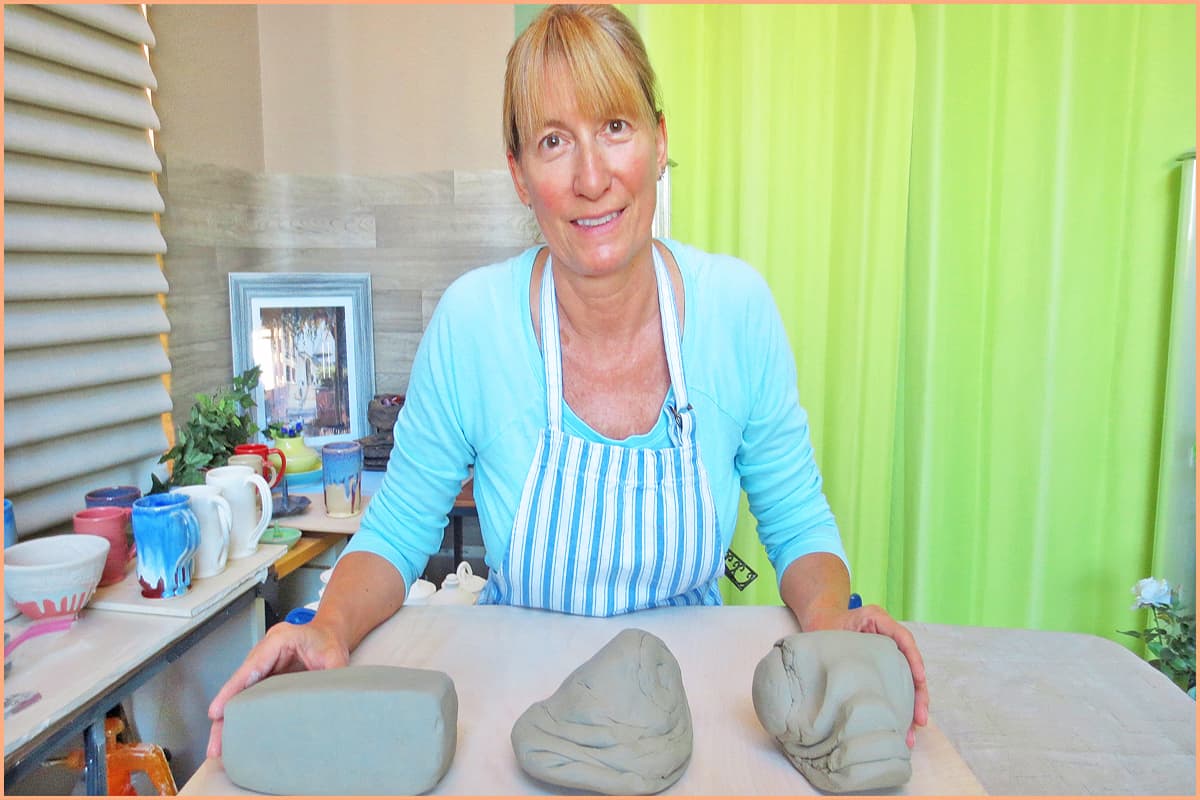
There are five ways to wedge clay that I have tried, and I am going to share them all with you. Find out which one is the best for you.
Affiliate Disclaimer: We are ambassadors or affiliates for many of the brands we reference on the website. As an Amazon Associate, I earn from qualifying purchases.
Prepare before you start Wedging
Have The Right Surface To Wedge On
Because clay is sticky, you need to wedge on a surface that your clay won’t easily stick to. There are different surfaces you can choose to wedge on, like Masonite, Concrete, Granite, and the most common: Plaster, Plywood, and Plywood covered in canvas. These are all good options. I’m wedging on a 24 x 24-inch (61cm) piece of plywood that the guy at the hardware store cut for me.
Always Weigh Out Your Clay
Weighing your clay is a good habit to get into because it helps you know how much clay you need for the items you are making.
When learning how to wedge, you should start with one to three pounds (.50 to 1.4 kg) of clay. A scale is an important part of working with clay, especially as a new potter; you need to know how much clay is needed to make different items or a few of the same size.
You don’t want your clay balls to be too small or too large. For now, at least 1 pound (.50kg) or whatever amount fits most comfortably in your hands will be fine until you get the hang of it.
NOTE: I will be using 3 pounds (1.4 kg) of clay for each wedging technique. Which is also in myBest Clay picks.
Being In The Correct Position
Before you start to wedge, you want to make sure your body is in the correct position and your wedging table is at the correct height. Since you will be wedging a lot of clay throughout your pottery journey, the correct position and height will make a big difference and help make wedging easier.
You don’t want to wedge on a table that’s too short or high. When you feel undue pressure on your back, your table is probably too low. If you feel too much pressure on your shoulders and arms, your table is probably too high. A good height for a wedging table is around your hip area.
Keeping your back straight helps as you lean into the clay. Using your whole body allows your body weight to help wedge the clay, giving you more control over it.
NOTE: Keep in mind you will only need to wedge thoroughly when working with recycled clay or when mixing mason satins or other colorants into your clay.
Fresh Clay right out of the bag only needs to be wedged 30 to 40 times, and then the stack and slam about 10 to 15 slices.
1) The Rams Head
- When starting the Rams Head wedge, you want to form your clay into a rectangular or square shape.
- Place your thumbs on the top of the clay.
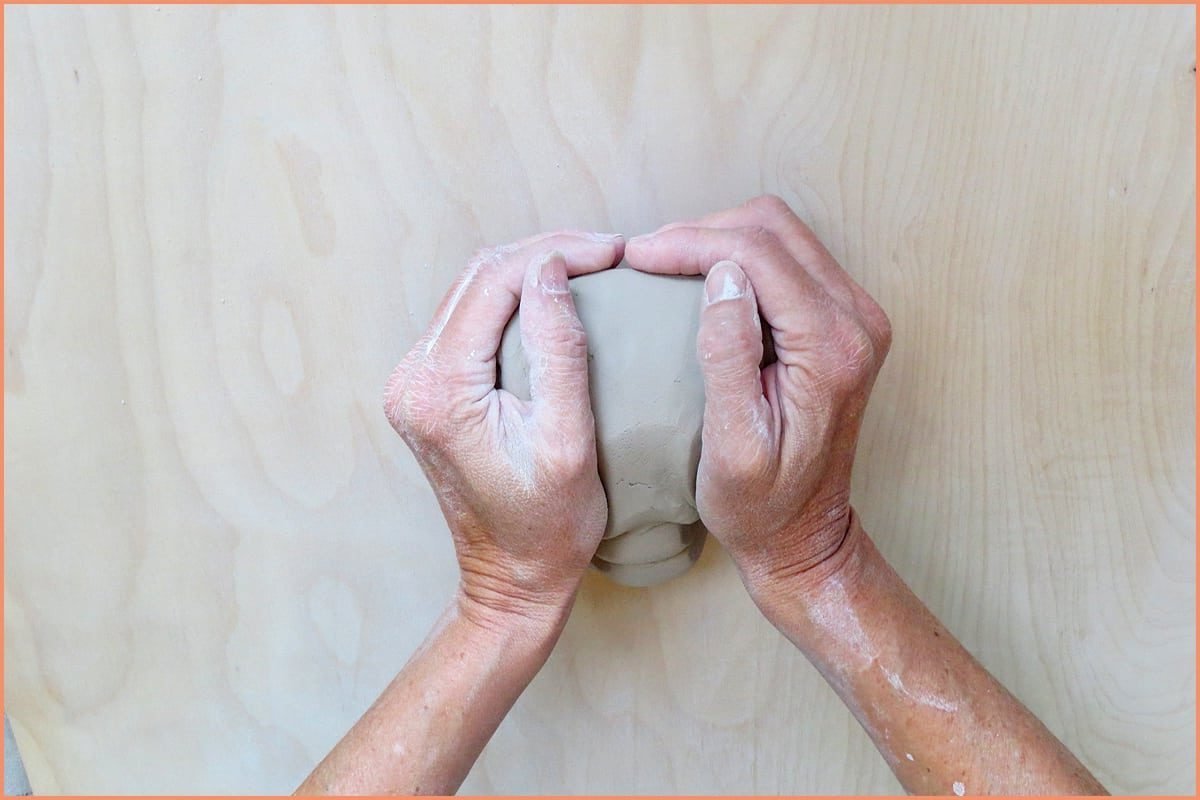
- Place your fingers gently around the clay (don’t squeeze your fingers into the clay)
- Press your palms inward as you push the clay down and away from you (towards the wall). Make sure you’re using your body weight.
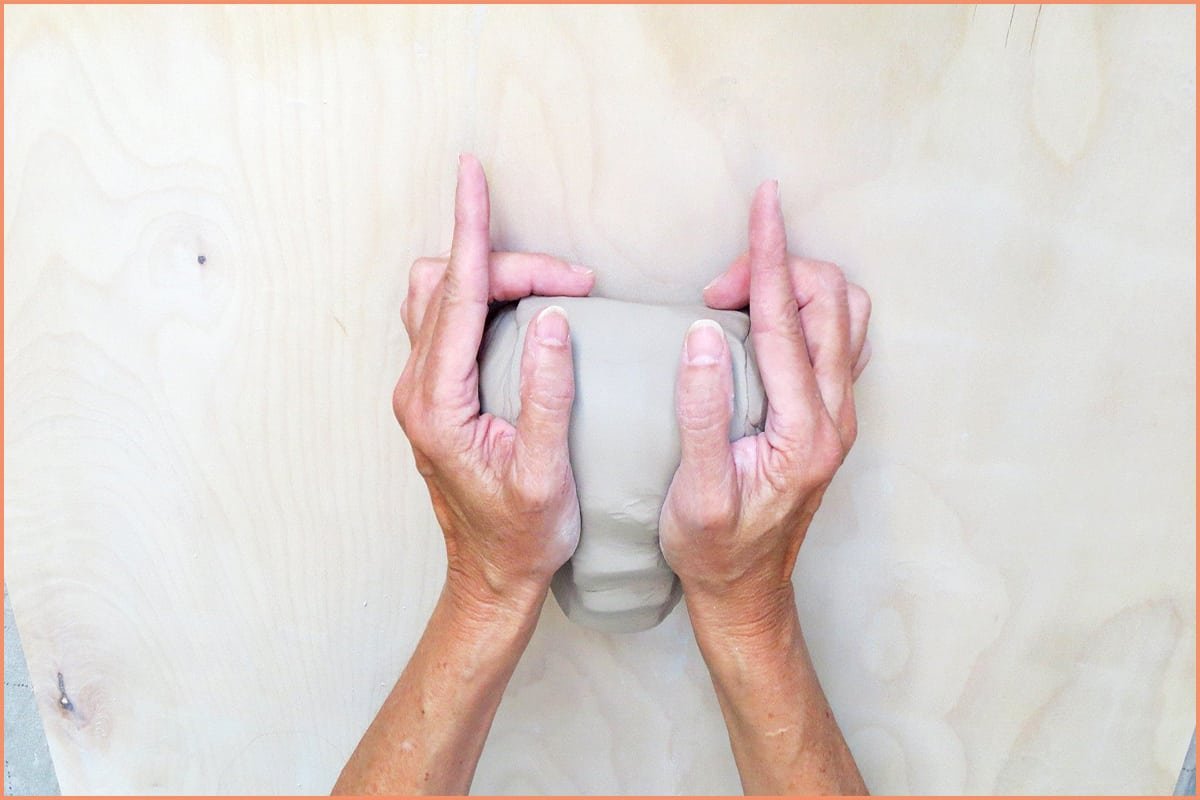
- Move your hands back to the top of the ram’s head and bring the top up towards you, and place the lower tip or nose of the ram’s head on the board.
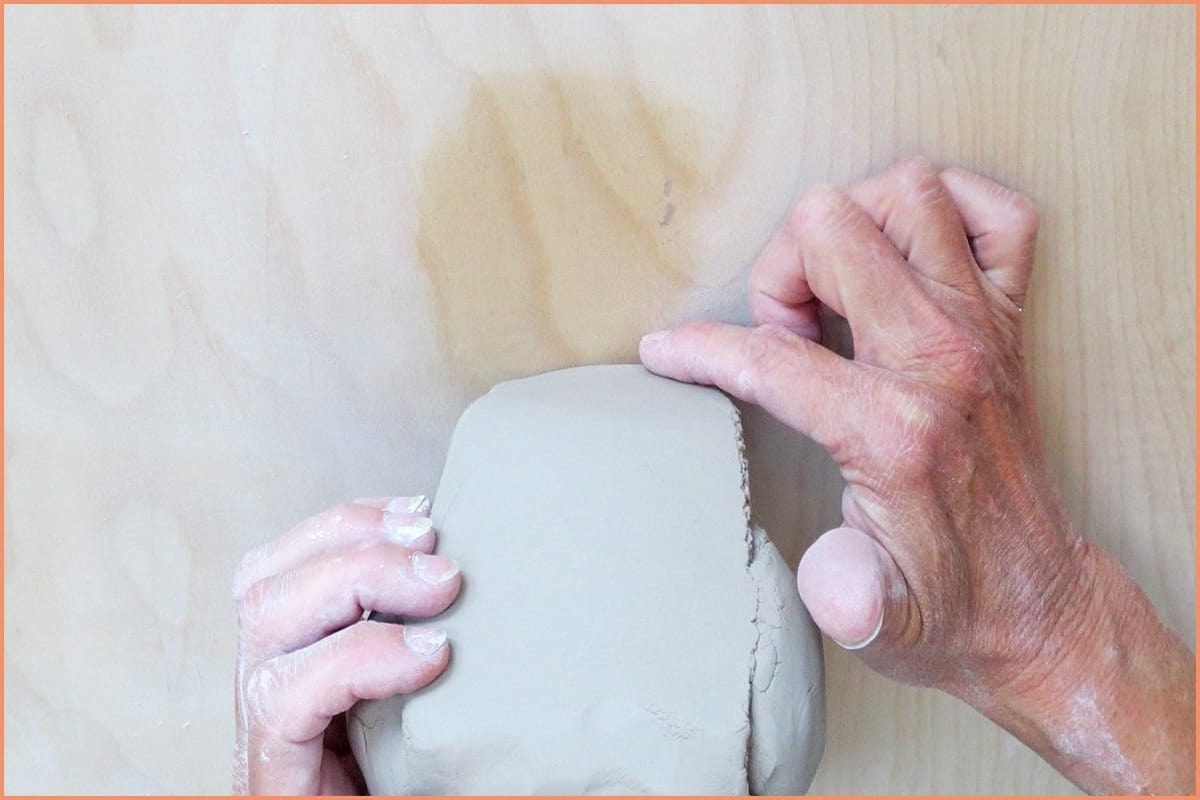
- Press inward, downward, and towards the wall.
- When pressing down and away, make sure you’re also pushing at least an eighth of the ram’s horn inward with the pads of your hands right below your thumbs.
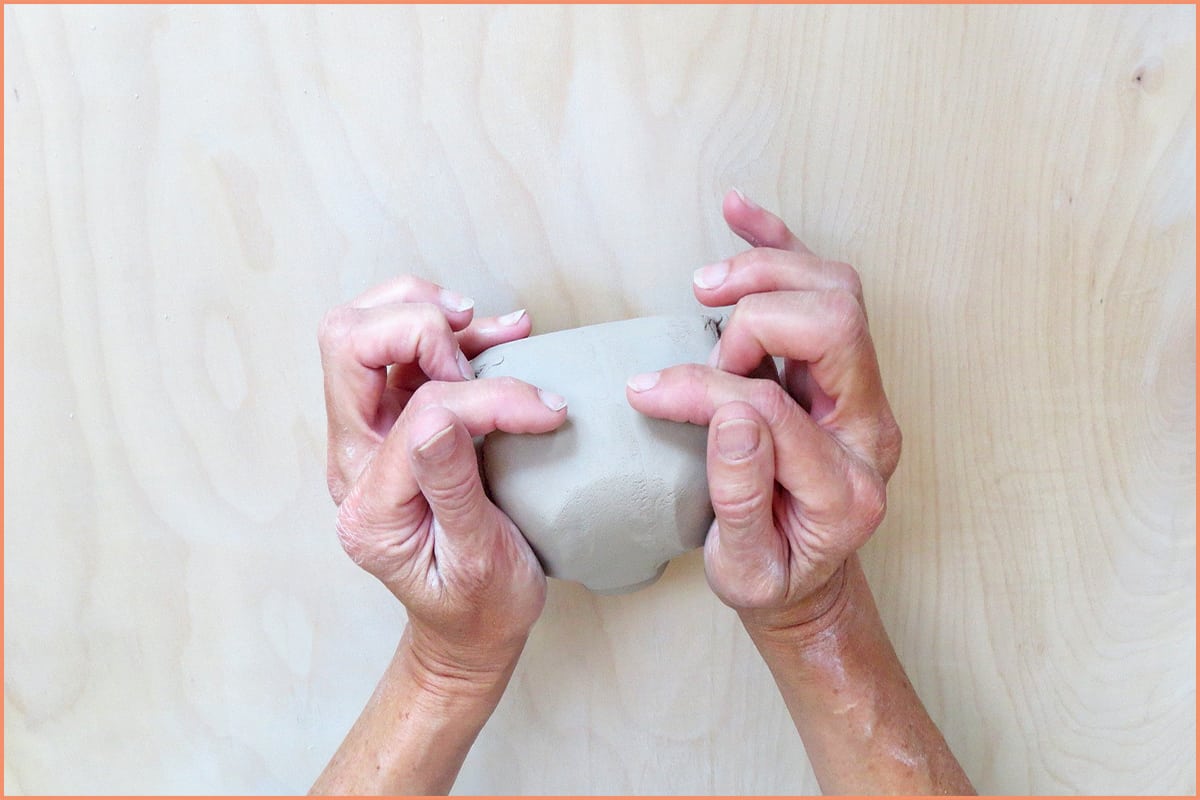
- You want to start a rocking motion when pushing in, down, and away, and pulling the clay back towards you.
This is how your Rams head should look.
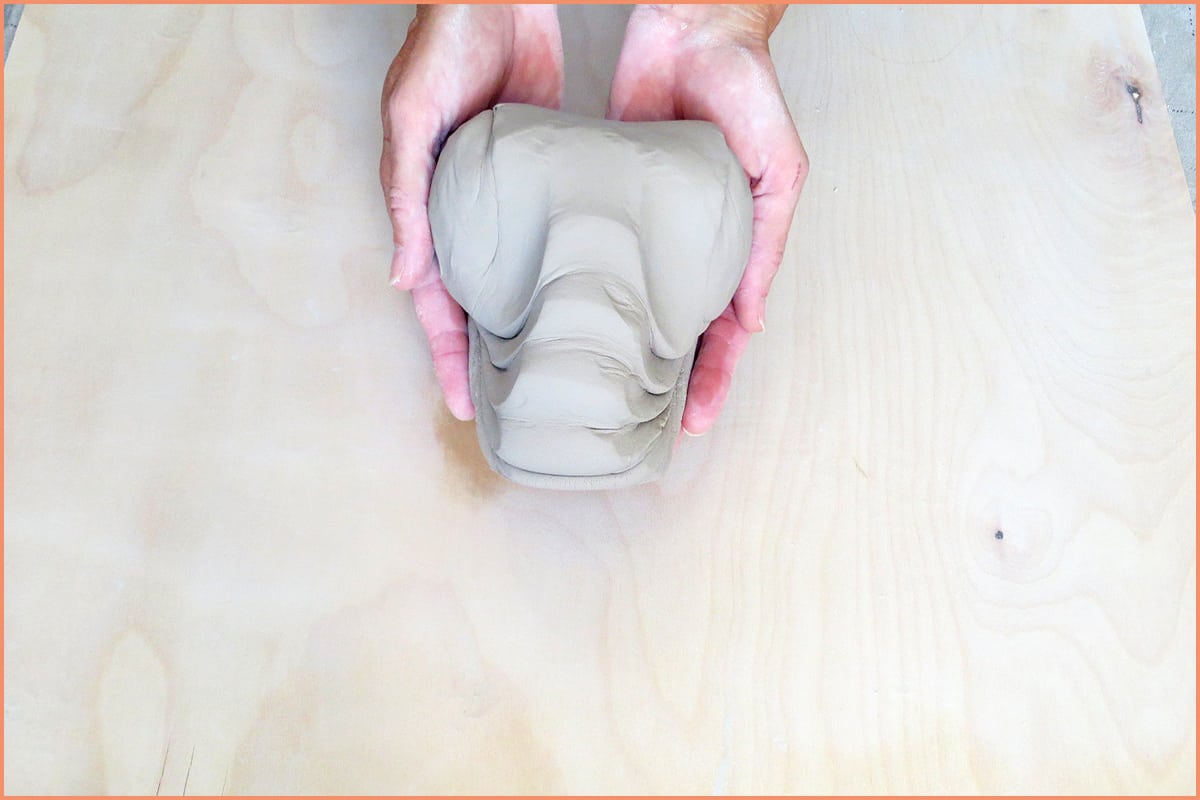
You should wedge at least 30 times when it’s fresh out of the bag. When it’s recycled clay, you will need to wedge it at least 100 times, if not more, depending on its condition.
A Few Things to Look Out For When Rams Head Wedging
- Be careful not to fold your clay over. This will create air pockets. Make sure you’re pushing the clay in and not folding it over.
- Don’t push your clay down too hard. You don’t want your ram’s head to look like it was hit by a car.
- Make sure your hands aren’t too far apart. The ram’s horns will start to spread too far out.
You want to keep a nice, smooth rhythm. I like to think of it as good exercise. After your clay is well wedged, you can roll up the nose, then pat the sides and form it into a ball.
Using 3 pounds (1.4 kg) of clay, I am going to add Evergreen Mason Stain to half of the clay and wedge the two colors together.
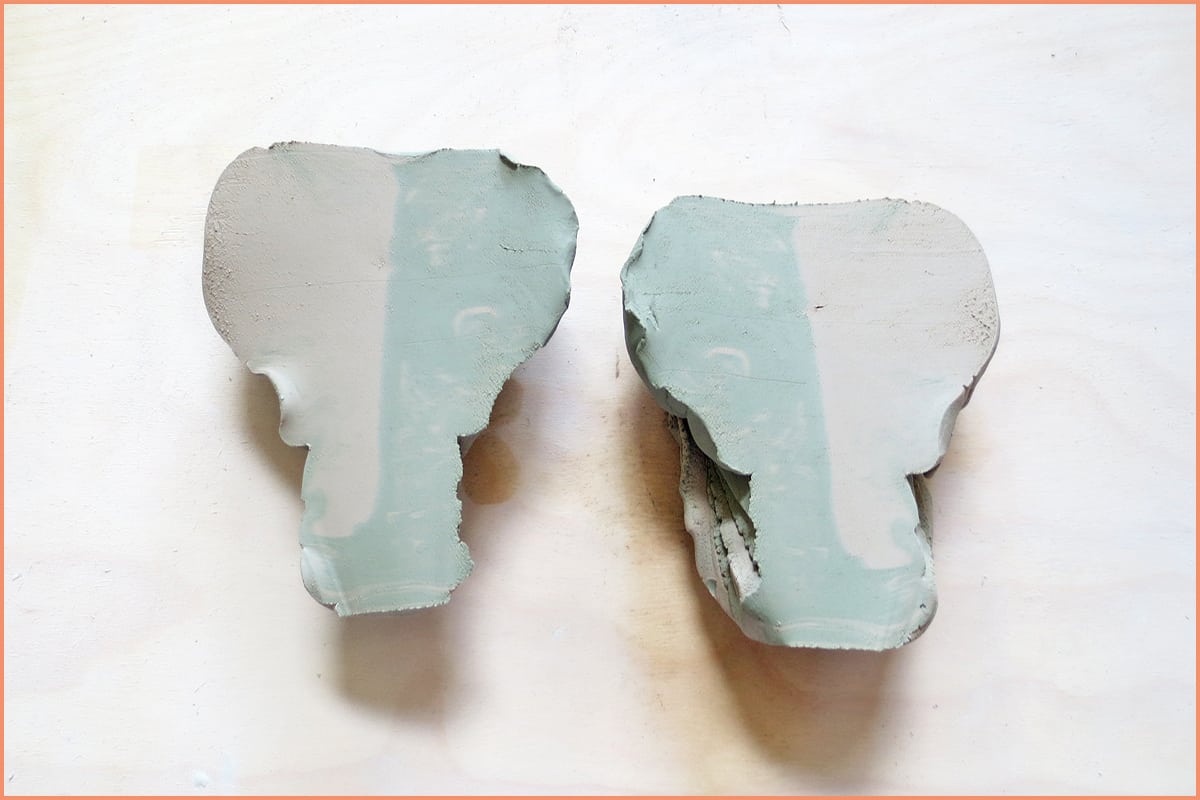
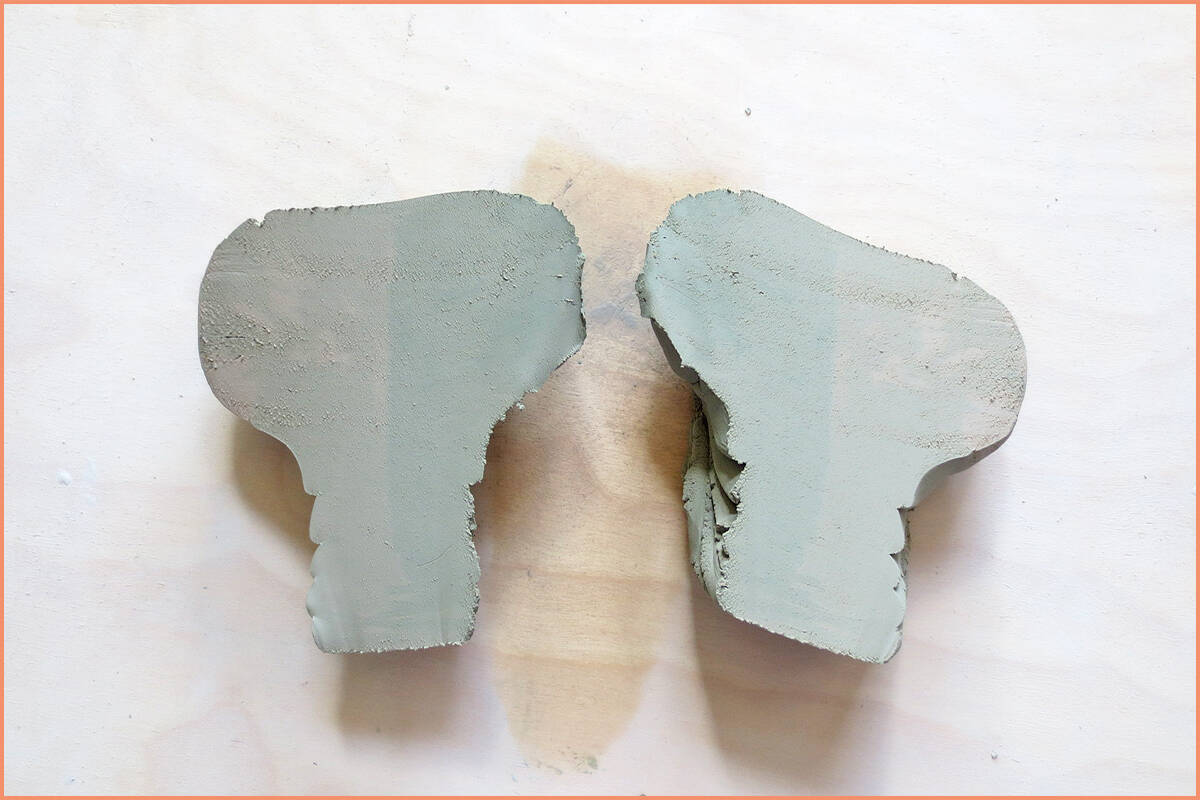
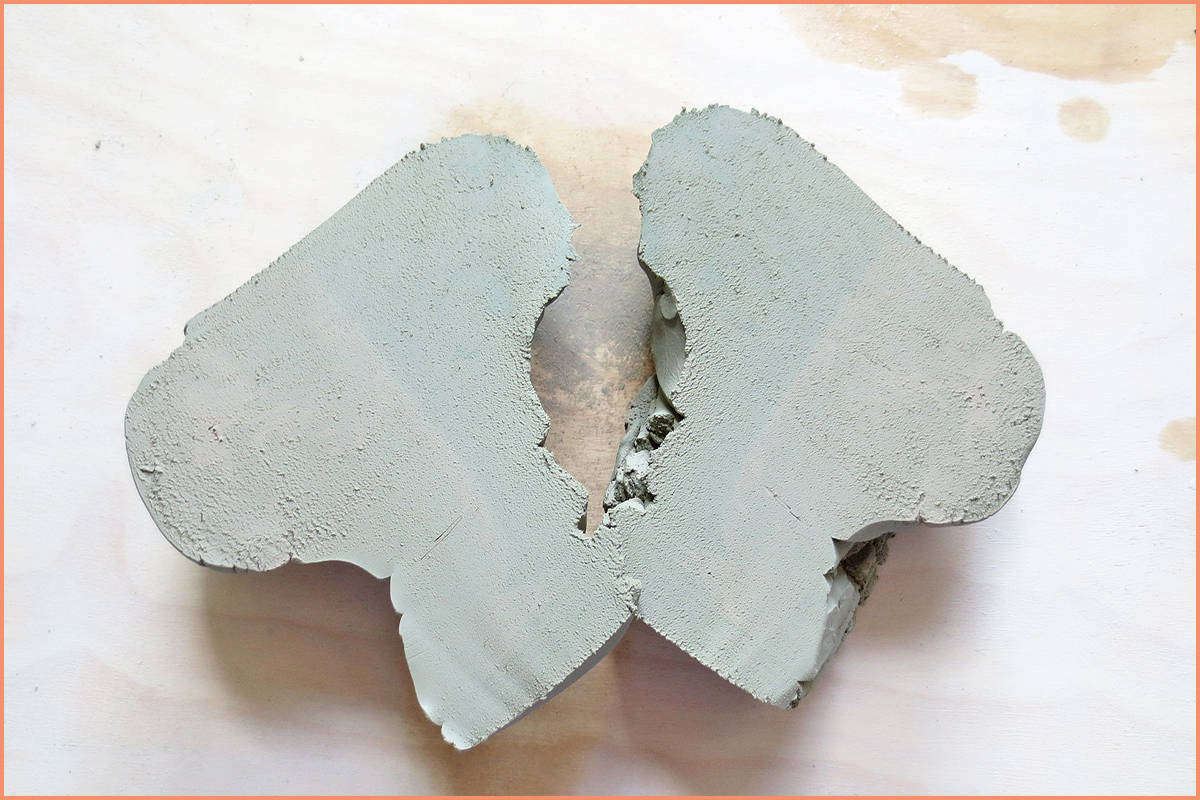
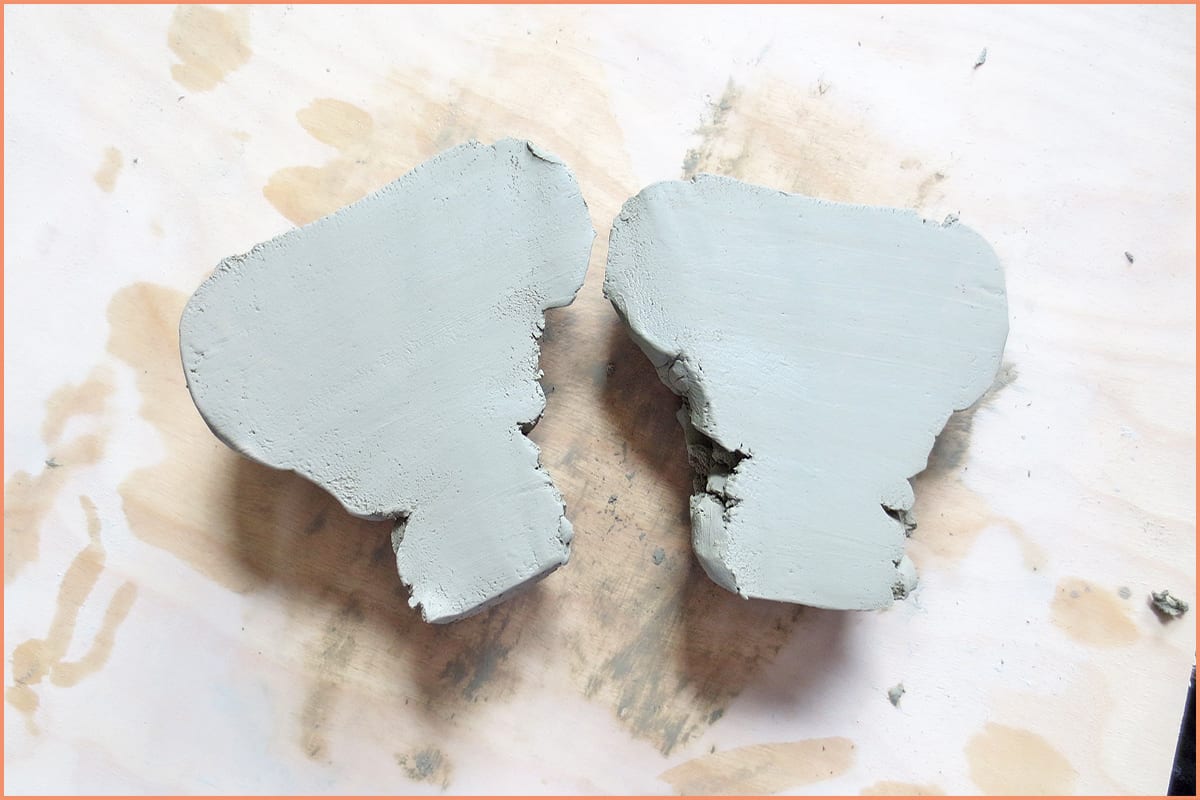
The Ram’s Head Wedge took a little over 6 minutes and 200 wedges to blend the two colors together. It’s good to know how many and how long it takes to blend the clay.
2) The Spiral
Spiral or Shell Wedging is another method you may want to try. It’s a little trickier but still easy to learn.
This method is similar to the Ram’s Head in that both create a swirl pattern. The Spiral mixes the clay very well by removing lumps, making it more workable, and effectively eliminating air bubbles.
- Form your clay into a rectangular shape, with your thumbs together, and place them on the top of your clay.
- You want to twist the clay slightly to the left (counterclockwise) as you push it down with your palms.
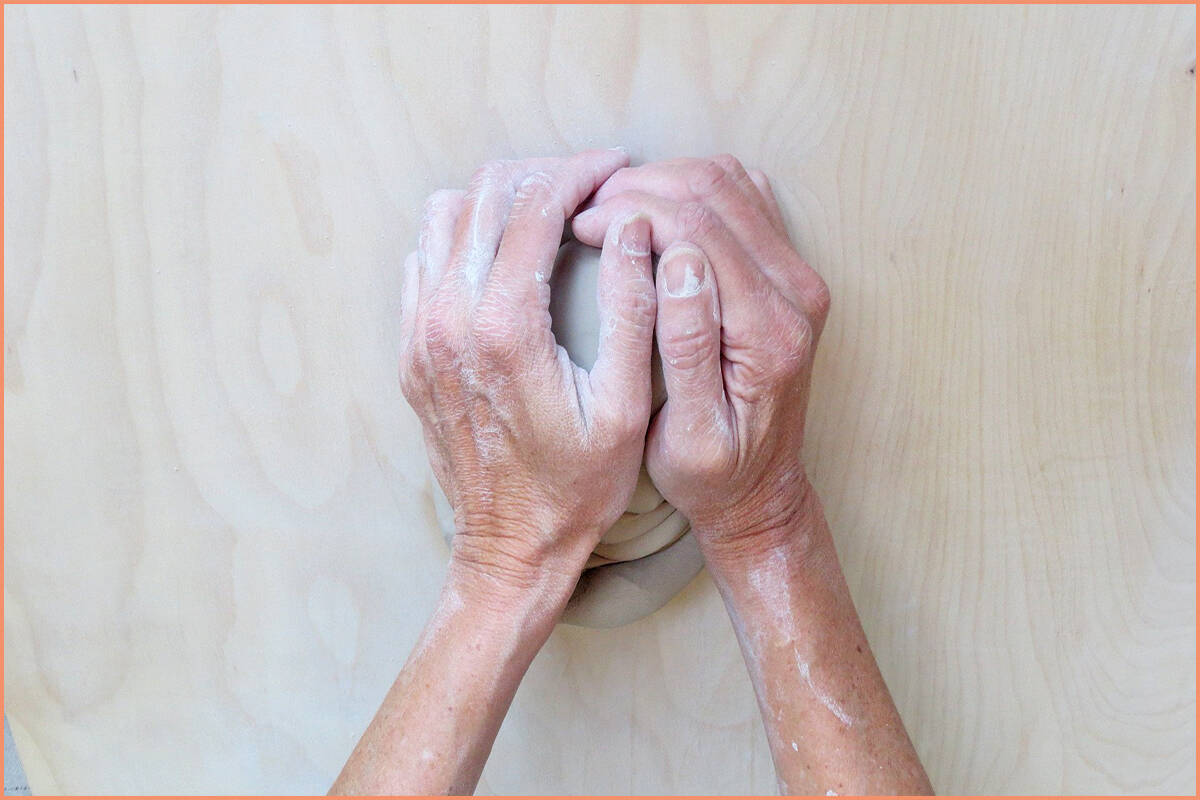
- Bring the top of the clay (where your hands are) back up to its side by rolling it up to the left.
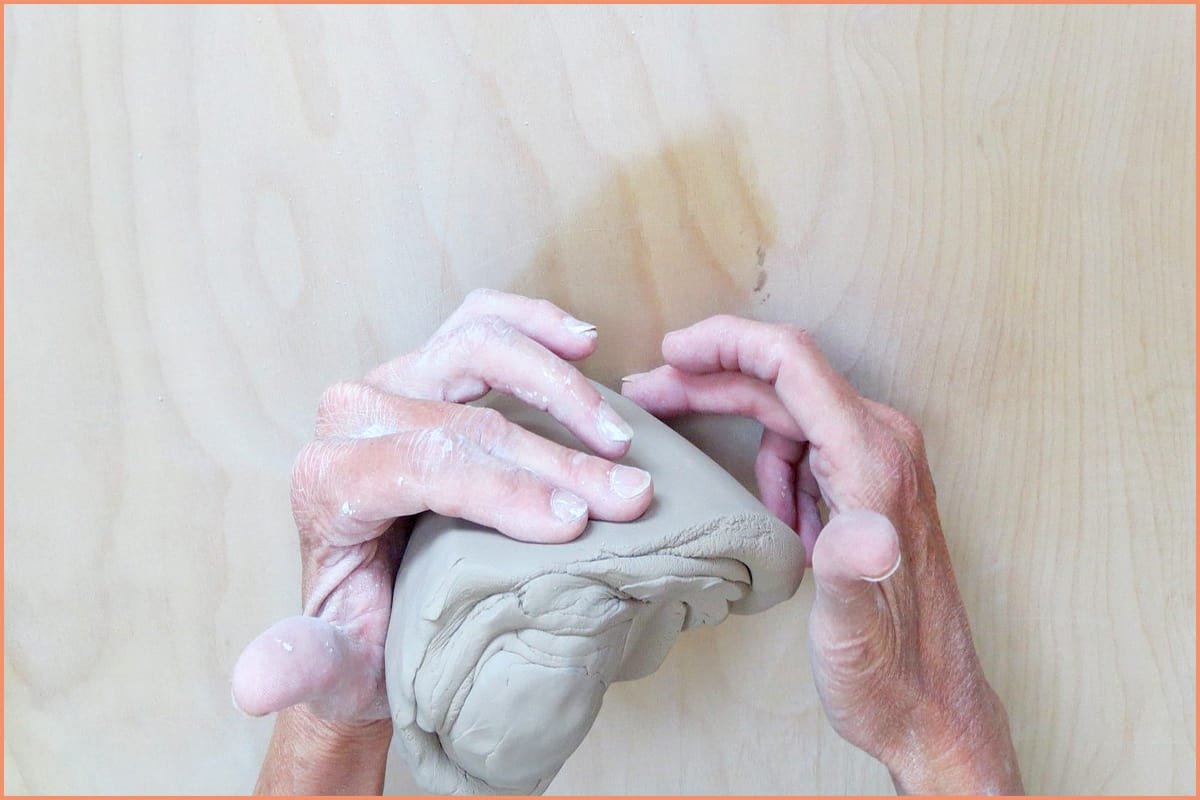
- Turn the bottom tip of the clay 15 degrees to the left and move your hands an inch or so (depending on the size of your hands) to the left.
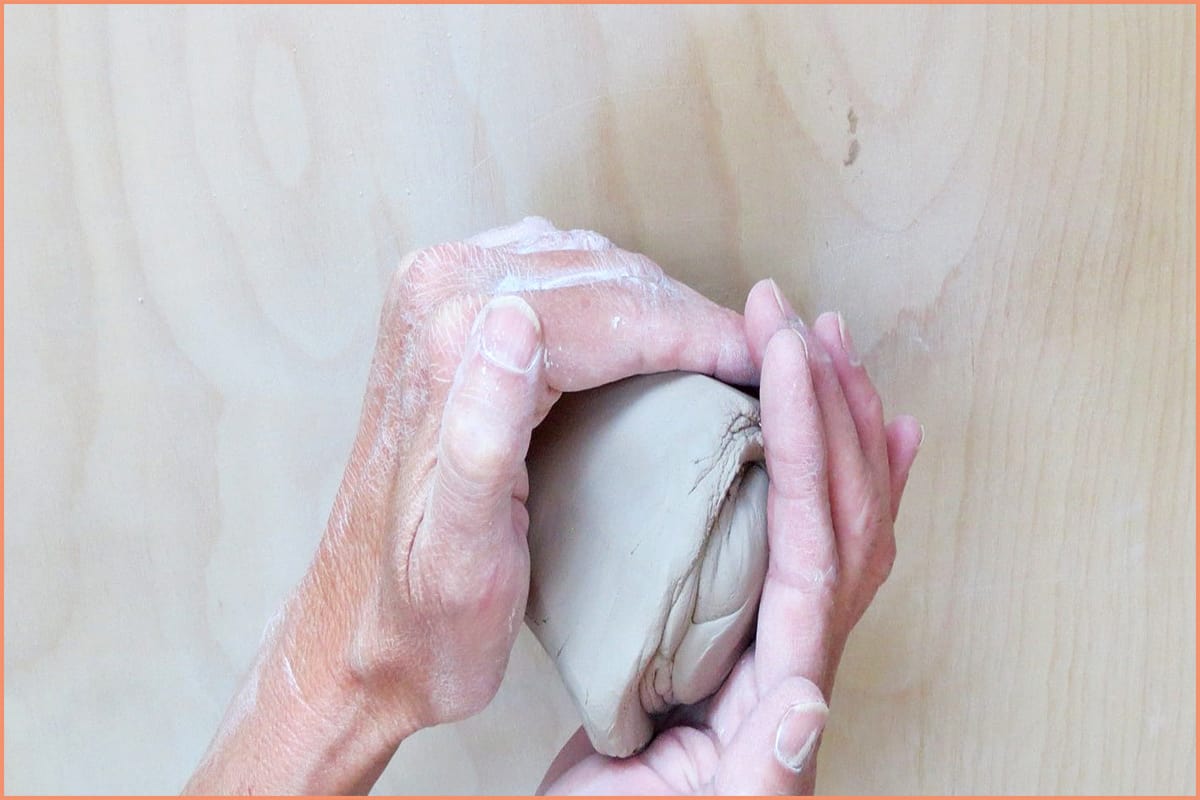
- Push back down with your palms a little to your left.
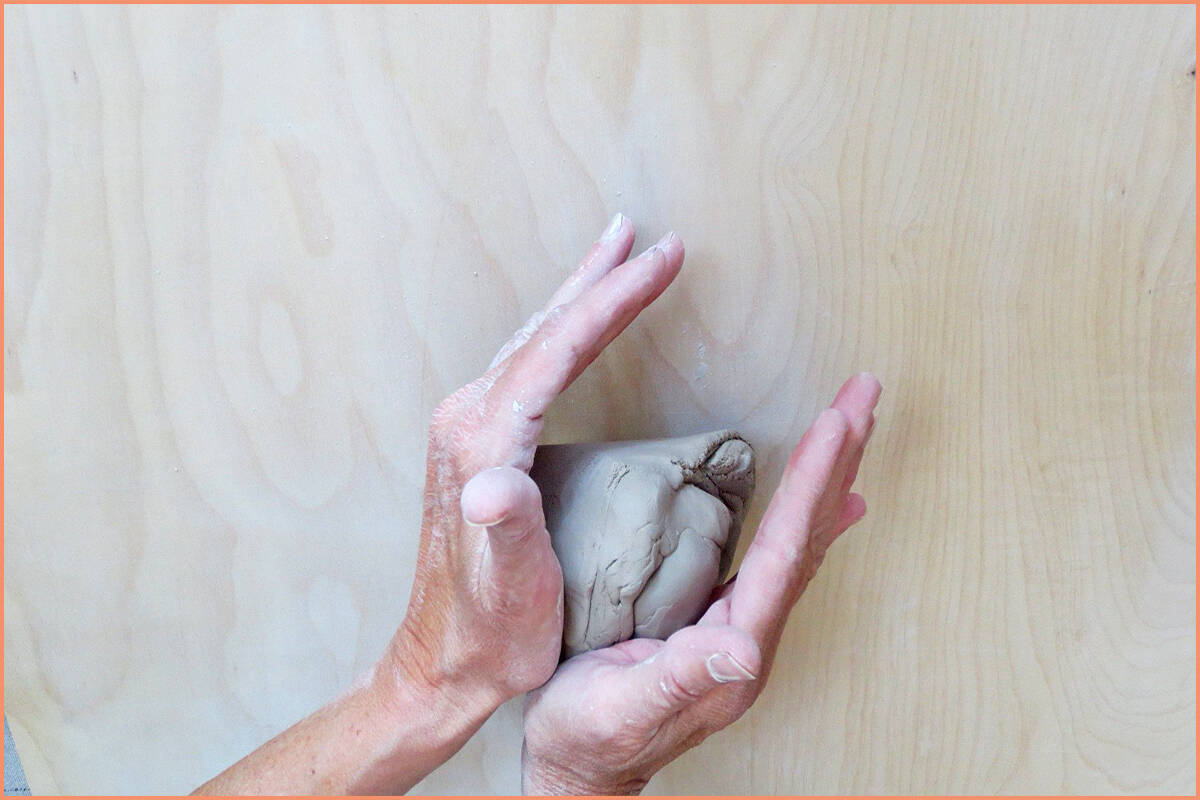
- When pushing down, don’t push too hard. Just concentrate on the top where your hands are, and the rest will follow.
- Make sure you are not creating a hole in the middle of your spiral where air can get trapped.
Notice how you are only pushing down with a twist when wedging this way. You will know fairly quickly if you are doing it correctly; your clay will form a spiral shape resembling a shell.
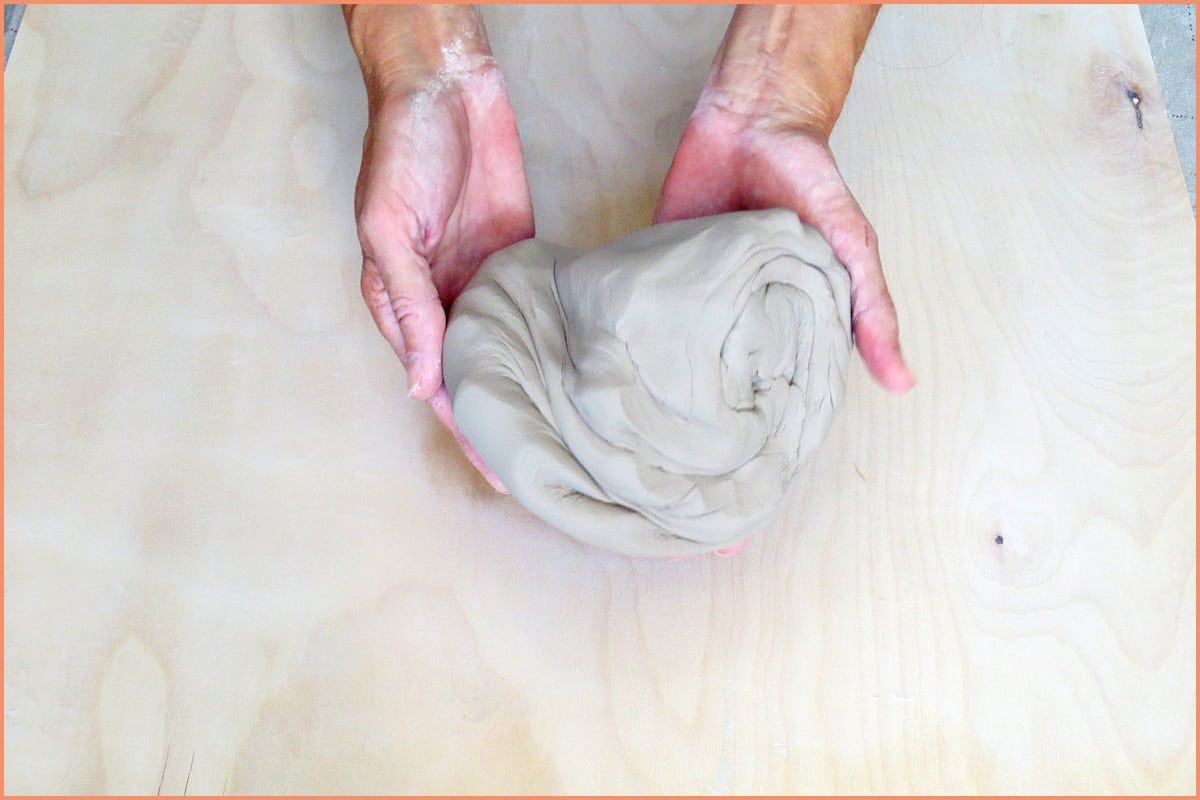
You should wedge at least 20 times when it’s fresh out of the bag. If it’s been recycled, you will need to wedge 100 times or more, depending on the condition of your clay.
Take 3 pounds (1.4 kg) of clay and mix half with Evergreen Mason Stain. See how many Spiral wedges it takes to blend the two colors.
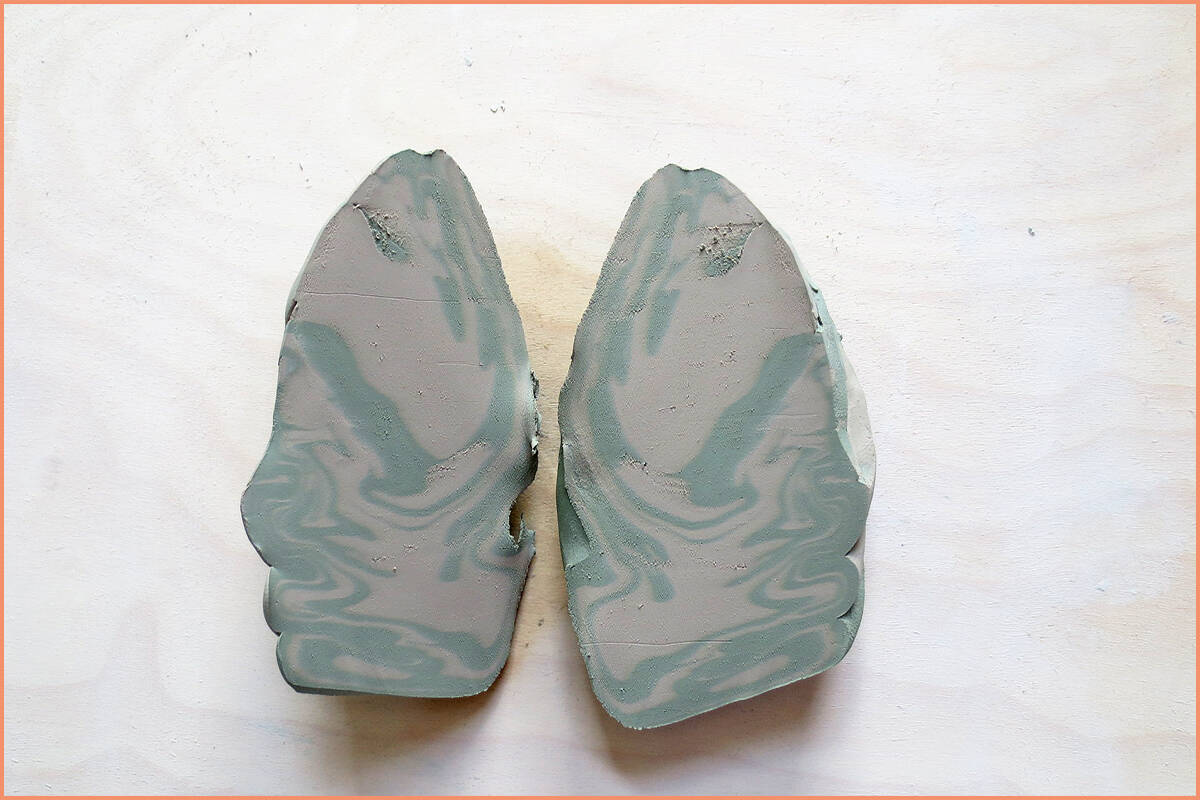
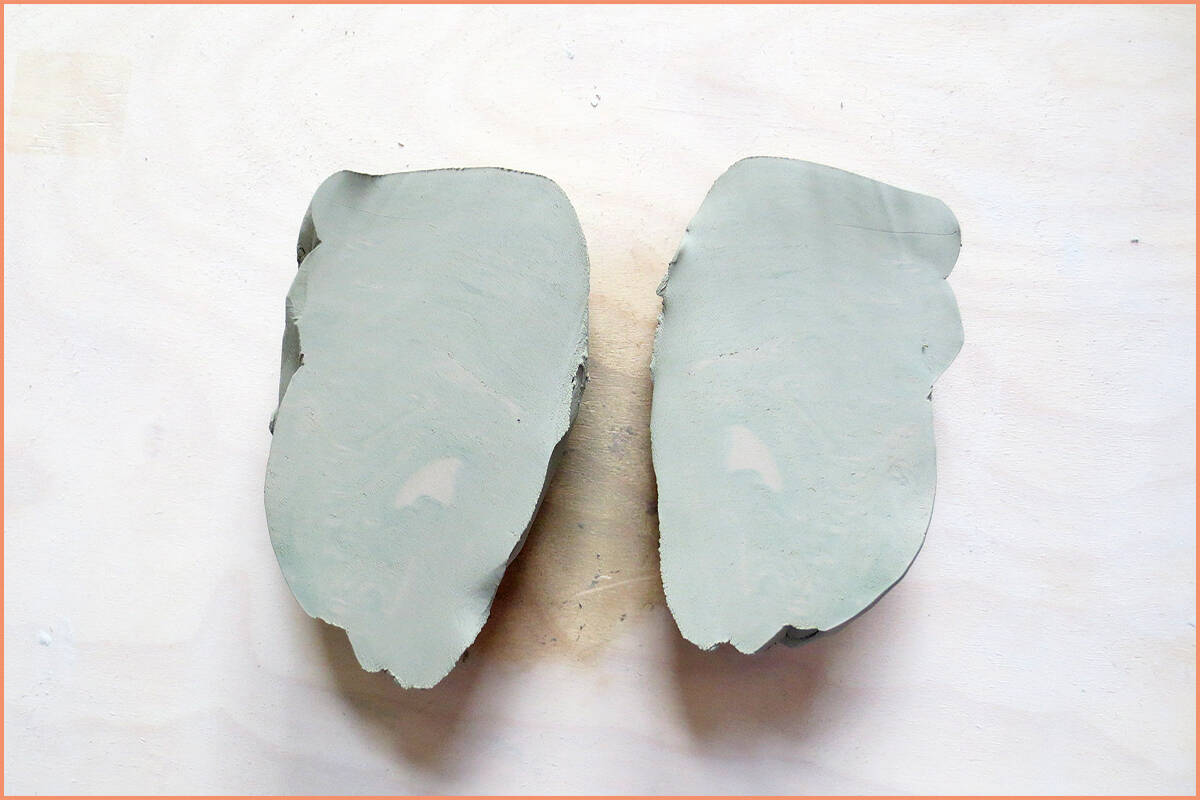
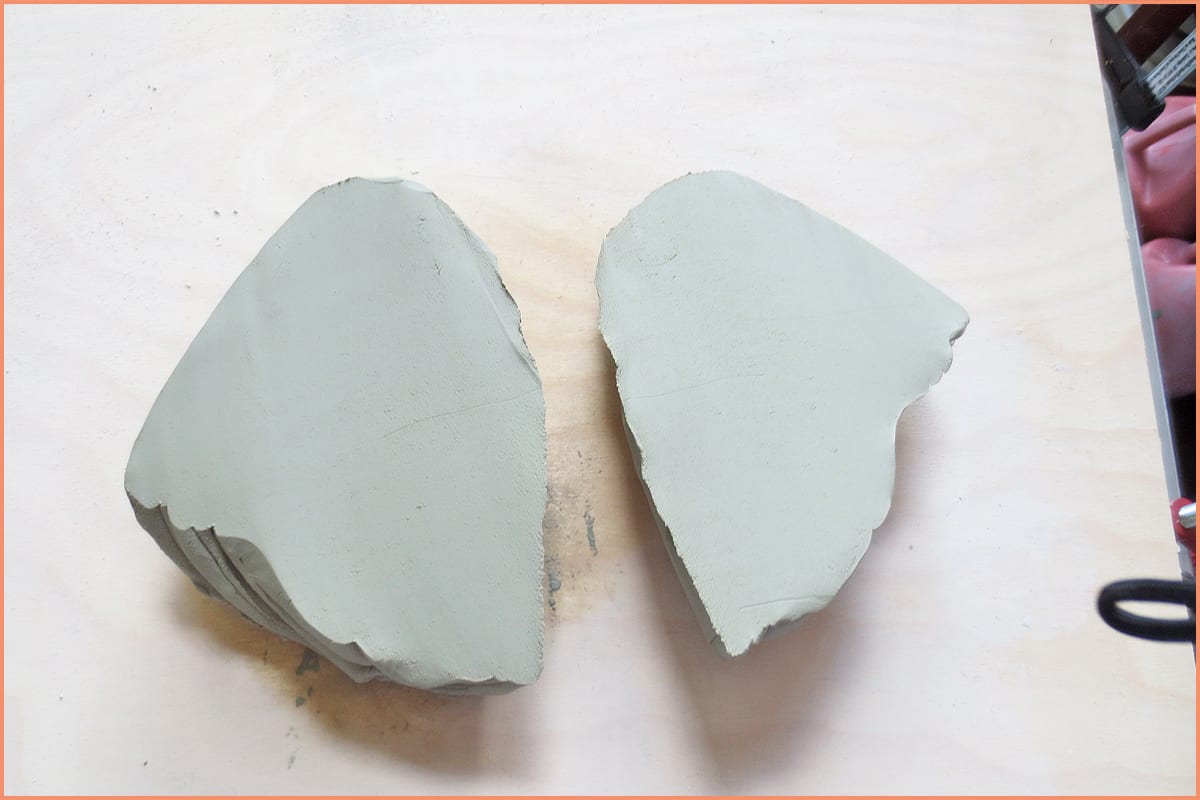
The Spiral Wedge took a little less than 4 minutes and only 100 wedges to blend the two colors together. The Spiral Wedge blended nicely in a short amount of time.
3) The Stack and Slam
This method is one of the easiest and also great at compressing clay, which in turn helps to prevent cracking.
- Start with your clay in a rectangular shape. Take your wire and cut your clay in half.
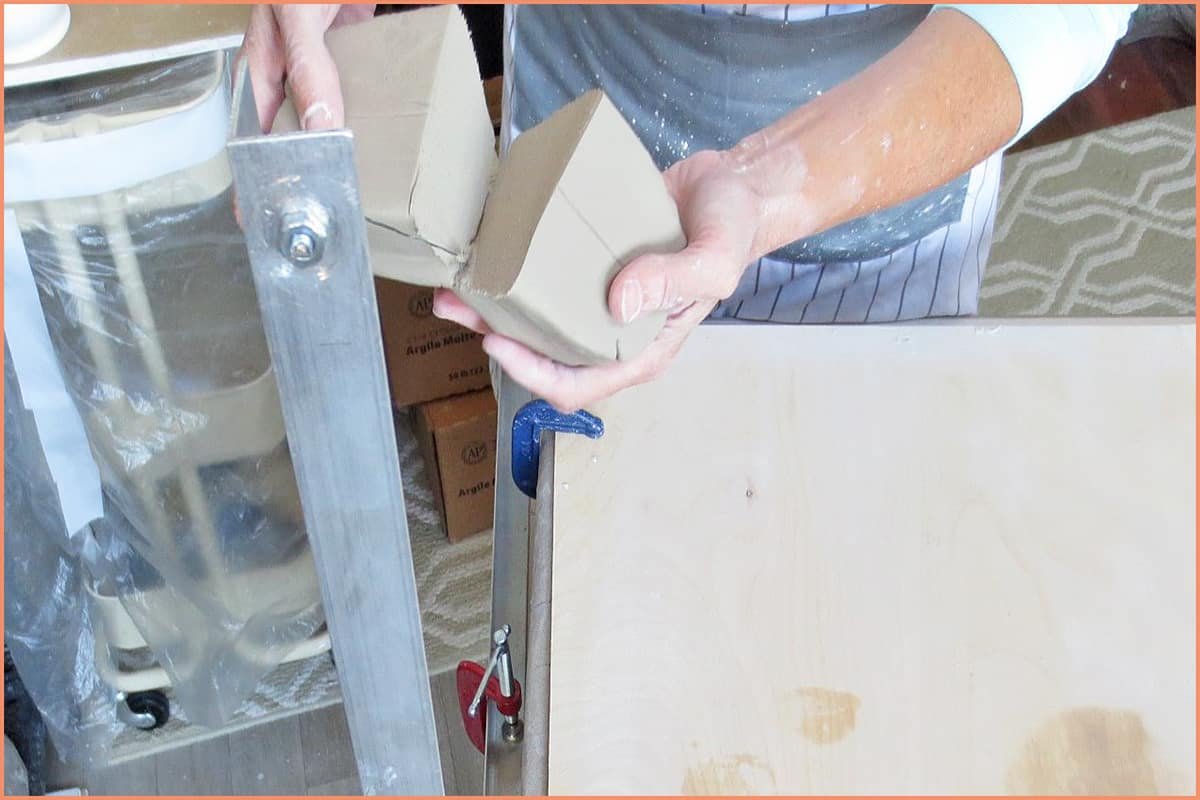
- Stack the clay on top of one another, like you are folding it over.
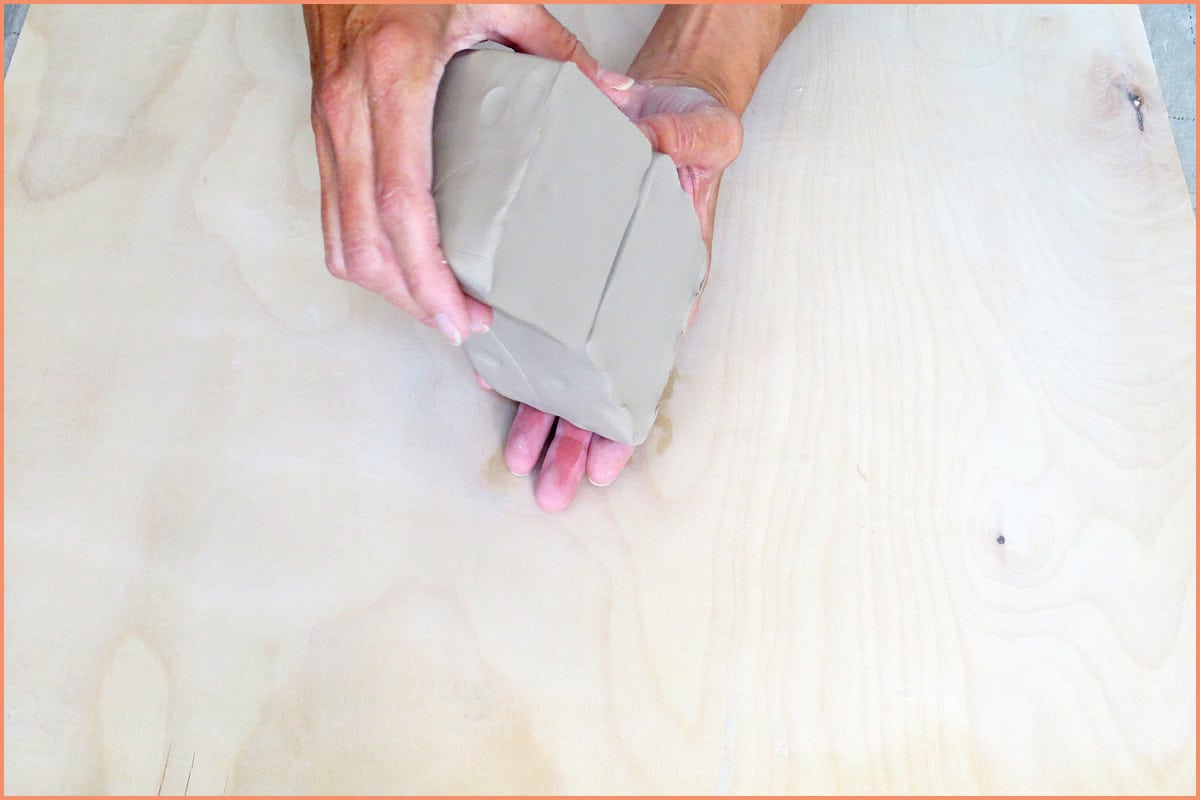
- It’s important not to dig your fingers in the clay. Doing this will create air bubbles
- Slap the clay down on the wedging board.
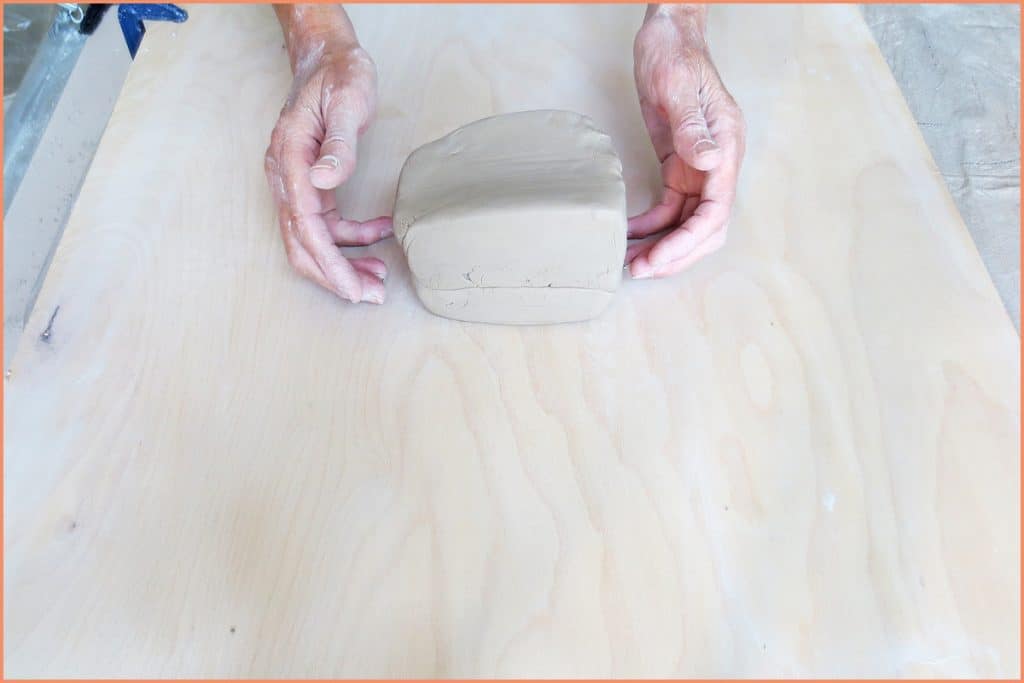
- Continue rotating the clay into a rectangular shape and slap it down 5 to 7 times to compress it.
You will want to cut the clay in half at least 10 times and 25 times or more if it’s recycled clay.
When you’re done slamming your clay around, it will be in a rectangular shape. You will want to slap the corners down to form it into a ball, so the moisture content stays even throughout the clay. Then you can start playing with your clay.
With the Stack and Slams method, see how many slices it is going to take to bend the 3 pounds (1.4 kg) of clay together.
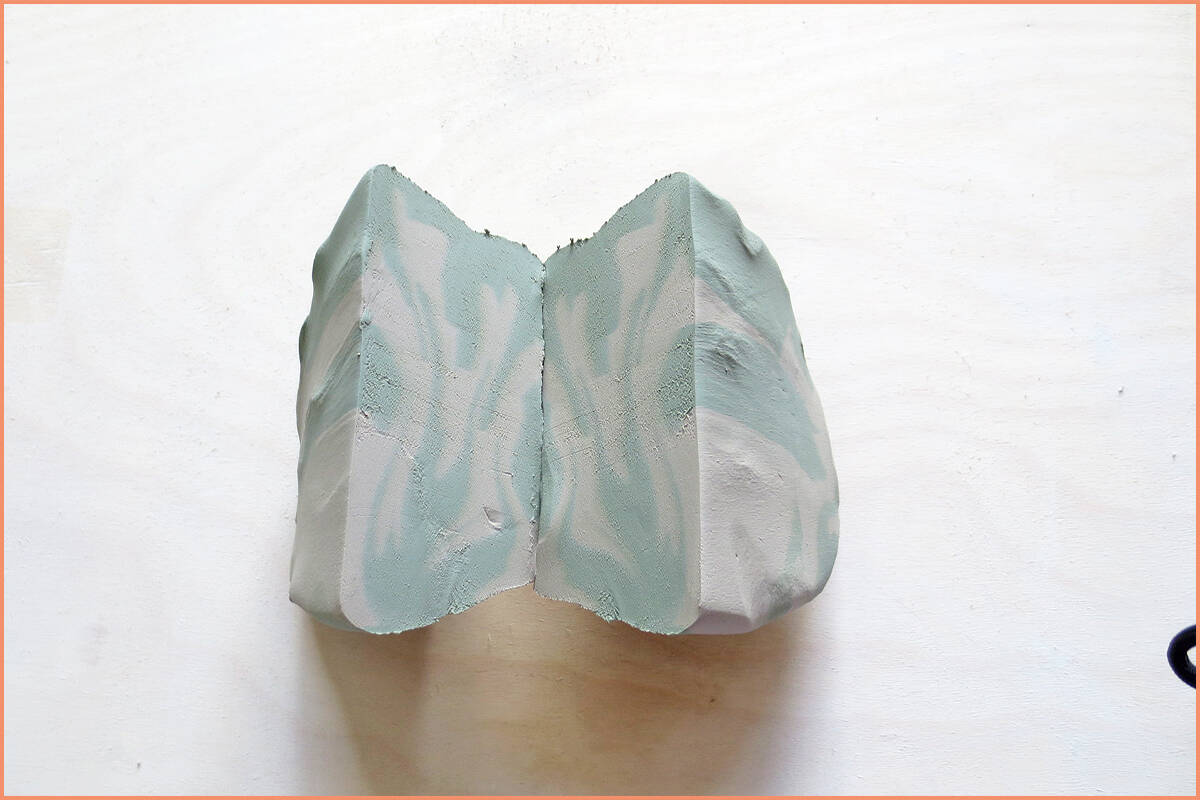
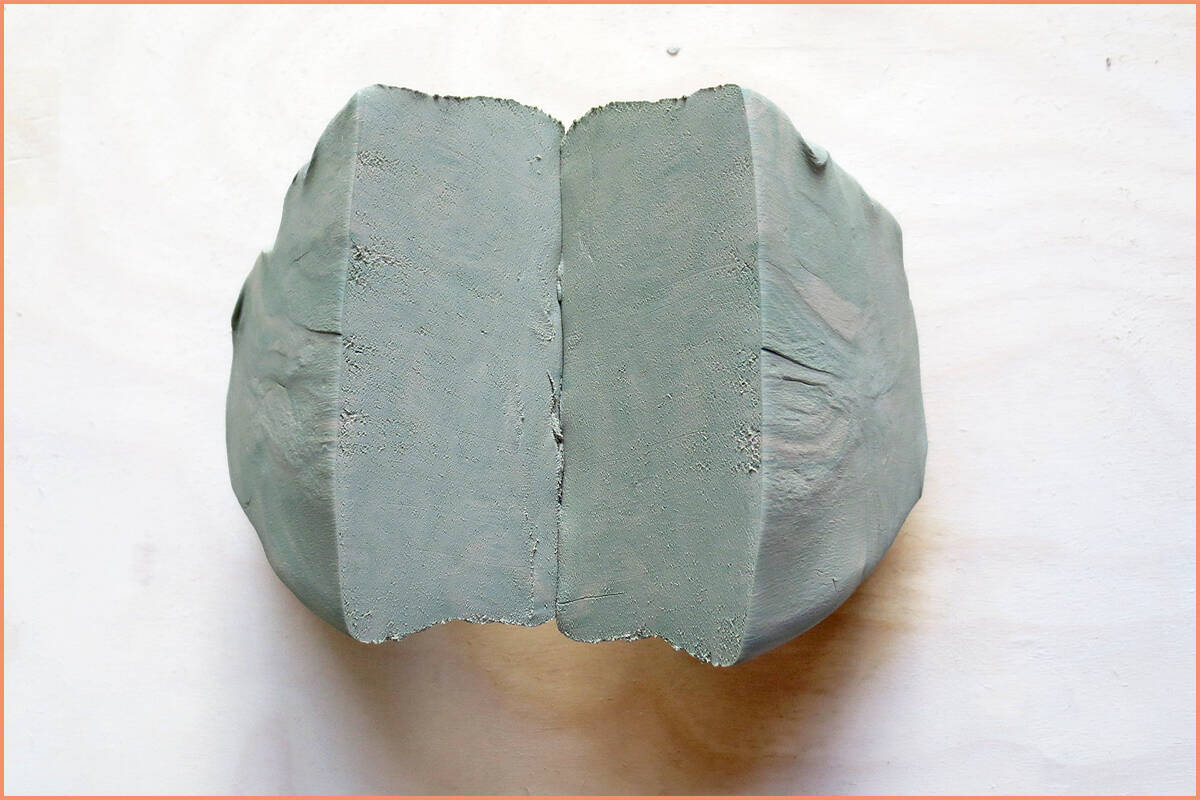
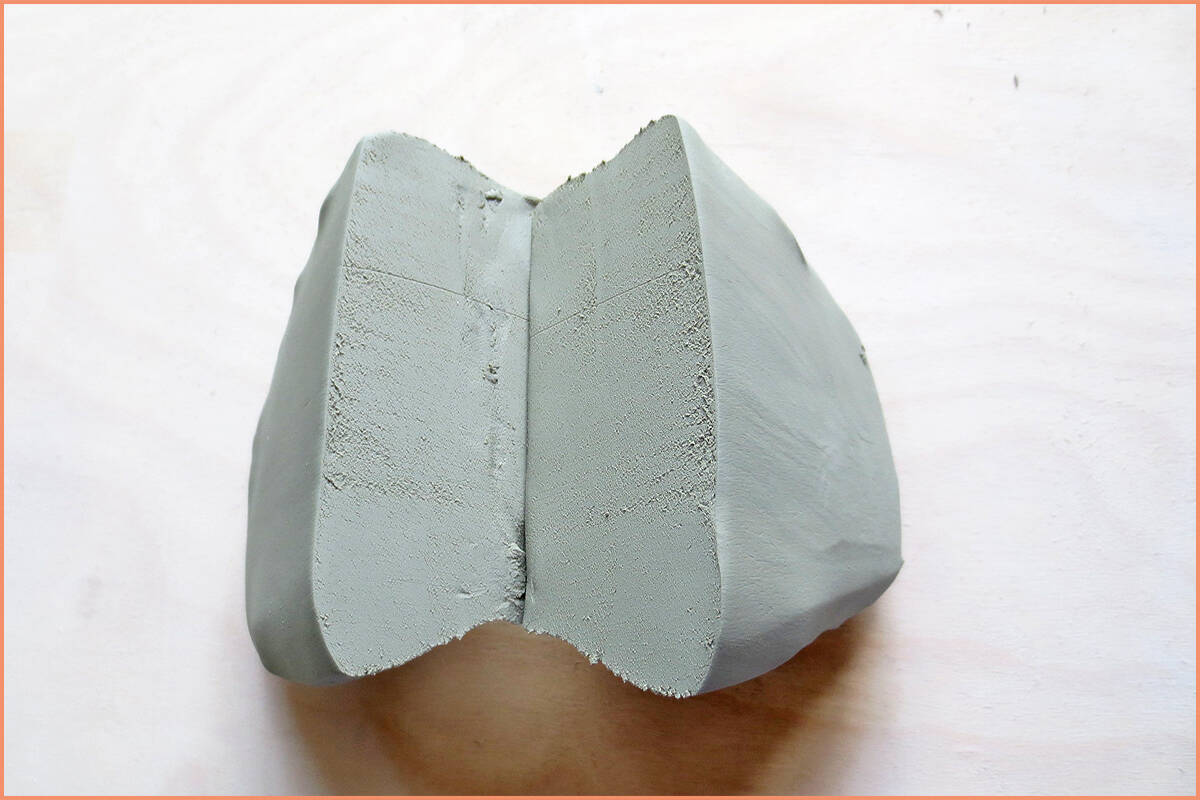
The two colors blended beautifully together with the Stack and Slam taking only a little over 6 minutes, 25 slices, and around 140 slams. This technique is great for anyone with wrist issues. It is by far the simplest method of wedging.
4) Wheel Wedging
Also called Coning or Towering, is wedging on the pottery wheel.
- Throw your clay in the middle of the wheel
- With both your hands, bring the clay up to a tall tower shape.
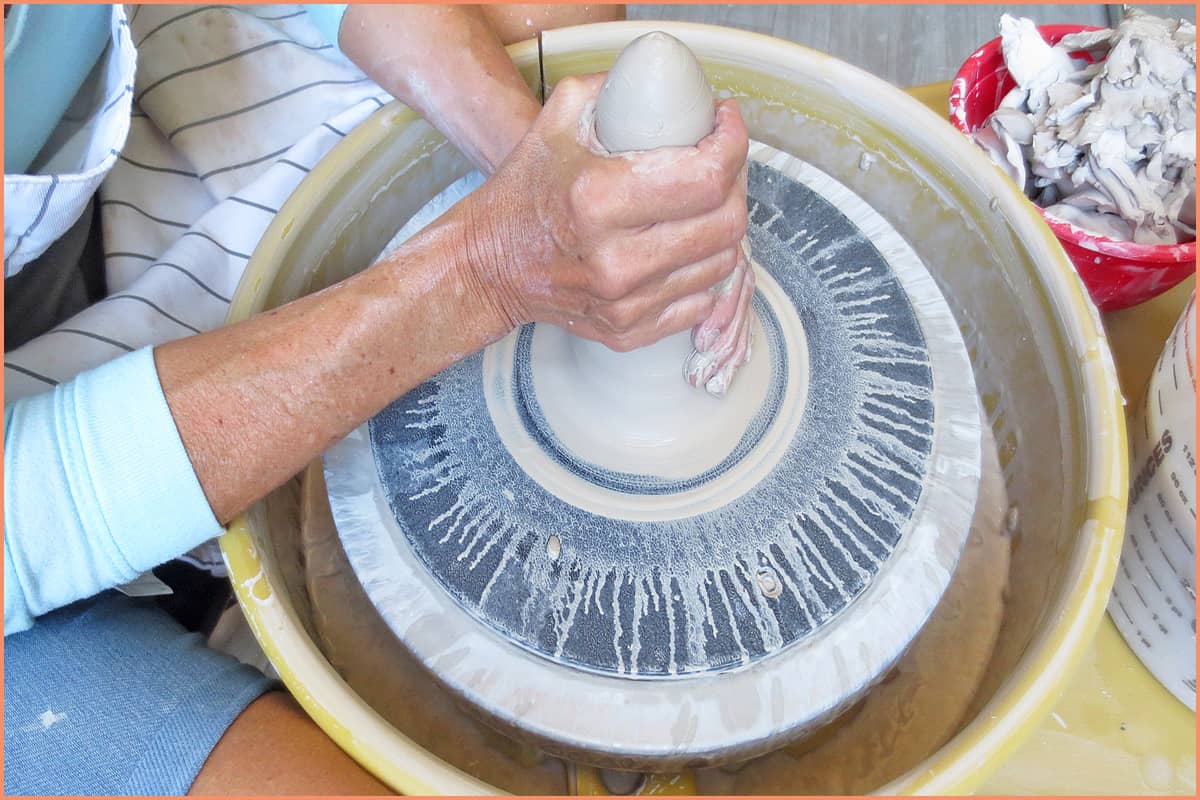
- Place your anchor hand on the side of the clay, and use the other hand to push the top of the tower down at an angle, away from you.
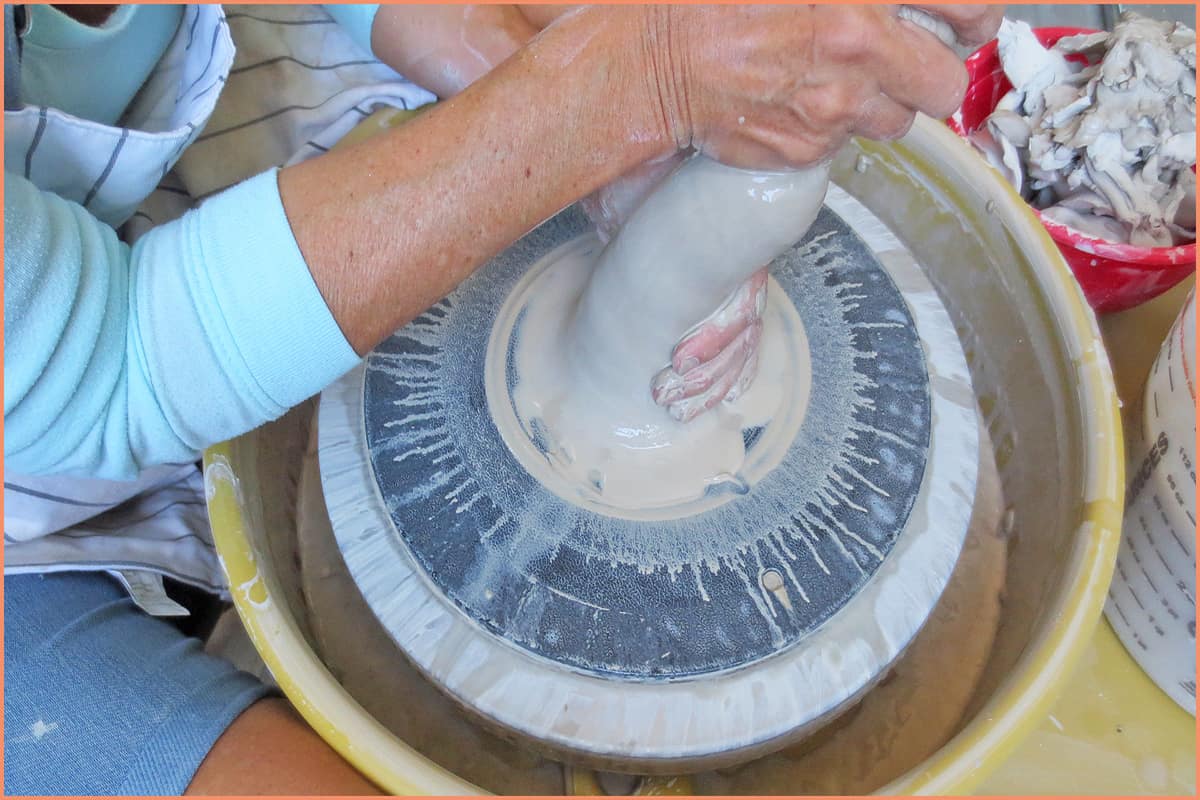
- Continue to push the clay down.
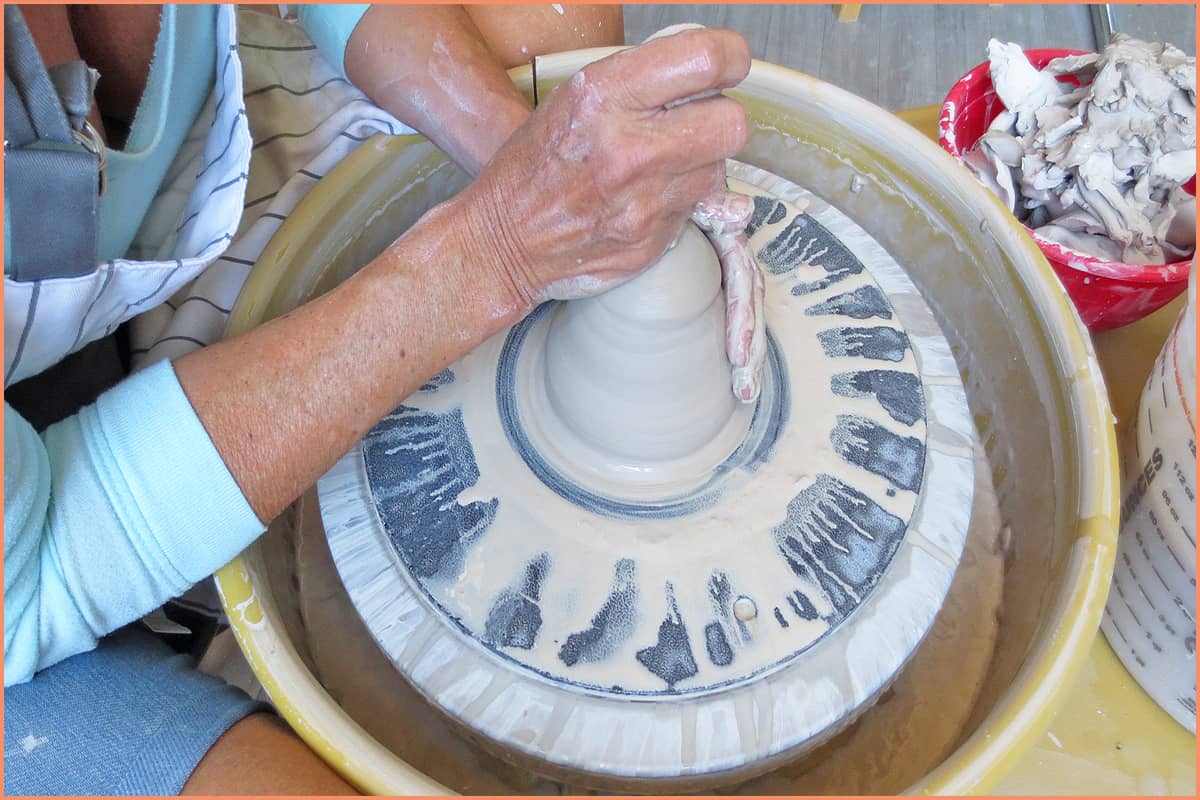
- Forming the clay into a beehive shape.
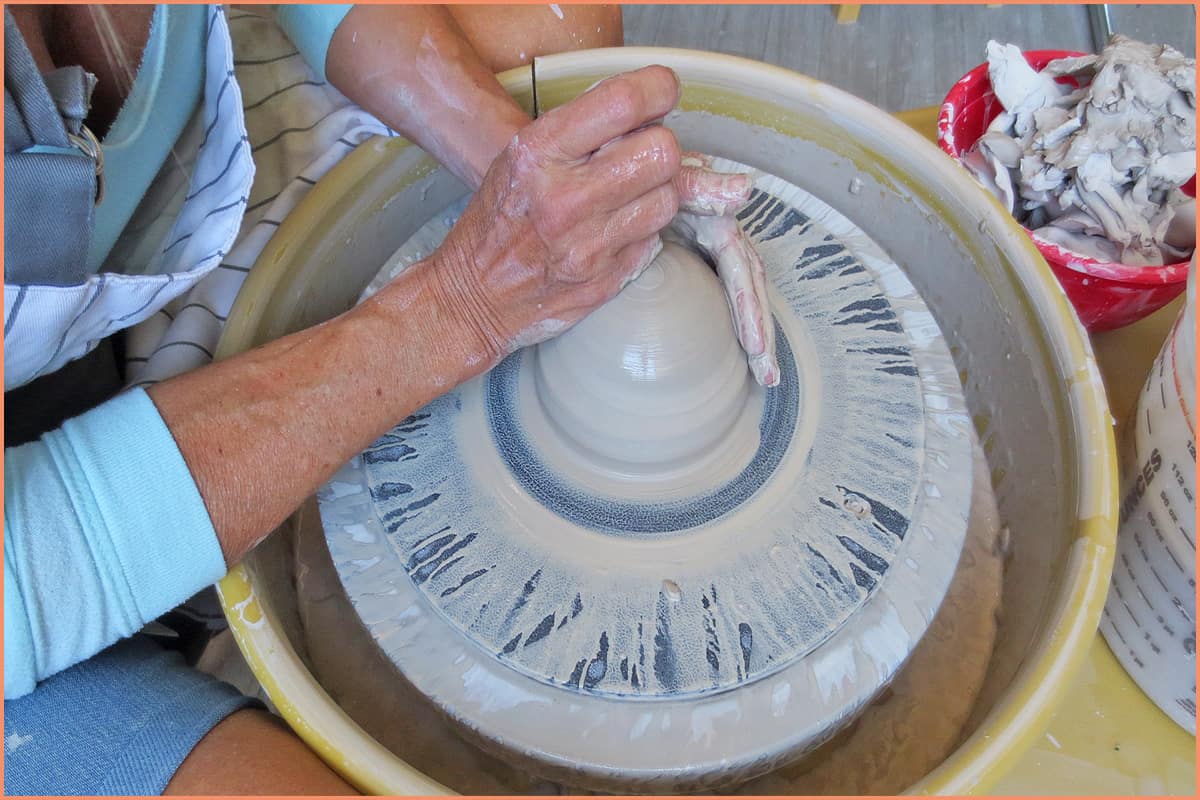
- Do this about three times to five times.
- You don’t want to wedge your clay too many times because you’re using water with this technique. If you introduce too much water into the clay, it can soften it, making it mushy and impossible to make anything.
Using 3 pounds (1.4 kg) of clay to blend these two colors together with the Wheel Wedge.
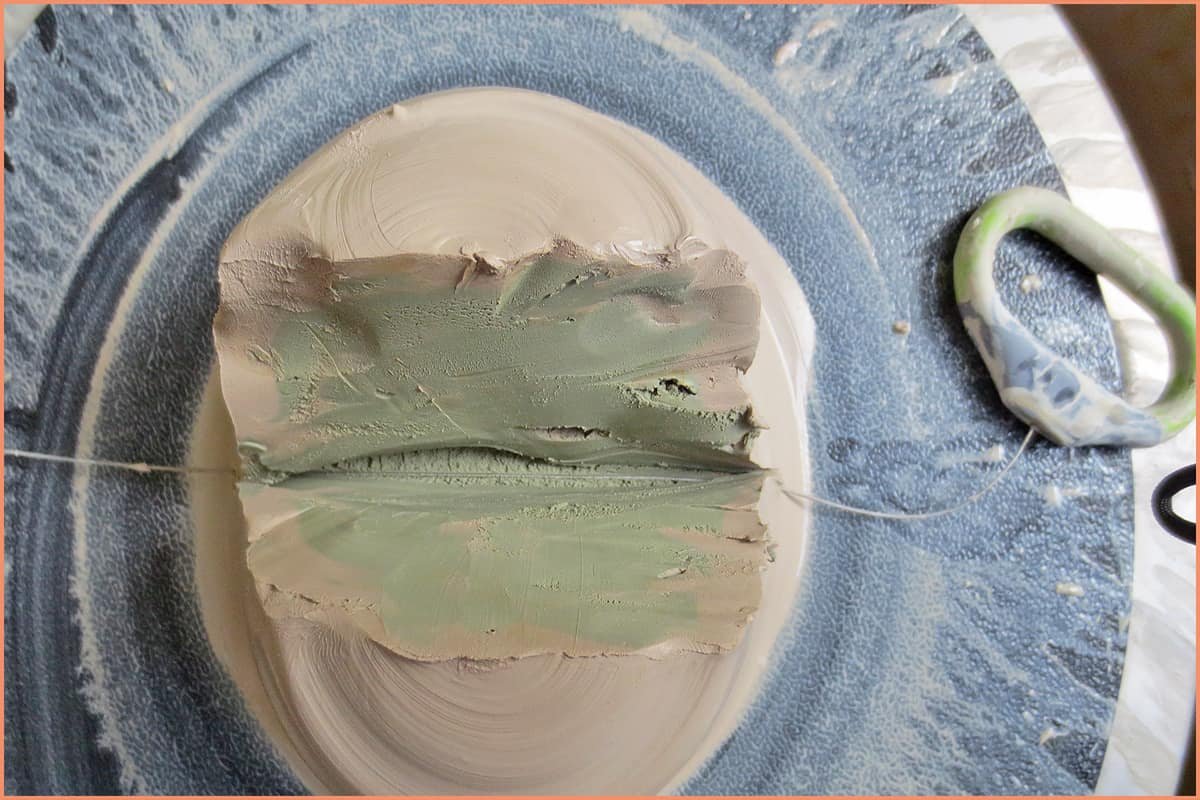
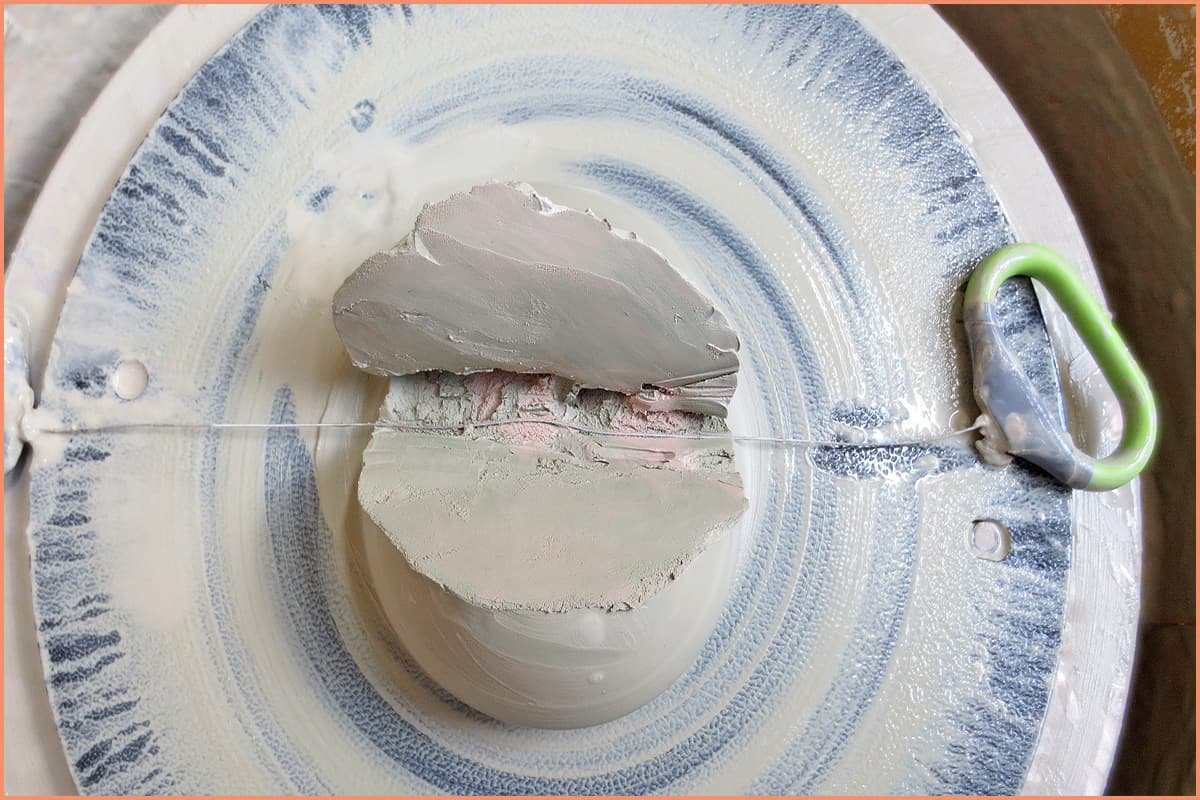
Wheel Wedging took only a few minutes and 4 times, working up the clay to blend pretty well.
5) A Pug Mill
Having a Pugmill is a wonderful alternative to hand wedging, but this luxury comes at a price. A good Pugmill costs anywhere from 3,000 to 6,000 US Dollars, depending on its size and bells and whistles.
If you’re not familiar with a Pugmill, it’s a machine with a horizontal chamber that loads from the top. The chamber is a metal cylinder with an auger inside. An auger looks like a large screw. It turns and wedges the clay, discharging the wedged clay at the other end.
When I used a pugmill in class, I liked it. You do have to be careful not to add too much or too little water. Because I recycle clay a lot, I will keep an eye out for one in the future. I love the convenience of it.
Pugmills do have to be cleaned often, especially if you use different clay bodies, but it’s still worth it.
Why Is It So Necessary To Wedge Your Clay
Smooths Out Lumpy Clay:
Well-wedged clay will remove any large or small lumps that may be lurking in your clay and make it more malleable (workable).
Makes the Clay More Plastic:
Plastic is the clay’s flexibility. Wedging helps the clay particles or platelets align with each other, making the clay easier to mold.
Makes the Clay Homogeneous:
This term, used in pottery, means giving your clay an even moisture content throughout. Maintaining consistent moisture in your clay is important for reducing the risk of your pottery cracking because your piece will dry more evenly.
Removes the Air Bubbles:
Air bubbles have to be one of the most irritating things to find in your clay when you’re trying to center or throw on the wheel. The bigger the air bubbles, the more difficult it becomes. Wedging most certainly helps to get rid of them.
You may have heard that air bubbles will cause your piece to explode. The air bubble itself does not do that. It’s the moisture trapped in the air bubble that causes it to explode. For more information on drying your pottery, check out my post on How Long Pottery Should Dry Before Firing.
Conclusion
The Ram’s head and the spiral wedges both wedge the clay in a similar way, mixing it in a swirling motion. The Ram’s Head Wedge is more popular because it is easier to learn. With a little more practice, the Spiral Wedge gets easier.
Wheel Wedging is convenient and easy to use, and Stack and Slam is by far the easiest method.
Now that you have some basics on how to wedge, head on over to this article that will help you with learning How To Fix Problems with Centering Clay. With a little help and a lot of practice, Centering and Wedging will become second nature.
If you are just starting out with your new hobby or are considering a career in pottery, I highly recommend taking some pottery classes. You will speed up your learning process immensely. I explain in this article exactly why it’s important for Every New Potter to Take a Pottery Class.
Watch The Step by Step YouTube Video below

Remember, My Motto Is “Progress over Perfection.”
Keep making that Beautiful Pottery