
7 Common Pottery Wheel Issues
When you drop between $400 to $2,000 on a pottery wheel, you hope that it lasts forever. Unfortunately, the Electric Pottery Wheel only lasts 10 to 15 years if not properly maintained. Understanding some common problems that can crop up during this time can help you address them. This troubleshooting guide outlines the seven most common problems potters encounter with their wheels and how to fix them.
Affiliate Disclaimer: We are ambassadors or affiliates for many of the brands we reference on the website. As an Amazon Associate, I earn from qualifying purchases.
#1: Foot Pedal Speed Problem
Whenever you use the wheel to increase or decrease the speed, you notice it feels slower than it should. Or your wheel doesn’t stop spinning. You push the foot pedal all the way back, and your Wheel keeps slowly moving.
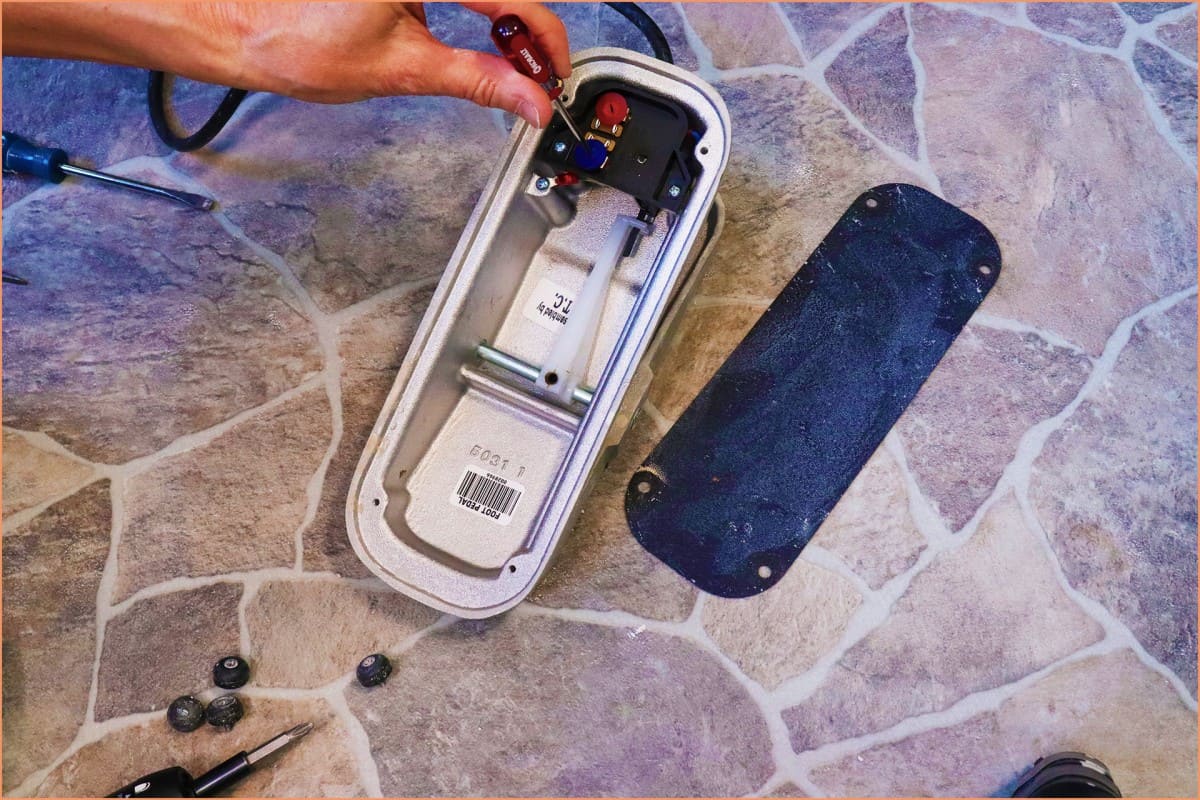
Solution: You have a plate at the bottom of the foot pedal—four screws inside the pedal with two adjustment screws. The one screw controls the top-speed adjustment, and the other positions the pedal when the wheel comes to a stop. Some models only have one screw to adjust the speed. You can play around with it to see if that corrects the problem. If that doesn’t work, it could be an issue with a computer module. You can get this repaired for around $100.
#2: Blown Fuse in Pottery Wheel
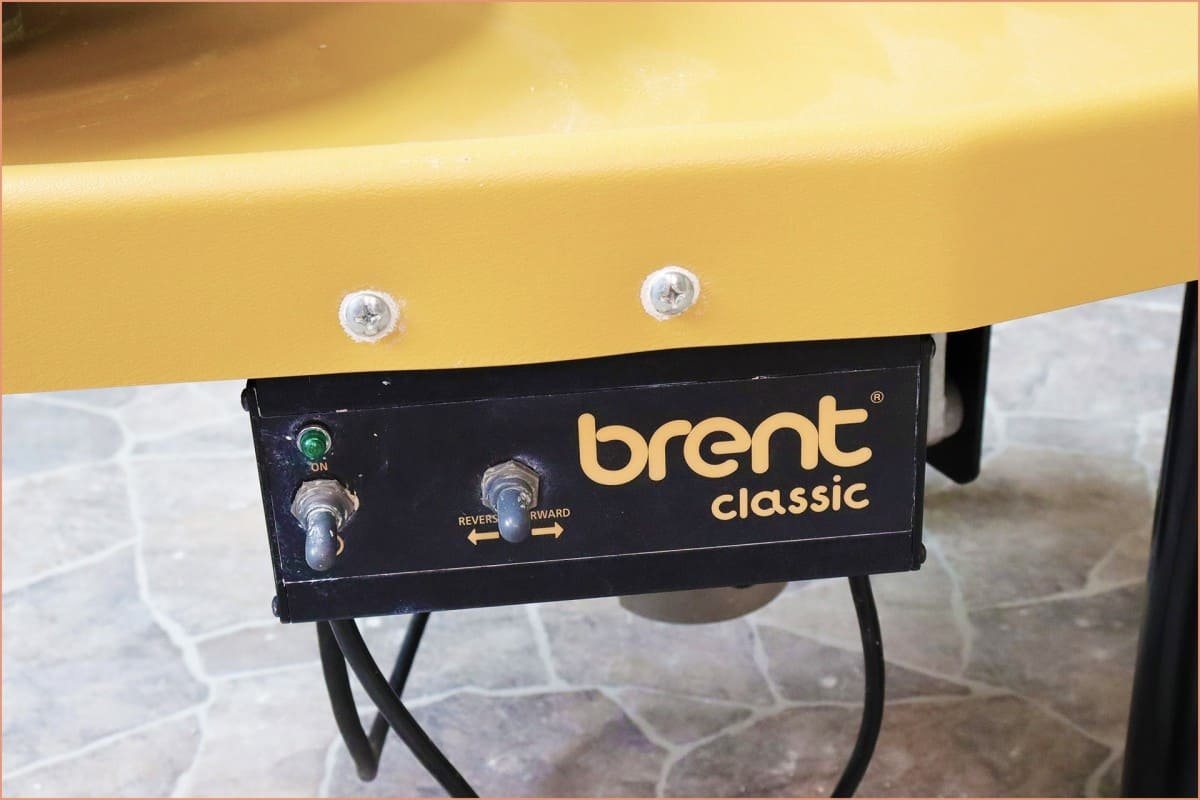
You plugged in the pottery wheel directly to the wall when you heard a pop. Unfortunately, this can happen from time to time when owning a pottery wheel. Dealing with a blown fuse is no fun at all, but it may not be the fuse in some cases. Here’s how to check if the pottery wheel has no power at all: you blew a fuse. If you heard a popping sound, it could mean that you fried the connectors. The popping noise could also indicate a failed capacitor on the controller board.
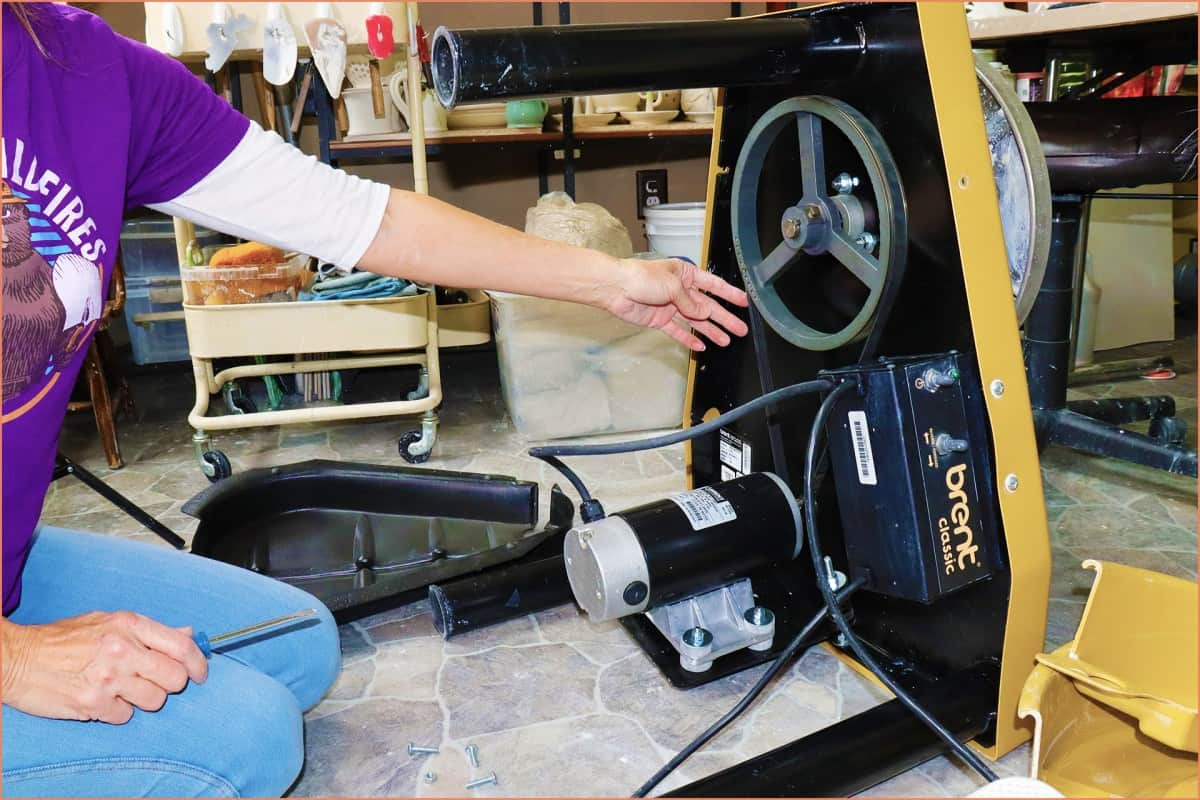
Some wheel brands are easier to diagnose a problem with than others. Brent wheels, for example, can be difficult to diagnose when you have a problem.
Solution: Amaco advises that you buy the “Slow blow” fuses. Slow-blow means the fuse can handle the initial power surges needed to start the wheel rotating. They protect you from slow and sustained electrical overload.
Fuses don’t cost much, and you can replace them easily enough, too.
Expert Tip: Always unplug your pottery wheel after each session to limit its exposure to power surges. You can plug it into a power surge protector, but this doesn’t guarantee protection.
#3: Clogged Sink
This problem doesn’t directly involve the pottery wheel, but it does involve what comes off the pottery wheel Clay. After you work with clay, you might consider letting it drain in the sink. Eventually, this will lead to a clogged sink and a $150 or more bill from the plumber. What can you do to prevent your sink from clogging?
Solution: Get a Sink Trap System. A sink trap system of any kind will prevent the clay from going through your pipes.
#4: Rusting Pottery Wheel
Pottery wheels and some pottery wheel heads can rust over time if not properly cared for. Many people like the aesthetic appeal of a pottery wheel, and a wheel left to rust will corrode with time. The most common reasons pottery wheels rust include:
- Uncleaned wheel
- Pitting
- Use of acid-based cleaners
- Poor cleaning technique
Previously, I wrote about this in the article, “Do Pottery Wheels Rust?” Pitting is the most aggressive form of corrosion on a wheel head, and if you see it, you want to address it immediately. Waiting can lead to pitting, making your wheel unsalvageable.
Solution: Pinpoint the cause of rusting. This can help you address rust by stopping its cause. Unfortunately, many times, once pitting sets in, you can’t do anything about it. This usually happens when the top layer of the protective coating peels off. Galvanized steel, for example, means a protective coating has been applied to the steel to prevent rusting. If the layer peels off, the metal may start to rust.
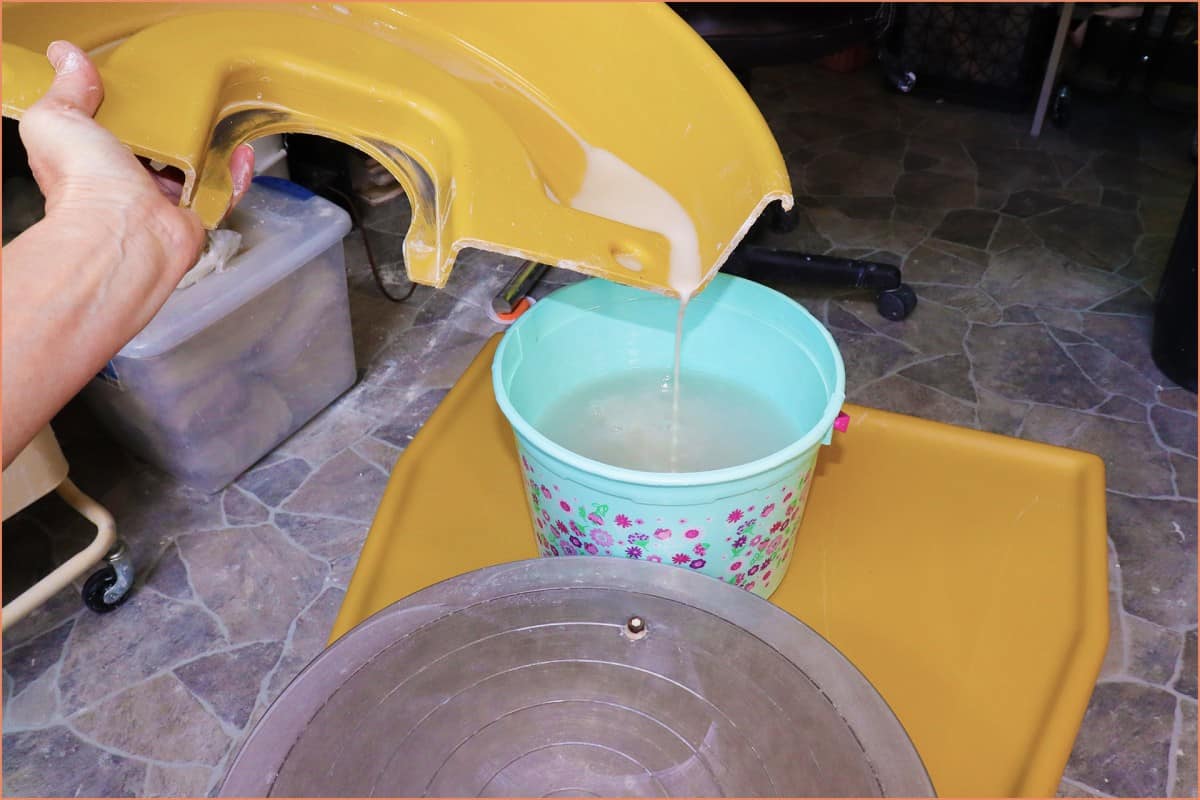
With the uncleaned pottery wheel issue and poor cleaning technique, you can easily solve this type of rusting. You should clean the wheel after each session. To properly clean the wheel, use water and a sponge to clean off the clay. If you’re going to use a cleanser, make sure it has the proper pH balance. Never use acid-based cleansers because the harsh chemicals can cause the wheel to rust prematurely.
#5: Pottery Wheel Mechanical Issues
Mechanical issues with your pottery wheel can happen. Especially with an electric wheel, the one downside is that this could crop up at some point. The best way to avoid mechanical issues is to properly maintain your pottery wheel. Clean it after each use and check all the belts and drive rings. Anything that looks worn out may need to be replaced. As you turn the wheel on, listen to it. Does it make unnatural sounds?
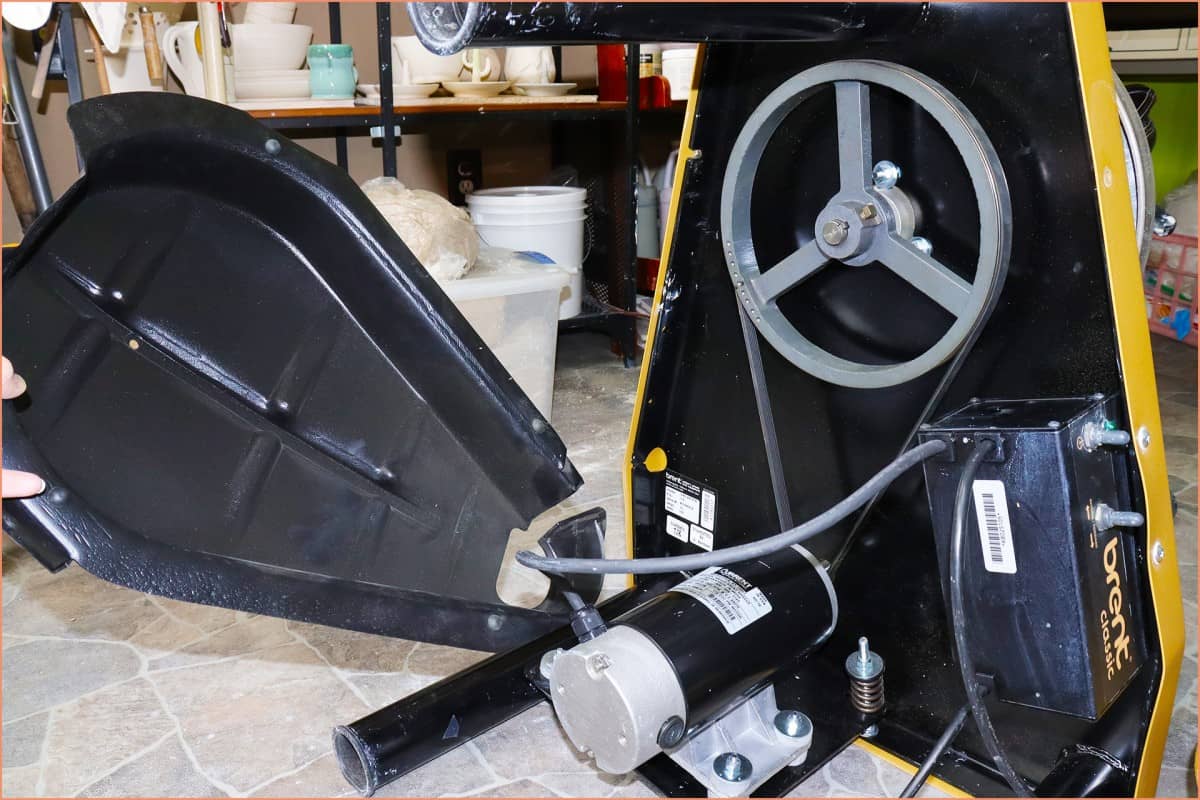
Solution: Unfortunately, working on an electric wheel with mechanical issues isn’t advisable unless you know how to do so. Unless you want to walk away looking like you were struck by lightning, you may want to have a professional repairman take a look. Even if you didn’t electrocute yourself, someone unskilled at this work could make the wheel worse. You might damage the wheel to the point where it can’t be fixed. When you pay $400 or more for a pottery wheel, that isn’t the road you want to take.
#6: Noisy Pottery Wheel
Unlike a kick wheel, many Electric Pottery Wheels do make some noise when you use them. When electric wheels first entered the market, many potters didn’t want to use them because of how much noise they made. The amount of noise the pottery wheel makes will depend on the model and brand used. Some will make more noise than others, which is natural. However, if you hear a thumping, knocking, or growling noise, it could indicate the wheel has issues.
Solution: The noise on a pottery wheel could come from a few things, which include:
- Bad belt on the wheel
- Bat pins loose on the wheel
- Loose bat pins from the bat pins
- Faulty bearings on the wheel
- Splash pan too far off-center
How you address the problem depends on the issue. For example, if you have a worn wheel belt, you should replace it.
With loose bat pins on the wheel, you want to tighten the wing nuts.
You can simply replace loose bats. They don’t cost that much to replace.
It may cost you around $75 to replace a Wheel head’s bearings, but the cost depends on the brand. First, check the underside of the wheel head. Caked-on clay can sound like bad bearings.
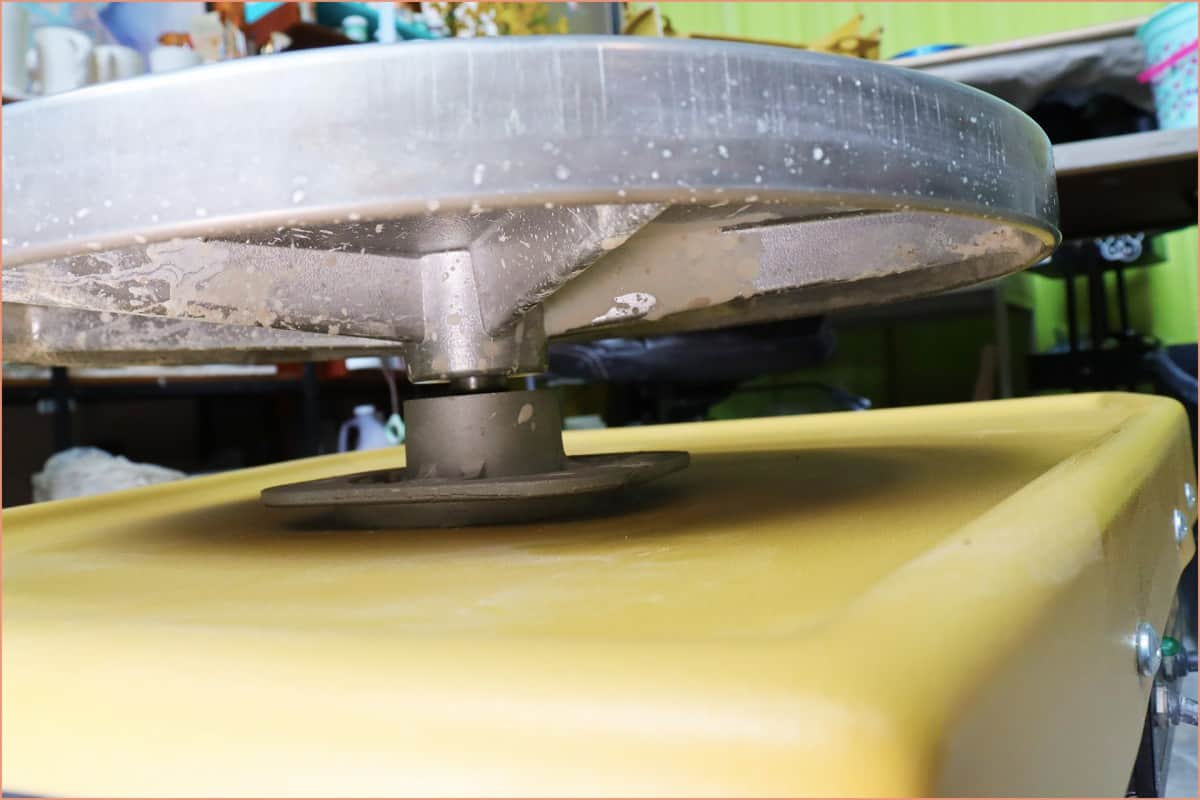
If the splash pan is causing the knocking noise on the wheel, you have to move it closer to the center.
#7: Pottery Wheel Won’t Turn On
Perhaps you have a wheel that won’t turn on, or it doesn’t seem to run properly. The issue could stem from several factors, so you should first pinpoint the cause. It could depend on the brand of the pottery wheel, too. Maybe you stored the wheel somewhere, and it worked before, but it doesn’t work now. What could be the problem?
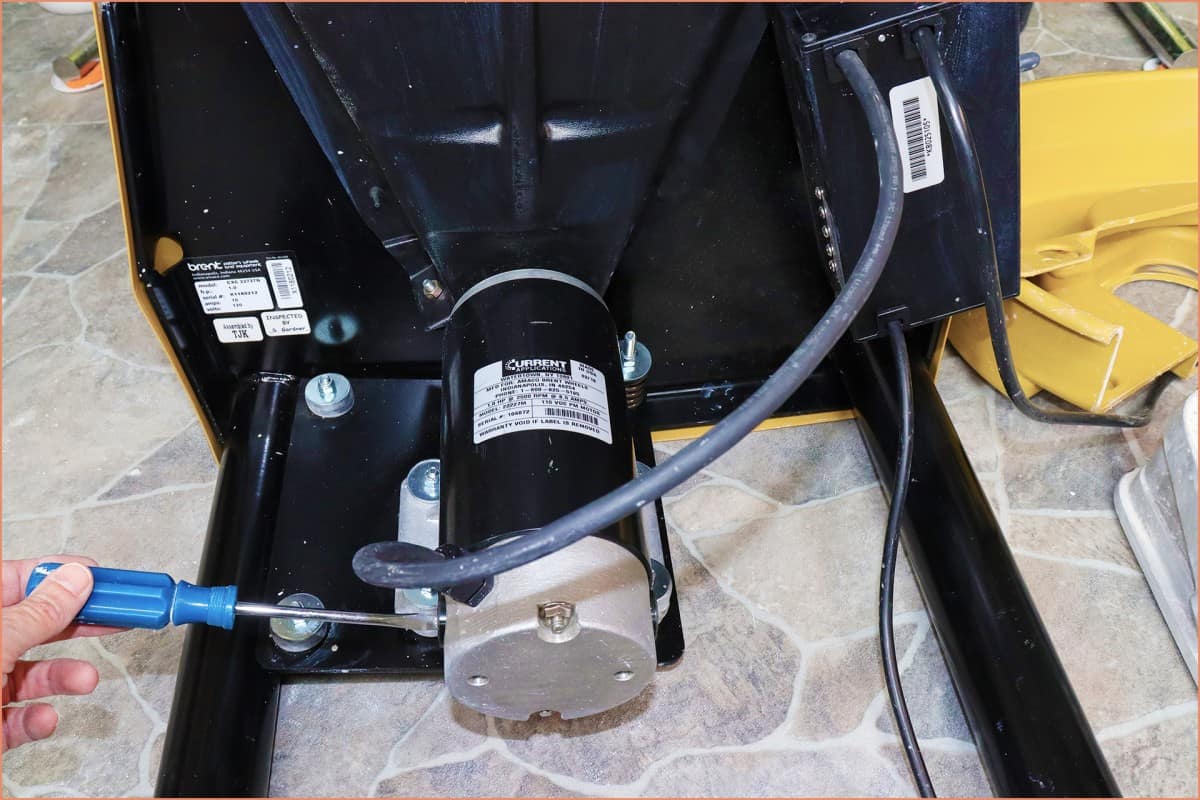
Solution: First, think of the age of your pottery wheel. Most Electric Pottery Wheels last anywhere from 10 to 15 years. After that, you may have to buy replacement parts.
If not the age, it could be the wheel being jammed. First, check the instruction manual, as it may have a specific way to handle wheel jams. With Skutt Wheels, they advise twisting the wheel head and pulling up to clear a jam. Over time, the wheel head might stick to the shaft, causing this problem.
Finally, you may have stored the wheel, and it worked before, but it doesn’t work anymore. First, you have to figure out why the wheel stopped working. Keep it in a dry and clean area away from water. Check the owner’s manual for troubleshooting. Most manuals are now online. You might call a repairman to see if it can be repaired if it doesn’t turn on.
Conclusion
Hopefully, this solves some of the problems that you might encounter at the Pottery Wheel. For the most part, pottery wheels are incredibly enduring. That’s a good thing considering they can cost $400 or more. Still, you can encounter issues at the wheel, and if you do, you want to know how to address them. If you have a problem, you can also call the manufacturer. This can provide detailed information about the specific brand.