

Wax Resist Tips | Protect – Decorate – Design
Wax resist is a substance that keeps underglazes and glazes from seeping into the pores of the clay and adhering to the pottery. They are very common among potters and are very easy to use. You can create great-looking pottery after using wax resist.
So, how can you use wax resist during glazing? The basic purpose of wax-resist is to repel underglazes and glazes. Keeping this in mind, you can use wax resist in multiple creative ways to make glazing more fun!
You can, of course, apply wax to areas you don’t want the glaze to drip down to, like the bottom of your pottery. You can also use wax to create designs and patterns on the pottery, let it dry, and then apply the glaze. You can then wipe off the glaze and reveal a gorgeous pattern. You can create designs using wax between dried glaze layers. You can apply wax over an Underglaze layer, chip away a pattern, then layer with a different-colored, textured glaze (Mishima with wax resist).
Let’s take a look at some popular techniques of using wax resists in glazing!
Affiliate Disclaimer: We are ambassadors or affiliates for many of the brands we reference on the website. As an Amazon Associate, I earn from qualifying purchases.
Wax Resist Techniques
Protect the Bottom of Pottery
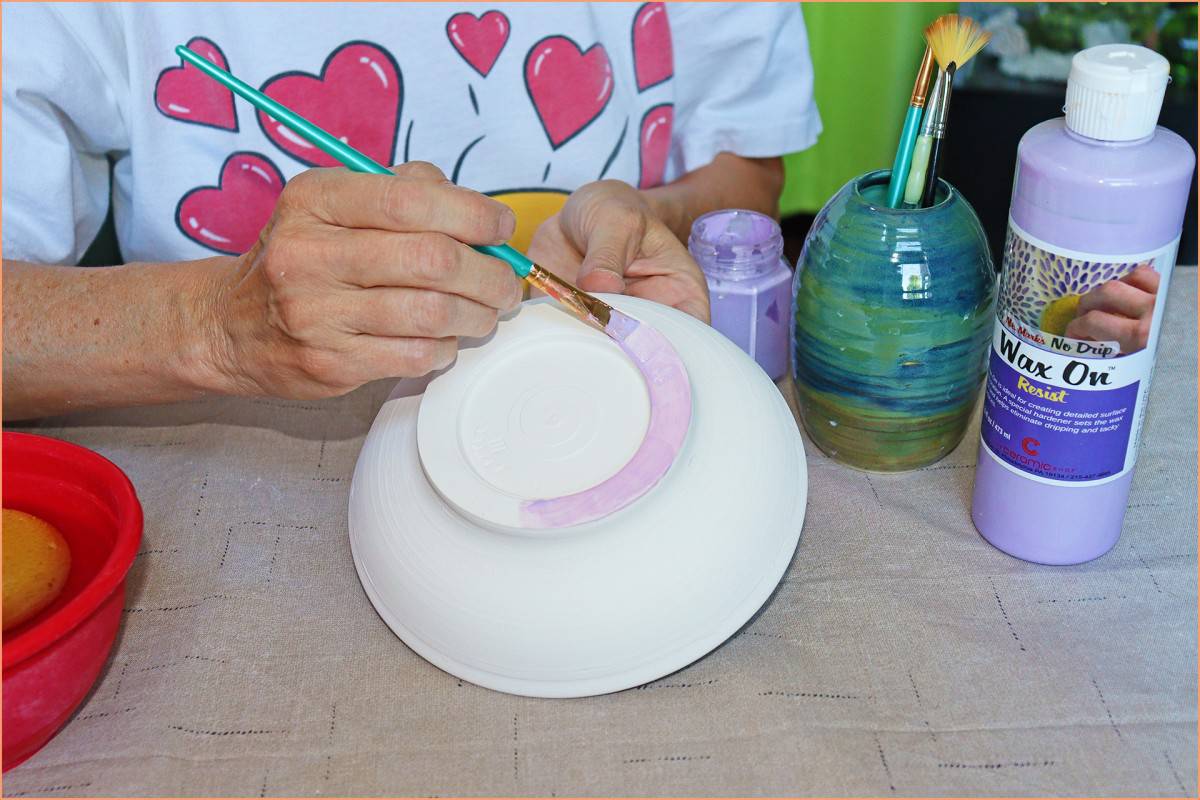
The most popular use of wax resists and emulsions in pottery is to protect the bottom of vases, cups, pots, etc., from coloring liquids. Wax resist keeps liquids like Underglazes and Glazes from adhering to the clay.
This is the most practical use of Wax Resists and is common in industries. Thanks to wax resist, you don’t have to struggle to wipe the glaze off the bottom of pottery; it wipes off cleanly and easily.
Besides the dirty, unfinished look that dripped glaze can give, it will also cause the pottery to stick to the kiln shelf during the firing process. Even if you wash the bottom part of a pot after the glaze has dried, it might still weld itself to the shelf. You can read more about Protecting Your Kiln Shelf From Melting Glaze.
For these reasons, most experienced potters apply a layer of wax resist on the bottom of their pottery before glazing. If you do this (we highly recommend it), don’t rush through the process. Hasty work always results in bad finishing. Make sure to get it done as neatly as possible to protect the pottery, your artwork, and the kiln. I skipped the wax resist and found myself spending more time trying to get the glaze off the bottom, but it still left colored strikes on the bottom. The Wax Resist kept the bottom clean.
If you’re a beginner, follow these steps to apply wax to the bottom of your Pottery.
- Grab a spare brush. Some waxes can damage the brush (this varies by brand). Don’t use your favorite brush!
- Coat the bottom of the pottery properly. Make sure to get every spot. The direction of strokes doesn’t matter.
- For extra protection, you can apply wax about 1/8 inch up the side, beginning at the bottom. You could do a little more if the glaze is a flowing or floating glaze.
- After you’re done, let it dry thoroughly. If your coat is too thin, you can apply a second coat. But don’t forget, wax coats repel themselves. You could apply a coat before the other one is completely dry to get a thick coat.
- Once the coat has dried, apply Glaze, Underglaze, or Decorative wax.
- After Glazing, wipe all the glaze off the bottom. If the glaze dries on the wax, it will wipe right off.
- Fire the pottery. The Wax Resist will burn off in the kiln.
Tips:
- Buy commercial wax resists. They’re easier to use than the common melted wax.
- Commercial wax can be washed off sponges and brushes with soap and water, while melted wax is much more difficult to wash off.
- Clear your wax resist of air bubbles. They might pop and leave bare spots where unwanted glaze can adhere.
- Select a Wax Resist with color if possible. Colored Wax Resist is much easier to work with because you can see exactly where you applied it.
Decorate Clay Body
You can apply wax resist directly to the clay body to create a decorative effect. But before you do, make sure that your pottery piece is completely dry and free of dust.
Tips:
- To begin, sketch your idea on paper. There’s not much room for trial and error.
- If you’re new to pottery or not that good at drawing, try using a stencil instead of free drawing.
- You should wax resist only the areas you don’t want the glaze to adhere to. You can either make outlines and then apply the glaze or draw with wax and apply the glaze on the outlines.
- Wait for the wax to totally dry before glazing.
Design With Wax Resist

You can cover the pottery with tape, then apply Underglaze. Once it has dried, apply the wax resist layer as a barrier.

Now let it dry and remove the tape, then glaze your pottery. It will give a cool-looking effect. Sponge off any glaze on the wax resist, let it dry, and fire.

Tips on Working with Wax Resist Overglaze and Underglaze
Decorating with wax might get a little tricky for some. But remember, there’s nothing that you can’t do with practice, passion, and some very helpful tips!
- You only need to apply a single coat of wax. Waxes resist other coats themselves.
- Don’t wax unless you’re sure. Once wax touches the pottery, it will repel any Glaze or paint you try to apply.
- Always apply wax on dried Glaze or Underglaze. If you’re in a rush, put the pot in front of or under a fan. This quickens the process, and drying would take less than 2-3 hours.
- Similarly, if you want the wax to resist different coats of Glazes and Underglaze, dry it thoroughly first. Drying overnight is the best option, but you can also use the fan method.
- Be careful when choosing your Glaze. Unlike Underglazes, some Glazes like to run more than others. You will want a glaze that keeps your pattern noticeable.
- Liquid wax has a consistency much like cream or buttermilk. Thicker liquid wax takes much longer to dry and may retain moisture, making it useless as a repellent. Carving through thick wax can also be tricky.
- The consistency of liquid wax should be as thick as cream. You’ll have to experiment with a variety of brands and products until you find the right one.
- The wax resist can be applied with any brush. Make straight, wavy, horizontal, diagonal, vertical or circular strokes depending upon the design.
- To preserve your brush and keep it from hardening due to dried wax, wash it as soon as you’re finished. Use soap and hot water for washing.
Affiliate Disclaimer: We are ambassadors or affiliates for many of the brands we reference on the website. As an Amazon Associate, I earn from qualifying purchases.
AMACO Wax Resist
This wax resist is perfect for bisque ware and greenware. It protects bisque from all sorts of glazes and slips. This AMACO Wax Resist is also non-toxic.
Laguna Premium Wax Resist for Pottery
This is another non-toxic option with consistent brushing, strong repellency, and a quick drying time. But what makes this Ceramic Supply Wax resist stand out is the blue tint, so you know where you have applied it. The wax fires off in the kiln.
To Summarize
Wax resist can be used to create intricate patterns on pottery and give it a neat look. It is also an important part of protecting your pottery during the Glazing process. From decorating to protecting your pottery, having Wax resist is a must for your studio. After finding the wax resist that works best for you, get creative and protect your pottery, too.