
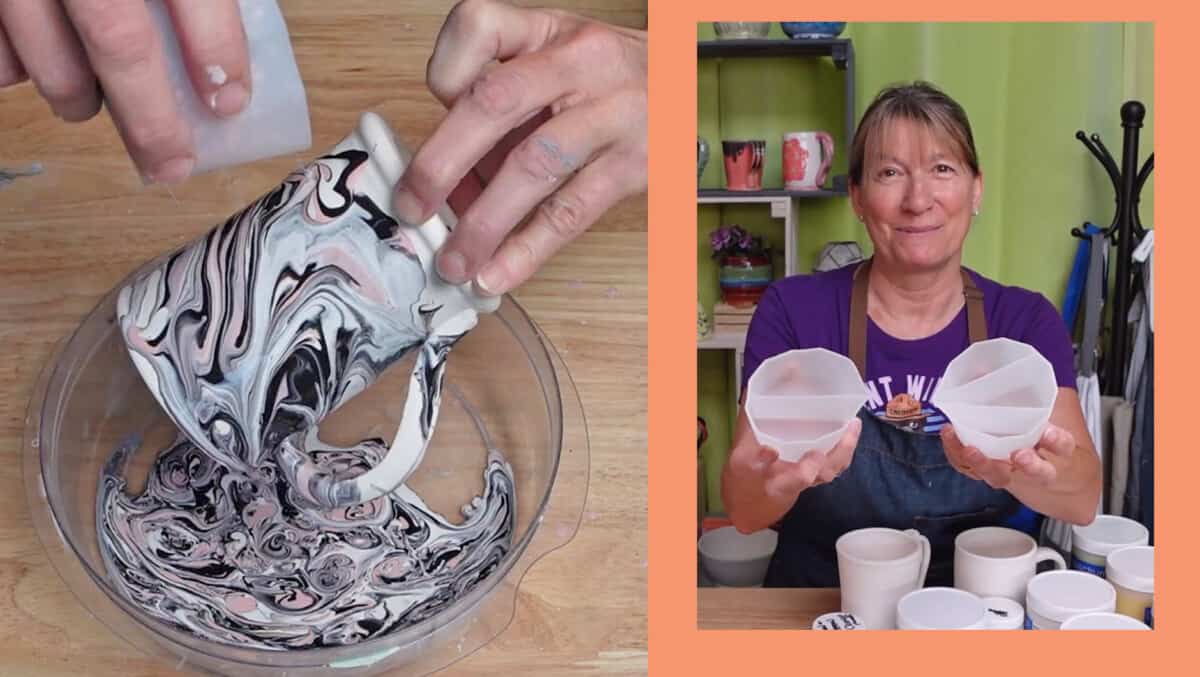
Underglazing with Split Cups For a Marbling Effect – A Step-by-Step Guide
Are you looking for a unique and fun way to decorate your pottery? Look no further! Underglazing with split cups is an exciting, creative technique that can help you create beautiful, abstract patterns on your ceramic pieces.
This method was inspired by artists who used split cups with acrylic paint to create abstract art. I thought, “Why not try this on some mugs using Underglaze?” And so, this step-by-step guide was born. I’ll dive into underglazing with split cups, exploring how to create eye-catching designs and marbling effects on your pottery pieces.
Whether you’re a beginner or an experienced potter, this technique offers a fun and accessible way to experiment with new decorative styles.
Affiliate Disclaimer: We are ambassadors or affiliates for many of the brands we reference on the website. As an Amazon Associate, I earn from qualifying purchases.
Here’s what I’ll cover:
- Preparing Your Bisqueware: Share a crucial tip for preparing your bisqueware for underglazing.
- Choosing Your Underglazes: I’ll discuss the types and colors of underglazes suitable for this project.
- Preparing and Mixing the Underglazes: I will go through the process of preparing and mixing the underglazes.
- Getting the Consistency Right: You’ll learn how to achieve the perfect consistency for your underglaze, ensuring it’s neither too thick nor too thin for pouring onto the mug.
- Pouring the Underglaze: A guide to applying underglaze to create cool patterns.
- Final Steps: Cover the final steps, including applying clear glaze and preparing the mugs for firing.
- Firing the Mugs: You’ll learn how to properly fire your underglaze mugs in the kiln.
- The Results: Finally, I’ll reveal the beautiful results of underglazing with split cups.
By the end of this guide, you’ll have all the knowledge and skills needed to create your own underglaze pottery pieces using split cups. So, let’s dive in!
Preparation of Bisque Ware
Before starting the underglazing process with split cups, it’s important to prepare your bisque-fired clay for a smooth and successful application.
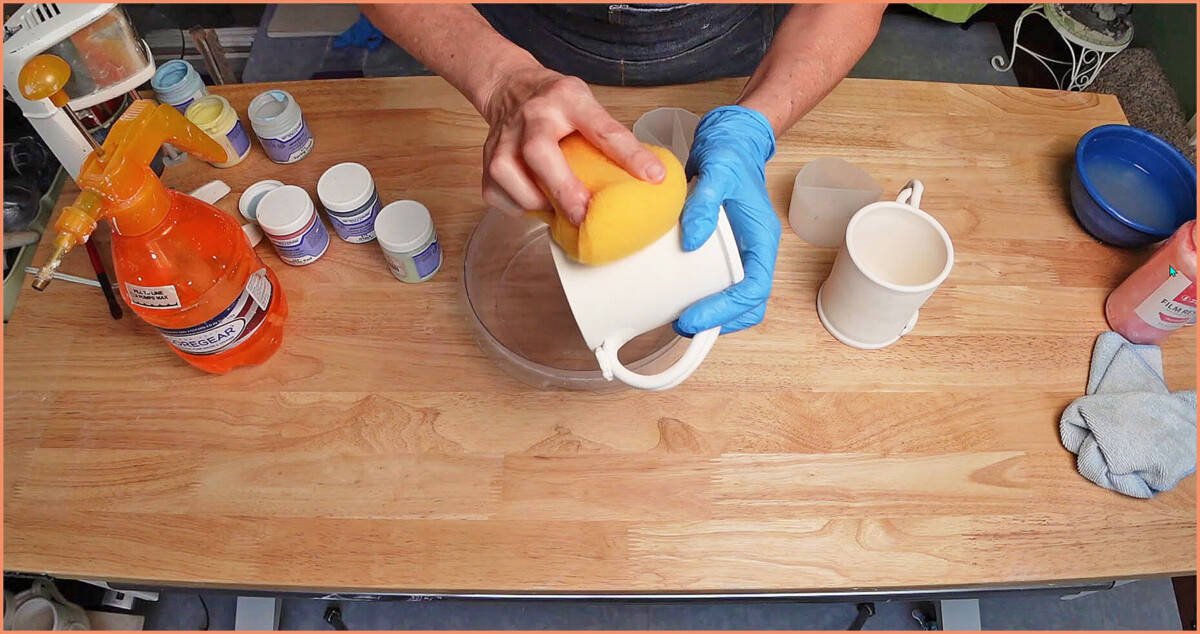
To begin, clean your bisqueware with a clean, damp sponge. Wipe down the entire piece to remove any clay dust that may have accumulated during the bisque firing. Doing this helps to ensure the underglaze adheres evenly to the bisqueware.
Next, make sure your hands are clean and dry, or wear gloves, because any oils, dirt, or moisture on your hands can affect the surface of the pottery.
Choosing Your Underglazes
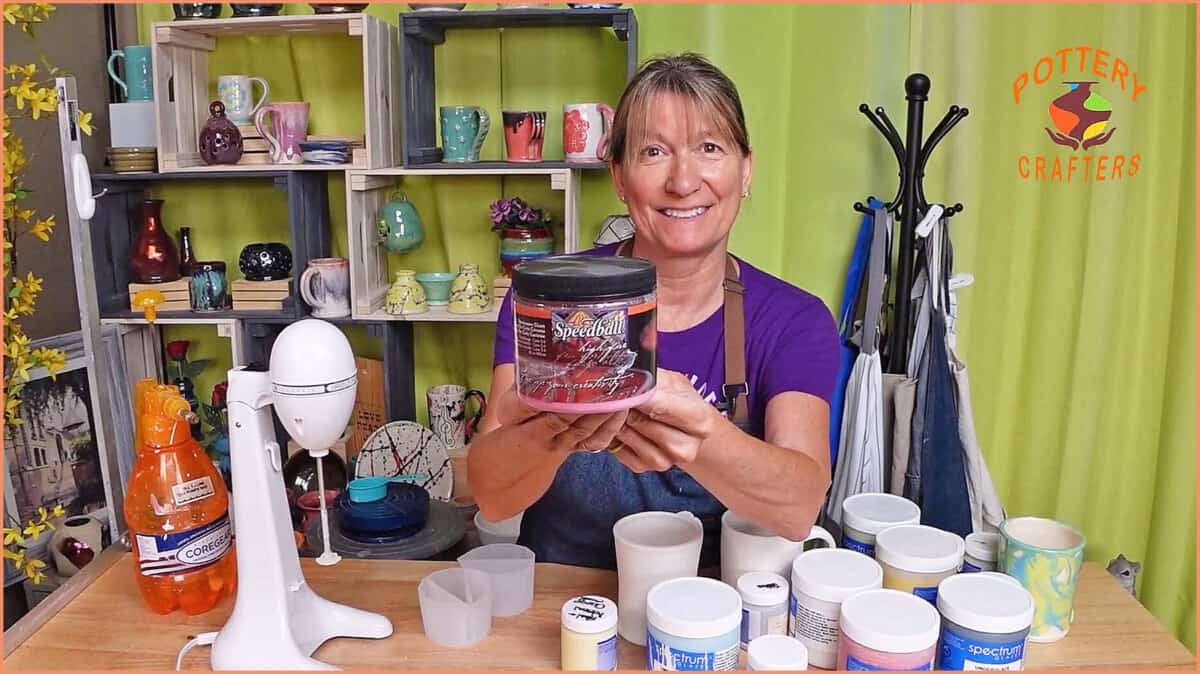
For this project, I’m using Spectrum underglazes. These underglazes are available in both four-ounce and pint-sized containers, offering options for different budgets and project sizes. The pint-size is especially economical if you Use Underglaze a lot, as I do.
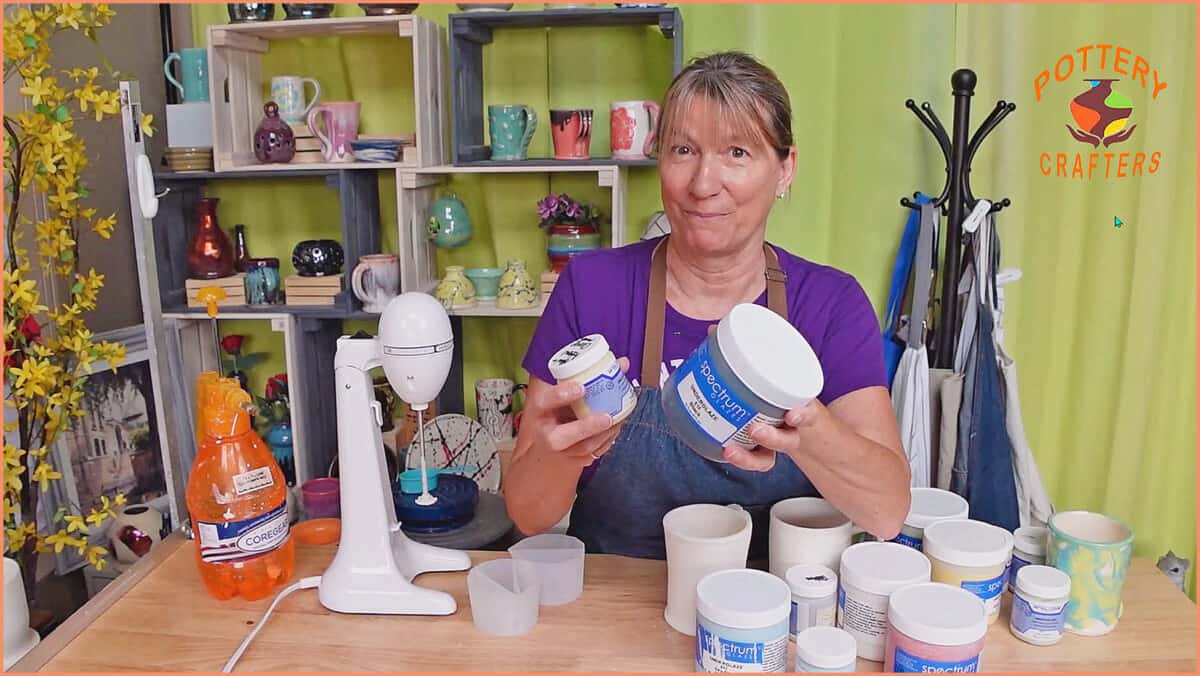
I have also used Speedball underglazes. It comes in pints and sets of 12 two-ounce containers, allowing you to choose from a variety of colors. There are other underglaze brands, but I have not personally tried them with this technique yet.
Here are two sets to choose from Spectrum Underglaze Pints
And Speedball Underglaze 12 -2 ounce Jars.
Choosing the Underglaze Colors
When choosing underglaze colors for your split-cup pottery, it’s essential to select hues that complement each other and create an eye-catching design. I will be using 3 different color combinations.
I am starting with Spectrum Sky Blue, Yellow, and Light Green combinations for a fresh and inviting look. These colors complement and contrast with each other to create a beautiful abstract look.
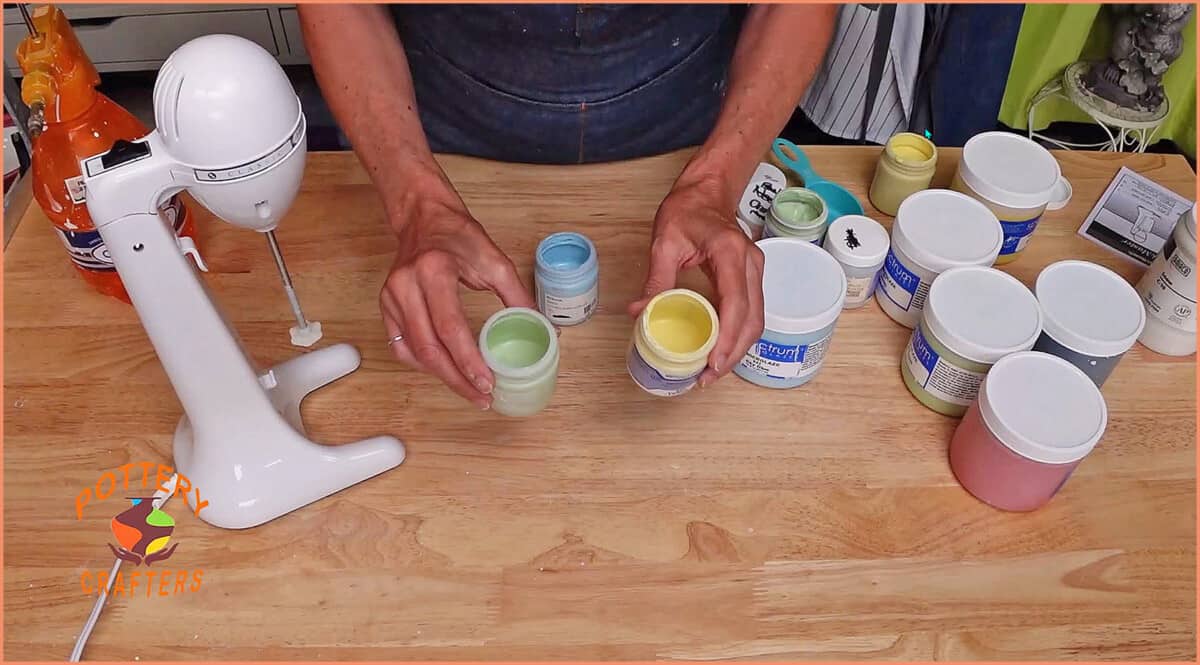
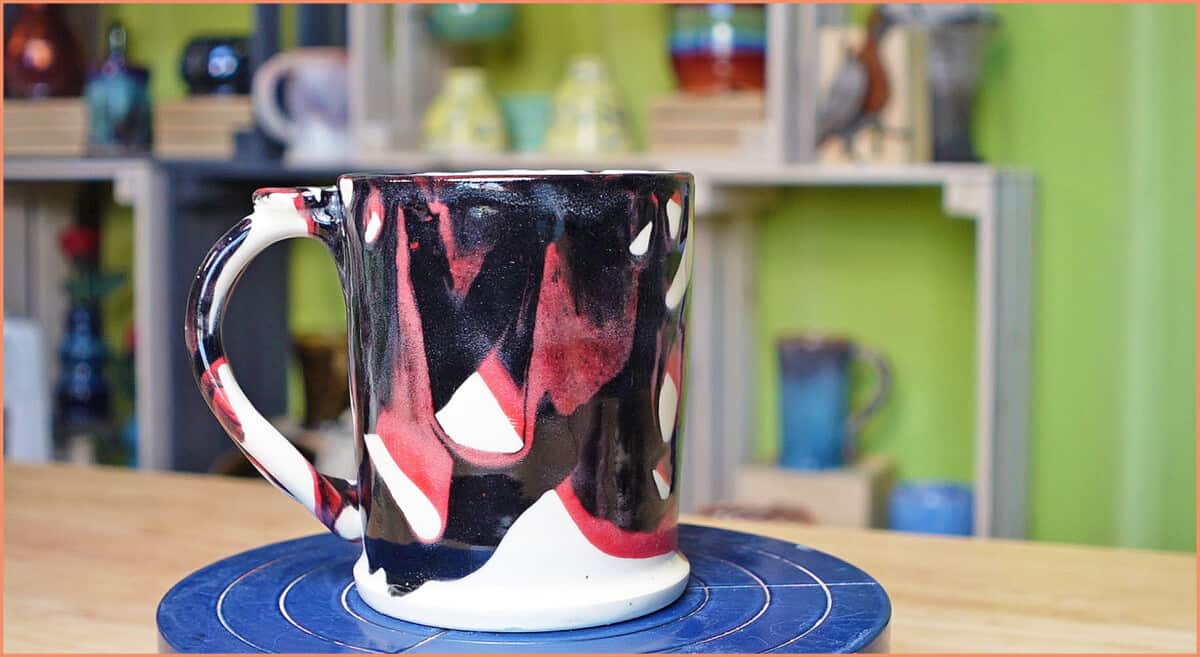
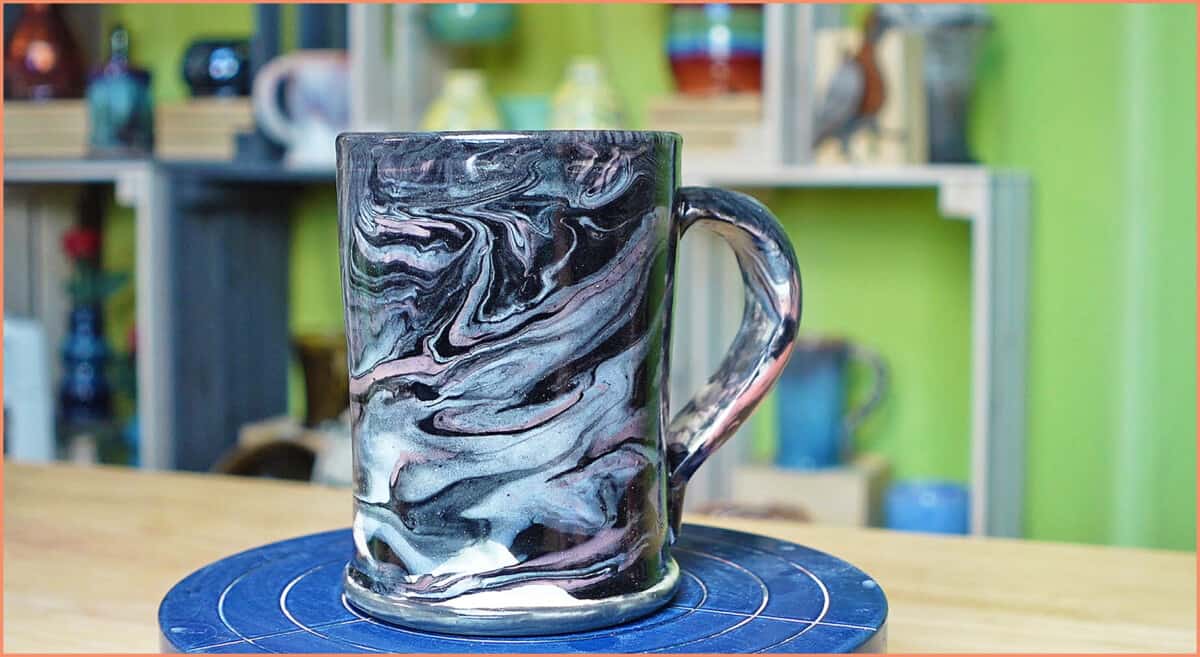
Then I will create a more dramatic effect, using Spectrum Black and Red underglaze. These colors can add depth and contrast to the pottery piece, making it stand out from the rest. I will also combine Spectrum Black, White, and Pink for a striking contrast to add visual interest.
Remember, experimenting with different underglaze color combinations is a fun and essential part of the process. So, feel free to let your creativity guide you as you choose the perfect colors for your split-cup pottery masterpiece.
Preparing the Underglazes
Preparing the underglaze is a simple process that requires only a few tools. To start, you’ll need small containers to mix your underglazes in. Measure two tablespoons of underglaze into the small container, and then measure two tablespoons of distilled water.
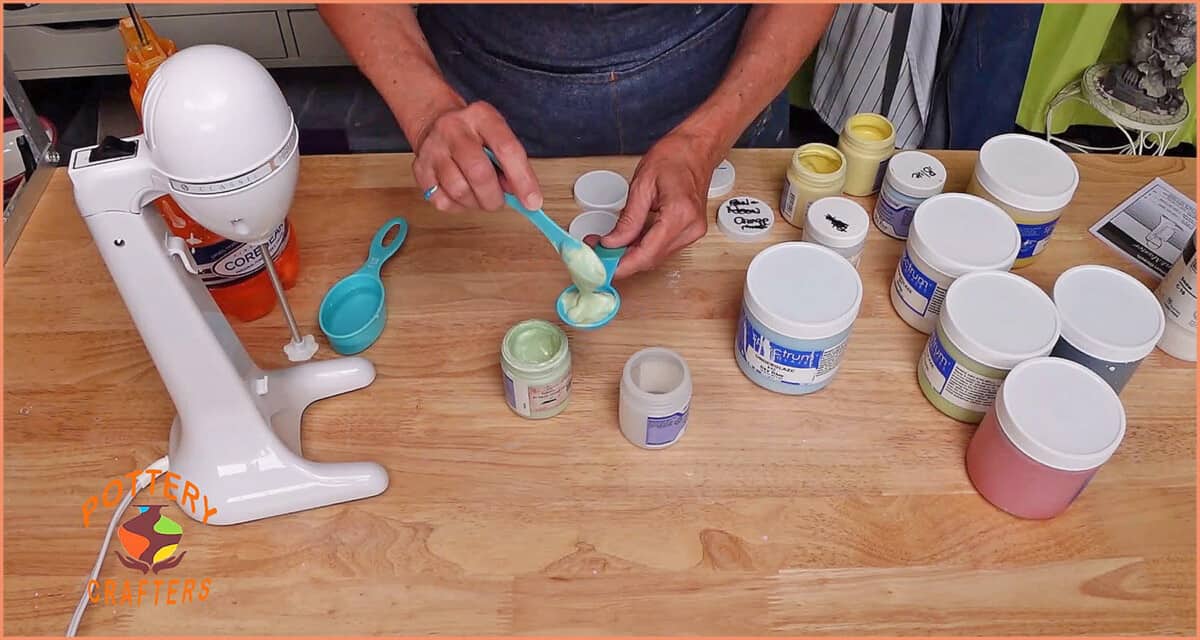
Begin by gradually adding the water to the underglaze. Stop to mix the underglaze well.
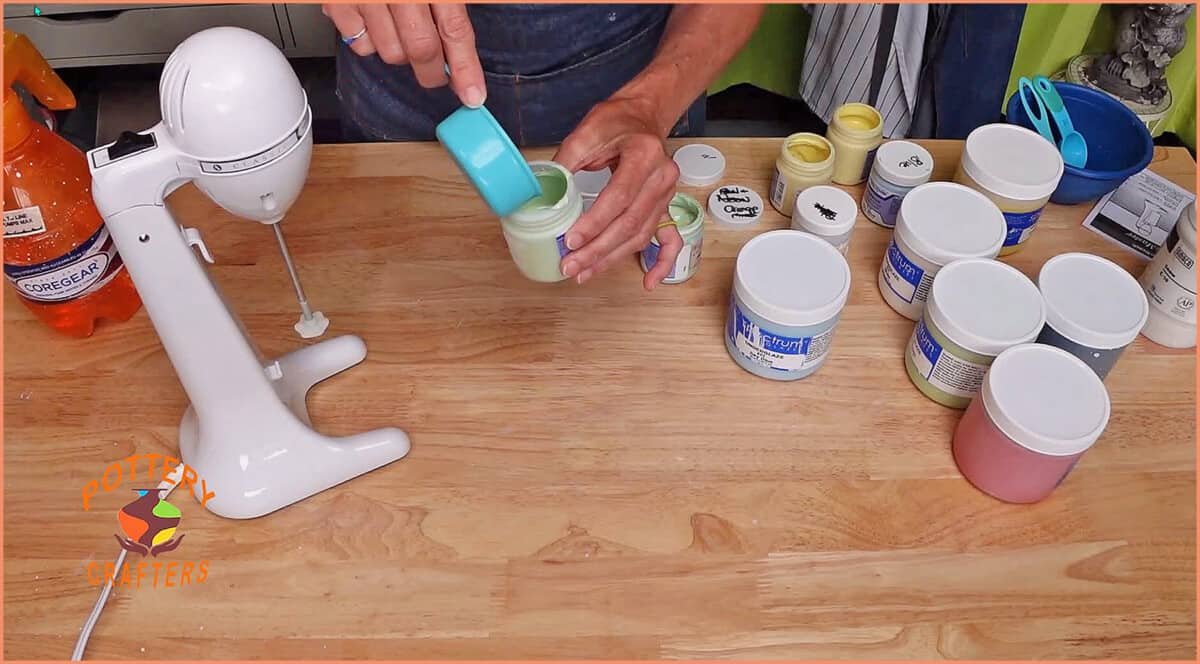
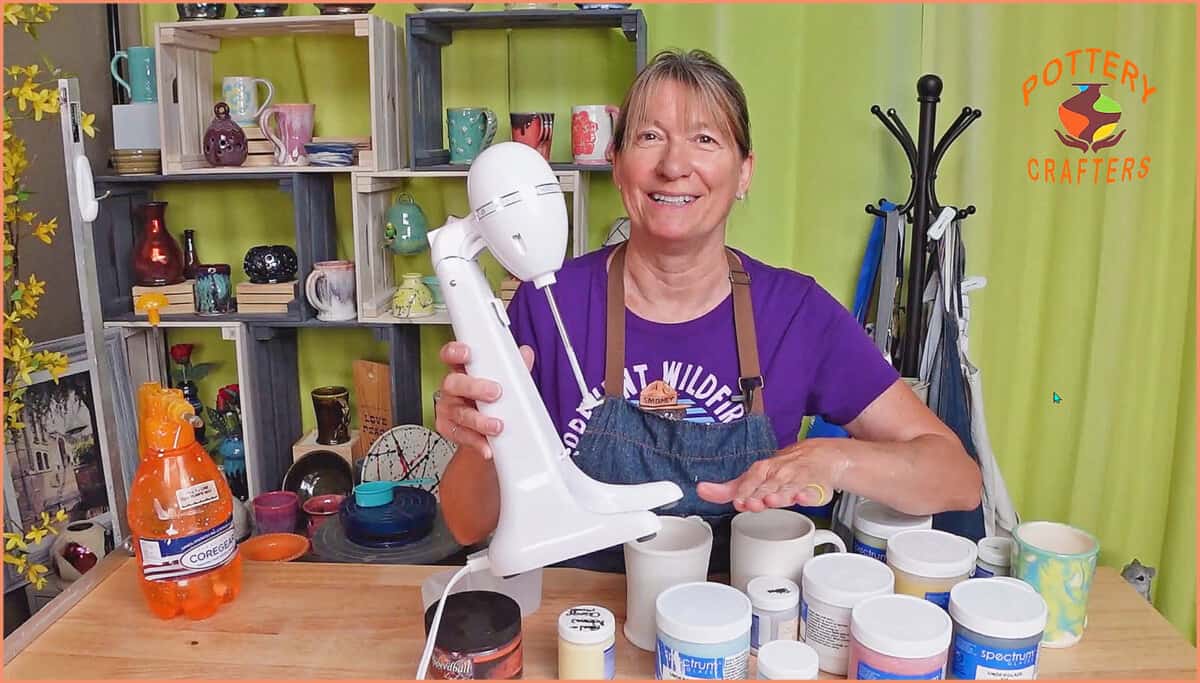
I’m using this Hamilton Beach Mixer to mix my glaze. This mixer can also mix pint jars from Amaco easily with no mess. It has a small footprint, two speeds, and cleans up easily.
This is an excellent mixer for mixing all of your glazes and underglazes. You can check out the current availability and pricing HERE.
This is important to ensure a consistent blend and to reduce the likelihood of air bubbles forming in the process.
Once you’ve reached the desired thickness, it’s a good idea to run your underglaze through a strainer to ensure no small clumps remain on your pottery. Keep in mind that different underglazes might have slightly different consistencies, so be prepared to adjust as needed.
Getting the Underglaze Consistency Right
Getting the consistency of the underglaze just right is an important step in underglazing with split cups. You want to ensure that your underglaze is thin enough to pour easily into the split cups and transfer smoothly onto your pottery piece.

Aim for the consistency of cream or acrylic paint. It’s essential, however, to avoid thinning your underglaze too much, which can result in a translucent layer of color or make it too thick; the underglaze won’t pour properly and will give you uneven coverage.
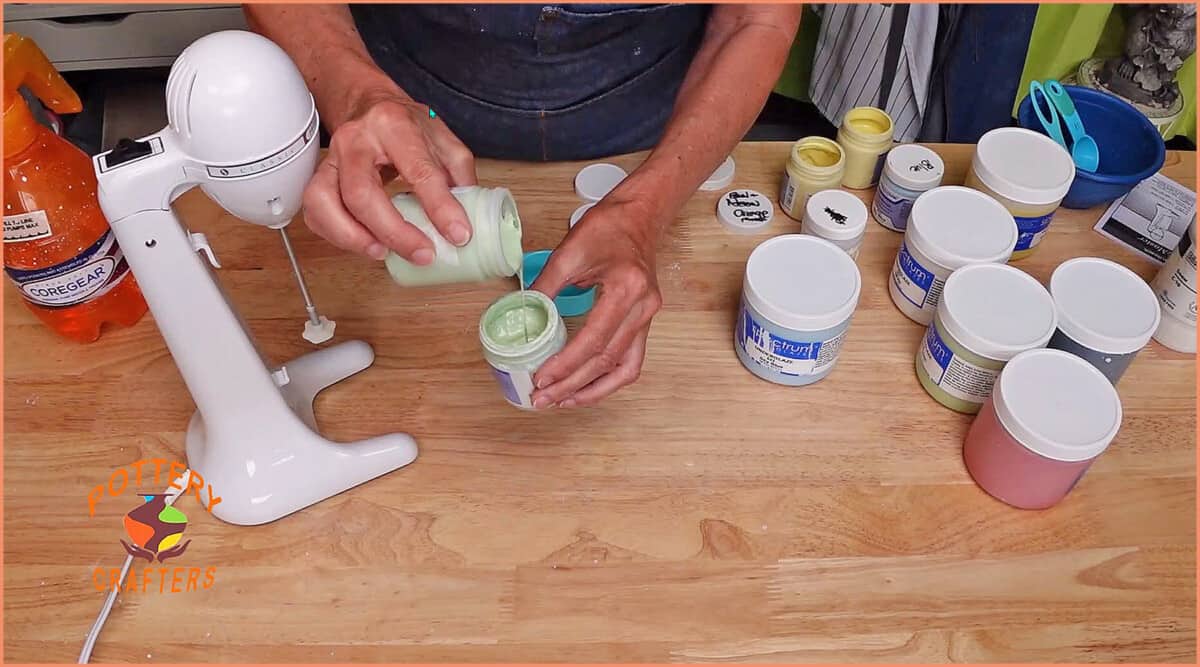
As you adjust the underglaze consistency, be sure to give each color the same level of attention. This consistency will allow you to create a stunning look with an even flow using your split cups.
Remember, practice makes perfect, so keep adjusting as needed until you feel confident with your underglaze consistency.
Pouring the Underglazes
Now that all your underglazes have the same consistency, it’s time to apply them using split cups. The split cups set includes 4 cups with 2-, 3-, 4-, and 5-compartment options, allowing you to choose and match the underglaze to your preferences and create cool marbling patterns. Made of high-quality silicone, the cups are stable, soft, smooth, lightweight, and easy to clean and store. The multi-dividers design allows you to add equal amounts of different colors of underglaze, and the curved design makes it easy to grip and pour the underglaze. Click this Split Cups link to see the price of this set. I will be starting with the three-section cup.
First Split Cup Underglazes
I’m starting with the sky blue, yellow, and light green underglazes. First, pour an even amount of underglaze into each of the three sections of the split cup.

Pour them onto the mug, moving both the split cup and the mug around to create an eye-catching pattern.

Make sure to dip the rim so the whole area is covered.
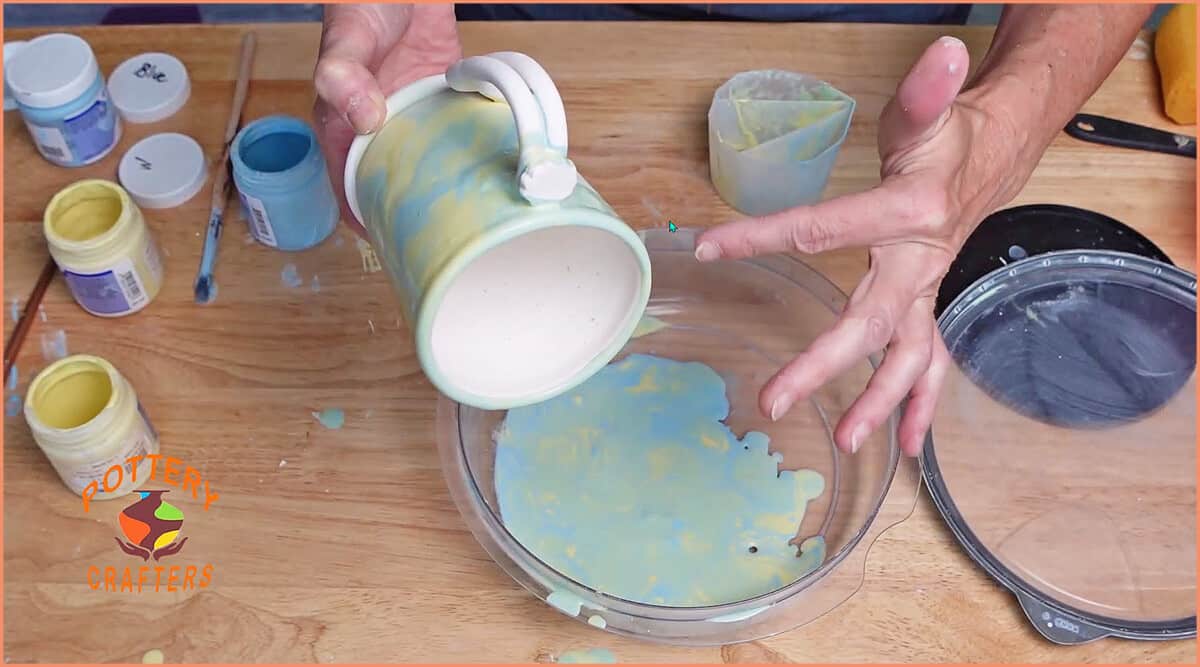
Once you’ve achieved the desired pattern, let the underglaze dry.
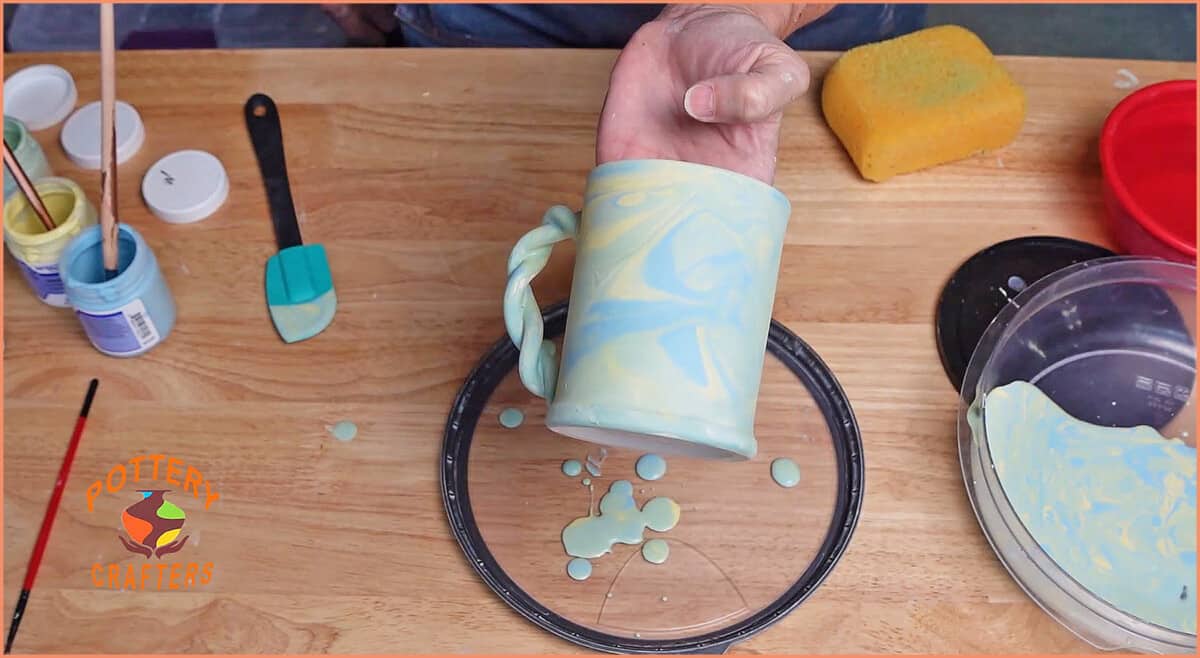
Underglaze Can Be Mixed and reused, reducing waste and making it more efficient to use.
Second Split Cup Underglazes
Next, I’m using Black and Red underglaze. Pour an even amount of underglaze into each of the two sections of the split cup.
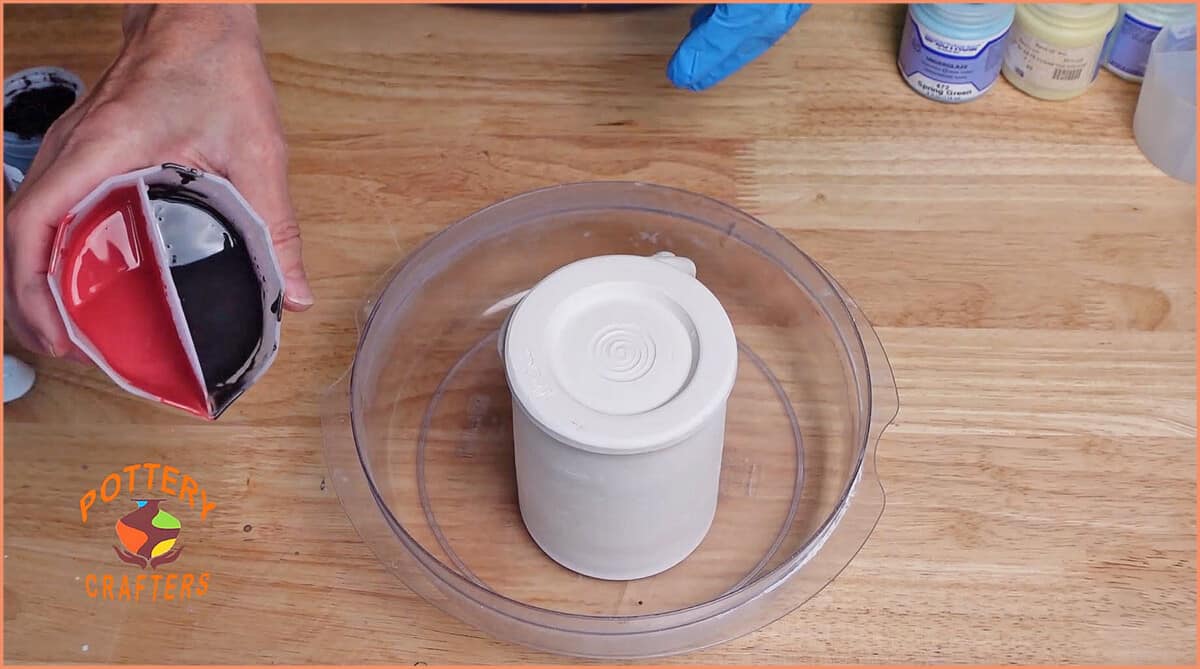
Pour the black and red underglazes evenly onto the mug, then move both the split cup and the mug to create an interesting abstract pattern.
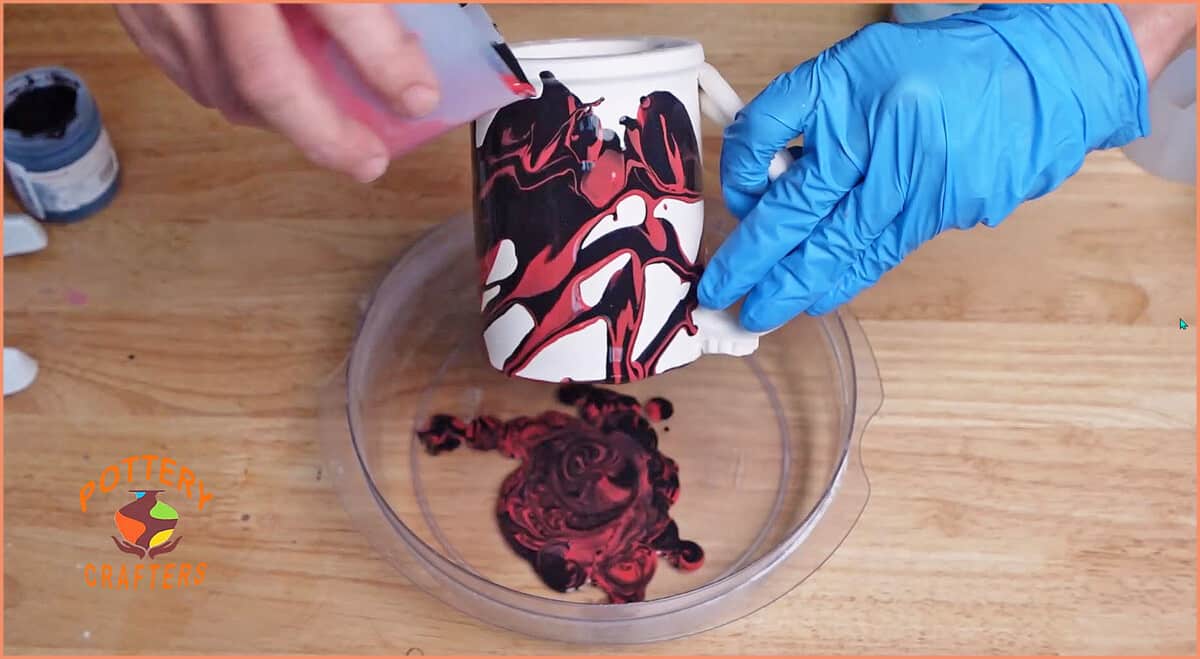
This time, I am not covering the whole mug to give a different effect.
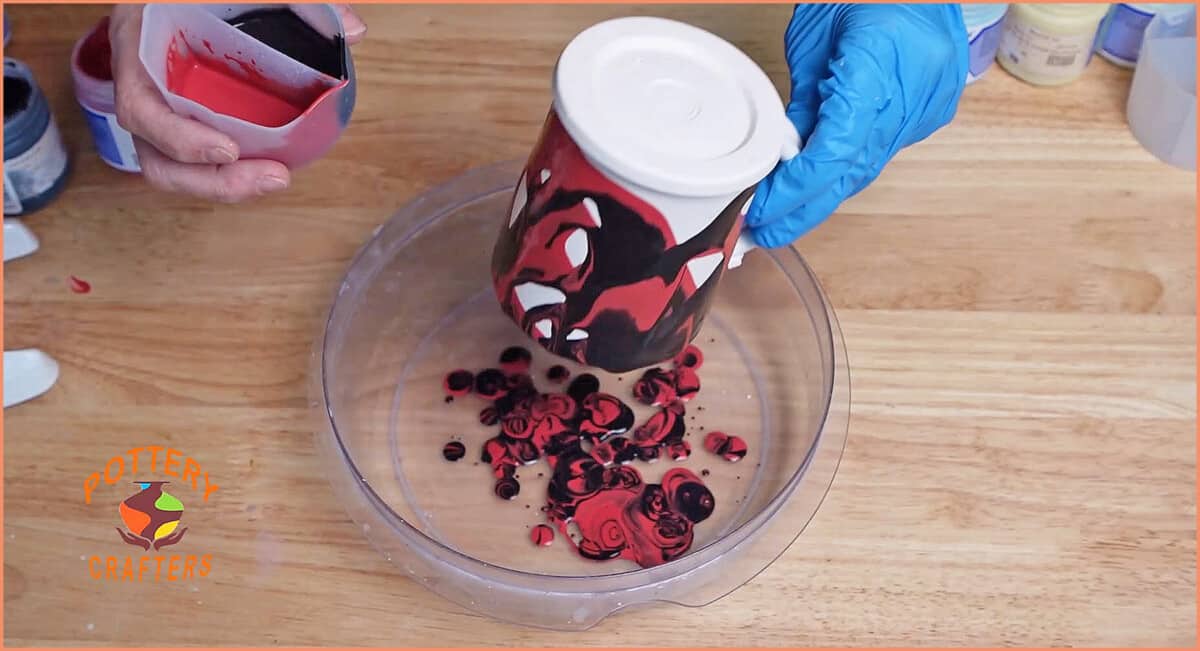
Don’t forget to dip the rim and then let the underglaze dry.
Third Split Cup Underglazes
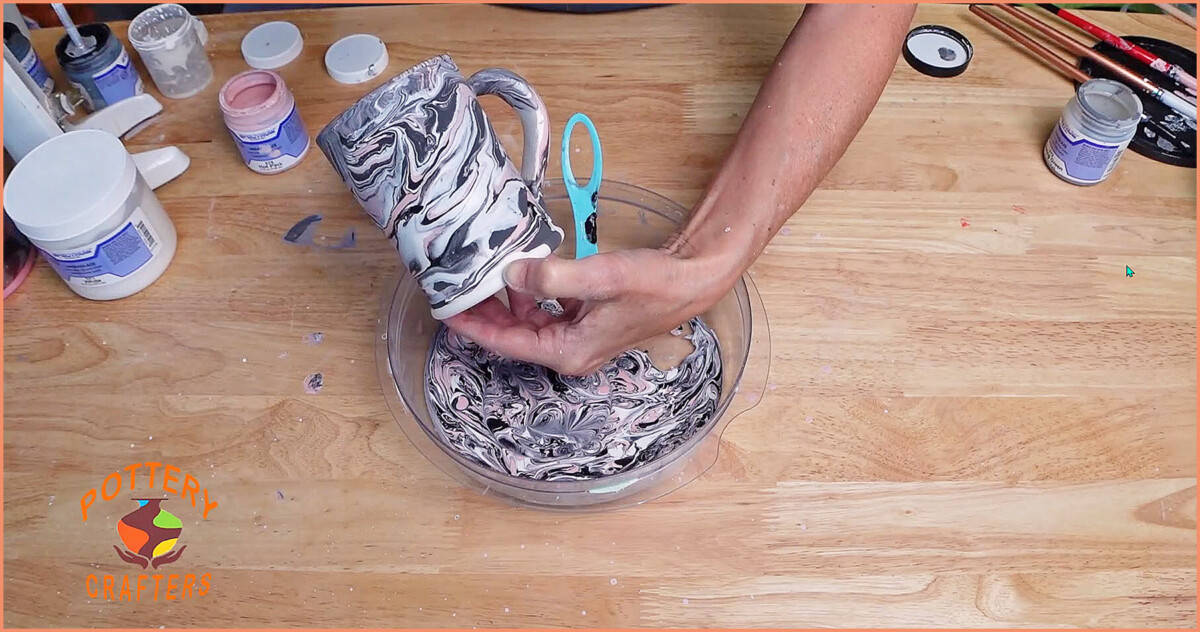
Finally, I’m using a combination of Black, White, and Pink underglaze. Pour an even amount of underglaze into each of the three sections of the split cup.
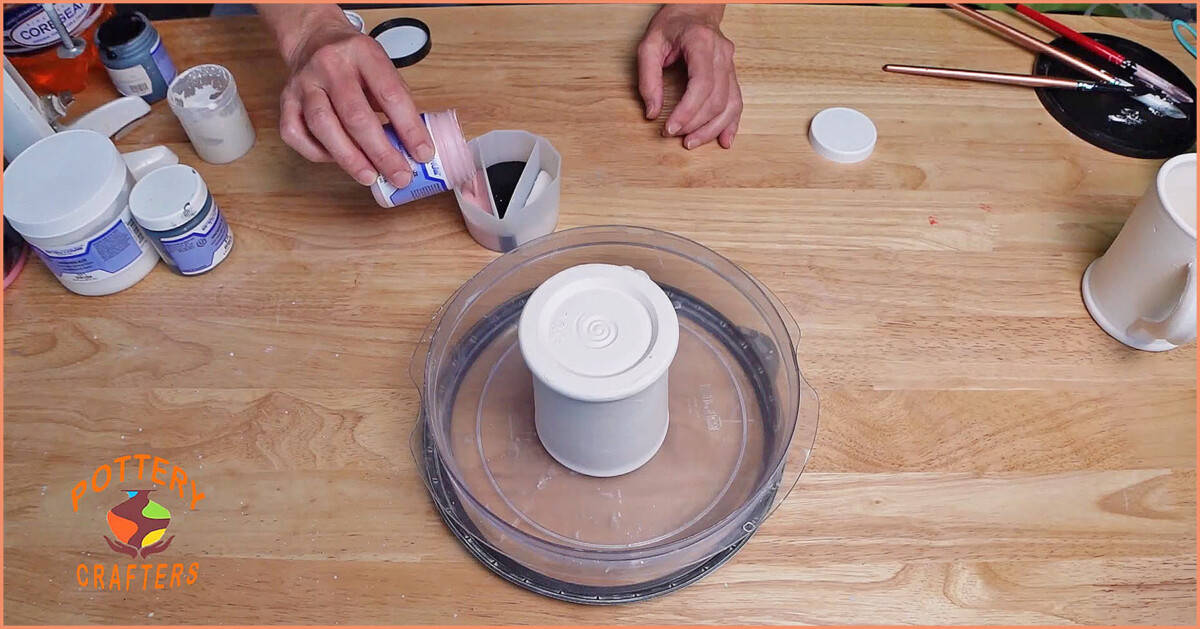
Pour these underglazes onto the mug, making sure you move both the split cup and the mug around to create a marble pattern.
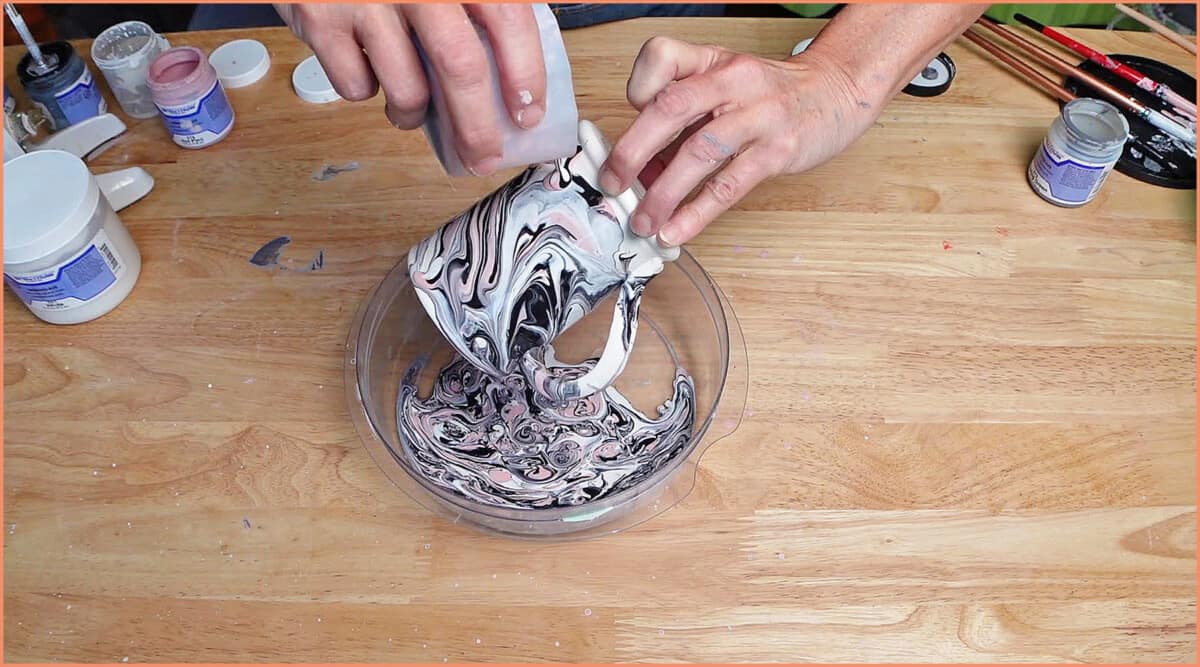
Dip the rim to fully cover it, then let the underglaze dry.
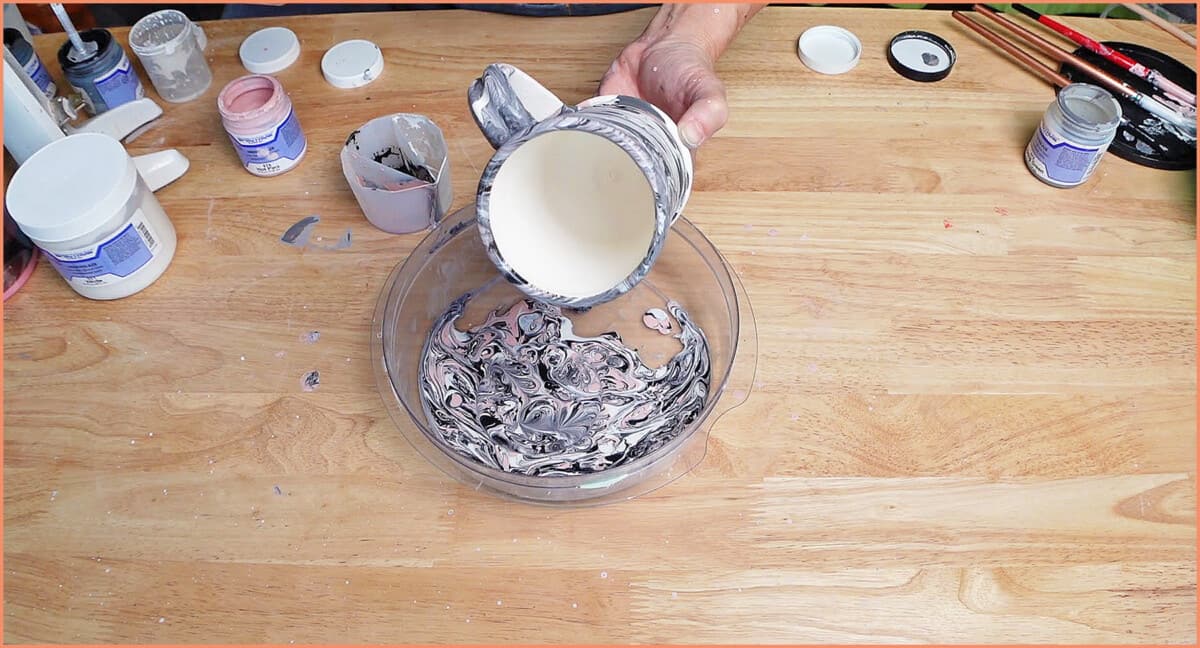
Practice makes perfect, so keep trying out different patterns and color combinations to find what works best for you. Enjoy creating unique abstract pottery pieces using split cups and underglazes!
Final Steps
After you have completed the underglazing process using split cups, it’s time to give the mugs a nice, clear coat of Glaze. The glaze will brighten and shine, and the underglaze will as well. Before you begin glazing, make sure the underglaze dries completely. This will help prevent smearing and maintain the integrity of your designs.
Apply Resist
Wax resist or film resist should be applied to any areas that you want to remain unglazed, such as the bottom of your piece. This can help prevent glaze from sticking to the kiln shelf.
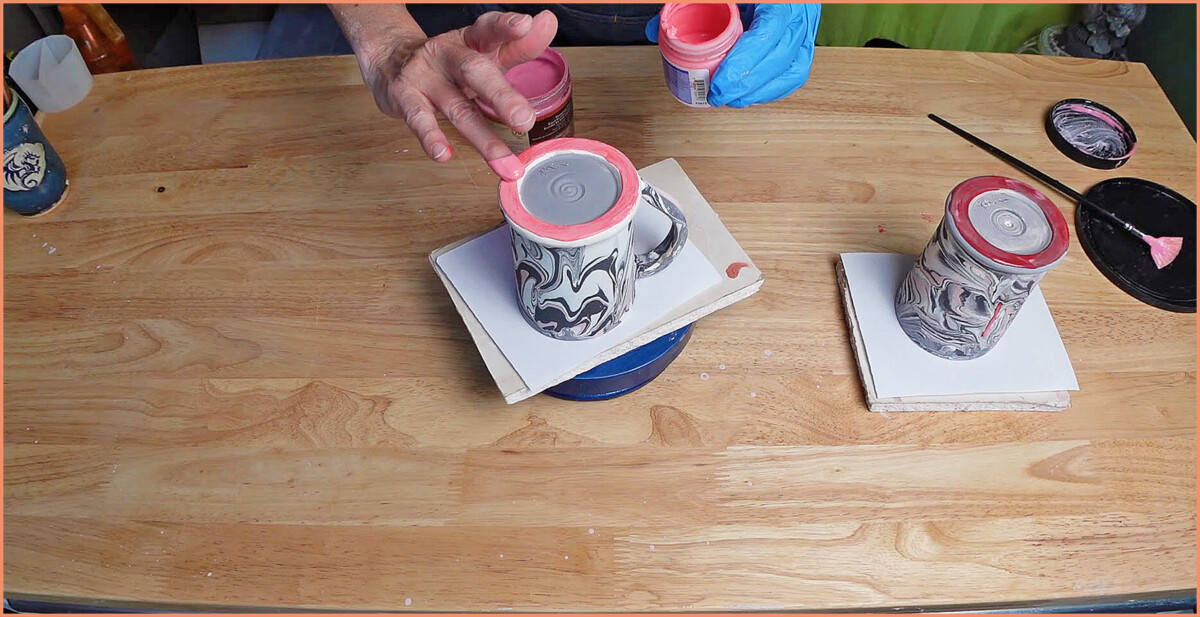
I am applying Film Resist to these mugs. After you’ve finished applying the film or Wax Resist, allow the resist to dry before applying the clear glaze.
Apply Clear Glaze
Apply two coats of a clear glaze. I am applying Speedball Clear Glaze to all of my pottery pieces. This will not only enhance the underglaze’s appearance but also make the pottery food-safe.
When applying the first coat of clear glaze, apply it horizontally. Use very light pressure with your brush to avoid smearing the underglaze. This Amagic Fan Brush works really well. I have had this set for over five years, and the bristles are still in good condition.
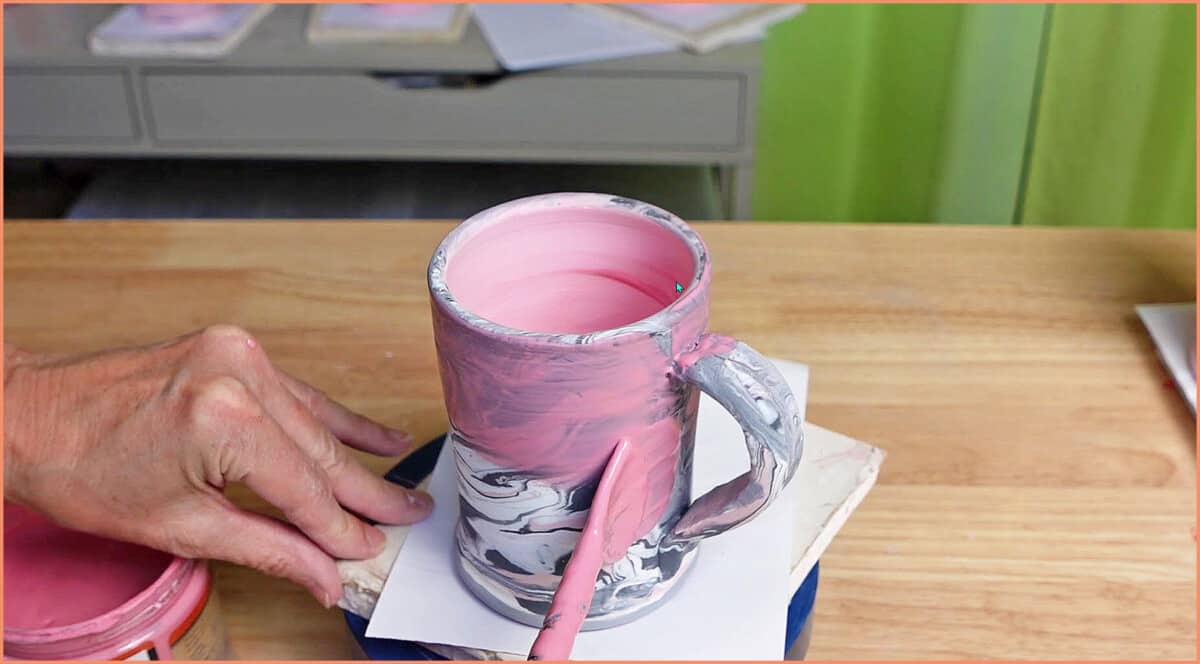
It glides smoothly across the underglaze. Ensure that you cover both the inside and outside of your pottery.
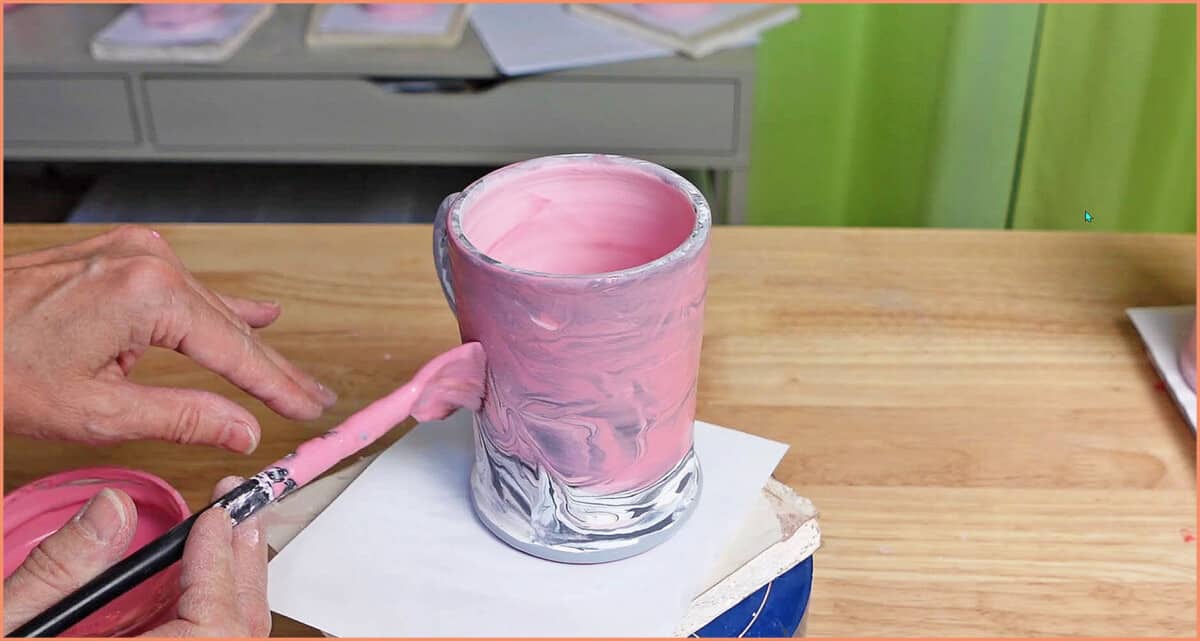
While glazing, consider using a banding wheel for even coverage. This helpful tool can make the process more accurate and efficient. This Source will help you choose the best Banding Wheel for your needs.
Once the first coat of clear glaze has dried, apply the second coat vertically.
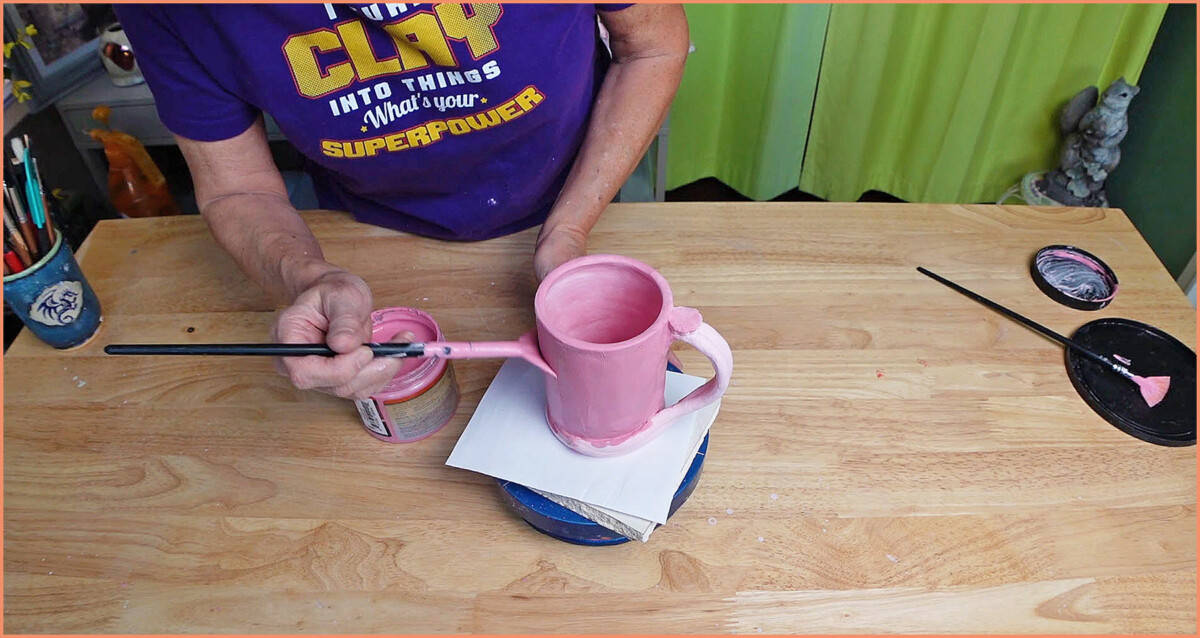
This will provide a thorough finish to your fired pottery. After your pottery has been glazed, allow the glaze to dry completely before placing it in the kiln for firing.
Firing Process and Temperature Control
Before firing the mugs, make sure any glaze is wiped off the bottoms, or, if you use film resist, that it is removed.

To determine the firing temperature, it’s essential to know the specific type of clay and glaze being used. You may be using a low-fire glaze, which requires a lower firing temperature. Low-fire Clear Glaze can be used for this underglazing technique. The low firing temperature for underglazing with split cups is cone 06, approximately 1828°F (998°C).
On the other hand, the clay and glaze may require higher firing temperatures. Firing temperatures for mid-fire clay and glaze are usually medium fire (cone 5, approximately 2167°F or 1186°C)or cone 6 (approximately 2232°F or 1222°C).
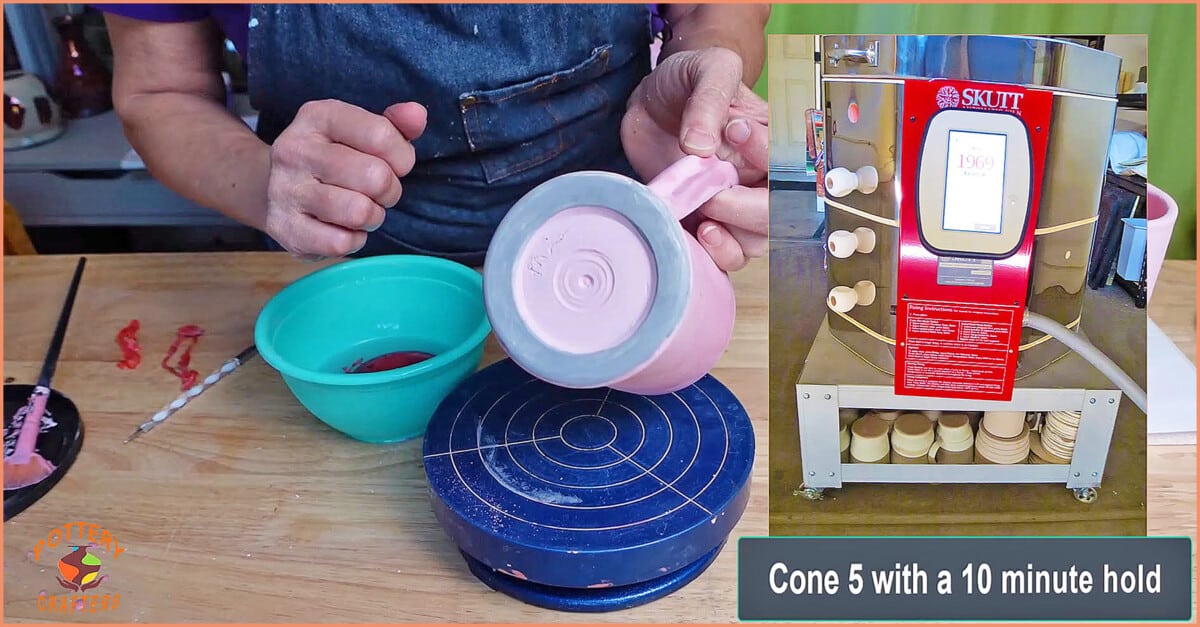
For these split cup underglazed mugs, I am firing to cone 5 with a 10-minute hold. This means the kiln will maintain an even temperature for 10 minutes to help cure the glaze before beginning the cooling process.
The Results
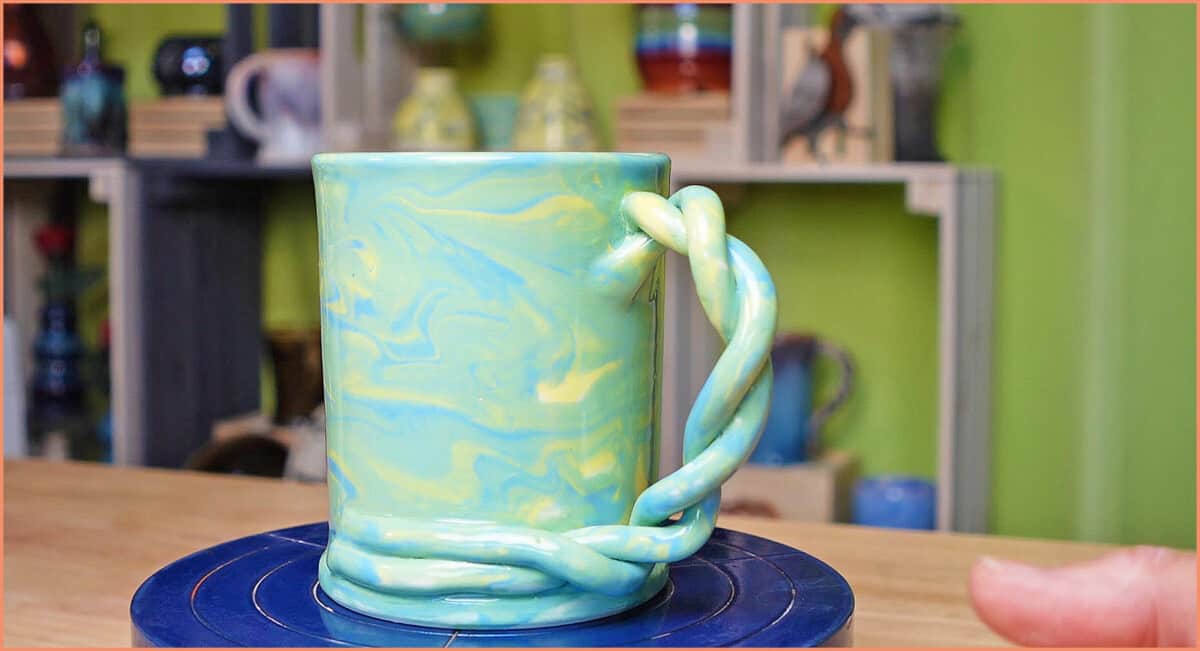
The combination of the green, yellow, and blue mugs turned out great. I love the pattern the split cups created.
The red and black mugs have an appealing contrast, showcasing the intricate flow of the underglaze technique.
The pink, black, and white mugs end up with more black than I expected; the color blend still looks striking, producing a beautiful marble effect.
Remember, the key to achieving these fascinating results is to follow the step-by-step underglazing process using split cups with the correct underglaze consistency. Keep experimenting with different color combinations and be open to the creative surprises that emerge.
Here is my step-by-step split cup YouTube Video below for you, also.

Conclusion
By now, I bet you’re excited to put your newfound knowledge of underglazing with split cups into practice. As you can see, this technique can add a whole new dimension to your pottery, and the end results can be quite striking. And you can achieve some amazing results.
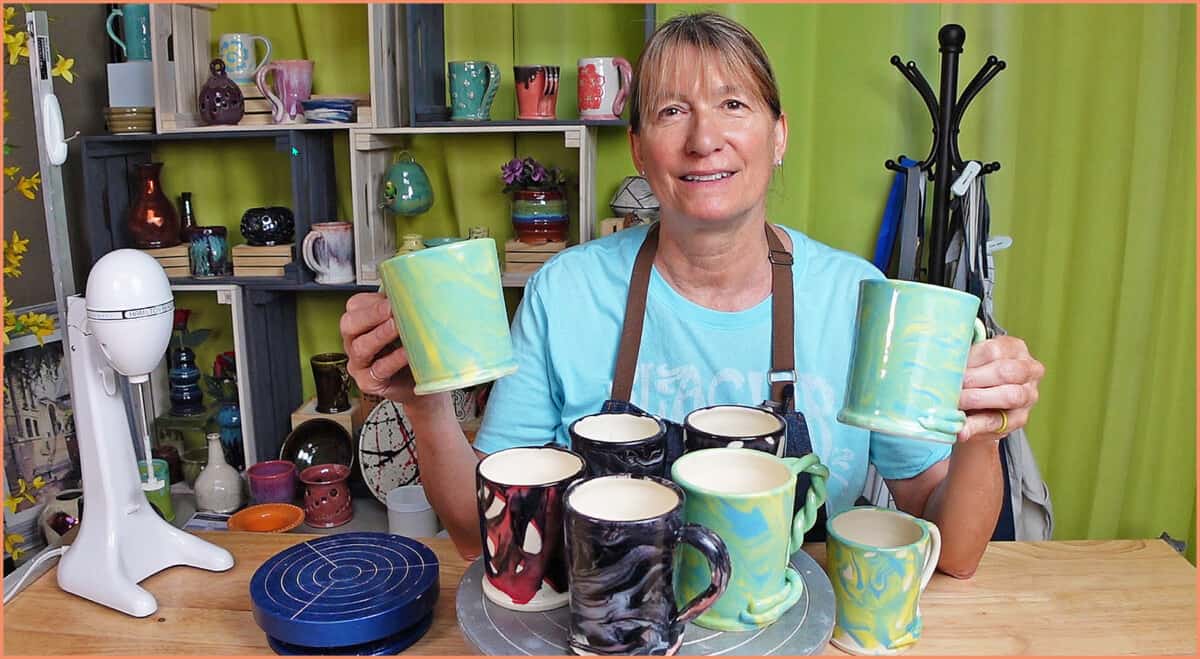
So, there you have it! Now it’s your turn to grab your split cups, choose your underglazes, and create something truly unique. I hope this guide has been helpful and inspiring, and I wish you the best of luck in your pottery endeavors.
As you progress, don’t hesitate to experiment with different underglaze techniques. This will only further boost your creativity and skillset. And remember, there’s always something new to learn when it comes to pottery, so keep an open mind and a sense of curiosity on this artistic journey.