
Sponge Glazing | Tips Tools And Ideas
Sponges are essential tools in pottery. You can use it in almost every step, from centering pieces to glazing. Ceramics finished with sponge glazing are popular amongst Potters because they give them the flexibility to create unique patterns and multilayer glazes.
This technique only requires a synthetic or natural sponge with different cutout shapes or patterns. With proper use, you can achieve the same texture as brushing and still have an excellent secondary layer for your ceramics.
Unlike brush glazing, however, this technique relies on textured patterns that create limitless design possibilities. There are different ways to sponge glaze your ceramics. Let’s go through the best practices of sponge glazing.
Affiliate Disclaimer: We are ambassadors or affiliates for many of the brands we reference on the website. As an Amazon Associate, I earn from qualifying purchases.
Basics of Sponge Glazing
Sponge glazing has become one of the most popular glazing techniques because of the versatility of patterns that you can create.
You can use extra-fine sponges to create repeat patterns and smooth designs all over your piece, or a porous sponge to add a contrasting layer of glaze that adds depth to your ceramics. Add these to the various cutouts that you can have on a sponge without constraints, and your imagination becomes the only limitation on what you can do with your pieces.
Unlike other glazing methods that depend on skills and perfection through practice, sponging relies on the potter’s creativity and adaptability.
There’s no such thing as lousy sponging, and I believe that it’s the only glazing technique that allows complete self-expression in pottery. As long as you follow best practices when sponge glazing, you’ll be able to push the boundaries of your creativity.
Best Practices Before Sponge Glazing
Sponge glazing may seem easy because of the sporadic impressions. But it’s not as simple as brushing, where you need a good brush to get the job done.
Here are some of the things that you need to do before you start sponge glazing your ceramics:
- Make sure that your glaze is well mixed and thoroughly sieved before dipping your ceramics or sponge. This will help prevent crawling, crazing, and cracking when fired.
- Sponge glazing doesn’t need a lot of glazes, so keep your mixtures in small containers to prevent it from settling on the bottom.
- You don’t need a separate glaze when sponging, because the application and glaze behavior that you need for this technique is the same as brushing. That’s why most seasoned potters interchangeably use brushing and sponging when finishing their ceramics.
- Clean your bisqueware before glazing. Use a damp sponge to remove dust and keep it grease-free. These particles will create spots that are prone to cracking and crawling because your glaze won’t adhere properly. You can use an air compressor to remove the dust before glazing.
- Cutting out parts of your sponge is the only way you can achieve unique patterns on your ceramics. However, improper cutting of sponges can compromise their firmness, affecting the design you want to create.
- It’s okay to use the sponge as it is, but the shape of your sponge is the only way to influence the designs. Cutting out various patterns on different sponges will allow you to be more creative and exploit the biggest advantage of sponge glazing: flexibility
You don’t have to follow these practices before sponge glazing, but it’s the best starting point. Different potters use different glazing methods, but these guidelines will help you learn the basics with minimal trial and error.
To help you with good glazing practices, you will want to check out this List of Glazing Tips for Beginners.
Ways to Sponge Glaze
There are several ways to sponge glaze. Let’s take a look at them, starting with the most popular.
Sponging With Underglaze
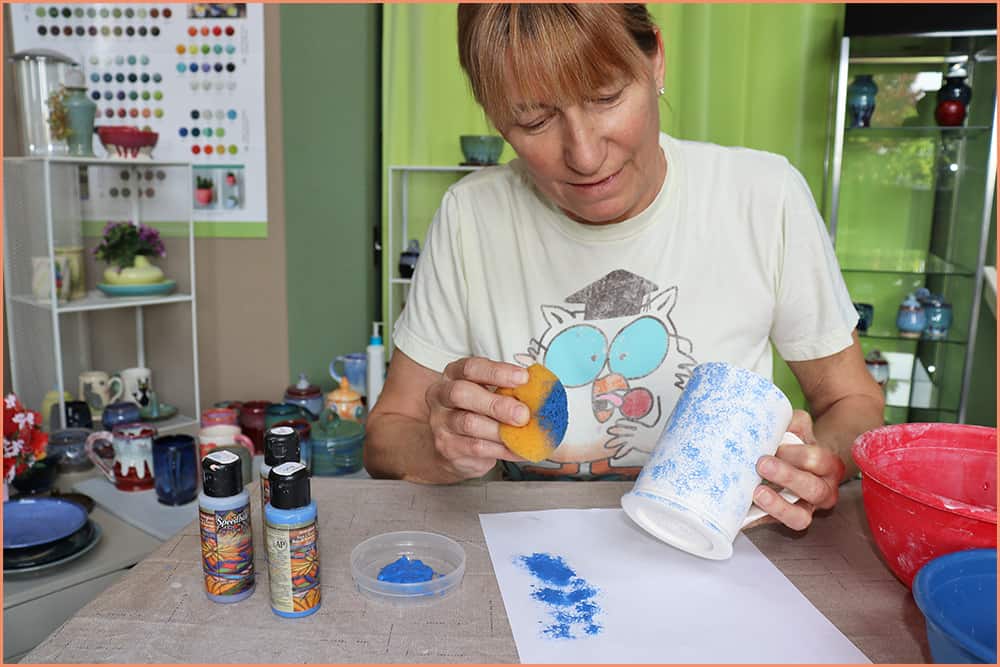
After mixing your underglaze, put a small amount of Underglaze in a shallow container. Take your selected damp sponge and dab it into your Underglaze.
This next step is important. Before you dab the sponge on your piece, you will want to dab it on a piece of paper or plastic to see the pattern it will make. You may need more or less underglaze to make the pattern you desire.
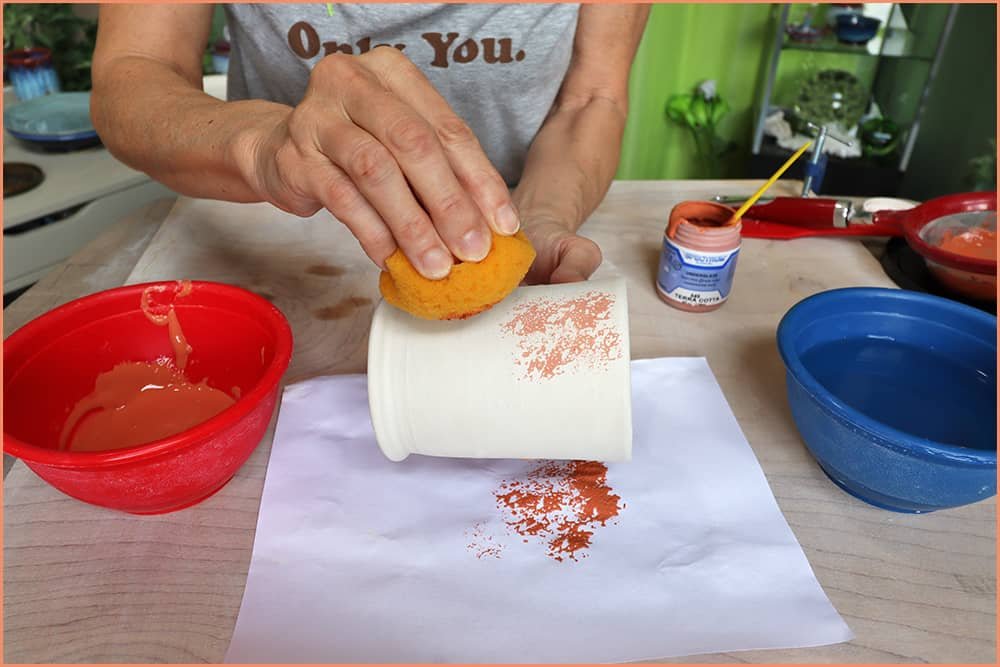
After you have sponged your pattern, let the Underglaze dry.

Once it’s dry, you can apply another color, let it dry, and apply another if you like. That’s the fun part of sponge glazing.
The Speedball Underglaze Sampler Pack offers a great selection of colors.
Apply Clear Glaze
Once your Underglaze is totally dry, it’s time to seal your creation with Clear Glaze. This can be done in several ways, Dipping, spraying, or brushing.
Dipping:
This is the easiest way to coat your sponged creation. One dip for 3 seconds should do the trick; some potters like to dip twice. I have found this is the one that works for me.
Spraying:
One of the best ways to apply clear glaze to your Pottery is with a spray gun. This technique gives you the least chance of smudging your sponge work without having to bisque again.
Brushing:
When brushing on your clear glaze, be careful not to smudge your sponge pattern. Some Potters will bisque their pieces again, then apply the Clear Glaze to guarantee your pattern won’t smudge. For a few good Brush recommendations, click HERE
As you learn the art of sponge glazing, you can experiment with different techniques to find the one you prefer. Here is another way that Potters can glaze:
Sponging With Glaze
Dip your bisqueware in a light or dark glaze for the first coat because it creates a nice, even surface. One or two dips for about 2 to 3 seconds each gives you the best surface to work with. You can also try using a spray booth for the first coating or brush-on, but dipping is faster and simpler.
Once your base coat is dry, it’s time to sponge.
Sponge glazing may not completely cover your piece, so you should always apply an undercoat or overcoat of Glaze. Two colors or shades are the minimum combination of glazes that can be used when sponge glazing. You can use as many colors as you need for your craft.
You can push your creativity even further by combining different sponge patterns to create a unique design. There’s no exact pattern to follow when sponge glazing, so you might as well take it a step further by using different sponges to create cool designs. This set of Six Potters Choice Glazes has a great selection for sponge glazing.
Best Practices During and After Sponge Glazing
Even though sponge glazing is known for encouraging spontaneous designs, you still need to be careful with the process.

Like other glazing techniques, whatever pattern you achieve through sponging will be permanent, so it would be best to follow these practices during and after glazing:
- Don’t dip your sponge in too much glaze. Several small dips are the best way to introduce glaze because they will allow you to create even designs. New potters who use sponge glazing think they can save time by using more glaze in their sponge, but this creates uneven, thick patterns. Make sure you dab your sponge on paper or plastic before applying it to your pottery.
- When sponge glazing your pieces, you don’t have to cover the entire pot. When I sponge glaze my ceramics, I usually cover the upper part, then leave the lower part with the base coat or multilayer dip coats.
- If you accidentally glazed a section, don’t clean it immediately. Let the glaze dry until it’s hard enough to scrape off with a metal rib or sandpaper. You can also use a small brush to clean hard-to-reach surfaces. When doing so, wear a Dusk Mask.
- If you want to avoid glazing specific parts of your ceramics, it’s best to apply a thick coat of Wax Resist. It will serve as a protective layer and create a beautiful emphasis on certain parts of your ceramics.
- Please don’t leave your sponge as it is after use. Sponges deteriorate over time, but if you wash them after each use, you can reuse the same pattern on many ceramics. It may not cost much to replace a sponge, but the cutouts you have for it are so unique that it’ll be tough to replicate.
There are several ways to sponge glaze your ceramics, but these practices ensure that you’ll get the best results every time. As you learn more about this technique, you can modify some of these practices to suit your preference.
Sponge Glazing and Brush Glazing
Potters use both methods interchangeably because the application process is similar. You can use dipping, brushing, or sponging simultaneously.
It’ll create varying textures and could significantly affect the color schemes and design elements that you want your ceramics to have. So the question is, when is the best time to use sponge glazing?
I prefer to use sponge glazing when working on functional ceramics like mugs, bowls, and pitchers. These pieces look best with the sporadic design and textures that sponging creates.
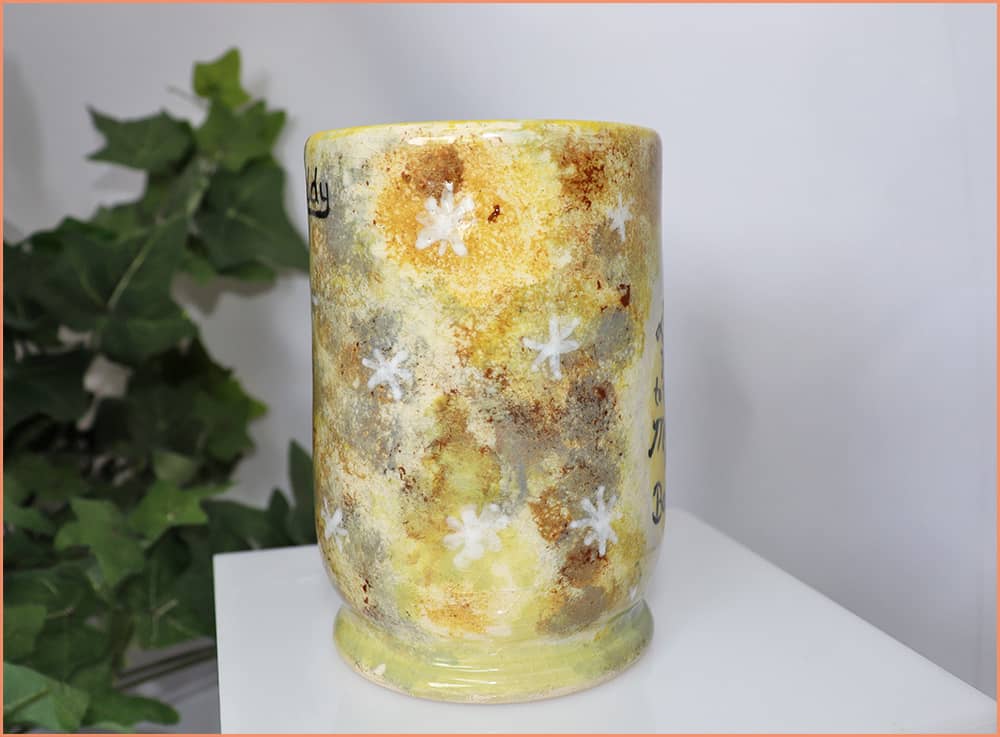
Potters used sponge techniques throughout the history of pottery. Sponge glazing is a unique way of decorating your mug. Beginners and Seasoned Potters alike prefer spongeware because the design elements are harder to replicate, giving them enough freedom to be creative with their pieces.
Check out my Sponge Glazing YouTube Video below

Conclusion
We have covered a few ways you can sponge glaze your ceramics to help expand your creativity in glazing.
Sponge glazing is unique because you don’t need to practice a lot to perfect it.
You only need to know the best practices for sponge glazing to use it successfully in pottery. The unique designs allow potters to make mistakes and still make them unnoticeable when fired. Hope this helped you to create some fun new glazing designs.