

21 Pottery Wheel Throwing Tips
Learning to use the pottery wheel is an exciting and rewarding journey, but mastering the techniques can be challenging at first. With the right tips and guidance, you can speed up your progress and enjoy the art of wheel throwing. In this post, I’ll share 21 pottery wheel-throwing tips that helped me when I was just starting out and can help you master the wheel, too.
Affiliate Disclaimer: We are ambassadors or affiliates for many of the brands we reference on the website. As an Amazon Associate, I earn from qualifying purchases.
1. Choose the Right Clay for Throwing
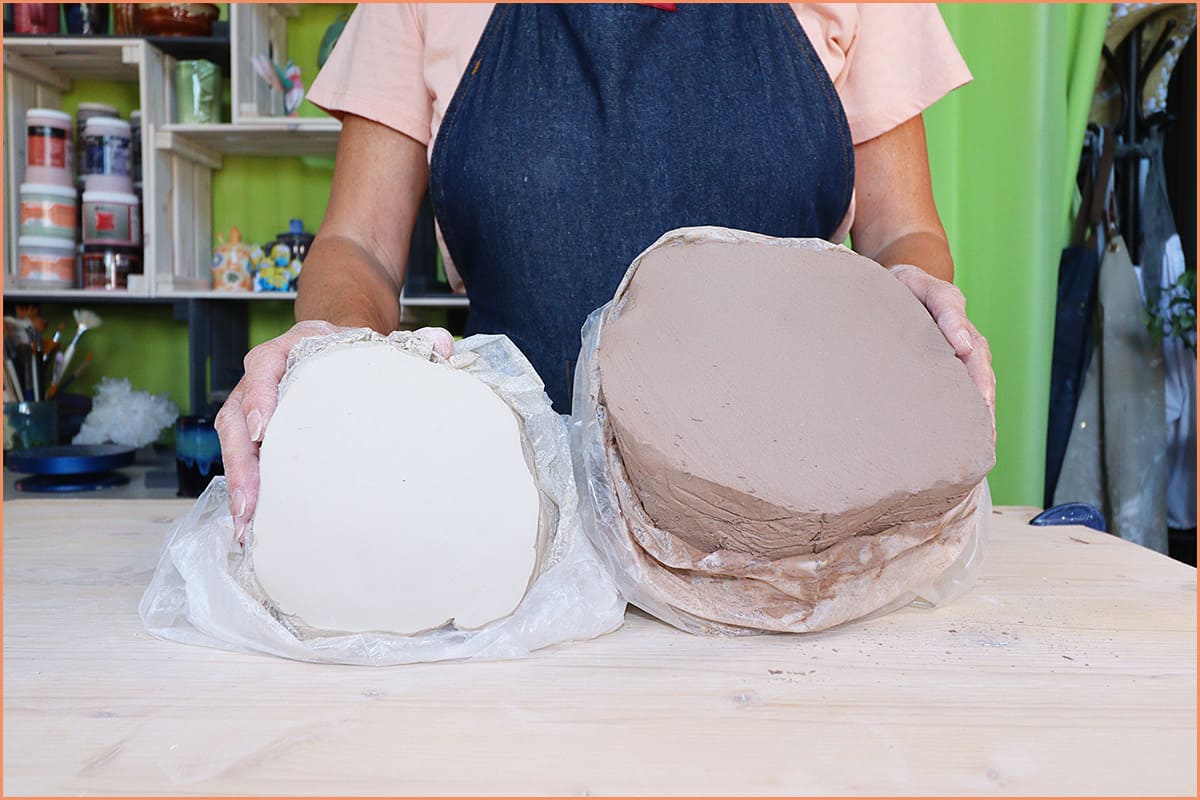
It’s best to start with a Stoneware Clay like Amaco Buff No. 46 or an Earthenware clay like Blick Talc-Free White Clay. These clays have great plasticity, making them more forgiving and easier to manipulate. Avoid using porcelain clay initially because it absorbs water faster, weakens more quickly, and is more elastic like a rubber band, making the clay harder to manipulate.
Make sure the pottery clay is soft enough to wedge, center, and throw it with. If the clay is too soft, it will collapse on the wheel. If it’s too hard, it will be very hard to wedge, center, and throw.
Avoid Clay With Too Much Grog
While grog gives the clay the ability to stand up longer and be less prone to cracking during drying, I found the medium and heavy grog clays a bit too abrasive for throwing on the wheel. If it doesn’t bother you, go for it.
If you feel the Grog is too abrasive but you need it in your clay, I would recommend a fine Grog, like mid-fire Laguna B mix with Grog or low-fire Standard Clay Co. 553 Warm Buff.
For a detailed guide on selecting pottery clay, including tips on types, textures, and firing temperatures, check out my detailed post, Choosing Your Pottery Clay: Best Pottery Clay For Beginners.
2. Wedge Your Clay Properly
Wedging clay is a crucial step in throwing on the wheel. For one, it eliminates any air bubbles. If the air bubble is large enough, it will continue to throw the Clay off-center because air is lighter than clay.
Wedging also eliminates hard lumps and helps align the clay particles, giving the clay an even, uniform consistency throughout, making it much more manageable and easier to throw.
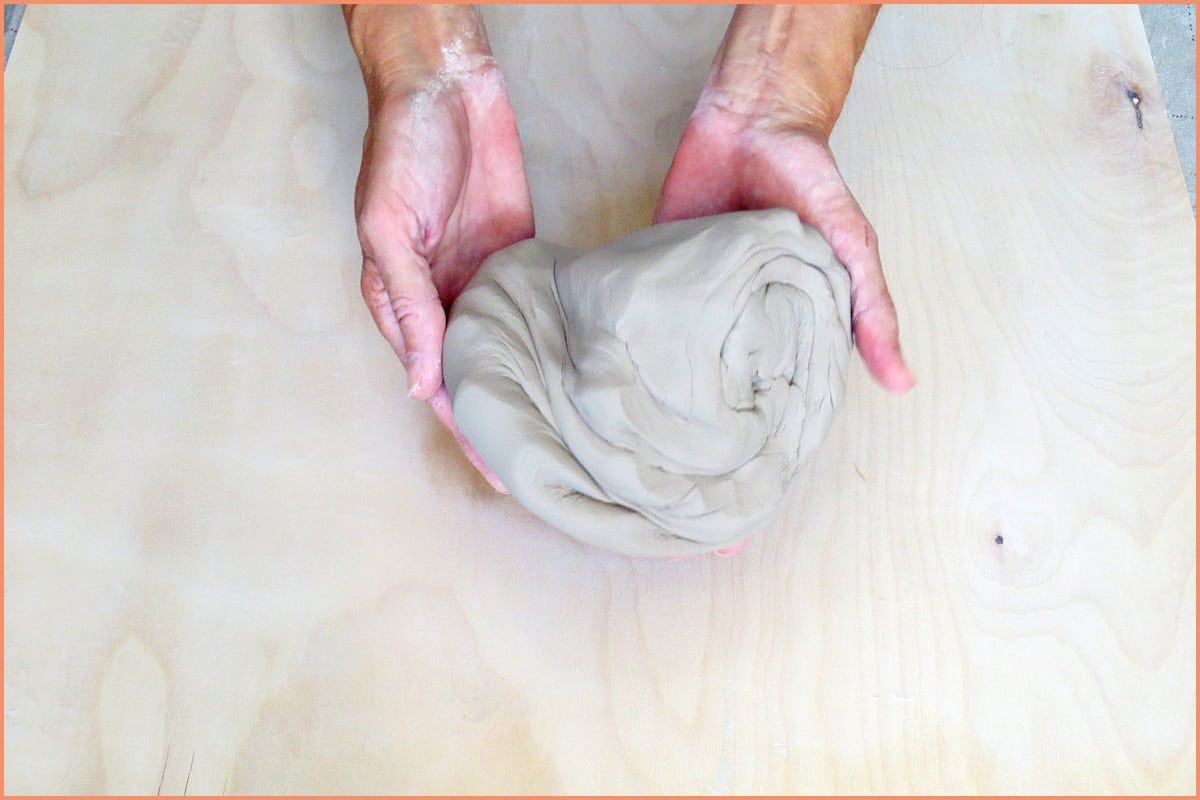
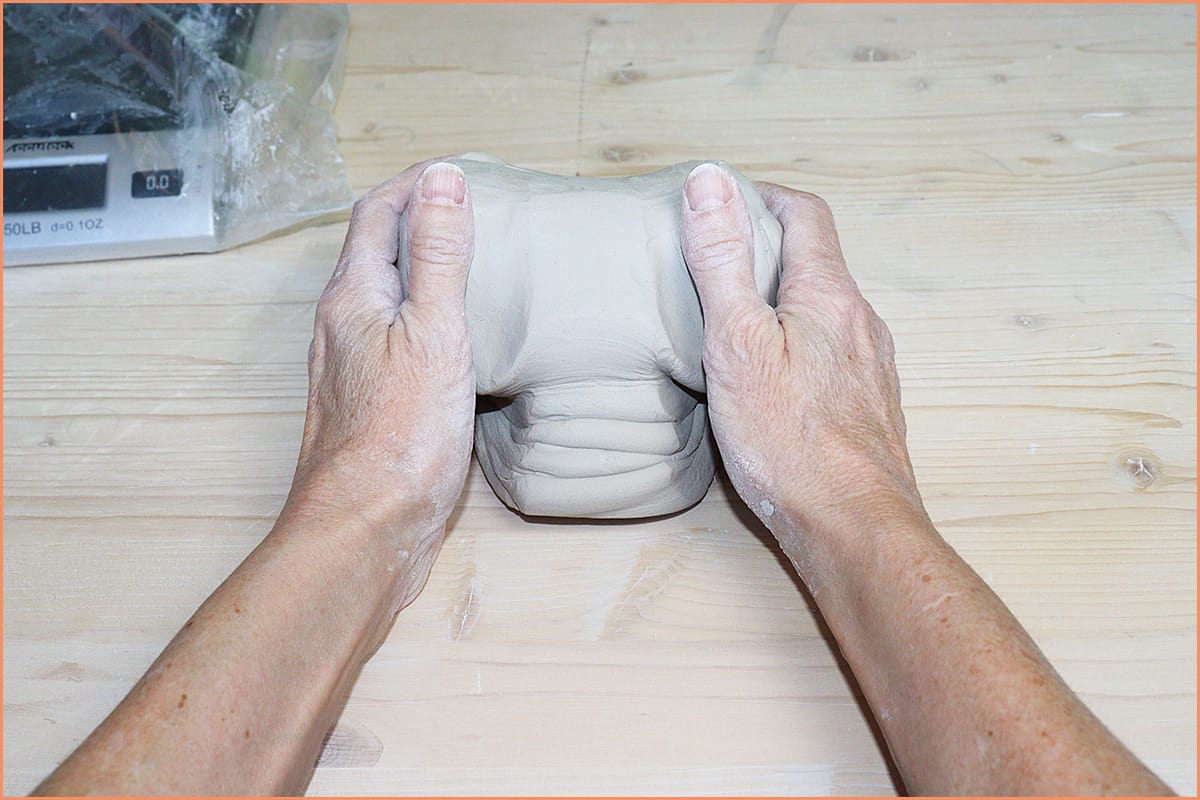
I like to wedge around 4 lbs at a time. My favorite is the spiral wedge. The spiral does have more of a learning curve, but once you master it, it’s the fastest way to wedge. If you don’t care for the spiral wedge, you can try the Ram’s Head. The ram’s head wedge is simpler and a great starting point for beginners.
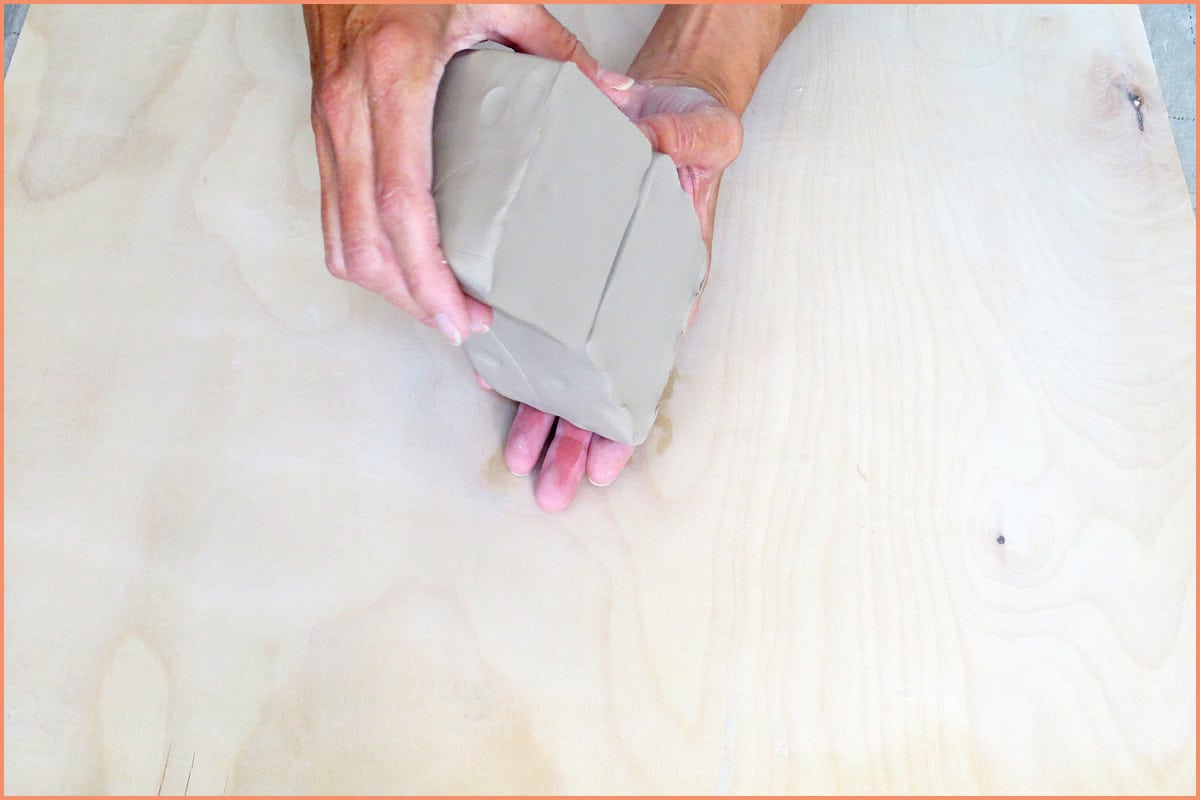
If you don’t care for the Ram’s Head, you can try the stack-and-slam, which is the easiest way to wedge and can be therapeutic at times. Just cut the clay in Half, Stack It, and Slam it on the table at least 4 times, rotating it each time. Repeat this process until the clay is wedged. The number of times that you do it depends on the state of the clay.
I have a post with a Video that goes through All Three Methods of Wedging so you can pick the technique that’s right for you.
3. Weigh Out Your Clay
Weighing out your clay is a good habit to get into to achieve consistent results. I always weigh out my clay before I start throwing. Using a Scale helps you keep track of the amount of clay for pottery projects such as mugs, bowls, and plates, especially if you want to make sets.

I usually weigh out about four to six balls of clay and place them in a plastic bag.

This will keep the clay balls from drying out, and the last ball of clay will be as good as the first.
4. Use Bats on the Pottery Wheel
Bats are helpful because they let you easily remove the piece from the potter’s wheel without destroying its shape, and you don’t have to wait for the clay to firm up before you take it off the wheel.
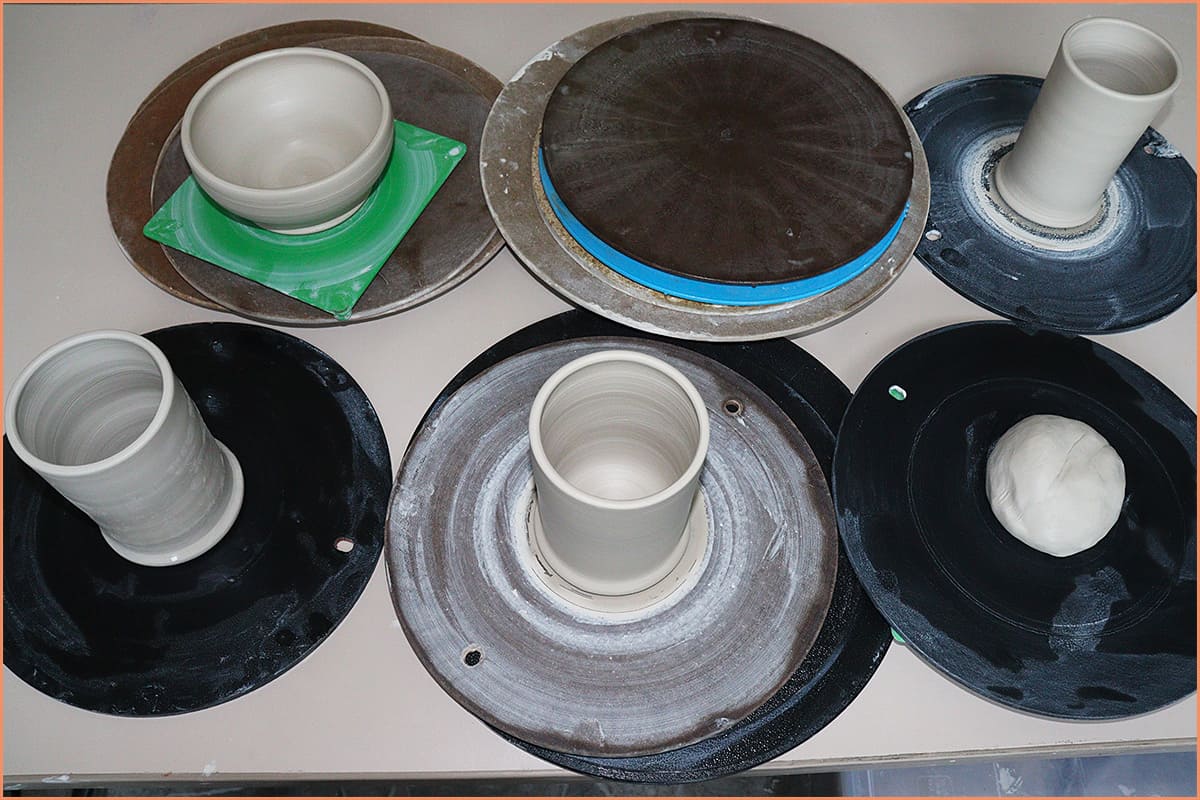
Yes, experienced potters can grab the pot right off the wheel when they finish throwing. I found it much easier to just take the piece off the potter’s wheel with the bat, place another bat on the wheel, grab another ball of clay, and continue throwing.
If the Bat gets loose, you can get a Bat Mate. It helps secure the bat to the wheel. Get the Bat Mate wet, then place it on your pottery wheel. This one was blue when I bought it years ago, and then place your bat on top.
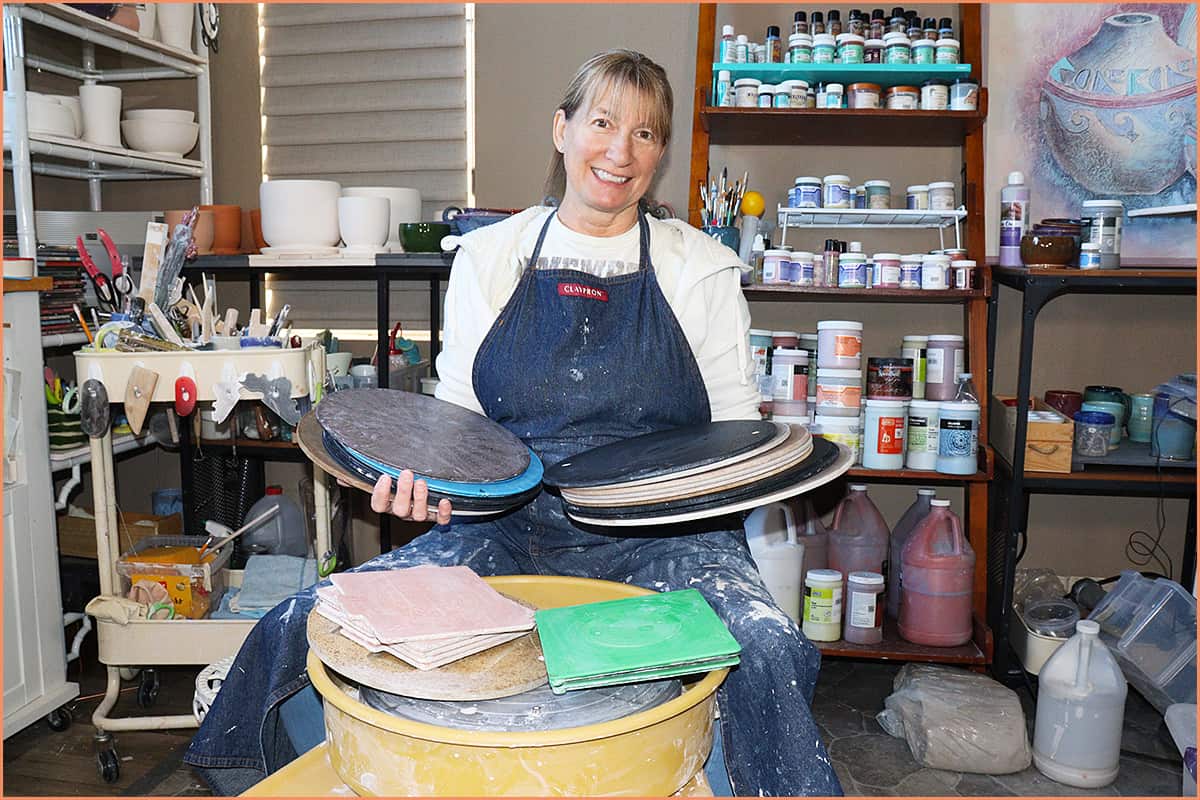
There are different types of bats available, including plastic, plaster, and wooden bats. Each type has its pros and cons. I have a detailed post with a video all about Using Bats on the Wheel, Including Types and Storage.
5 Clay sticking to the wheel head or the bat
This step may seem small, but it can make a big difference. If the pottery wheel head is too wet, the clay will slide around and will not stick to the wheel.

The same goes for the surface being too dry. The clay won’t adhere to the bat and will come loose.

For the clay to stick properly, the surface needs to be damp. Squeeze out your sponge and wipe the surface. Squeeze out your sponge and wipe it on the potter’s wheel or bat.

The clay will stick right to the surface. The clay will not come off unless you remove it with a wire cutter or it dries on the bat.
6. Develop a Good Centering Position
Centering clay can be difficult to master, but developing the proper position will make it much easier.
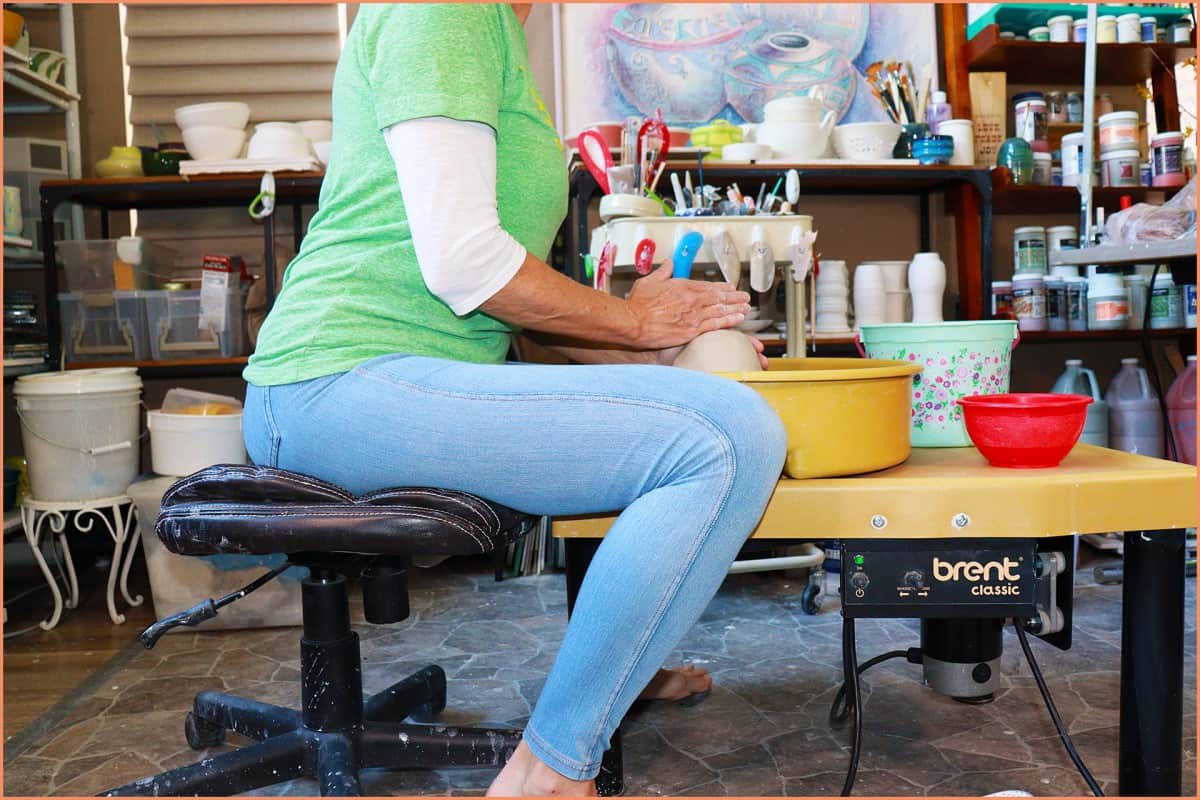
Place your legs as close to the splash pan as you can. Keep your arms anchored to your legs or your side, and keep your back straight.
Make sure you’re using the heel of your hand and that your wrist is bent. Lean your body into the clay and allow your whole body to join in the centering process. That way, the clay has nowhere to go except where you want it.
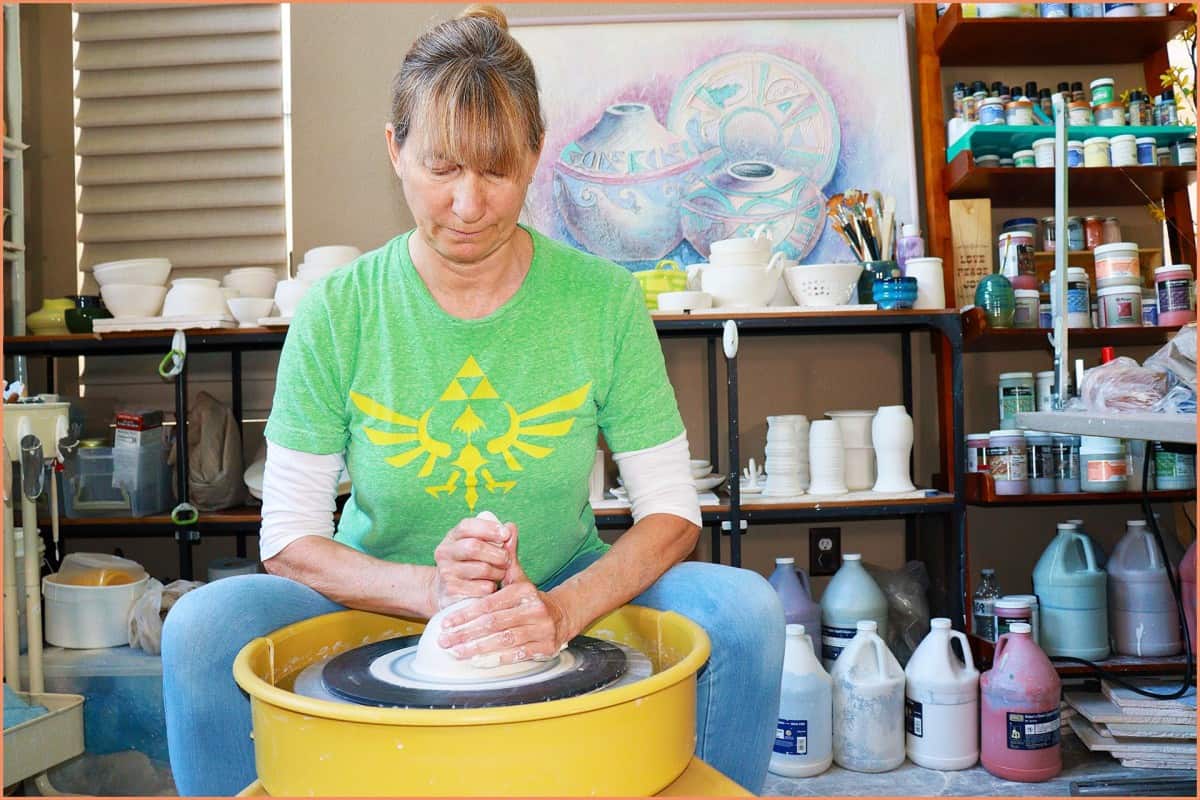
Centering clay is all about leveraging your body weight and staying relaxed. The more stable your position, the easier it will be to center the clay. If you don’t control the clay, it will control you.
7. Use a Sponge for Better Control
When centering and coning up the clay, you can use a sponge to add water in controlled amounts. This reduces the number of times you need to remove your hands, allowing you to maintain better control over the clay.
Load the sponge with water, then squeeze out a little water as you press down on the clay whenever it feels dry.

This way, you don’t have to take your hands off the Clay as often to add more water. Plus, you have more control over how much water you release onto the clay.

The Sponge also helps control the clay when coning it up. Remove the water from the sponge and press inward as you move the clay upward.

Load the sponge with water and continue centering the clay.
8. Use a Modeling Tool to Check Centering
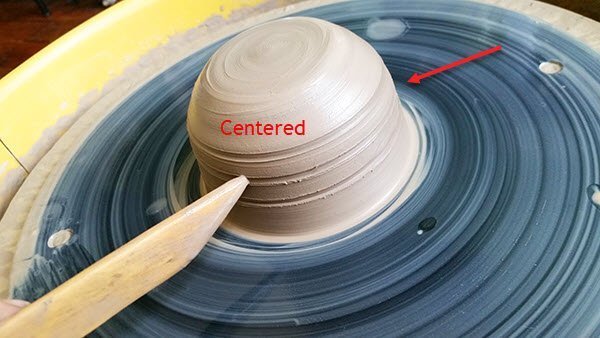
A simple trick to ensure your clay is centered is to use a Wooden Modeling Tool. Use the pointy end of the modeling tool to gently press it against the clay. Hold your modeling tool steady with both hands to keep it in one spot. Then, slowly turn the pottery wheel.
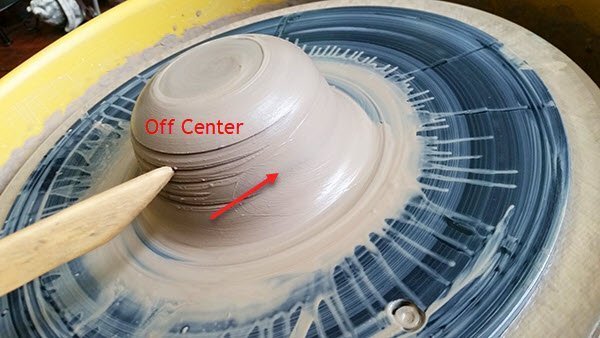
If you have a line on only one side, you know you’re off-center. Cone your clay back up. Anchor your hand, press down, and then try it again. When there are thin lines all the way around, your Clay is centered.
If you find centering frustrating at first, know that this is a common experience. It was the hardest part of throwing for me. For more detailed information on centering, I have a simple Step-By-Step Centering Video you can follow. I also have a post and video on Solutions for 11 Problems You May Run Into When Centering.
9 Check the Thickness of Your Clay
If you’re unsure how thick the clay base is, using a Needle Tool is the best way to find out. Stick the needle tool in the bottom of the pot until it hits the potter’s wheel.
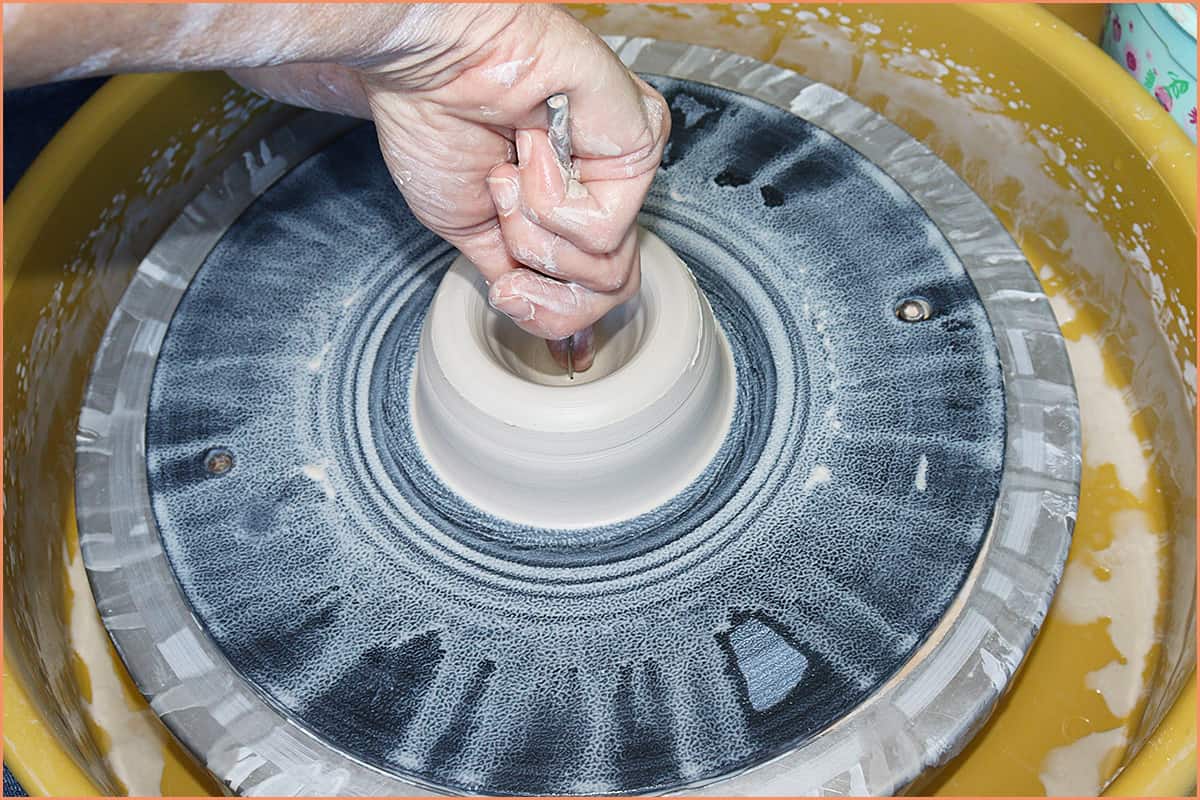
Slide your index finger down the needle tool until your finger touches the clay. Keep your finger on the needle tool as you remove it from the clay.
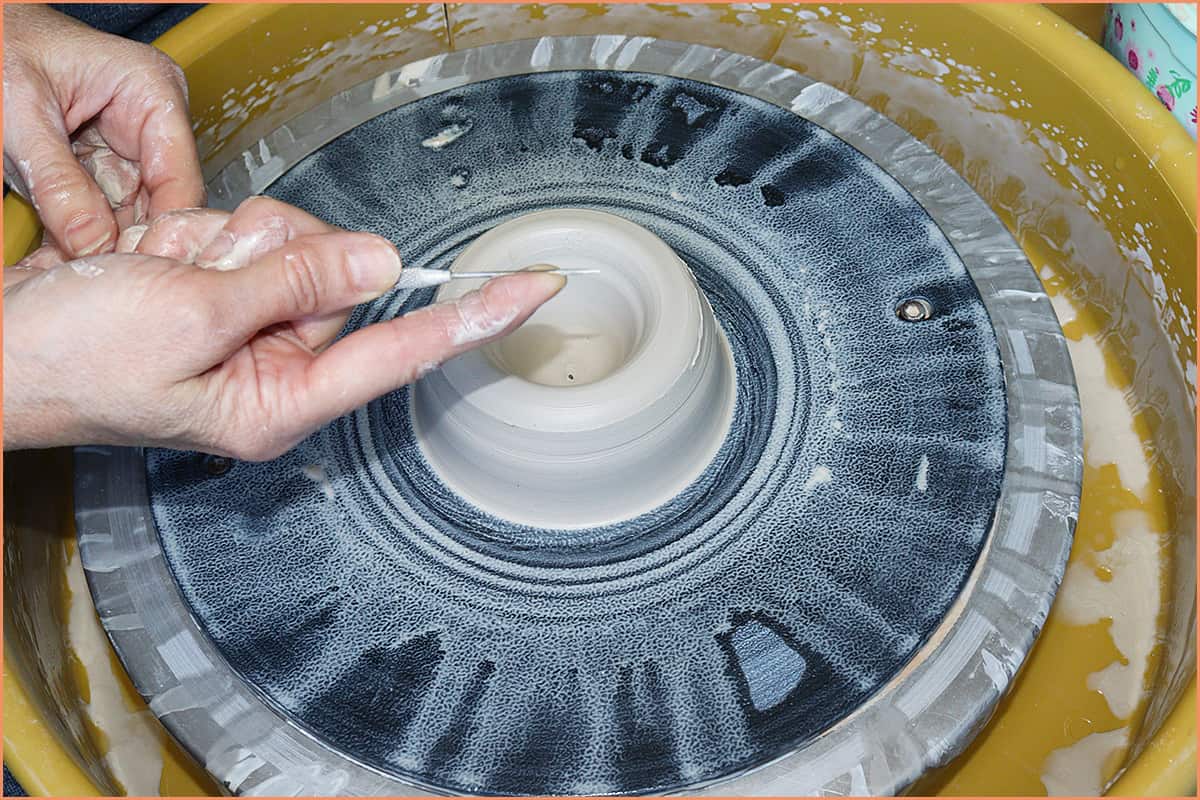
The thickness of the bottom is the distance between your finger and the tip of the needle. The thickness will determine whether or not you want to trim the bottom of the pot. If you’re trimming, leave around half an inch.

After removing the piece with the Wire Cutter and trimming it, you should be left with a quarter-inch of clay on the bottom.
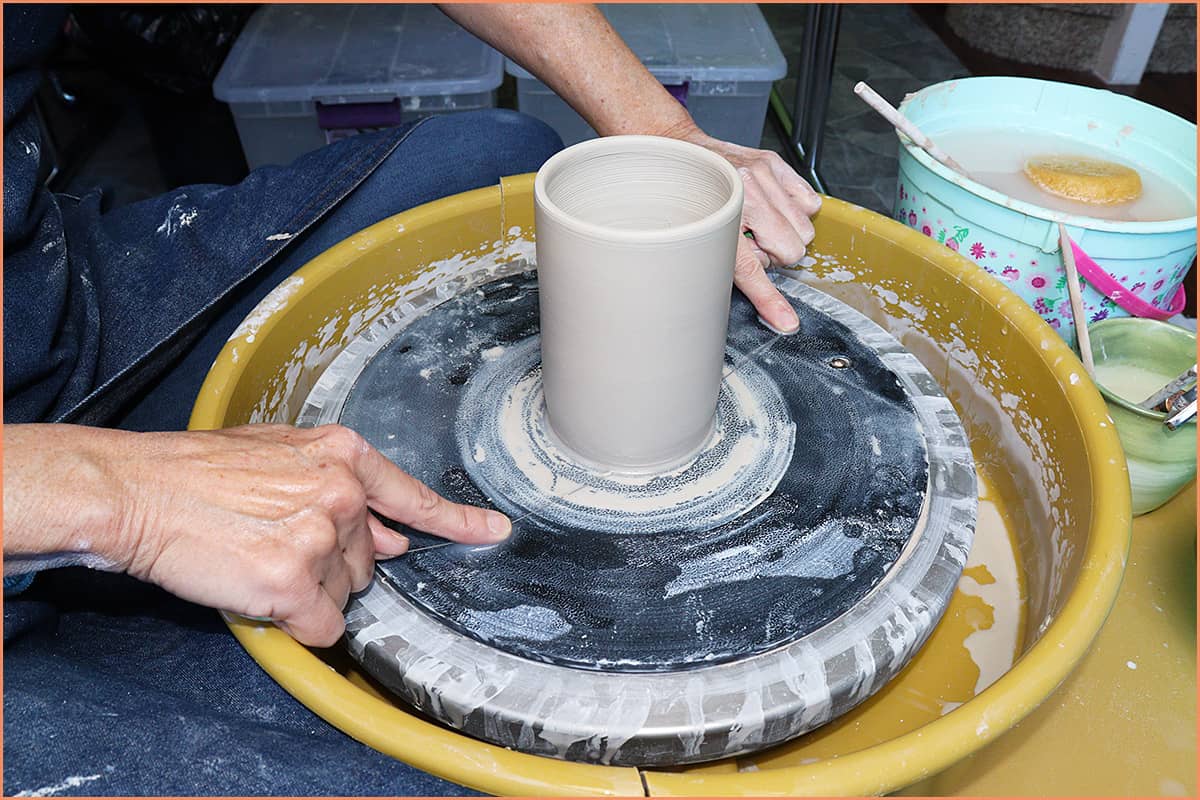
If you’re not trimming, you want about a third of an inch of clay on the bottom if you’re using a wire cutter, because after you cut it off, clay will be left on the wheel or bat.

If you allow your piece to just dry off the bat or wheel, you want at least a quarter of an inch of clay on the bottom. Checking the thickness regularly will help you get a feel for the right depth
10. Compress the Clay
Compressing the clay on the bottom aligns the clay particles, helping prevent S cracks. Soak up the extra water with a sponge. You can continue to use a sponge as I do or use your fingers.

Apply firm, even pressure as you move back and forth from the center to the edge of the bottom. You want to do this at least four times. This process also removes excess water that may have pooled at the bottom.
11. Keep the Clay From Flaring Out
Flaring is a common issue, especially when the wheel is rotating too fast while pulling the walls. When pulling up the walls, you want to angle your outside hand inward because the centrifugal force of the wheel naturally wants to create a bowl.
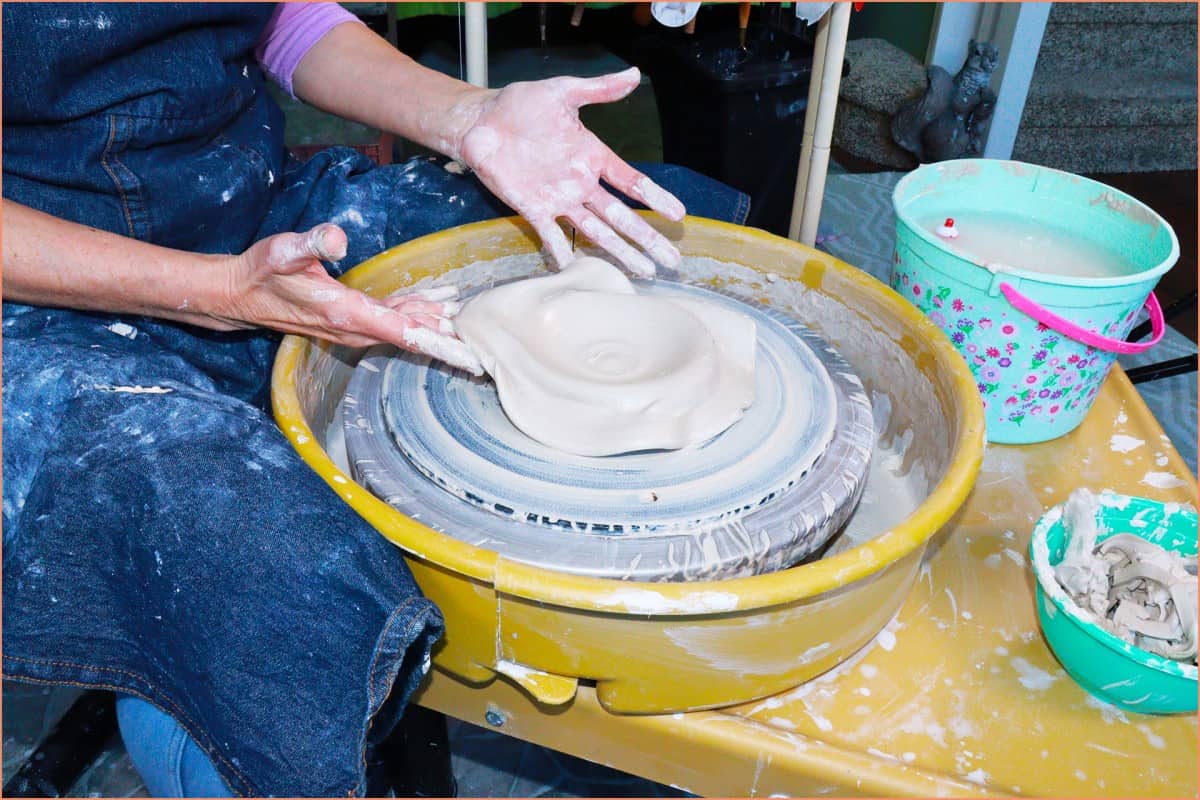
If the cylinder does start to flare out, get both hands wet and collar in the clay by wrapping them around the top area of the pot and slowly pushing the clay inward.
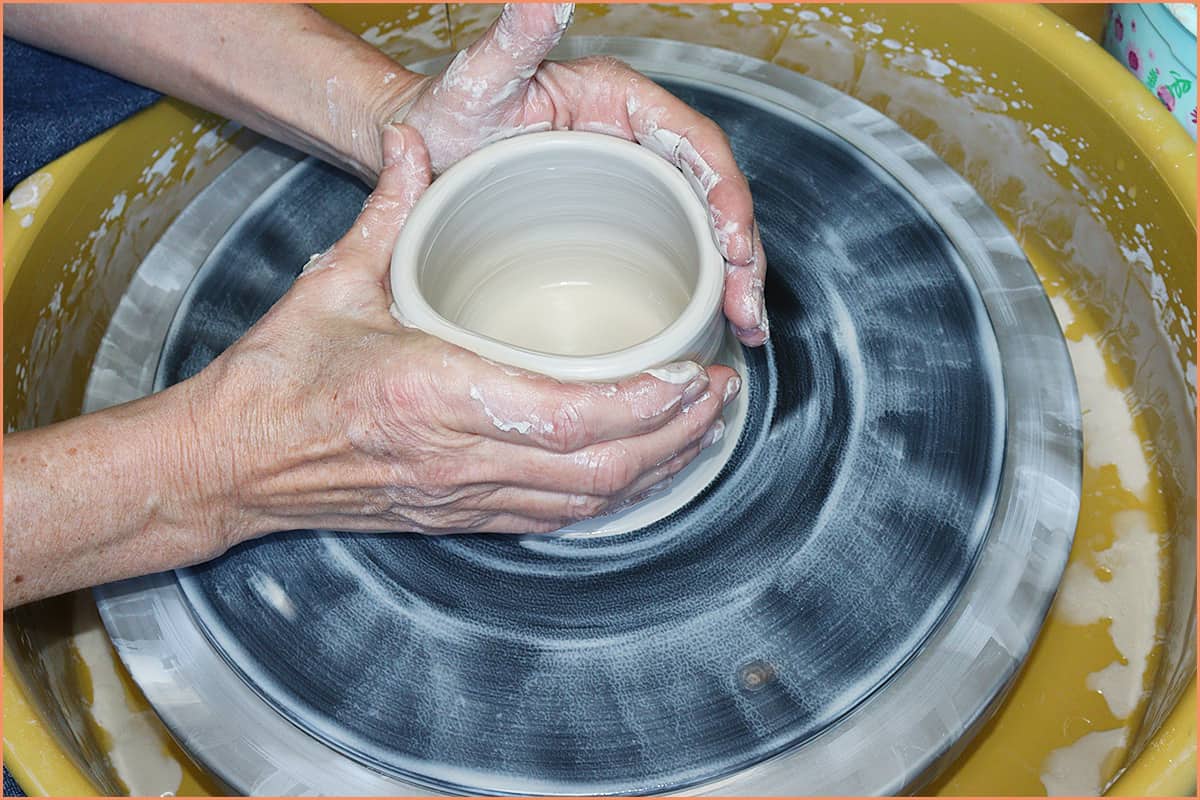
This technique is particularly useful when you’re trying to create taller forms, as it keeps the walls straight and stable. Also, make sure the wheel is not rotating too fast.
12. Find the Right Speed
As your skill grows, so will your speed control. Some Potters like the Pottery Wheel a little slower because it gives them more control over the clay, while others like me prefer the wheel a little faster. Because it’s more fun.
Be aware that throwing faster increases the chance of your clay flaring out and collapsing. You can change the speed at different stages of throwing.

When Centering faster is better. You want the pottery wheel to spin fast enough to use the centrifugal force to your advantage. High to medium-high speed is recommended. If you go too slow, you’ll have less control over the clay, making it harder to center.

After you Center, slow the wheel down to throw your clay. Most Potters will rotate their wheel between medium and medium-low. As you go through the process of throwing, you will find the speed that works best for you. Remember, not too fast and not too slow.

For detailed info on the speeds for different stages of pottery making, including centering, opening, and pulling up walls, check out my guide on How Fast Should a Potter’s Wheel Turn?
13 Apply even pressure as you pull up the clay.
Applying consistent pressure when pulling up the walls will help you avoid uneven thickness and potential collapses. It’s important not to squeeze too hard or grab too much clay from the bottom right away.

On the other hand, too little pressure will result in thick, bulky walls that are difficult to shape. Anchoring your hands together helps to stabilize your movements and maintain consistent pressure throughout the pull.
14. Balance Water Use
It’s important to keep the clay smooth as you’re pulling up the walls. Friction can cause the clay to catch on your fingers and misshape or collapse.

When you feel any friction from the clay, apply more water. Keep in mind that the more times you pull up the clay, the weaker the clay gets, so if you add too much water or overwork the clay, the clay will start to weaken and collapse because the clay starts to soak up water and separate the clay particles.

You can remove the extra water with a sponge. This will help compress the clay particles again, allowing you to reintroduce water and help your vessel hold its shape longer.
For most beginners, the cylinder will collapse a few times before you get the feel of the clay, but that’s okay. It’s part of the learning process. The great part is it’s only clay, and it can be recycled and reused.
15 Don’t Pull Up the Walls Too Quickly
Take your time when pulling up the walls of your piece. A common mistake that beginners make is pulling up the walls too quickly. This can lead to uneven thickness or even the collapse of the vessel.

Allow the wheel to make at least one full rotation before moving your fingers up the clay. This slow, steady approach ensures the clay is evenly distributed and properly compressed.

This also helps you maintain better control over thickness and height, resulting in a more stable piece.
16 Pulling up the Walls in Different Ways
There are several techniques you can use to pull up the walls, such as the crab claw, knuckle, sponge, or fingers. These are the ones that I know of.
Crab Claw
The Crab Claw involves using your thumb and index finger to pinch and pull the clay upward. Some Potters feel it gives them more control over the clay.

Knuckle
Another way is to use your knuckle. Press the knuckle on the outside of the clay and pull upwards to form the wall.

Sponge
A Sponge can be used to help maintain an even amount of water on the clay, reducing friction and allowing for smoother pulls.

Because the sponge is in contact with more of the clay than your knuckle or fingers, it helps control the clay better.
Fingers
Using your fingers is one of the most popular ways, and it is recommended that beginners get the feel of the clay.

Try each one and see which one suits you best.
17. Level the Rim with a Needle Tool
A level rim is important for both the appearance and functionality of your pottery piece. If it’s lopsided, use a Needle Tool to level it.

Carefully insert the needle through the clay at the exact height where you want to level the rim. With the needle tool in place, slowly rotate the wheel as a cylinder spins.

The needle tool will cut off the excess clay and create an even surface. After leveling, compress the rim with your fingers or a sponge to smooth it out and prevent cracks.
18. Measure Wall Thickness
If you don’t want to cut your cylinder in half to check its thickness when throwing, you can use a needle tool or even a needle to measure the cylinder’s wall thickness. This helps ensure your piece has evenly spaced walls throughout. Uneven wall thickness can lead to problems during drying and firing, such as cracks or warping.
Measuring the wall is similar to measuring the bottom. To measure the sides, I use the thinnest needle I have so I don’t poke holes in the side of my cylinder.

Place your finger all the way down on the inside of the cylinder, then poke the needle tool through just above the base of your piece until it touches your finger.

Then, place your finger on the Needle Tool and gently press against the clay. Keep your finger on the needle as you remove the needle tool from the clay, then work your way up the cylinder to check that the thickness is even.

If it’s even like this, you’ve done a great job. If not, continue to pull up the walls.

By measuring the thickness as you work, you can bring more clay up from the base as needed. This practice will also help you develop a better sense of how much pressure to apply when pulling up the walls, leading to more consistent results over time.
Remember, the goal is to create walls that are uniform in thickness from top to bottom, ensuring that your piece does not have a heavy bottom.
19. Remove Excess Slip with a Rib
Using a flexible rib can help you remove excess slip and refine the form of your pottery piece. It also helps to smooth out the surface and strengthen the structure. You can use both a Metal Scraper or a Soft Palmer Rib. They both Bend and work well. It’ll be a matter of your preference.

Place your anchor hand on the inside to brace the clay. Start from the base and move upward with a smooth, continuous motion. Apply even pressure throughout the process, being careful not to remove too much clay or create unwanted indentations.

These ribs come in different sizes. This technique not only helps to refine the form but also strengthens the piece. Experiment with different ribs to find the one that works best for your needs. This step will not only improve the appearance of your piece but also help to strengthen it by compressing the clay.
20 Compress and Smooth Out the Rim.
While the sides are compressed simply by the act of throwing the clay, the top of the rim is not. Make sure you compress it by holding the sides of the rim with the thumb and index finger of your anchor hand, and place the index finger of your outside hand on the top of the rim.

This helps to stop the rim from cracking as it dries. Be careful not to press too hard and misshape the rim. You don’t want any sharp edges. You want the rim to be smooth and rounded.
You can also smooth it out with a Chamois. I cut a piece of chamois and attached it to this bobber. Remove excess water from the shammy and carefully run it along the rim. Be careful not to press too hard.

This works great, and the rim is nice and smooth. This simple step can make a big difference in the durability and usability of your finished pottery piece.
21. Create a Lip for the Foot
When trimming, consider creating a small lip at the base. Creating a lip on the foot is a good idea, especially for Potters who are afraid the glaze may flow too much. If the glaze is applied too thickly, the lip will stop the glaze from running. Of course, not always, but it’s better than not having a lip at all.
Use a Wooden Modeling Tool to form the base. Press the pointy edge of the pottery wheel next to the piece. You want to clean away as much clay from the base of the wheel as possible.

You can also consider getting an Ultimate Edger to form a foot. This single-edge side of the edger creates a nice-sized lip on the base of your Pottery. If you tilt the edger downward towards your wheel, you can create a smaller lip on the bottom of your piece. This is my go-to tool for making edges. A well-defined foot adds an element of sophistication to your piece, giving it a more professional appearance.

For a detailed guide on how to use the Ultimate Edger pottery tool, including its multiple functions and bonus uses, check out my post, The Ultimate Edger Pottery Making Multi-Tool.
If you prefer a visual guide, I’ve also created a detailed video on YouTube covering these 21 Pottery Wheel Throwing Tips. The video below complements these tips perfectly.
Conclusion
I hope these 21 tips help improve your wheel-throwing skills. Remember, pottery is a journey of continuous learning, and every mistake is an opportunity to improve. If the clay isn’t cooperating, take a break and try it again later. Sometimes, a fresh start can make all the difference.
Don’t be discouraged by setbacks—each failed piece is a step closer to mastering the craft. Keep experimenting and, most importantly, enjoy the process. Let’s stay dirty!