Skip to content
pottery crafter logo 2021
  • Beginner InfoExpand
    • Choosing Your Pottery Clay – Best Pottery Clay For Beginners
    • 21 Essential Pottery Clay Tips for Every Potter
    • 21 Essential Do’s and Don’ts for Making Pottery Every Potter Should Know 
    • 21 Pottery Wheel Throwing Tips
    • 21 Essential Underglaze Tips for Pottery
    • How I Started Making Pottery at Home – My Guide for New Potters 
    • What is Greenware Ceramics: Understanding Its Role in Pottery
    • Is Raku Pottery Expensive to Make?
    • 30 Beginner Pottery Wheel Projects | With Easy Instructional Videos
    • How to Dispose of Pottery Clay Water | 3 Proven Methods
    • 10 Tips on How to Become a Successful and Confident Potter
    • How To Make Colored Clay For Pottery – A 6-Step Clay Coloring Guide
    • 21 Tips for Hand Building Pottery
    • Pottery Clay Extruders – Uses and Functions
    • Is Raku Pottery Waterproof: Sealing Raku Ceramics
    • Is Raku Pottery Food Safe: What You Need to Know
    • Can Pottery Clay Be Frozen
    • Stoneware Clay Vs. Porcelain Clay – Details and Facts Explained
    • 21 Pottery Clay Slip Questions Answered
    • What Is Potters Clay Made Of – Pottery Clay Ingredients Explained
    • How to Store Pottery Clay
    • How to Prevent Pottery Clay From Cracking While Drying
    • How to Throw Clay on the Pottery Wheel: A Step-by-Step Beginners Guide
    • How To Use a Pottery Kick Wheel (Ultimate Guide)
    • 7 Best Surfaces for Hand Building
    • How To Do Pottery With Long Nails – 5 Tips To Remember
    • How To Use Bats on a Pottery Wheel | Types – Usage – Storage
    • Can Air-Dry Clay Be Used on the Pottery Wheel – 3 Brands Tested
    • What Causes Pinholes in Pottery Glaze and How To Prevent Them
    • What Is the Difference Between Stoneware and Earthenware Clay
    • Can Broken Pottery be Repaired?
    • Pottery Wheel Positions and Posture – All You Need to Know
    • How to Make Kiln Cookies in 6 Easy Steps – With a Video
    • Can Handmade Pottery Go In The Dishwasher?
    • How to Make Pottery – 8 Step Pottery Making Process
    • How to Start a Home Pottery Studio
    • Which Direction Should a Potters Wheel Turn
    • Online vs In-Person Pottery Classes – A Beginners Guide
    • Are Pottery and Ceramics The Same Thing
    • Plain Clay Slip
    • Colored Clay Slip
    • 11 Problems Centering Clay and Easy Ways to Fix Them
    • 21 Kiln Questions Answered
    • 9 Common Pottery Wheel Mistakes and How to Fix Them
    • Wax Resist Tips | Protect – Decorate – Design
    • What Are Sponges Used for in Ceramics?
    • The Four Types of Clay
    • What Is Wax Resist in Pottery Used For
    • Why Every New Potter Should Take a Pottery Class
    • What To Wear When Doing Pottery
  • Product ReviewsExpand
    • Beginner-Portable-Full Size Pottery Wheel Review: Which Wheel Type Is Right for You?
    • The Original Giffin Grip and Giffin Grip Mini – Review and Comparison
    • Giffin Grip vs. Bailey Quick Trim 2: The Detailed Differences 
    • Brent CXC Pottery Wheel – OWNERS REVIEW – Buyers Guide
    • Skytou Pottery Wheel Pottery Forming Machine – OWNERS REVIEW
    • Speedball Artista Pottery Wheel – Owners Review Buyers Guide
    • Pottery Wheels Reviewed
    • Shimpo Ceramics Rebranding – A Huge Undertaking
    • The Ultimate Edger Pottery Making Multi-Tool Review
  • Buyer GuidesExpand
    • Gift Ideas for Potters – Pottery Crafters Gift Guide
    • 10 Things to Consider When Buying a Used Pottery Wheel
    • Pottery That Sells Well – 9 Pieces All Potters Should Make and Sell
    • Ultimate Pottery Glazing Tools & Supplies Guide
    • Buying a Pottery Kiln | Facts Features and What to Consider
    • Choosing an Electric Kiln – A Step-by-Step Buyer’s Guide
    • Choosing a Pottery Wheel – Step-by-Step Buyer’s Guide for Beginners
    • Best Pottery Tool Sets Under $18
    • Best Glaze Brush Sets
  • Projects & SuppliesExpand
    • Berry Bowl
    • Bowl with Chopstick Holes
    • Bowl with Chopstick Holes
    • Berry Bowl
    • Cat Bowl
    • Casserole Dish
    • Ceramic Citrus Juicer
    • Creamer
    • Honey Jar
    • Incense Holder
    • Kitchen Utensil Holder
    • Mortar and Pestle
    • Mug with a Gallery Lid
    • Piggy Bank
    • Succulent Plant Holder
    • Sugar Bowl
    • Toothpick Holder
    • Vase
    • Yarn Bowl
    • Plain Clay Slip
    • Colored Clay Slip
  • GlazingExpand
    • Can Pottery Glaze Be Frozen
    • Do You Have to Glaze Pottery  
    • What is Glaze Made of — Ceramic Glaze Ingredients
    • Is Pottery Food Safe Without Glaze?
    • Do You Need a Kiln to Glaze Pottery at Home 
    • How to Remove Glaze From Pottery
    • How to Choose Pottery Glaze – A Beginner Glaze Guide
    • What Is Crazing in Ceramics and How To Prevent It!
    • Can You Bisque and Glaze Fire Pottery at the Same Time?
    • Sponge Glazing
    • Glaze Grinding
    • Applying Underglaze on Greenware vs Bisqueware – Which Is Best
    • What is The Difference Between Glaze and Underglaze
    • Underglazing with Split Cups For a Marbling Effect – A Step-by-Step Guide  
    • Can You Layer Underglaze
    • How Do You Mix Underglazes / Tips to Mix Underglazes
    • Underglazing Pottery | Glazing Tips Tools and Ideas
    • Bubble Glazing
    • Sponge Underglazing
    • Sponge Glazing Ombre Glazing
    • What Is Slip Trailing | Glazing Tips Tools and Ideas
  • Kiln TipsExpand
    • Kiln Maintenance Guide: Tips for Top Performance  
    • The Differences Between a Raku and Electric Kiln Explained
    • What Is the Difference Between a Gas and Electric Kiln
    • What Temperature Do I Bisque Fire Pottery Clay To?
    • Is it Recommended that a Pottery Kiln Be Vented?
    • The Ultimate Guide to Troubleshooting Kiln Problems
    • Are Pottery Kilns Safe – Beginner Kiln Questions
    • How To Use a Pottery Kiln at Home – 13 Tips To Remember
    • What Is A Kiln Sitter? Everything You Need To Know
    • At What Temperature Can You Open a Pottery Kiln?
    • What Is Kiln Wash – Kiln Shelf Protection Guide
Recommended Tools
  • Pottery Wheels
  • Kilns
  • Clay
  • Tools
  • Glazes
  • Brushes
  • Bats
  • Stools
YouTube YouTubePinterest PinterestInstagram Instagram
pottery crafter logo 2021
Pottery Crafters
Tools I Endorse

Pottery Wheel Positions and Posture – All You Need to Know

ByMarie Updated onNovember 5, 2021
Home / Beginner Info /

There are different opinions as to which way is better, Sitting or Standing. Sitting down may give you more control over your clay, but Standing up may be easier on your back. Regardless of the type of Pottery Wheel, you decide to get – Sitting or Standing – there are still proper body positions and correct posture to be aware of.

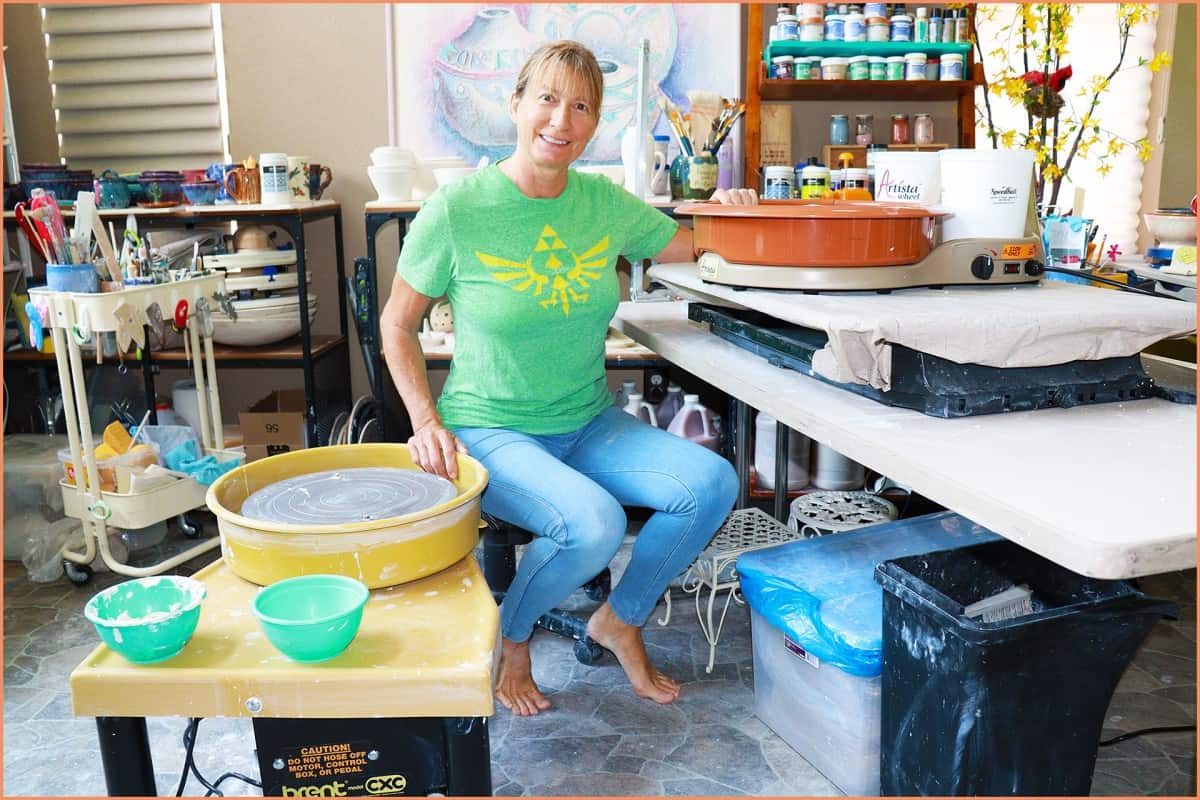
I have a Full-size sit-down Brent CXC and a portable tabletop Speedball Artista to demonstrate the different positions for each wheel. I’m going to show you the proper Sitting and Standing positions while Throwing your Clay to help you be as comfortable at the wheel as possible!

Table of Contents
  • Sitting Position at the Pottery Wheel
  • How Do You Sit at a Pottery Wheel
  • What is the Best Stool for Pottery?
  • Pros and Cons of Sitting at the Pottery Wheel
  • Standing Position at the Pottery Wheel : What You Need to Know
  • How Do You Stand at a Pottery Wheel
  • How High Should a Standing Pottery Wheel be?
  • Pros and Cons of Standing at the Pottery Wheel
  • Adjust the Pottery Wheel Height According to Your Body
  • Avoid Throwing on the Wheel for a Prolonged Time.
  • Posture Matters when Throwing on the Pottery Wheel
  • Conclusion

Affiliate Disclaimer: We are ambassadors or affiliates for many of the brands we reference on the website.  As an Amazon Associate, I earn from qualifying purchases.

Sitting Position at the Pottery Wheel

Most new Potters will learn the Sitting down Position first. It’s the original way to throw your clay, and will always be the most popular way to make pottery. When you sit down to throw your clay, make sure your body position is comfortable and feels right.


How Do You Sit at a Pottery Wheel

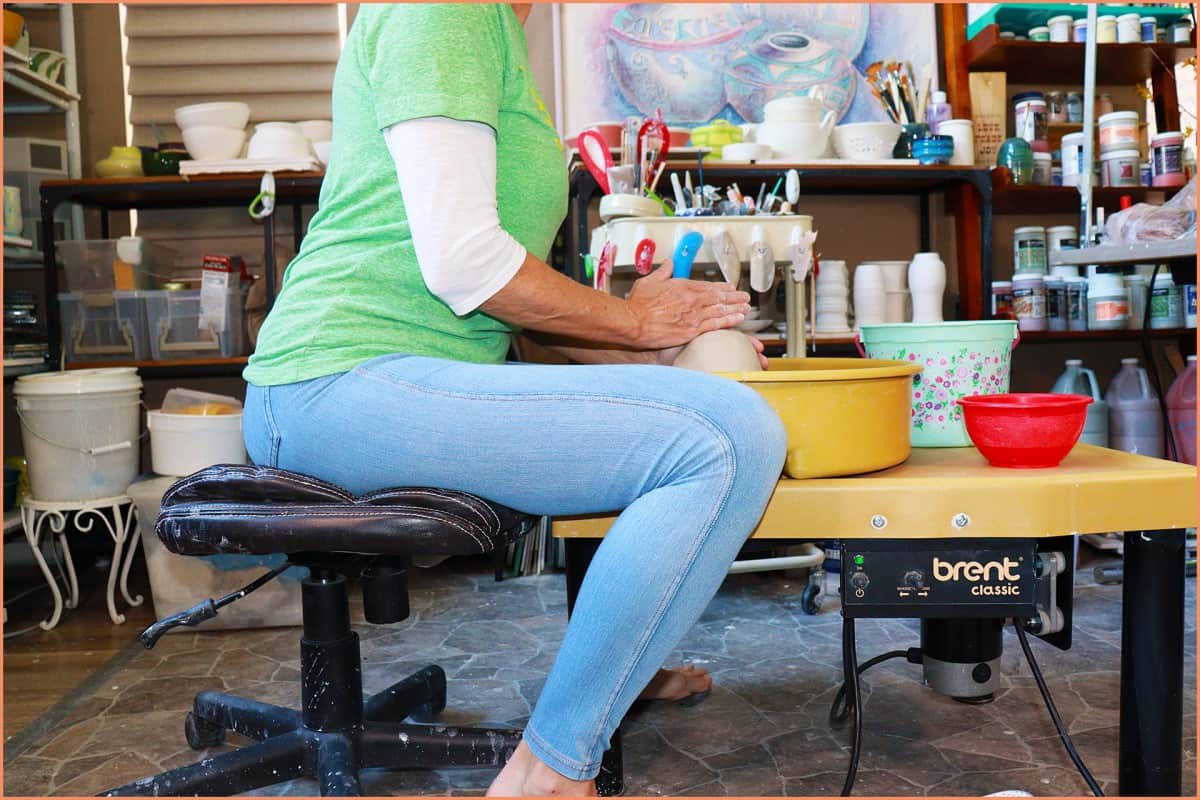
Your posture makes a big difference when sitting at the wheel. You want to relax your body and remember to breathe. You will use your core body muscles, tuck your arms in and anchor them to your legs or the side of your body and let the process guide you at the wheel. Keep your back straight and remain close to the wheel using your whole upper body instead of just your arms and hands.


Try not to hunch over the wheel because this will ruin your back over the long term.
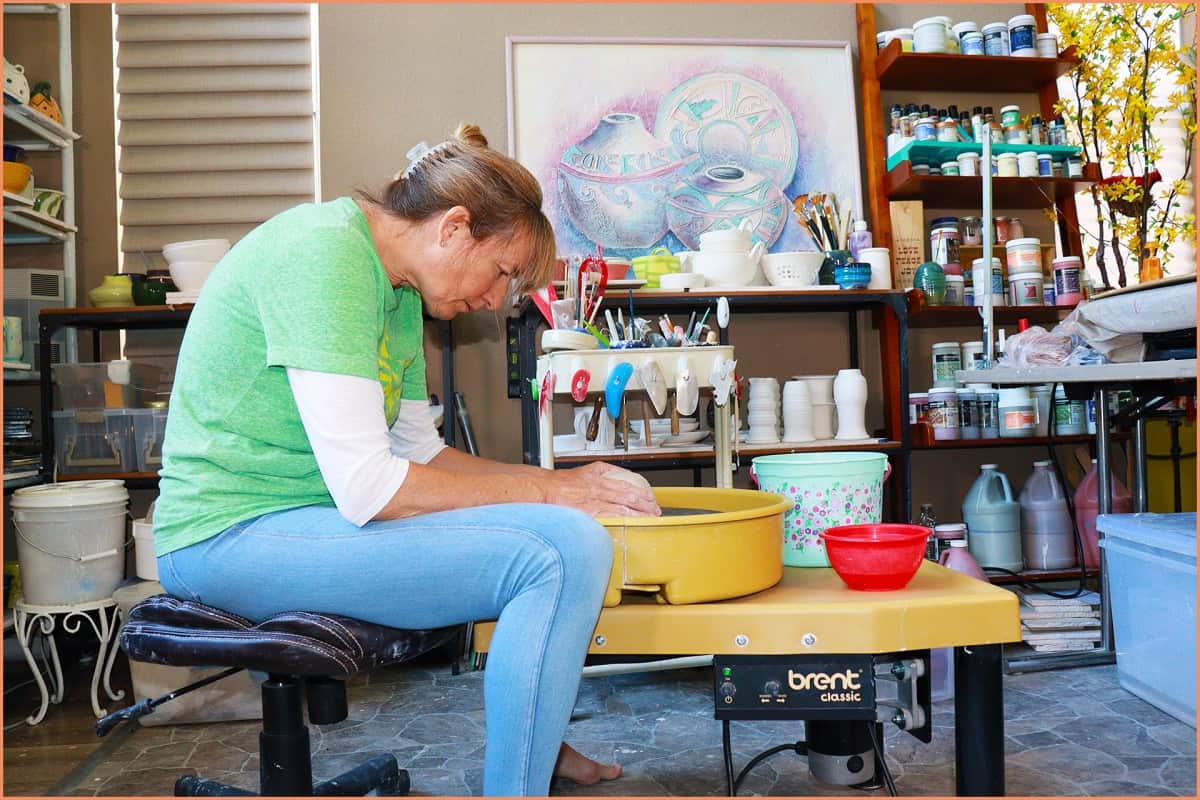

Some potters don’t sit close enough to the wheel. If you’re not close enough to the wheel, you may have to hunch over to work at the wheel. As you sit at the wheel, you want to sit with your pelvis pulled forward to align it with your spine. Hunching leaves the spine unsupported, which weakens the muscles over time.

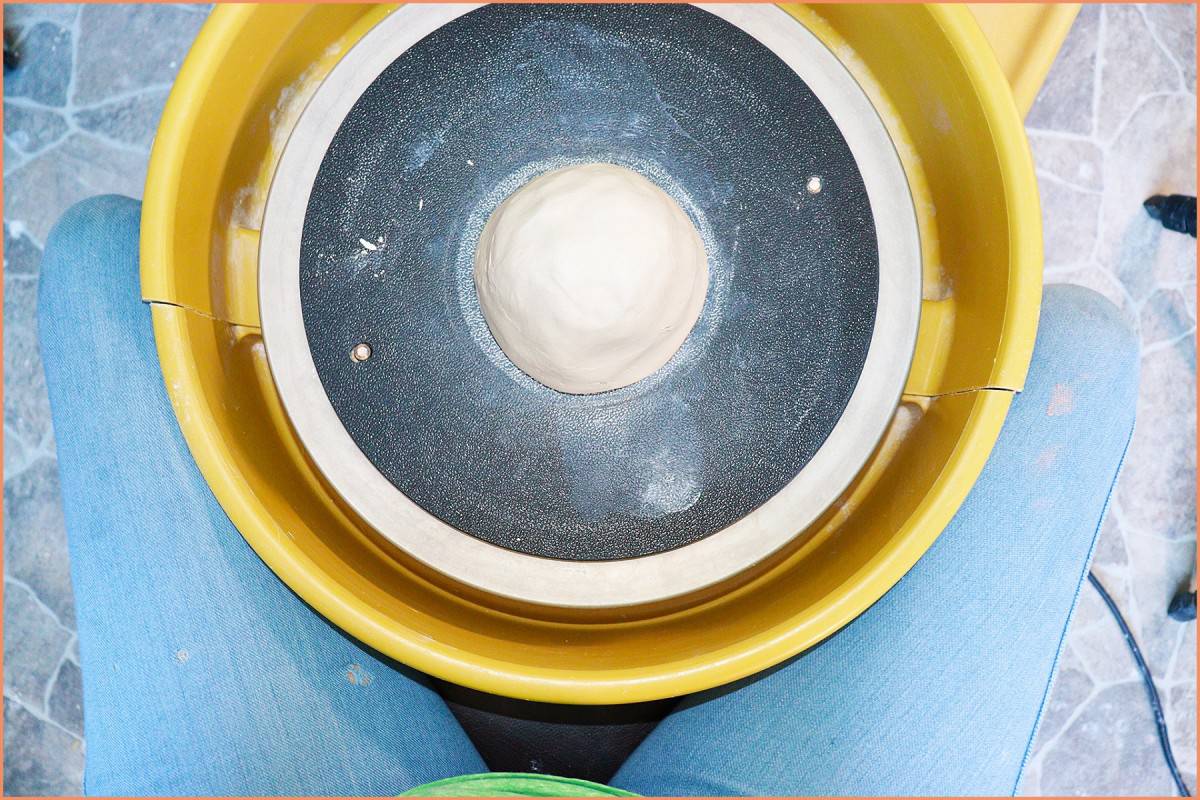
Most potters say to sit with your stool parallel to the pottery wheel stand and your legs wrapped around the splash pan.


Be careful not to squeeze your legs against the splash pan as it is stressful on the body when throwing. Plus it can hurt your legs after a while as did with me when I started throwing. And remember a big part of the art of throwing clay on the wheel is to relax as you are creating with the clay.

What is the Best Stool for Pottery?

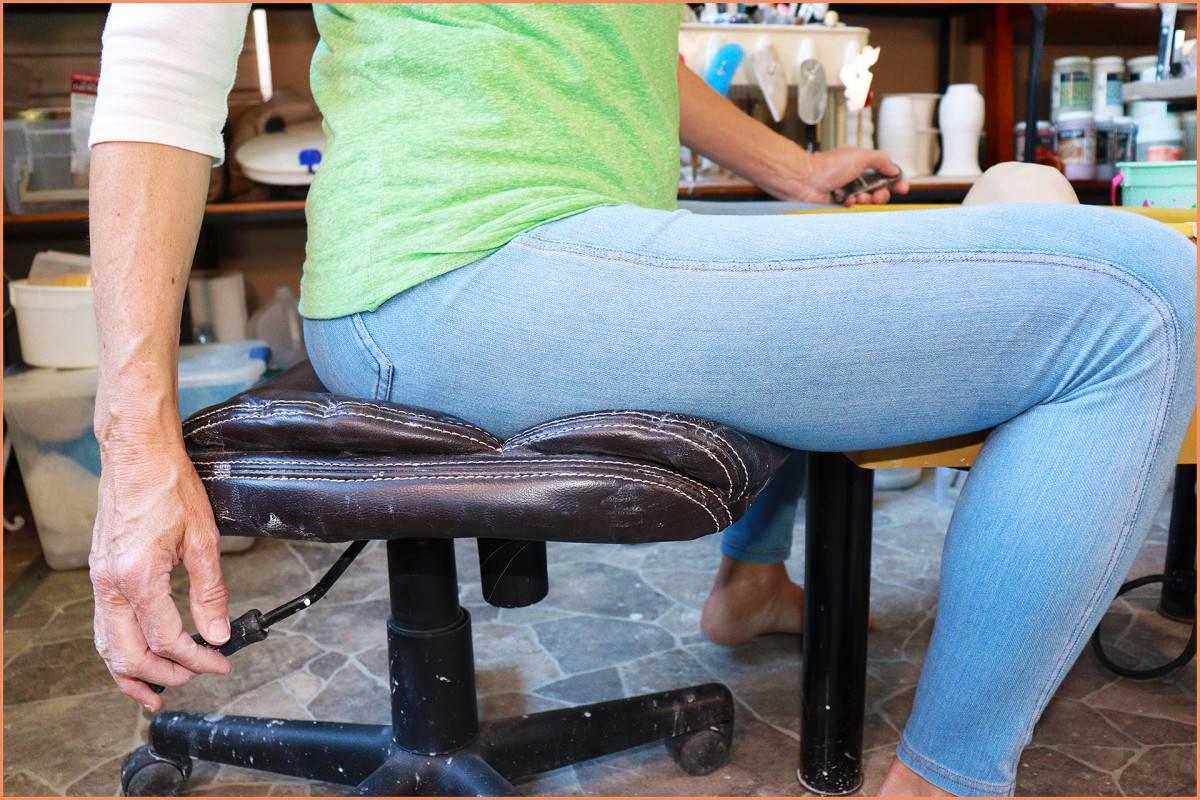
Many times, potters use an uncomfortable Stool. You may want to use a Pottery Stool that is comfortable enough for a good long pottery-making session. Your technique and body position can also make a huge difference when it comes to throwing at the wheel.


Does your seat sit higher than the wheel head? If so, position it so that your knees sit level with the wheel head. That promotes good circulation in the legs while feeling comfortable too. From the sitting position. You will want a stool or chair that is adjustable so you can find the height that is right for you. For more detailed information on selecting The pottery stool or chair that’s right for you check out My Top 4 Pottery Stools

Pros and Cons of Sitting at the Pottery Wheel

Let’s take a look at a few of the pros and cons so that you can make up your own mind on whether you would prefer to sit or stand at the wheel. Each comes with its own advantages and disadvantages.

Pros

  • Most popular position throughout the pottery world
  • Easier to stay steady while sitting
  • Takes the pressure off the back when in the proper position
  • Feels less mechanically complicated than the standing position
  • Easier to center clay in the sitting position

Cons

  • Hard on those with a bad back and can further inflame back problems.
  • Easy to take on bad posture habits like leaning and hunching over.

Standing Position at the Pottery Wheel : What You Need to Know

Standing at the pottery wheel has become a more common position for throwing with portable pottery wheels like the Speedball Artista Table Top Wheel and the Shimpo Aspire Pottery Wheel. There are also full-size pottery wheels that have leg extensions.
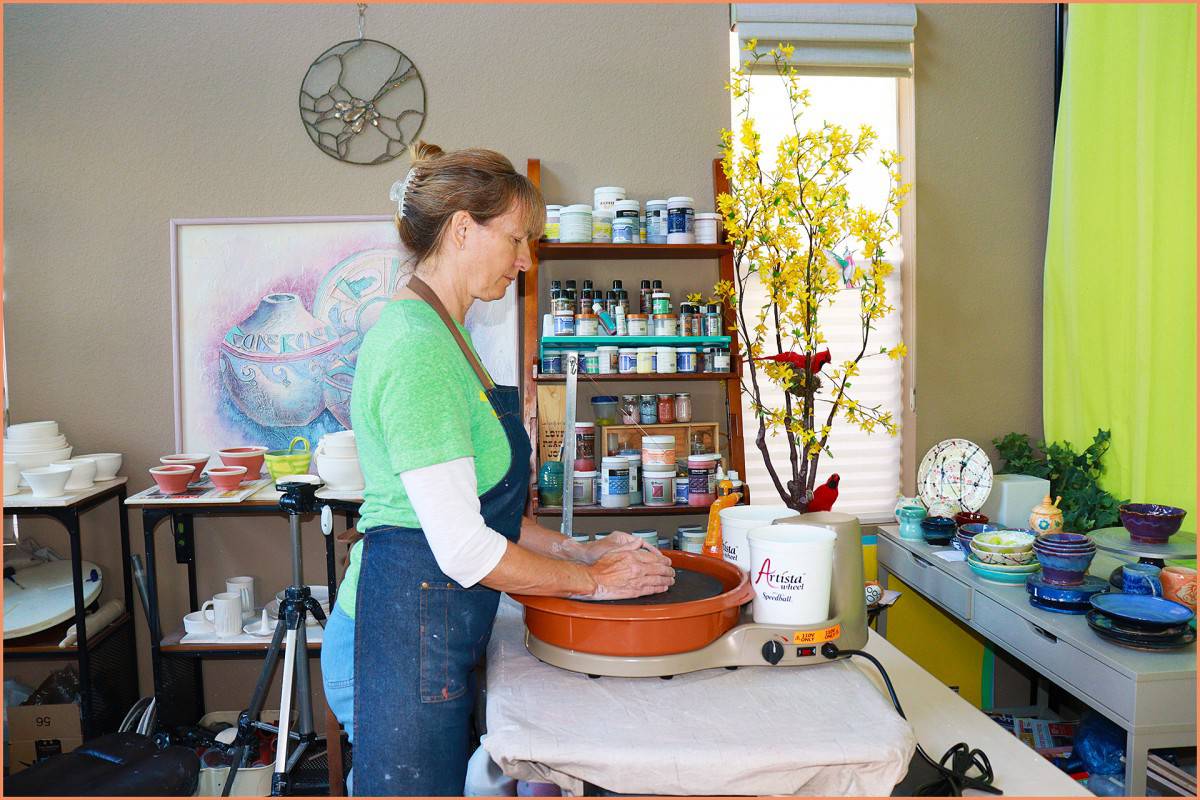

The standing position helps to eliminate pressure on the back, but you should be aware of how it can put pressure on your knees and ankles.

How Do You Stand at a Pottery Wheel

It takes a little more time to learn how to throw in the standing position. Have your feet parallel to your hips and keep your back straight. Allow your whole body to help you center and throw the clay. Keep your elbows close to your body for more leverage with the clay.
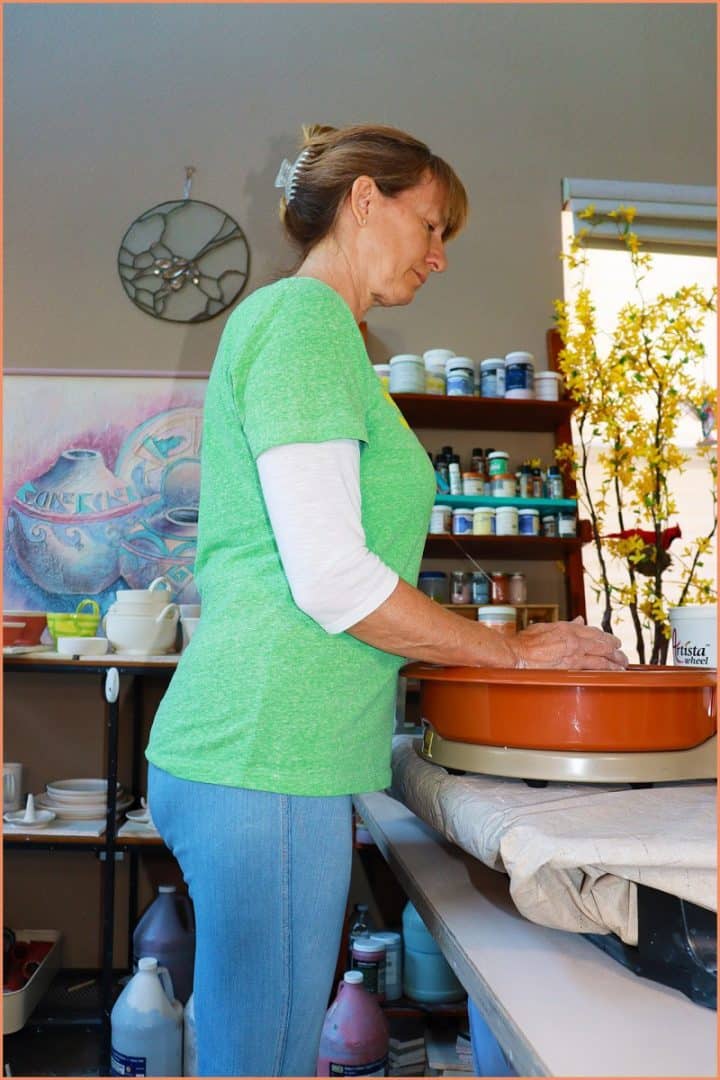


When you stand, you should use your whole upper body to throw, not just your hands and arms because the incorrect use with your elbows in the air will put stress on the wrists and shoulders.

How High Should a Standing Pottery Wheel be?

When standing, the wheel head should sit around belly height. You don’t want the wheel too low because your back will bend, which can have the same effect as the sitting position. Put it too high, and you won’t be able to center and get the right angle on your clay to throw properly.


Expert Tip: Everyone has different body issues, and what works for one person may not work for the rest. Do what feels right, but check to see that it won’t lead to pain over the long term. 

Affiliate Disclaimer: We are ambassadors or affiliates for many of the brands we reference on the website.  As an Amazon Associate, I earn from qualifying purchases.

Pros and Cons of Standing at the Pottery Wheel

Standing has multiple advantages for potters, but many potters still prefer the sitting position because it feels more comfortable. If you want to do the sitting position, it’s fine, but try to set up good habits early on.

Pros

  • The standing position is easier on your back
  • Easier on the body in general
  • Good choice for taller potters
  • Lower risk of repetitive stress injuries at the pottery wheel

Cons

  • If your position is not right, it may still be hard on your shoulders
  • It can cost more money to buy the right accessories for standing
  • It may take longer to learn standing at the pottery wheel.

While standing position may take time to learn, don’t give up. You see some people who say they can’t learn it, but if they learned how to throw sitting down, they could learn to throw standing up.

Adjust the Pottery Wheel Height According to Your Body

Whether you decide to sit or stand, it’s important to select the right wheel height. Because of different heights and postures, each person will have a different preferred wheel height.

You can adjust it according to your needs with leg extenders. The Brent CXC has pottery wheel Leg Extensions as an accessory, so you may want to check on this beforehand.

The Speedball Artista Table Top Portable Wheel also has Folding Legs and a Static Leg Set if you would like to use it in the sitting position

It is Best to use Leg extenders that are made for the pottery wheels because it is important for your pottery wheel to be even and stable. Without a steady surface, it can cause the wheel to vibrate. This is not good for the pottery wheel and can make working with clay impossible as it will be highly prone to errors.

When you pay anywhere from $500 to $2,000 for a Pottery Wheel, you don’t want to cheap out on leg extensions that can wreck your pottery wheel.

Avoid Throwing on the Wheel for a Prolonged Time.

If it hurts when throwing in one Position too long like leaning over to one side, it’s important to adjust your position. Be aware of hushing over and leaning to one side too much, because this can lead to injury over time. Some potters use a mirror to see the side of the piece they are throwing.
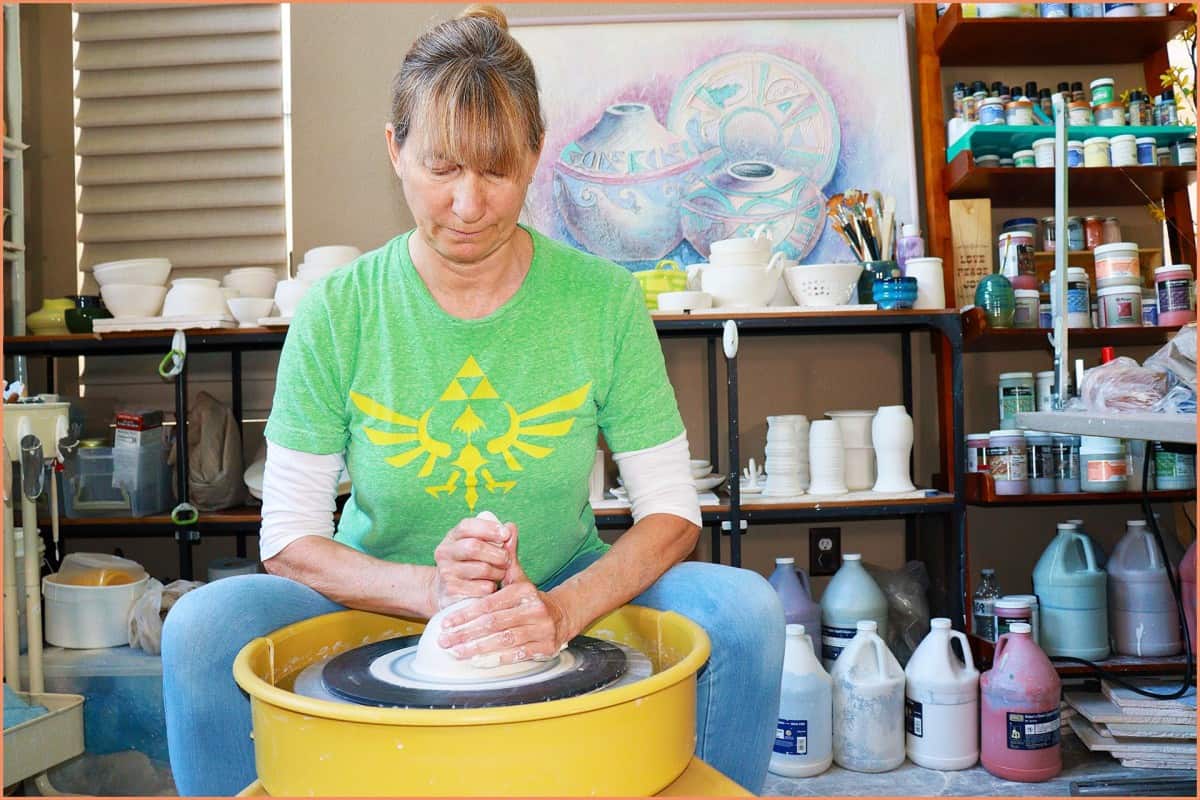

Wedging out only 1 or 2 balls of clay at a time is a good practice to get into because it gets you up and away from the wheel for a bit, so you can stretch and use different muscles by wedge out more clay. You have to wedge and throw anyway, so why not spread the tasks out for your own benefit. Stretching every time you go to the wheel and get off the wheel is also a good habit to get into.

Posture Matters when Throwing on the Pottery Wheel


And some potters may just want the option to stand once in a while, for those with the extra cash they may buy a second Pottery Wheel.
 
You may want to suggest asking to local pottery class place if they have a sit-down wheel and a standup wheel so that you can test both.  

You may have learned to throw in the sitting position. Still, you have cases where you would find it an advantage to learn how to do it standing up, especially if you have back problems. Someone with a bad back may want to learn throwing from the standing position right away because it does away with getting used to it later. Some people have a hard time getting used to it.

I know we can all get wrapped up in the art of forming our clay, but it is especially important to be aware of your posture.

Another important thing to remember when working on a wheel is to breathe. Holding your breath while throwing on the wheel also puts unwanted stress on your body.

Conclusion

Whatever position you choose to throw on the pottery wheel, neither one is right or wrong. Everyone will have different body types and what feels most comfortable at the wheel. Standing is good for those with bad backs. On the other hand, sitting works well for those with bad ankles and feet. I have found that throwing in the proper position, breathing, and taking breaks works well for both sitting and standing. Throwing the proper way is important to help you develop good habits.

Post navigation

Previous Previous
How Do You Mix Underglazes / Tips to Mix Underglazes
NextContinue
Can Broken Pottery be Repaired?
Search

Get Your Free Claymail Alerts

Subscribe and start learning today! 

Pottery Crafters Claymail Alerts are completely free, and you have the freedom to unsubscribe at any time.

You're All Set!

Congratulations! You're now a member of the Pottery Crafters Claymail Alerts newsletter. 

Get ready to explore the art of pottery with the latest techniques, tips, product reviews, and irresistible deals from top brands.

If you don't receive an email shortly, please check your junk/spam folder.

About Marie

Hi, I’m Marie
I’m a Potter, a Writer, and the Creator of Pottery Crafters
I also make videos on YouTube about Making Pottery.
My passion is to make Pottery and to Pass on what I’ve learned to you,
helping you in your Pottery Making Journey… Read more


Legal Information This site is owned and operated by Pottery Crafters. Pottery Crafters is a participant in the Amazon Services LLC Associates Program, an affiliate advertising program designed to provide a means for sites to earn advertising fees by advertising and linking to Amazon.com. Pottery Crafters also participates in affiliate programs with, CJ, Impact Radius, and other sites. Pottery Crafters is compensated for referring traffic and business to these companies.


  • About Us
  • Privacy Policy
  • Terms and Conditions
  • Disclaimer
  • Affiliate Disclaimer
  • Contact Us

© 2026 Pottery Crafters
Design By Marie with Kadence

Table of Contents
  • Sitting Position at the Pottery Wheel
  • How Do You Sit at a Pottery Wheel
  • What is the Best Stool for Pottery?
  • Pros and Cons of Sitting at the Pottery Wheel
  • Standing Position at the Pottery Wheel : What You Need to Know
  • How Do You Stand at a Pottery Wheel
  • How High Should a Standing Pottery Wheel be?
  • Pros and Cons of Standing at the Pottery Wheel
  • Adjust the Pottery Wheel Height According to Your Body
  • Avoid Throwing on the Wheel for a Prolonged Time.
  • Posture Matters when Throwing on the Pottery Wheel
  • Conclusion
Scroll to top
  • Beginner Info
    • Choosing Your Pottery Clay – Best Pottery Clay For Beginners
    • 21 Essential Pottery Clay Tips for Every Potter
    • 21 Essential Do’s and Don’ts for Making Pottery Every Potter Should Know 
    • 21 Pottery Wheel Throwing Tips
    • 21 Essential Underglaze Tips for Pottery
    • How I Started Making Pottery at Home – My Guide for New Potters 
    • What is Greenware Ceramics: Understanding Its Role in Pottery
    • Is Raku Pottery Expensive to Make?
    • 30 Beginner Pottery Wheel Projects | With Easy Instructional Videos
    • How to Dispose of Pottery Clay Water | 3 Proven Methods
    • 10 Tips on How to Become a Successful and Confident Potter
    • How To Make Colored Clay For Pottery – A 6-Step Clay Coloring Guide
    • 21 Tips for Hand Building Pottery
    • Pottery Clay Extruders – Uses and Functions
    • Is Raku Pottery Waterproof: Sealing Raku Ceramics
    • Is Raku Pottery Food Safe: What You Need to Know
    • Can Pottery Clay Be Frozen
    • Stoneware Clay Vs. Porcelain Clay – Details and Facts Explained
    • 21 Pottery Clay Slip Questions Answered
    • What Is Potters Clay Made Of – Pottery Clay Ingredients Explained
    • How to Store Pottery Clay
    • How to Prevent Pottery Clay From Cracking While Drying
    • How to Throw Clay on the Pottery Wheel: A Step-by-Step Beginners Guide
    • How To Use a Pottery Kick Wheel (Ultimate Guide)
    • 7 Best Surfaces for Hand Building
    • How To Do Pottery With Long Nails – 5 Tips To Remember
    • How To Use Bats on a Pottery Wheel | Types – Usage – Storage
    • Can Air-Dry Clay Be Used on the Pottery Wheel – 3 Brands Tested
    • What Causes Pinholes in Pottery Glaze and How To Prevent Them
    • What Is the Difference Between Stoneware and Earthenware Clay
    • Can Broken Pottery be Repaired?
    • Pottery Wheel Positions and Posture – All You Need to Know
    • How to Make Kiln Cookies in 6 Easy Steps – With a Video
    • Can Handmade Pottery Go In The Dishwasher?
    • How to Make Pottery – 8 Step Pottery Making Process
    • How to Start a Home Pottery Studio
    • Which Direction Should a Potters Wheel Turn
    • Online vs In-Person Pottery Classes – A Beginners Guide
    • Are Pottery and Ceramics The Same Thing
    • Plain Clay Slip
    • Colored Clay Slip
    • 11 Problems Centering Clay and Easy Ways to Fix Them
    • 21 Kiln Questions Answered
    • 9 Common Pottery Wheel Mistakes and How to Fix Them
    • Wax Resist Tips | Protect – Decorate – Design
    • What Are Sponges Used for in Ceramics?
    • The Four Types of Clay
    • What Is Wax Resist in Pottery Used For
    • Why Every New Potter Should Take a Pottery Class
    • What To Wear When Doing Pottery
  • Product Reviews
    • Beginner-Portable-Full Size Pottery Wheel Review: Which Wheel Type Is Right for You?
    • The Original Giffin Grip and Giffin Grip Mini – Review and Comparison
    • Giffin Grip vs. Bailey Quick Trim 2: The Detailed Differences 
    • Brent CXC Pottery Wheel – OWNERS REVIEW – Buyers Guide
    • Skytou Pottery Wheel Pottery Forming Machine – OWNERS REVIEW
    • Speedball Artista Pottery Wheel – Owners Review Buyers Guide
    • Pottery Wheels Reviewed
    • Shimpo Ceramics Rebranding – A Huge Undertaking
    • The Ultimate Edger Pottery Making Multi-Tool Review
  • Buyer Guides
    • Gift Ideas for Potters – Pottery Crafters Gift Guide
    • 10 Things to Consider When Buying a Used Pottery Wheel
    • Pottery That Sells Well – 9 Pieces All Potters Should Make and Sell
    • Ultimate Pottery Glazing Tools & Supplies Guide
    • Buying a Pottery Kiln | Facts Features and What to Consider
    • Choosing an Electric Kiln – A Step-by-Step Buyer’s Guide
    • Choosing a Pottery Wheel – Step-by-Step Buyer’s Guide for Beginners
    • Best Pottery Tool Sets Under $18
    • Best Glaze Brush Sets
  • Projects & Supplies
    • Berry Bowl
    • Bowl with Chopstick Holes
    • Bowl with Chopstick Holes
    • Berry Bowl
    • Cat Bowl
    • Casserole Dish
    • Ceramic Citrus Juicer
    • Creamer
    • Honey Jar
    • Incense Holder
    • Kitchen Utensil Holder
    • Mortar and Pestle
    • Mug with a Gallery Lid
    • Piggy Bank
    • Succulent Plant Holder
    • Sugar Bowl
    • Toothpick Holder
    • Vase
    • Yarn Bowl
    • Plain Clay Slip
    • Colored Clay Slip
  • Glazing
    • Can Pottery Glaze Be Frozen
    • Do You Have to Glaze Pottery  
    • What is Glaze Made of — Ceramic Glaze Ingredients
    • Is Pottery Food Safe Without Glaze?
    • Do You Need a Kiln to Glaze Pottery at Home 
    • How to Remove Glaze From Pottery
    • How to Choose Pottery Glaze – A Beginner Glaze Guide
    • What Is Crazing in Ceramics and How To Prevent It!
    • Can You Bisque and Glaze Fire Pottery at the Same Time?
    • Sponge Glazing
    • Glaze Grinding
    • Applying Underglaze on Greenware vs Bisqueware – Which Is Best
    • What is The Difference Between Glaze and Underglaze
    • Underglazing with Split Cups For a Marbling Effect – A Step-by-Step Guide  
    • Can You Layer Underglaze
    • How Do You Mix Underglazes / Tips to Mix Underglazes
    • Underglazing Pottery | Glazing Tips Tools and Ideas
    • Bubble Glazing
    • Sponge Underglazing
    • Sponge Glazing Ombre Glazing
    • What Is Slip Trailing | Glazing Tips Tools and Ideas
  • Kiln Tips
    • Kiln Maintenance Guide: Tips for Top Performance  
    • The Differences Between a Raku and Electric Kiln Explained
    • What Is the Difference Between a Gas and Electric Kiln
    • What Temperature Do I Bisque Fire Pottery Clay To?
    • Is it Recommended that a Pottery Kiln Be Vented?
    • The Ultimate Guide to Troubleshooting Kiln Problems
    • Are Pottery Kilns Safe – Beginner Kiln Questions
    • How To Use a Pottery Kiln at Home – 13 Tips To Remember
    • What Is A Kiln Sitter? Everything You Need To Know
    • At What Temperature Can You Open a Pottery Kiln?
    • What Is Kiln Wash – Kiln Shelf Protection Guide
YouTube Pinterest
Search