
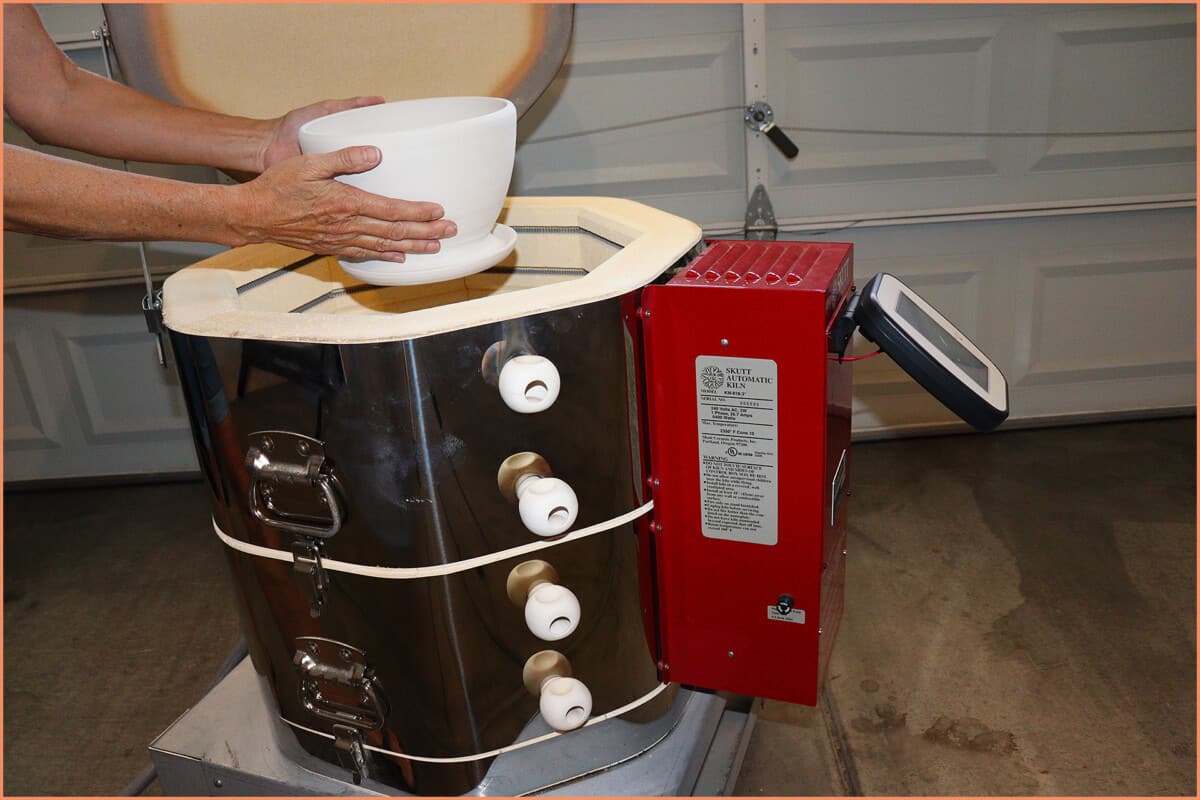
How To Use a Pottery Kiln at Home – 13 Tips To Remember
Pottery Kilns have been used for hundreds of years to turn clay into firm objects. Modern technology has enabled the installation of pottery kilns in homes. However, these kilns operate at very high temperatures, so you should be careful when using them.
Operating a Pottery Kiln is straightforward, but if you aren’t cautious, mishaps can occur. I will give you 13 tips on how to use a Pottery Kiln at Home.
Affiliate Disclaimer: We are ambassadors or affiliates for many of the brands we reference on the website. As an Amazon Associate, I earn from qualifying purchases.
1. Place Your Kiln in a Secluded and Ventilated Place
You must install your kiln in a secluded place because it becomes very hot when you run it. The place should also be dry to avoid corrosion of your machine and possible electrical shocks.
You don’t want your children or pets to go near it. You can place warning signs near the place and teach your kids about the dangers so they don’t become curious and injure themselves. The warning signs will also keep away any strangers or your guests.
The second crucial thing to consider is placing your kiln in a ventilated area or in a Vent System. The kiln releases toxic fumes, gases, and other compounds into the air during the heating process. These fumes can be harmful if not removed regularly. Most compounds and organic materials burn off between 500 and 1000 degrees Fahrenheit (260 and 538 degrees Celsius). However, you still don’t want to be hanging around the kiln area while it’s firing.
You can either use a Fume Extractor to remove fumes from the room. You can also install your kiln in a place where fresh air can circulate through it. The fresh air will drive out the fumes and help keep the temperature lower.
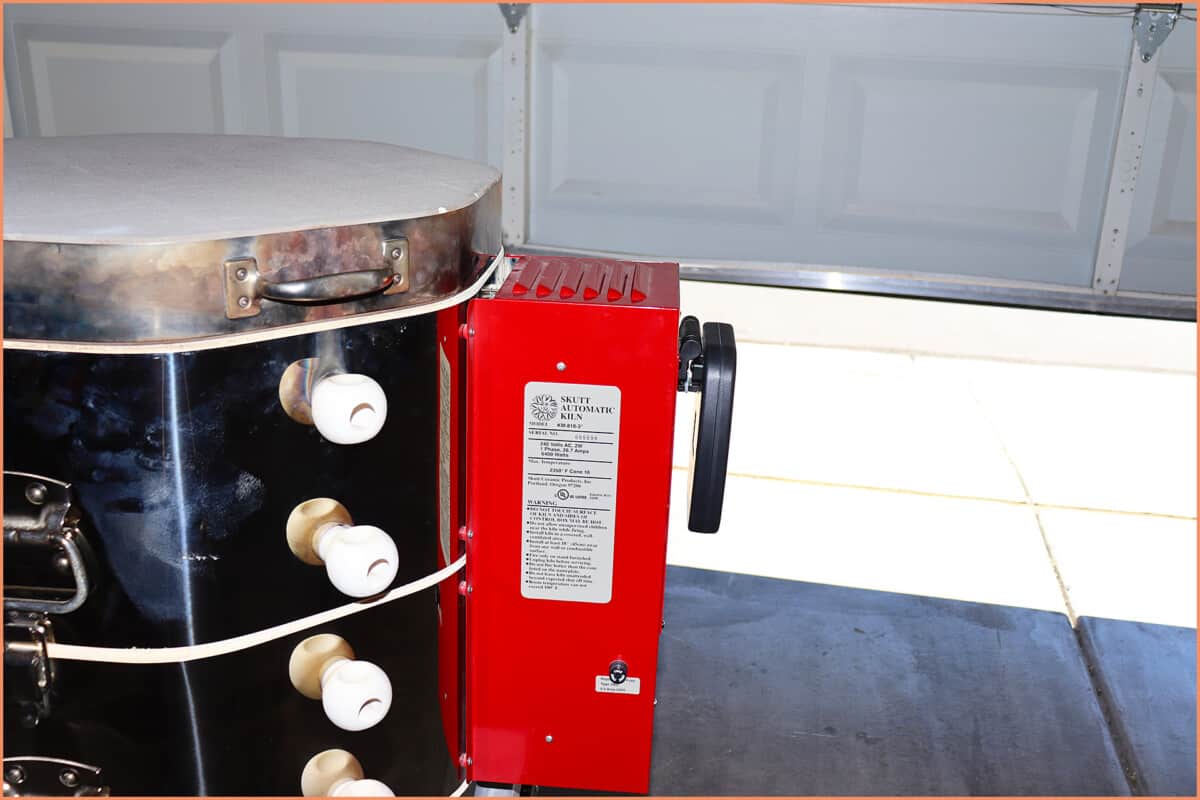
An excellent place to install your kiln would be your garage or basement. If you have a budget, you can also build a small studio with windows. If you cannot afford these, you can place your kiln in your backyard, but you’ll have to be extra careful to ensure the safety of your family and friends. For more detailed information on kiln placement, size, and installation, check out Choosing your kiln.
2. Dry Objects Entirely Before Putting Them Into the Kiln
It’s crucial to let the clay dry out thoroughly before you put it in the pottery kiln. If the clay is wet, the moisture in it will evaporate into steam as heating begins. Consequently, your pottery will explode into bits.
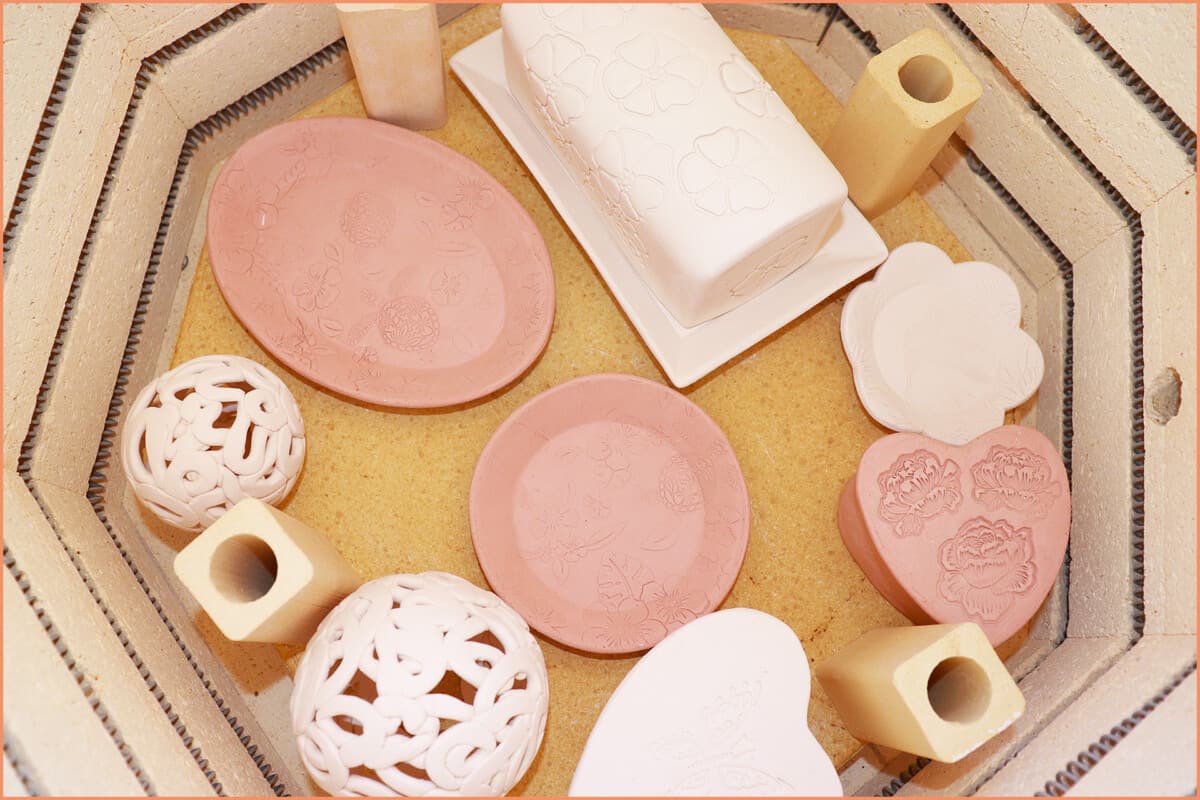
The result won’t only be a waste of your effort, but it can damage the internal lining of the kiln or components like the thermocouple and your heating elements.
Typically, clay takes a week or even a few weeks to dry completely, depending on the pottery’s size, shape, and the climate you live in. Dry clay will be pale in color and will feel dry to the touch. For more information on drying, check out How Long Pottery Should Dry Before Firing.
3. Wear Protective Gear While Operating the Kiln
Pottery kilns can reach a temperature over 2000°F (1093°C) during the heating phase, which is why it’s vital to wear protective gear while operating them. Some potters will prop open the lid to vent until it reaches 1000 degrees Fahrenheit (538 degrees Celsius), then remove the fire brick propping it up and close the lid.
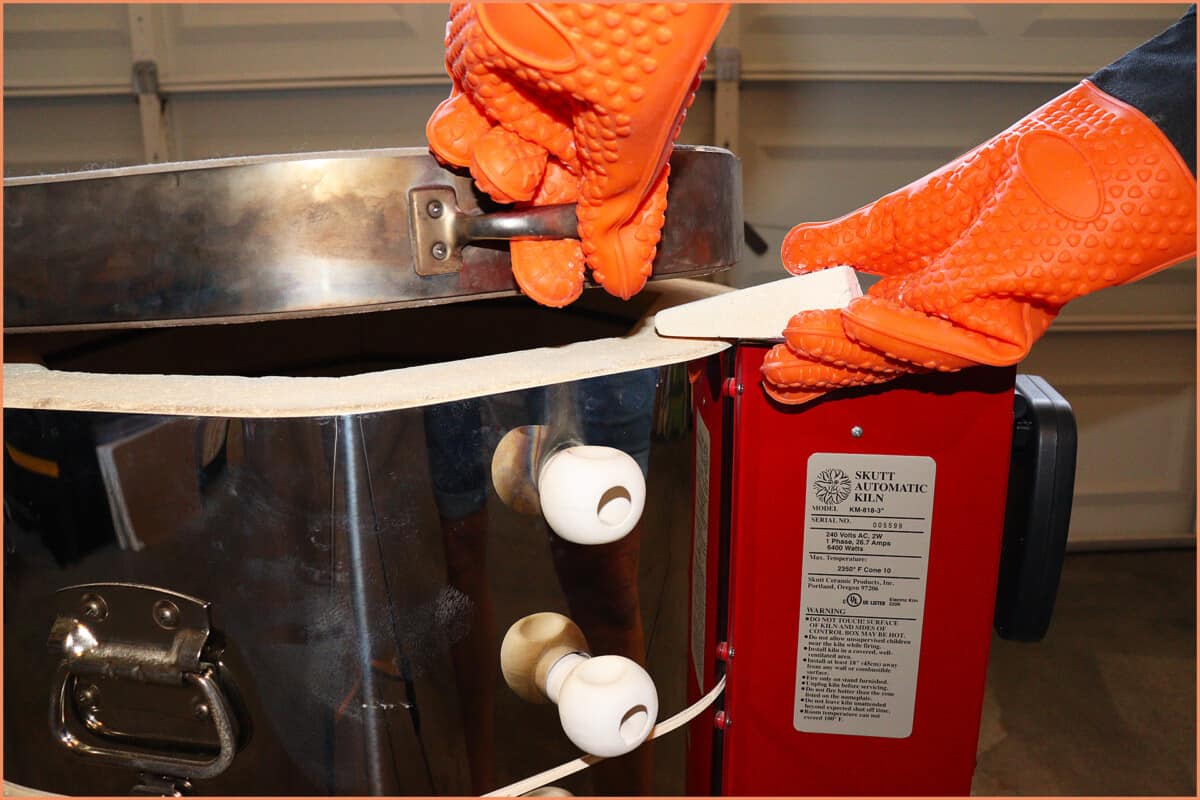
It would be best if you took special precautions when you touched any part of the kiln. Although they have proper insulation, the outer part can still reach a temperature hot enough to melt your skin the moment you come in contact with it.
Your protective gear should include Fire Gloves to protect your skin and UV and Safety glasses to shield your eyes when looking in the peepholes.
Even with protective gear on, you should always try to maintain a distance from the kiln. For example, it’s best not to put your hands in the electric kiln while it’s on, even with the gear on, because the metal coil and other components can shock you the moment you touch them.
4. Keep the Area Near the Thermocouple Clear
A thermocouple is an instrument used to measure the temperature in the pottery kilns. The manufacturers place the thermocouple so that its tip remains inside the kiln to measure the temperature.
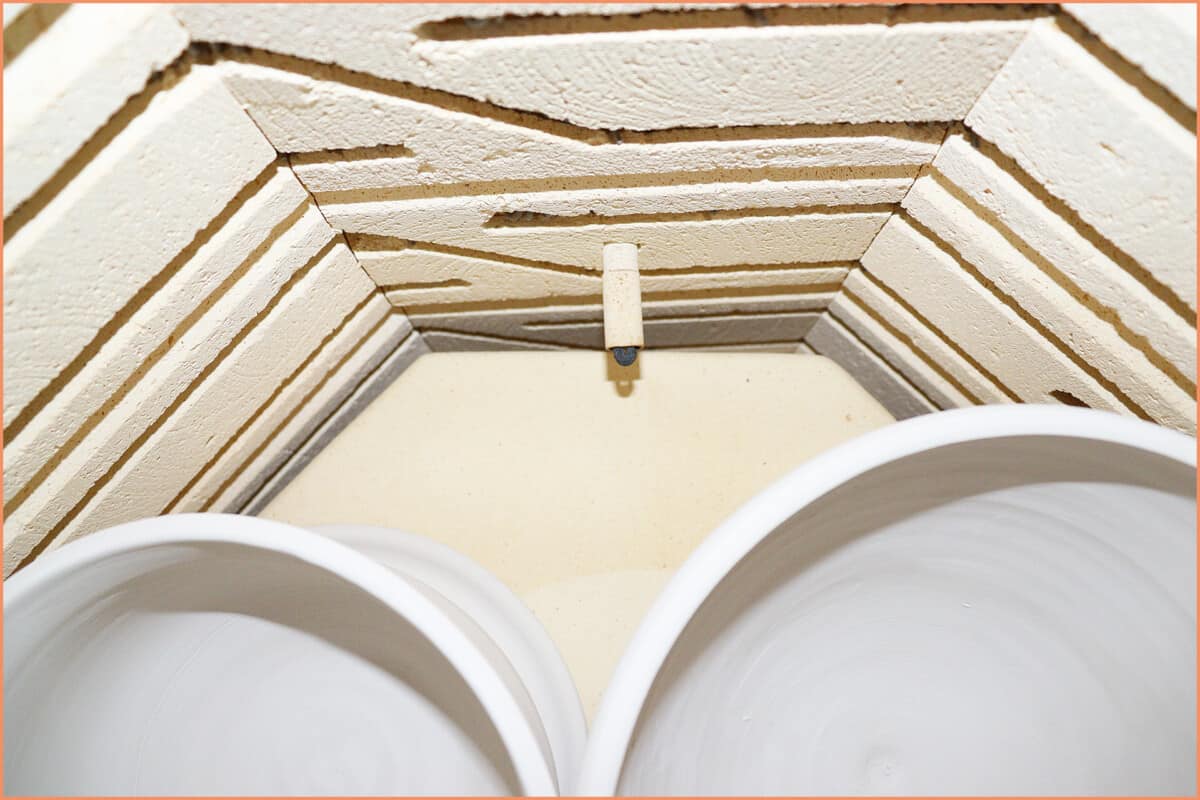
It’s crucial to keep the area near the tip of the thermocouple clear to obtain an accurate temperature reading. A thermocouple works by sensing the heat in the kiln and generating a small voltage accordingly. It then converts the voltage into temperature.
If the area near the thermocouple isn’t clear and the tip contacts the clay, it’ll read the temperature of the clay’s surface rather than the kiln’s. As a result, you’ll see the wrong readings on your controller’s screen.
The temperature readings give you an idea of the progression of the heating process inside the kiln. If the thermocouple is too close to the clay, it won’t show an accurate temperature rise and may lead you to believe your kiln isn’t working correctly.
Moreover, it won’t show you the correct drop in the temperature when the kiln shuts off. It’s important to place your pottery at least 2 inches away from the thermocouple to ensure an accurate temperature reading.
5. Don’t Place Anything Above the Kiln Once It Starts To Run
Pottery kilns generate a good amount of thermal energy. Although it’s well-insulated, the outer layer can still reach a high temperature. That’s why you don’t place Anything on top of the kiln while it’s on.
If you think the excess heat will speed up the drying of your wet clothes or shoes, you should know that it’s more likely to burn or melt your accessories.
If you need to use the excess heat for drying your greenware, you can place it near the kiln. It’s best not ever to place Anything above the kiln.
6. Don’t Open the Lid and Peek During the Heating Operation
You can prop the lid open about an inch to vent, but you should never open the lid of an operating kiln. Because kilns reach a high temperature during heating, getting in contact with them during this process will increase your chances of being hurt.
Moreover, kilns radiate a substantial amount of heat and light, and it’ll hurt your eyes if you see them without wearing the proper protective gear.
If there’s a situation where you think your kiln isn’t functioning correctly, then shut down the kiln and attend to Anything after it cools down.
In addition, if you have a top-loading Kiln, you should never open it because as soon as you open the lid, all the heat will escape upward and burn you.
7. Stay Alert When Removing the Peep Plugs
Pottery kiln peepholes were made to allow the potter to peep at their pottery and pyrometric cones while firing. They also allow the fumes and gases generated inside to flow out. Peephole plugs cover the peepholes, and you can remove the top one to let moisture and hot gases escape.

However, you have to be very alert and cautious when you’re dealing with the peepholes. Wear your Fire Gloves and Safety glasses, and remember to never stand right in front of the peepholes when removing the plugs.
If you stand too close while removing the plugs, the hot air will drive out of the kiln and straight towards your body, which can cause burns and injuries.
Moreover, don’t open all the peepholes because the kilns need to maintain a specific temperature for the clay to set. Leaving all the holes open for a long time will lower the internal temperature and can cause your pottery to crack from thermal shock.
8. Use Pyrometric Cones as a Backup To Monitor the Temperature
A pyrometric cone is a tool used to measure the kiln’s temperature. Even if you have a controller that displays the internal temperature, you should use pyrometric cones to make sure the controller shows accurate readings. Or used as a backup when the controller or thermocouple malfunctions.

Pyrometric cones are temperature-sensitive objects that start to bend and melt at a particular temperature. Each cone has a number associated with it, and each number tells you the temperature of that cone by bending halfway.
To achieve better results, use three cones with different temperature ranges. If you fire to cone 5, you will need cone 4, cone 5, and cone 6 witness cones.
Cone 4 will bend and melt when the kiln is above the temperature. Cone 5 will bend halfway at the desired temperature. And cone 6 will not bend when the kiln is below the required temperature. Place them near the peephole to peek at them with Safety glasses.
9. Leave Kiln Closed Until the Temperature Is Under 125°F (51.7°C)
Pottery kilns take a day or even longer to complete the heating and cooling process, depending on the heating rate, kiln size, and insulation. The control screen will provide a clearer indication of the kiln’s internal temperature. However, it would be best to wait until the temperature drops below 125°F (51.7°C) before opening the lid to see the final product.

You should be cautious even in the cooling phase of the kiln, because although the temperature isn’t hundreds of degrees, it may still be enough to burn you.
If you are removing your pottery with gloves on, it is still too hot. It’s always best to wait. Nothing about pottery is fast anyway.
10. Don’t Put Anything in the Kiln if You’re Unsure About It
There are two main reasons you should never put something in the kiln if you are not completely sure it belongs there.
First, the material may not tolerate extreme heat. If it cannot handle high temperatures, it can melt, crack, or even explode. When that happens, it does not just ruin the piece. It can damage the kiln interior, shelves, and elements, which is an expensive mistake.
Second, some materials release toxic fumes when heated. These fumes can be dangerous to breathe and can linger inside the kiln and studio. This puts your health at risk and can also contaminate future firings.
Clay is designed to withstand extreme heat, often up to 3000°F (1649°C). That heat tolerance is what makes kiln firing possible. When you use a material without knowing how it reacts to heat, you are taking a gamble. Materials with a low heat tolerance may melt. Others may stay brittle or break down in ways you cannot see until it is too late.
Certain additives are safe to use when they are meant for ceramics and used correctly. These are commonly mixed into clay bodies to change the texture and create different effects.
Materials commonly added to clay include:
Organic/Textural Materials
Crushed nutshells, paper pulp, sawdust, dried leaves, rice, and coffee grounds can be blended into clay to create porous surfaces, lightweight forms, or decorative void-filled effects.
Silica/Flint
Added to raise thermal expansion and increase body hardness.
Granular Ilmenite
Adds dark speckles and contributes titanium to the clay body.
Granular Rutile
Creates speckling and can encourage crystal development on the surface.
Iron Chromate
Produces gray and speckled visual effects in clay bodies.
Textural additions and grog options include:
Molochite
A calcined clay or porcelain grog that adds strength, texture, and a lighter color to the clay
Crushed Granite
Adds a rough, stony texture to the surface.
Silica Sand
Gives the clay more tooth and a grainy feel.
Coal Slag Pellets
Creates dark, contrasting spots throughout the clay body.
Homemade Grog
Crushed bisque-fired clay can be reused to reduce shrinkage and add visual interest.
Always test small amounts first. Additives can change how a clay matures, how much it shrinks, and how strong or brittle it becomes. When in doubt, test before firing and stick to materials made specifically for ceramic use.
11. Stop the Kiln When It Goes Above the Rated Temperature
Every piece of electrical equipment has rated values for current, voltage, power, and temperature. Rated values are defined by the tolerance limits of a particular appliance, and you should never operate a machine beyond its rated capacity.
Electric kilns have their rated temperatures mentioned on the serial plate. The value corresponds to the heat tolerance of the metal coils and the thermocouple.
If you operate your kiln above the rated values, the metal coils might melt, or the thermocouple might break. The metal coil and thermocouple are responsible for heating and measuring the temperature, respectively. Without these components, your kiln won’t be functional.
Many kilns, especially newer ones, will shut down automatically if the control board overheats. I know the 818-3 Skutt Kiln I have will shut down if the control board exceeds 160 degrees Fahrenheit.
That’s why it’s good to monitor your kiln with Pyrometric cones and stop the kiln if it exceeds the temperature limit. For more detailed information on kiln safety, read Are Pottery Kilns Safe?
12. Regularly Maintain the Kiln to Ensure Optimal Performance
Regular maintenance of your kiln will ensure optimal performance and extend its life cycle.
Vacuum your kiln at least after every other bisque firing to clear out the dirt or other residues that might remain inside the kiln. Also, don’t forget to clean the lid because the remnants on the cover can fall on your ware the next time you use your kiln.
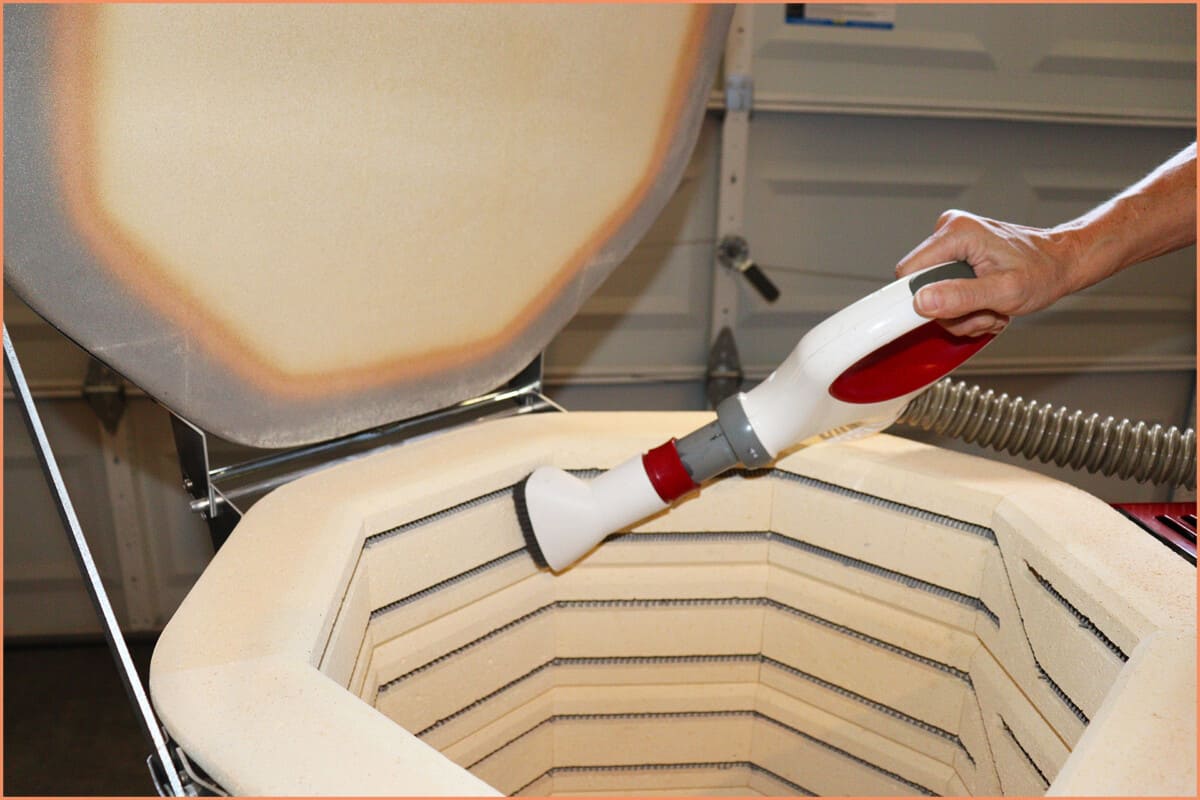
However, make sure the kiln is off, and remove the plug if you can before you start vacuuming.
Moreover, the kiln’s lid is the part that requires more maintenance. When the kiln runs, its top expands during the heating phase and contracts during the cooling phase. This expansion and contraction can loosen its band clamps, so you should tighten them occasionally to avoid any problems.
You should also check your plug and socket box from time to time for signs of discoloration or overheating. Moreover, you should replace your plug if you notice any damage to the wire’s insulation. Damaged insulation can expose the inner copper wire, which can give you an electric shock if you touch it.
13. Safety Tips to Keep in Mind When Using a Kiln
When you Buy a New Kiln, ask the manufacturers if they provide installation services. If not, you should hire an electrician rather than installing it yourself. Home Advisor (affiliate link) is an excellent choice for hiring an Electrician to ensure the safe and correct installation of any wiring, breaker boxes, or outlets.
Installing includes configuring the breaker box, and an electrician will know how to complete the job safely.
In addition, don’t put Anything flammable or temperature-sensitive in the same room as the kiln because they can catch fire if they come into contact with the kiln’s surface or due to the release of hot fumes and gases.
Lastly, always unplug the kiln before working on its components. If your kiln is hard-wired, make sure the circuit breaker is turned off first, if there’s one in place!
Final Thoughts
Although easy to use, pottery kilns can cause severe damage or injury if you don’t handle their operations properly. For more questions and concerns about using your pottery kiln at home, check out 21 kiln questions Answered
The steps covered above and the safety tips will help you enjoy using your kiln at home without incident.