
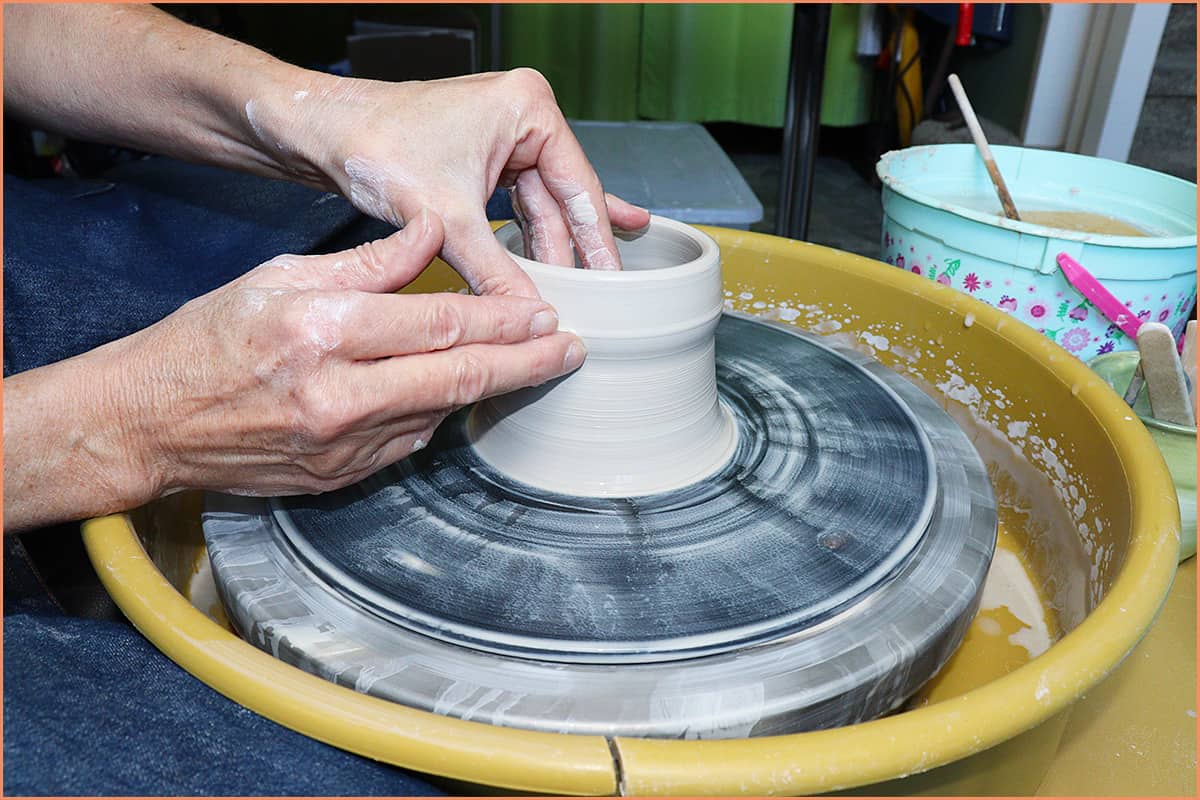
How to Throw Clay on the Pottery Wheel: A Step-by-Step Beginners Guide
If you have always wanted to learn how to throw clay on the pottery wheel but don’t know where to start, this Step-by-Step beginner’s guide is perfect for you.
This post will teach you everything you need to know about throwing clay on a pottery wheel, how to prepare your clay, and how to get started with this fun and rewarding craft.
Along with following these steps, remember to be patient with yourself and practice with the goal of progress over perfection!
Affiliate Disclaimer: We are ambassadors or affiliates for many of the brands we reference on the website. As an Amazon Associate, I earn from qualifying purchases.
What is Wheel Throwing
Wheel throwing is a technique used by potters to create ceramic objects on a pottery wheel. It involves using a Pottery Wheel that spins, allowing the potter to shape and mold the clay into various forms.
The process begins with the potter centering the clay on the wheel by pressing it firmly onto the wheel head. Once the clay is centered, the potter can begin shaping the clay into the desired form, using various tools and techniques to create different shapes and designs.
Wheel throwing is a process that requires skill and practice to master. It involves understanding Choosing the Right Clays and the ability to manipulate the clay in a controlled manner.
Many potters find wheel throwing deeply meditative and satisfying, as they can create beautiful, functional objects with their hands. Whether you are a beginner or an experienced potter, wheel throwing is a fascinating and rewarding technique that can help you create unique and beautiful pieces of pottery.
Step #1: What to wear when throwing on the Pottery Wheel
The first thing I considered when working with clay for the first time was what to wear. Throwing on the pottery wheel is a messy, wet, exciting, and fun experience.
It’s an activity best done with an Apron to protect you from getting dirty. You need to be dressed appropriately and comfortably, since throwing clay can get your clothes quite messy. Also, your clothes can get stained from working with darker clays.
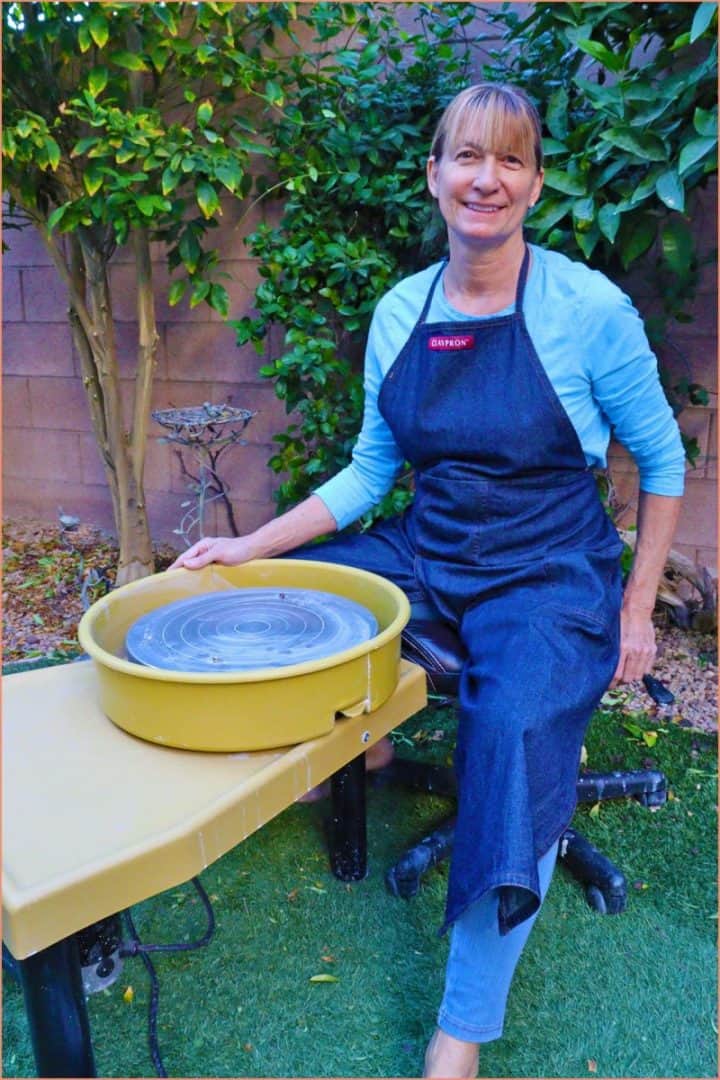
My favorite apron when throwing on the wheel is this Claypron. It’s lightweight and covers well. For more choices, check out this article: Best Aprons for Potters to help you choose which apron is best for you.
Here is one of the top articles on the internet that I wrote on What to Wear When Doing Pottery.
Step #2: Tools and Supplies Needed to Throw Clay on the Pottery Wheel
Before any clay touches the wheel, you will need a few important basic tools and supplies.
PotteryWheel:
First and foremost, you will need a Pottery Wheel. There are many different pottery wheels available, from simple models to more advanced wheels.
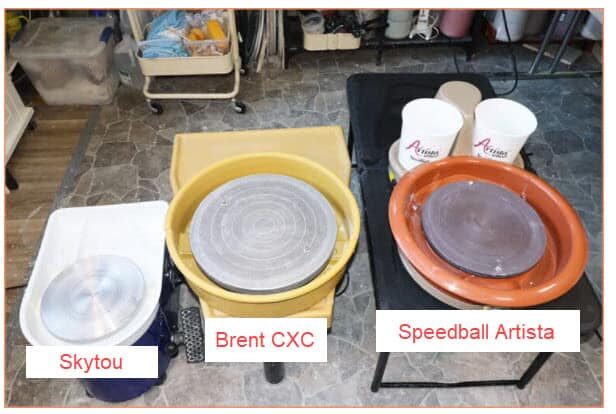
I’m using my Brent CXC pottery wheel, which I call my workhorse wheel. For more detailed information on choosing a Pottery Wheel, you can check out this Step-by-Step Pottery Wheel Buyer’s Guide for Beginners.
If you would like to start with a smaller budget pottery wheel, I have a detailed Post and a Video Demonstration where I show you everything you will need to know about the Skytou Pottery Wheel
I use this little guy a lot, and I highly recommend it for any new potter or even a second wheel if needed.
Pottery Tools:
Here is a good 8-piece toolset. It has the basic tools to get you started. I recommend this 8-Piece Pottery Tool Set for beginners; it’s inexpensive and of good quality.
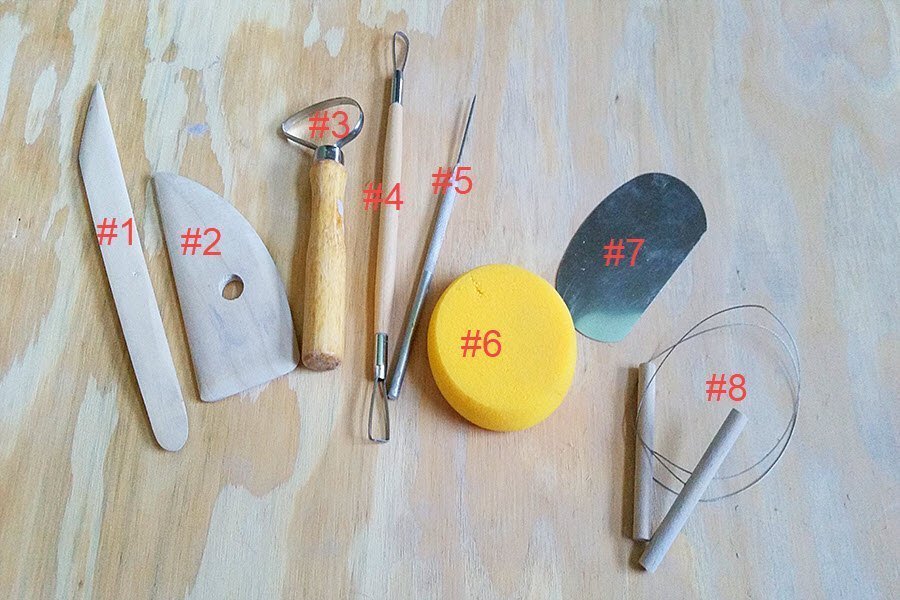
#1 Wooden Modeling Tool, #2 Wooden Rib, #3 Loop Tool, #4 Ribbon Tool, #5 Needle Tool, #6 Sponge, #7 Metal Scraper, and #8 Wire Clay Cutter.
If you are a tool person like I am, check out my Recommended Tools page, where I’ve tried and tested the tools for you so you don’t have to.
You will need a small bucket for water and a bowl for your clay scraps.
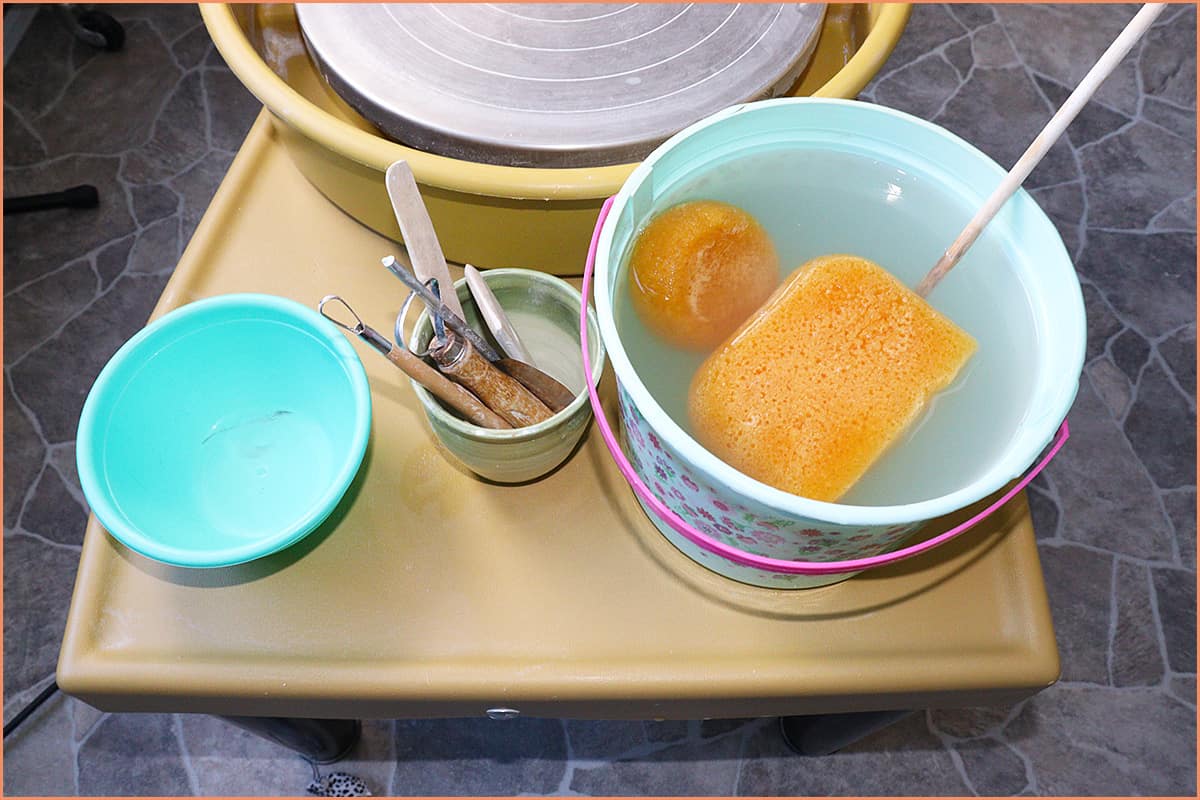
Also, you will need two additional buckets for rinsing and cleaning, since clay absolutely cannot go down your drain.
Step #3: Choosing your clay for throwing on the pottery wheel
Now that you have your tools and supplies, it’s time to select your clay. There are many clays to choose from, but when it comes to throwing on the wheel, you will want a nice, smooth clay that’s easy on your hands and a good choice for beginners learning to throw on the wheel.

I’m using Amaco #38 stoneware white clay. It’s my favorite clay to use when I’m making Mugs and Bowls.
Here are More Clay Choices for you to check out.
Step #4: Prepare Your Clay for the Pottery Wheel
Preparing your clay involves wedging and weighing it out.
Wedging:
You don’t want to skip this step. It gets the bubbles out and smooths your clay, giving it an even consistency and making it more workable.
There are five ways to do this. The ram’s head wedge, the spiral wedge, the stack and slam, wheel wedge, and a Pugmill.
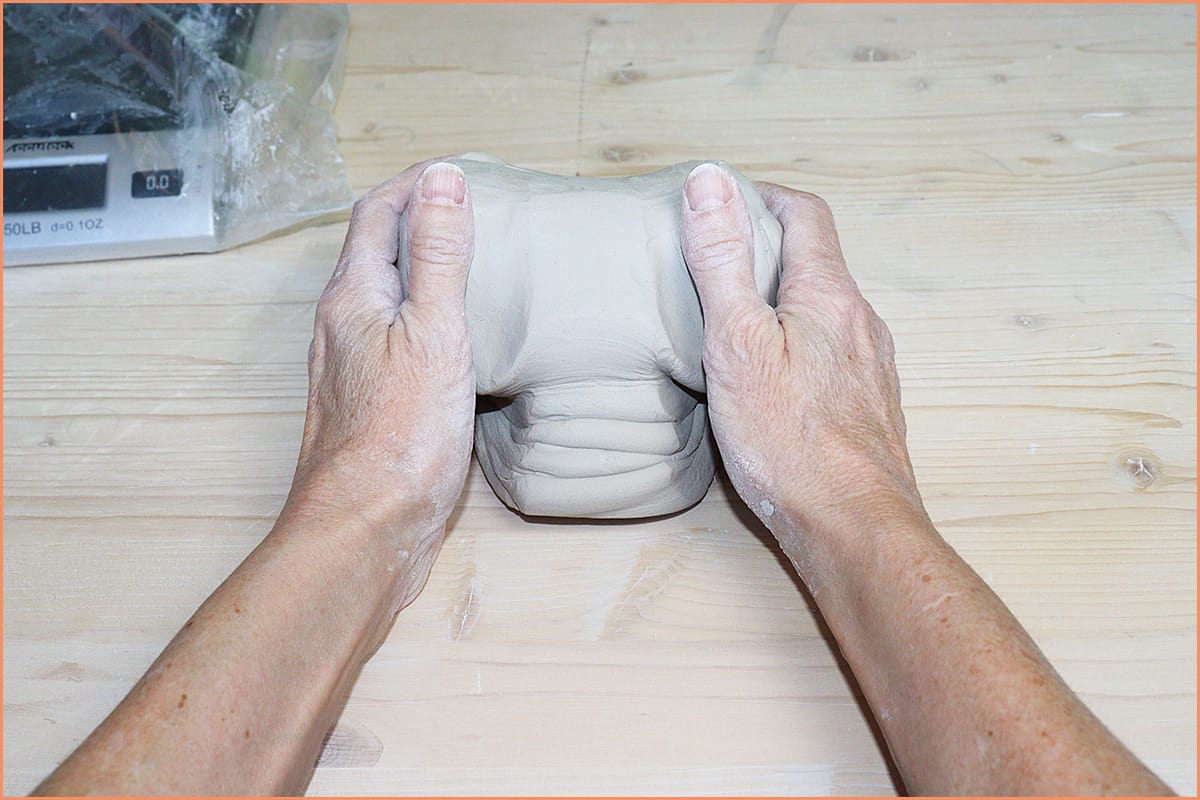
For more detailed information about wedging, check out my article on How to Wedge Clay with a Step-by-Step Video.
Weighing:
This helps you learn how much clay is needed for each project. For this project, I’ll be using 1.5 pounds of clay. I like to weigh out 3 pounds of clay at a time to wedge, because wedging under 2 pounds is more difficult unless you have smaller hands.

After my clay is nicely wedged, I cut it in half with a wire cutter and weigh out two balls of clay, each a pound and a half. Place your extra ball of clay in plastic or under a damp rag.
Step #5: Get Familiar with your Position at the Pottery Wheel
Sit at the wheel so your knees are level with the wheel head. This promotes good circulation in the legs while also feeling comfortable. You will want an adjustable stool or chair so you can adjust to the height that is right for you.
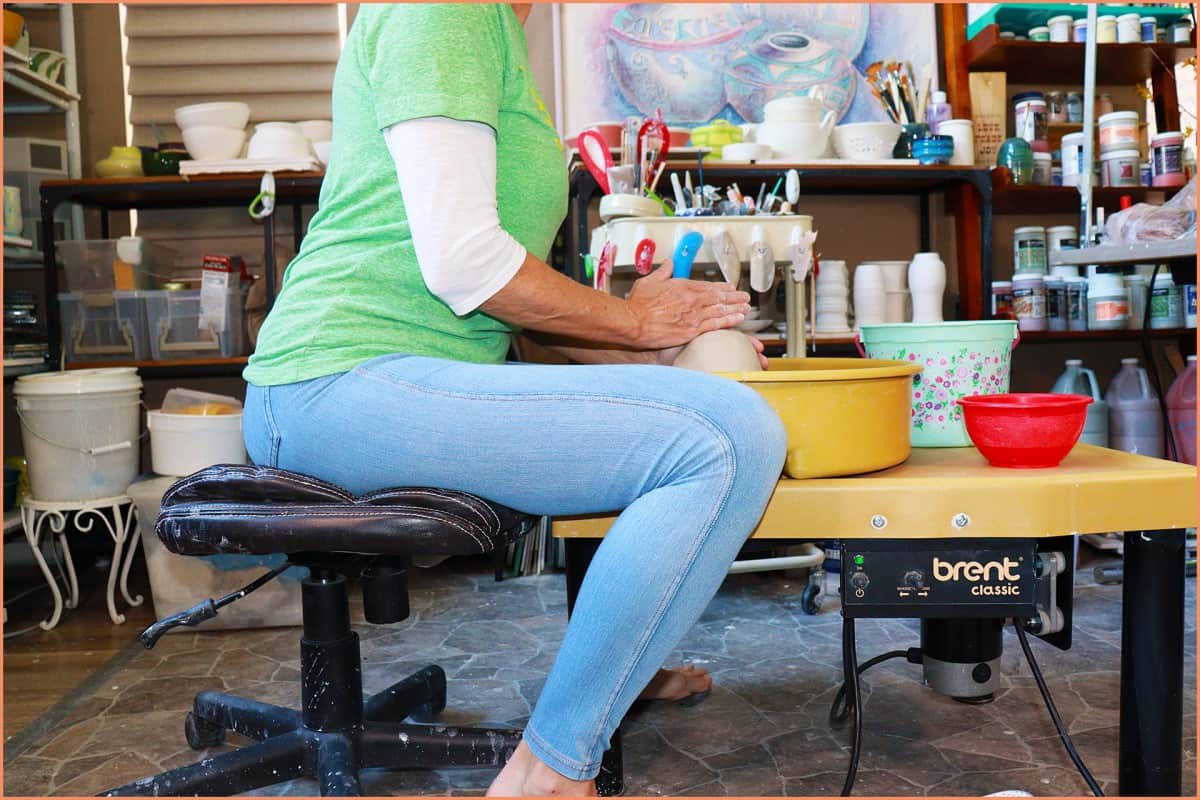
Sit close to the wheel, tuck your arms in, and anchor them to your legs or the side of your body. Keep your back straight and stay close to the wheel, using your whole upper body rather than just your arms and hands.
Beginners tend to focus so hard on centering the ball of clay that they forget to coordinate their bodies with the clay. Your Pottery Wheel Position and Posture are important when throwing your clay.
Step #6 Centering on the Pottery Wheel
To begin, wipe your wheel or bat with a damp sponge, giving it a very light coat of water so the clay sticks to the wheel.
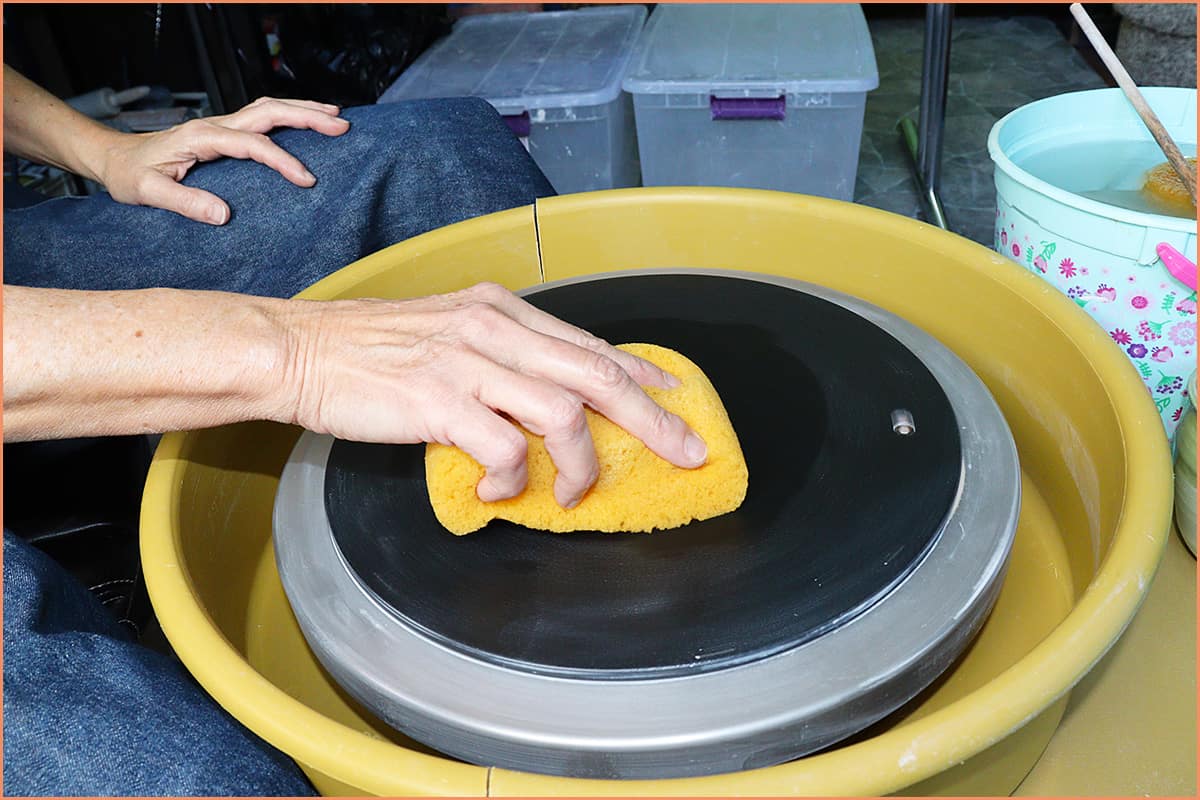
The clay won’t stick to the wheel if you have too much water on the wheel. The same goes for being too dry. The clay won’t stick to the wheel. So just get the wheel head a little bit damp.
Throw your ball of clay down onto the middle of the wheel. Press the foot pedal down gently with the ball of your foot. As the pottery wheel slowly turns, tap the clay with both hands to center it.
Using your sponge, squeeze water onto your clay until it’s covered. Increase the speed of your wheel to medium-high or higher, then press the clay with both hands.

Be sure your arms are anchored to your legs or the side of your body to help your hands stay still.
Coning Up The Clay:
Next, squeeze the clay by bringing your hands together.

At this point, the clay has nowhere else to go but up. This is called coning the clay because it will be the shape of a cone.
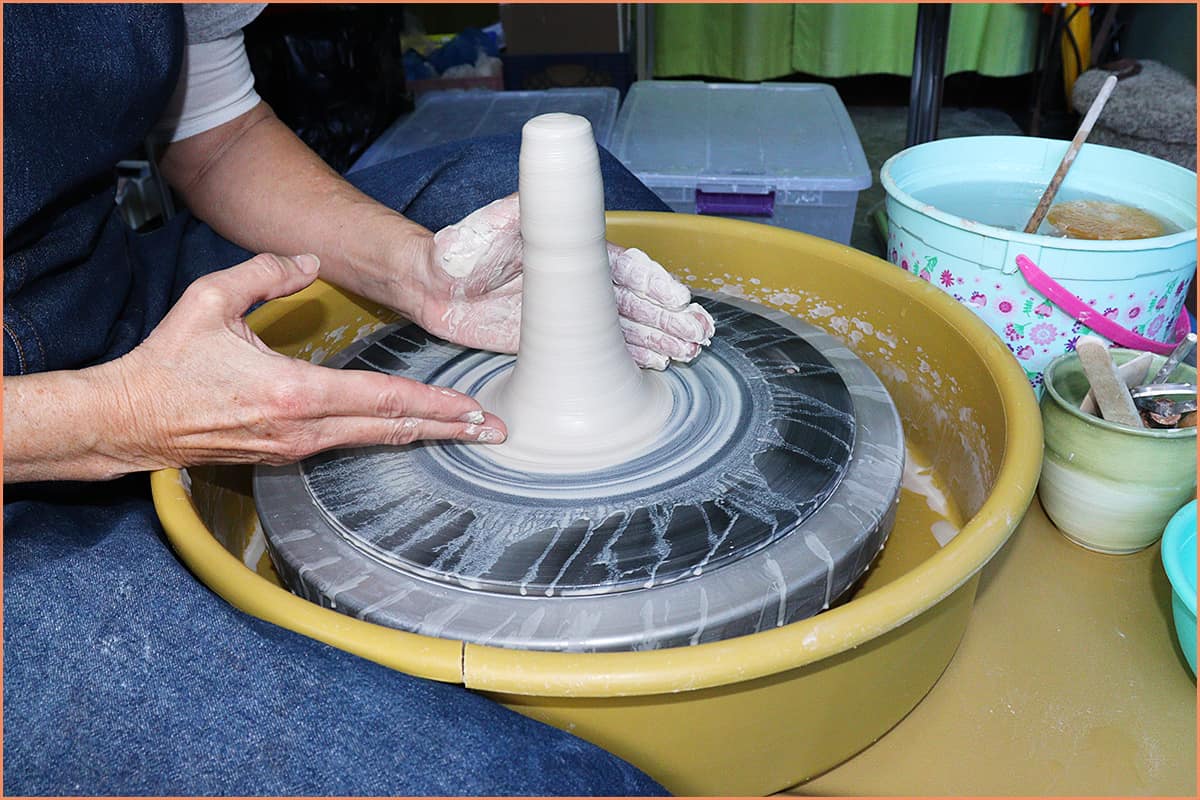
Press Down The Clay To The Center:
When the clay is coned up, place the palm of your anchor hand on the side of the clay. Your anchor is your non-primary hand. For example, if you are right-handed, your anchor hand is your left hand, and your wheel is turning counterclockwise.
Next, place your other hand in the karate chop position on top of your cone and apply pressure at the top of the clay to flatten it into a round hump.
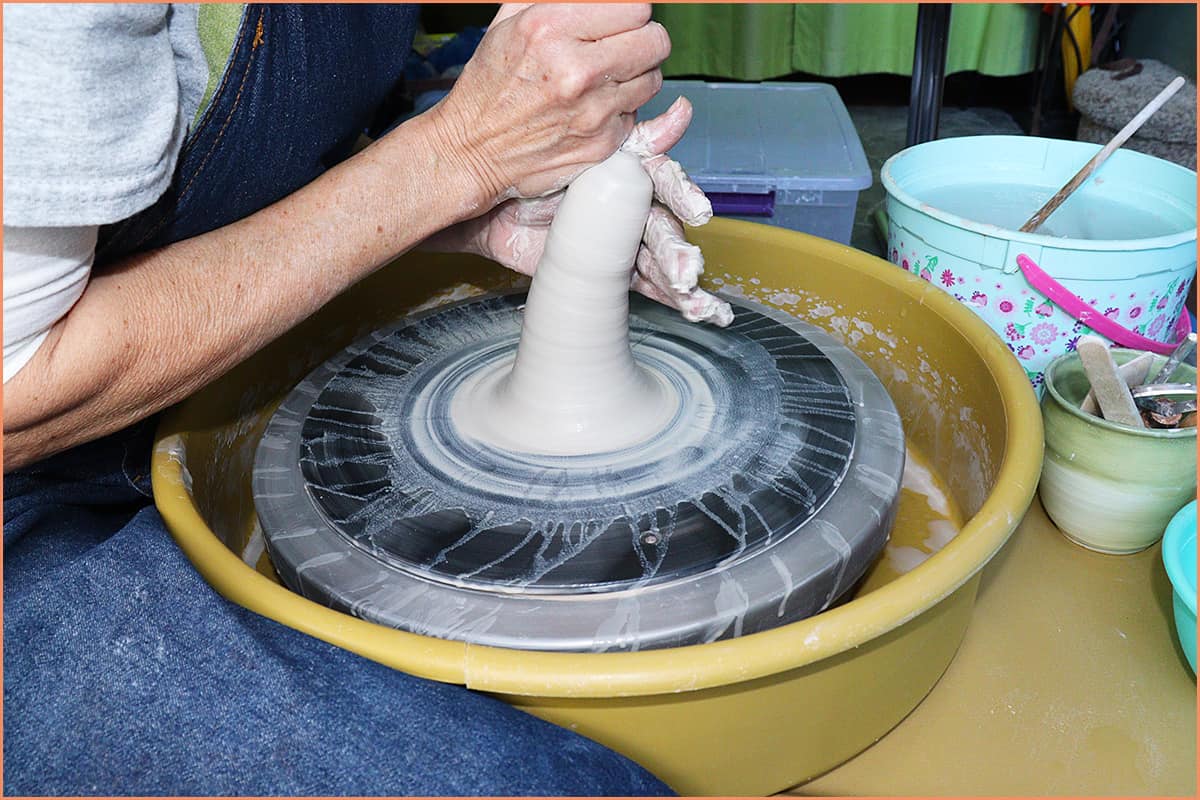
As your hand pushes downward, your anchor hand keeps the clay in place. The wheel should be turning at full speed or close to.
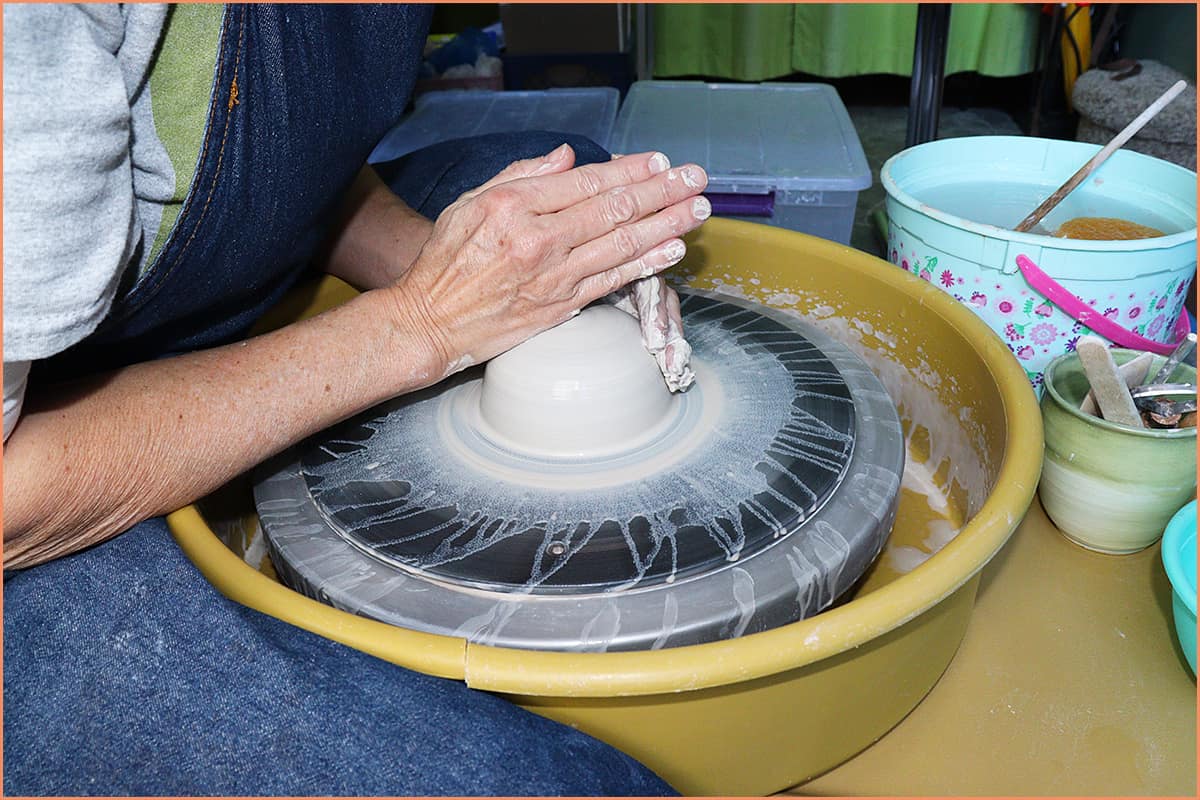
Continue to be mindful of your arms being anchored to your legs or against your body to keep your hands stable.
Important note: Whenever you remove your hands from the clay while the wheel is spinning, make sure you remove them slowly, so you don’t throw the Clay off-center.
For a visual step-by-step centering guide, you can go to this video How to Center Clay on The Wheel Easily – A 5 Step Beginners Guide.
Step #7: Opening your Clay on the Pottery Wheel
When the clay feels still in your hands, it is centered. Wrap your hands around the clay. Then press your heel on the foot pedal to slow down the wheel to mid-speed. Then slowly press the tips of your thumbs down into the center of the clay.
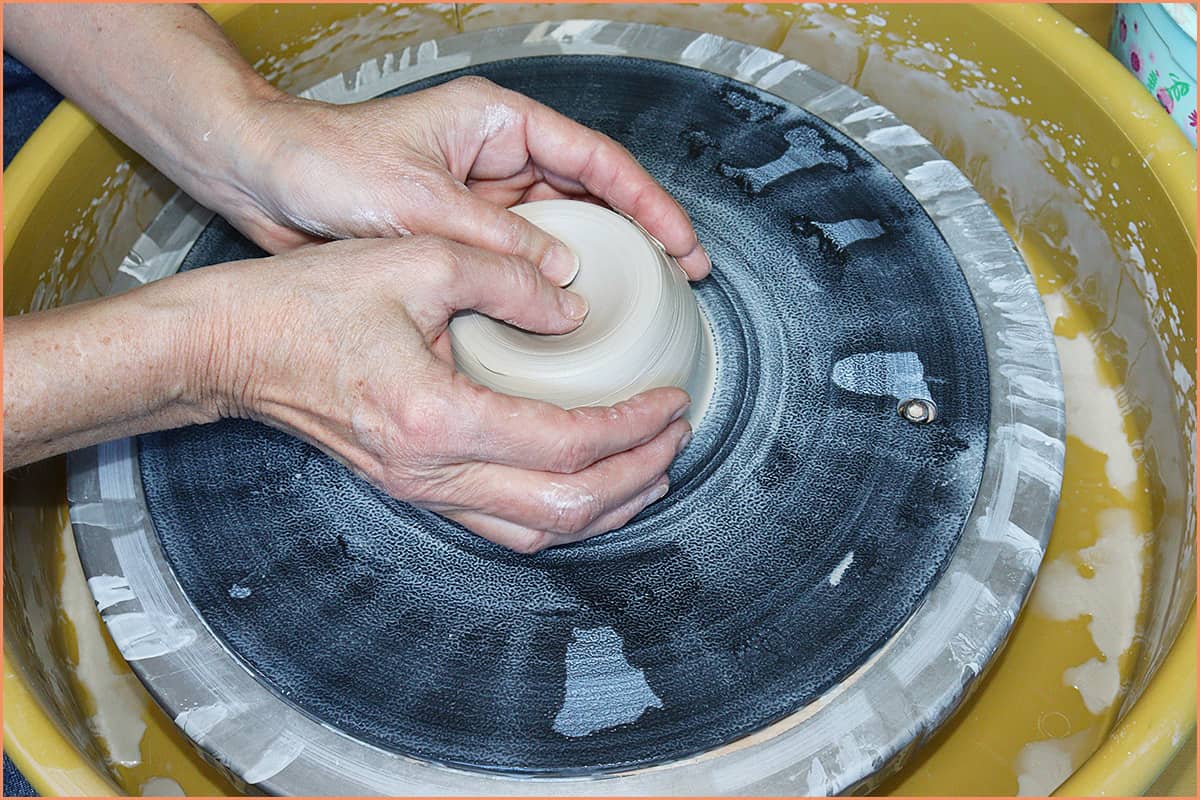
The spinning wheel will find the center as you press your thumbs into the clay.
When you start to feel friction, slowly remove your hands from the wheel or slow the wheel down. Then dip your hands in water and continue opening your clay by placing your anchor hand on the side to prevent it from going off center, and press down in the center with your index and middle fingers.

Check The Thinkness of The Clay:
Stop the wheel to measure the thickness of the clay on the bottom. Remove any water from the bottom with your sponge, and insert a needle tool into the floor of the pot until it hits the wheel. Don’t worry about the hole in the clay that your needle tool just made. It will be filled in when you compress the clay.
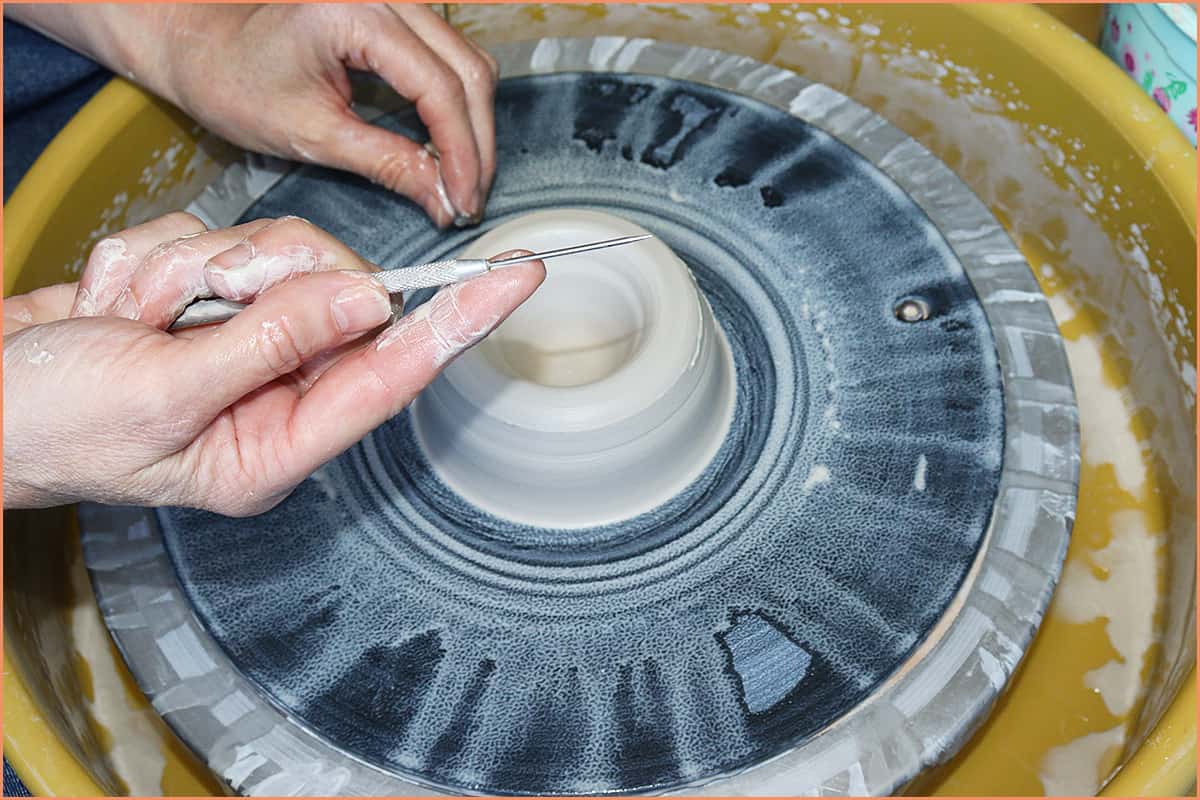
Slide your index finger down the needle tool until your finger touches the clay. Keep your finger in place on the needle as you remove the needle tool from the clay. The thickness of your floor is the distance between your finger and the tip of the needle.
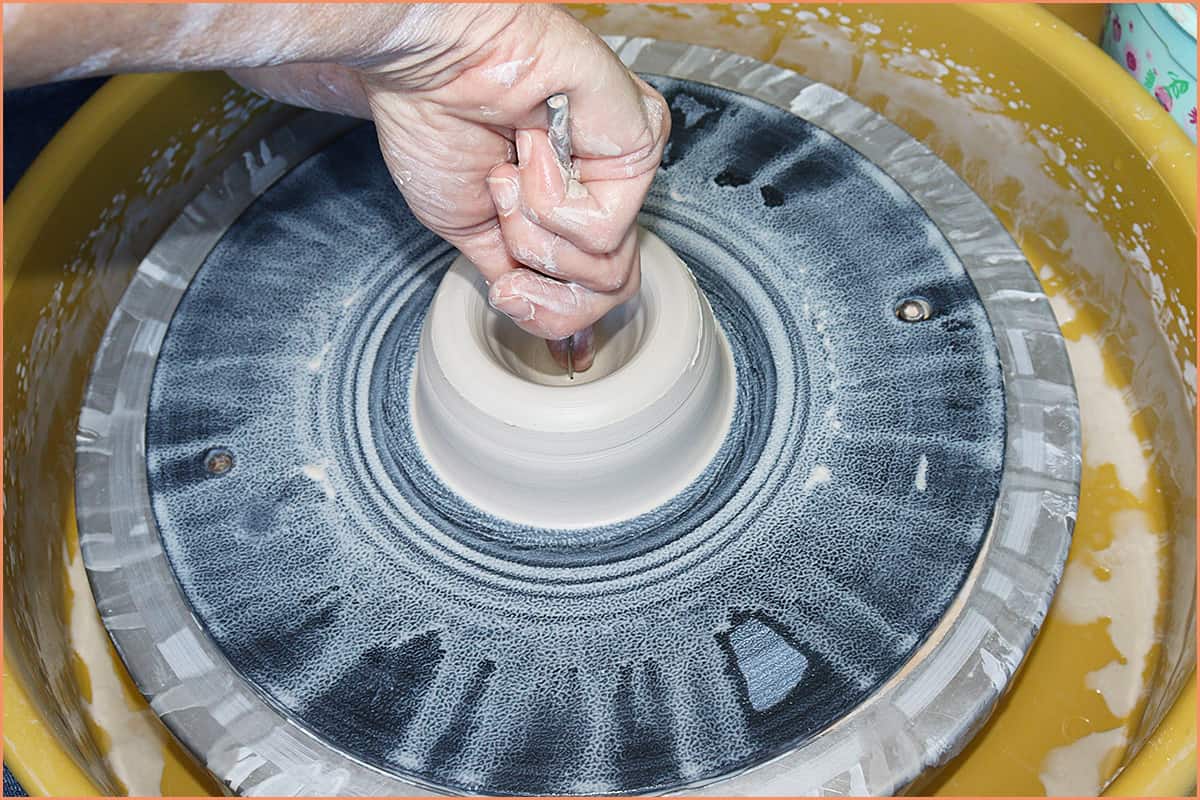
A half-inch of clay thickness is good when you trim the bottom. After trimming, you will be left with a quarter-inch of clay on the bottom.
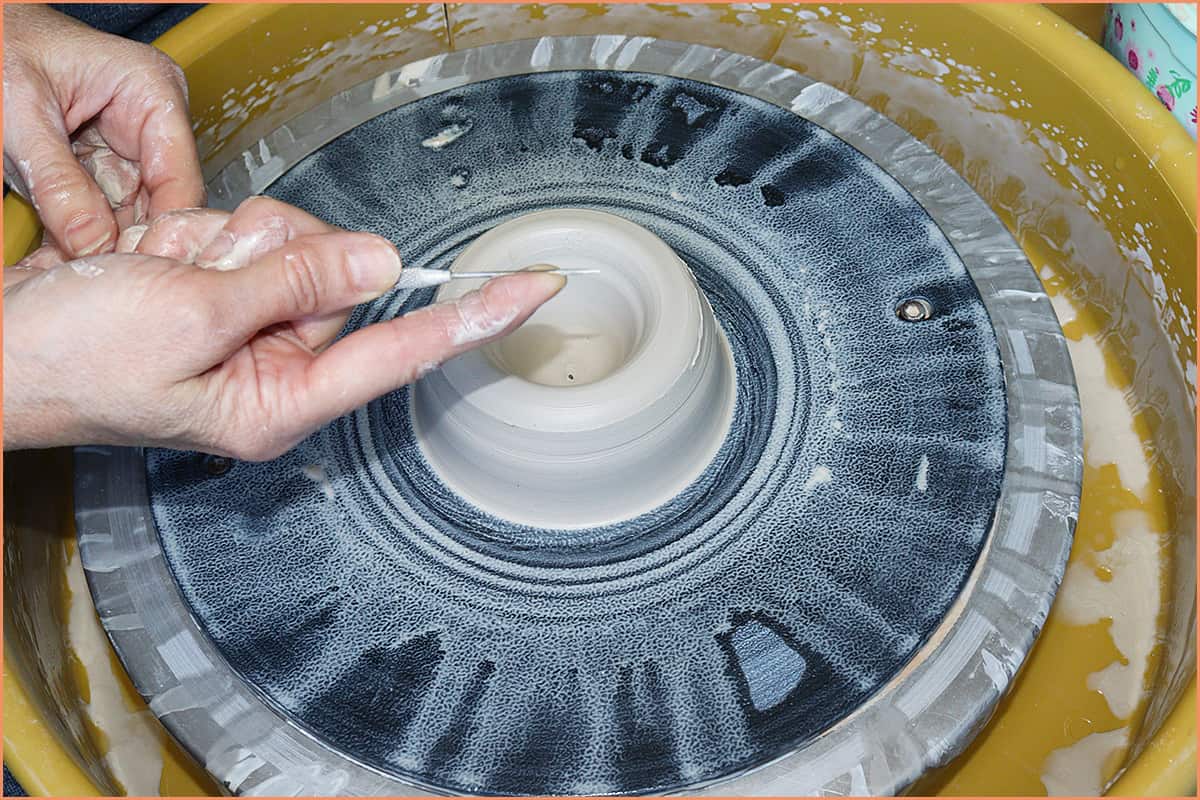
If you are not trimming, you want a third of an inch of clay on the bottom when using a wire cutter. Or at least a quarter of an inch when you use a throwing bat and allow your piece to dry off the bat on its own.
Step #8: Form the Base of the Clay on the Pottery Wheel
Once the bottom reaches the right thickness, it’s time to enlarge the opening to match the base’s width.
Brace the outside of the clay with your anchor hand as you place your right hand in the center of the clay. Then, push the clay outward with your fingertips.
Continue to push the clay outward until you reach the desired width. Once you have the width, it’s important to remove any extra water from the bottom and compress the clay.

Squeeze the excess water out of your sponge to remove the water from the bottom of your clay. Then compress the clay by pressing the sponge on the bottom to avoid S cracks.

Once the base is compressed, it’s time to bring up the walls.
Step #9 Pulling up the Walls of your Clay on the Pottery Wheel
When you start pulling up your walls, you don’t want the wheel to turn too slow or too fast. A good speed is a little slower than medium.
Squeeze a good amount of water into the clay to avoid excessive friction when raising the walls.

Using only your fingertips, place your anchor hand on the inside and press the fingers of your outside hand against the base of the clay.
Your fingers on the outside will be slightly lower than your fingers inside. You want it to start at the bottom, with each pull until the clay reaches the desired thickness and height, and you get the right consistency of clay throughout the piece.

As you’re pressing the clay, move your fingers slowly upward while the wheel spins. The clay has nowhere else to go but up. You want the wheel to rotate at least once before moving your fingers upward.

As you get more advanced, you may end up using a sponge on the outside of the clay to pull up the walls. Here is the one I use the most and recommend, it’s a Mudtools Orange Mudsponge.
Beginners should use just their fingers to get the feel of the Clay and its thickness, and how it moves and feels as you’re pulling up the walls. There’s no timeline for learning the sponge technique; trial and error will be your teacher
Remove the Water:
Soak up the water on the bottom with your sponge from time to time. If water sits on the bottom for too long, it will weaken your clay.
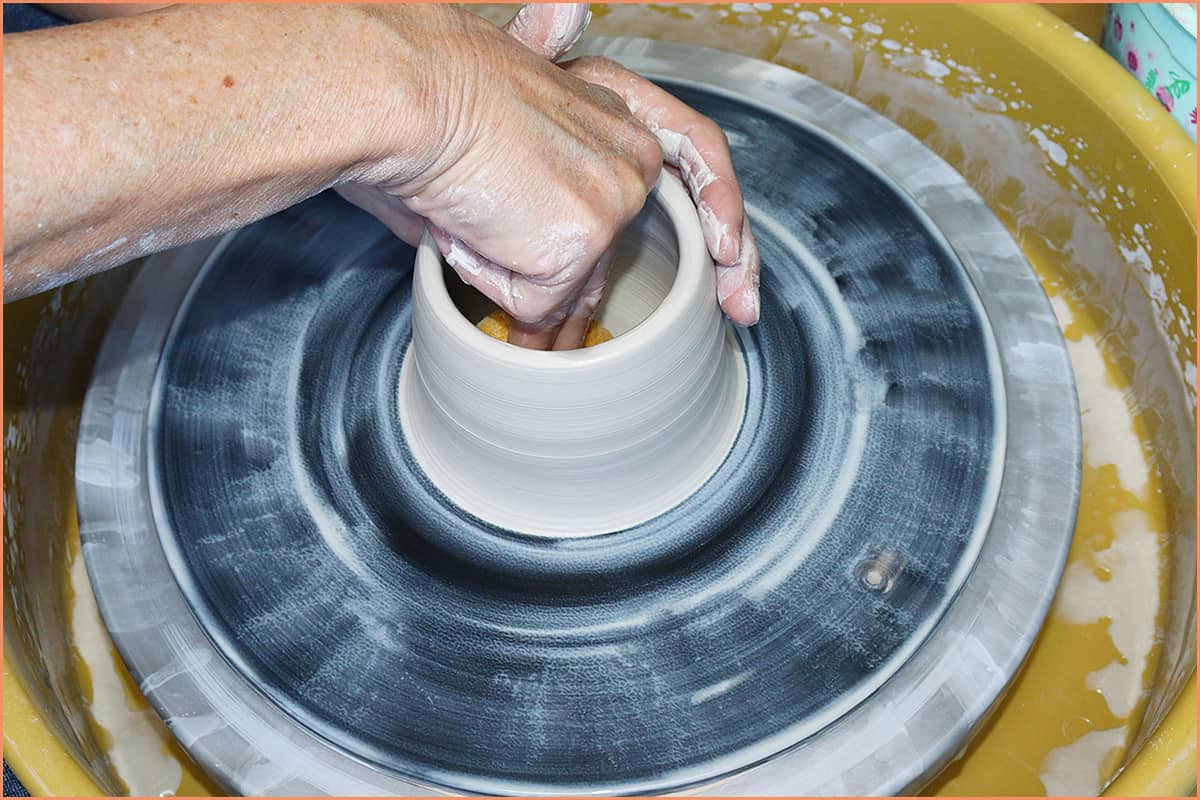
Removing the water from time to time and compressing the bottom will align the platelets and allow you to introduce more water without weakening the clay as much. I have had great success with doing this and don’t get S cracks.
Collor in The Clay:
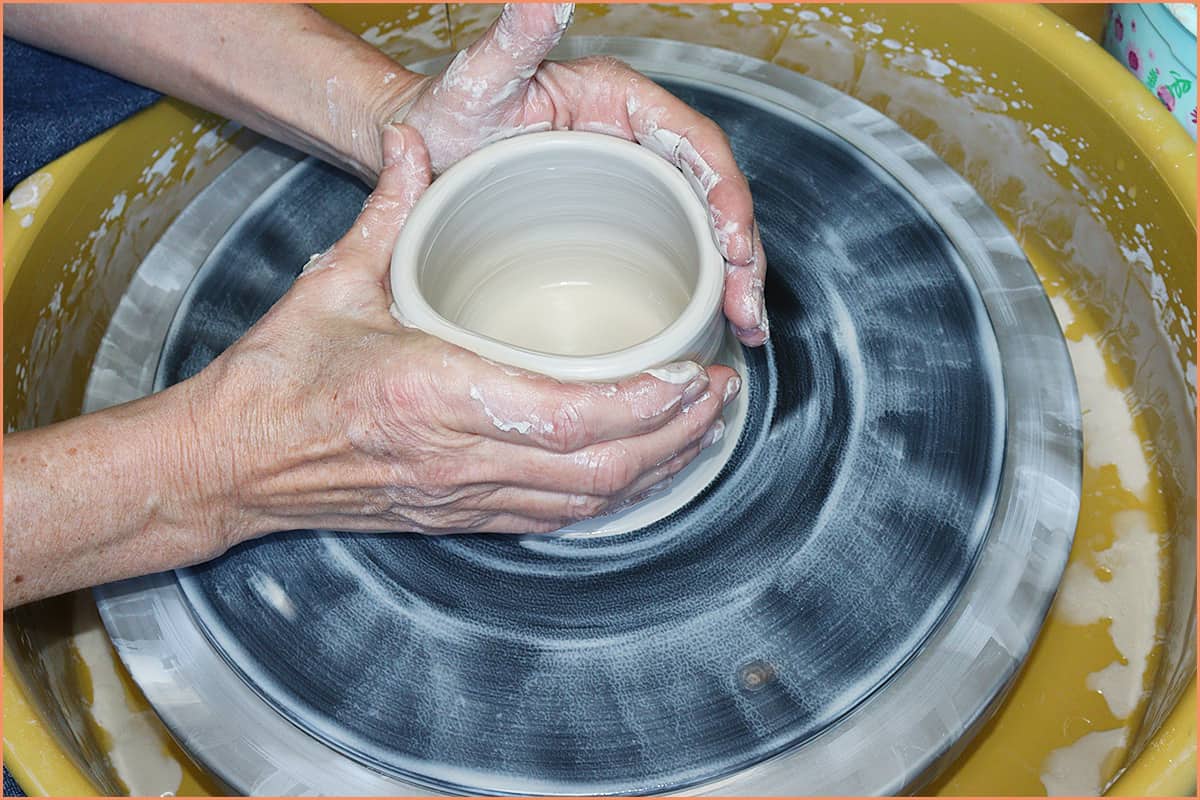
If the cylinder starts to flare out, you want to collar in the clay by getting both hands wet, wrapping them around it, and slowly pushing the clay inward.
Apply Even Pressure:
When pressing on the clay, it’s important not to squeeze too hard or grab too much clay right away. Instead, you want to apply an even amount of pressure with your fingers as you slowly bring up the walls.

Anchoring your inside thumb against your outside hand helps keep the pressure on your fingers consistent, keeping the sides’ thickness even throughout your piece.
Compress The Rim:
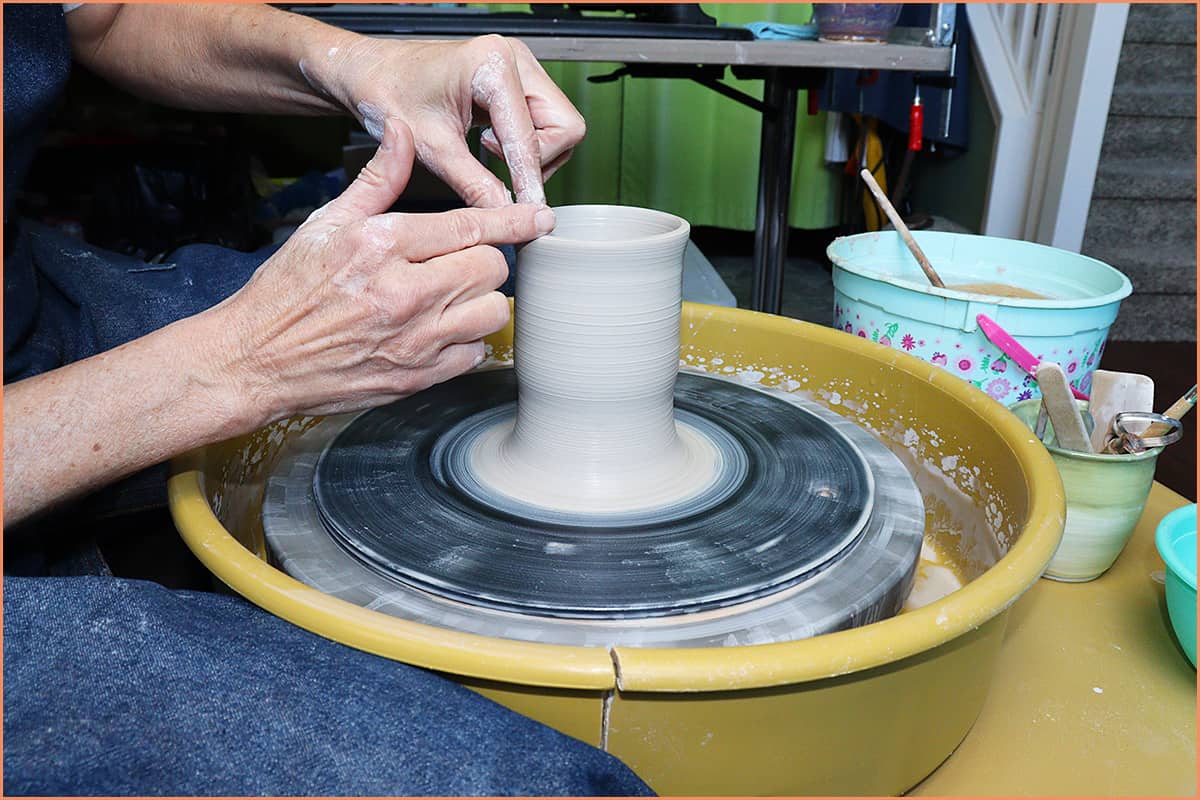
It’s important to compress the rim of your cylinder after every 2nd or 3rd pull. Hold the sides of the rim with the thumb and index finger of your anchor hand, and place the index finger of your outside hand on the top of the rim. Be careful not to press too hard and misshape the rim.
Add Water to The Clay:
It’s important to keep the clay smooth as you are pulling up the walls. When you feel friction from the clay, apply more water. Friction can cause the clay to catch on your fingers and misshape it.

You will be repeating the process of pulling up your clay about 5 to 8 times. Keep in mind that the more times you pull up the clay, the weaker the clay gets. Once you master this technique, it will take around 3 to 5 pulls.
If you overwork your clay, it will start to weaken and collapse. For many beginners, the cylinder may collapse a few times before you get the feel of the clay, but that’s ok; it’s part of the learning process. The great part is it’s only clay. The clay can be Recycled and reused.
Step #10: Finishing your Cylinder On the Pottery Wheel
Once the clay cannot be pulled up any further, it’s time to finish your piece.
Compress and Remove the Water:
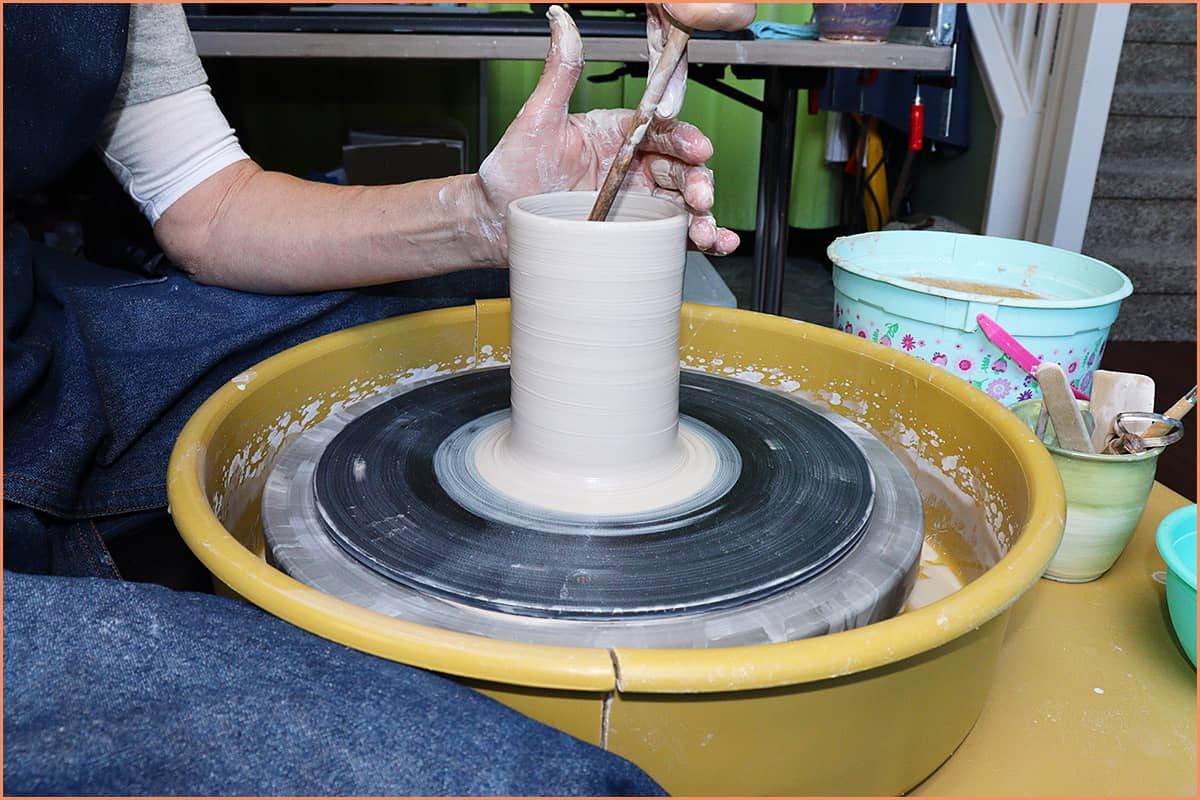
Compress the bottom of your cylinder with a sponge and remove any water or slip on the inside. I found that the sponge on a stick works really well on cylinders.
Remove The Slip From the Outside of The Cylinder:
To smooth the surface of the clay, I use a metal scraper to remove slip and any throwing lines. You can also use a wooden or hard rubber rib.
Place the scraper’s edge at a slight angle on the side of the cylinder. Press lightly onto the clay. Place your anchor hand inside to brace the clay.

Starting at the bottom, press gently outward on the clay as you move the scraper upward. Applying too much pressure will remove too much clay or even misshape it.
Form The Base of The Cylinder:
Press the pointy edge on the wheel next to the piece using a wooden modeling tool to form the base of your cylinder.

At this stage, you want to clean away as much clay from the base of the wheel as possible to make it easier to remove the clay from the wheel.

Remain aware of the angle of your modeling tool. Hold your tool at a slant angle away from the clay.
Compress and Smooth out the Rim:
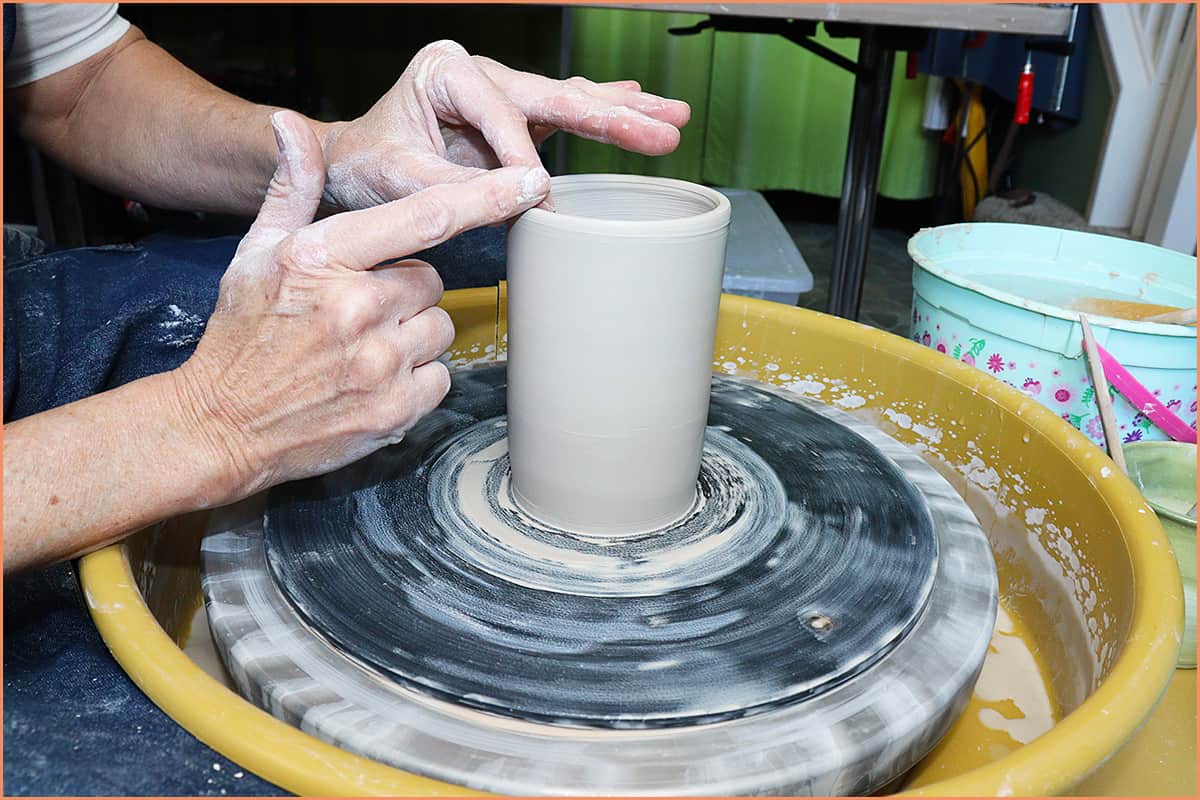
Compress the rim one more time and smooth it out. Again, hold the rim’s sides with the thumb and index finger of your anchor hand, and place the index finger of your outside hand on top of the rim. Be careful not to press too hard and misshape the rim. You will want the rim to be smooth and rounded. Think of drinking from the rim.
You can also go to this video on How To Throw A Cylinder On The Pottery Wheel Easy Beginners Guide
Step #11: Removing your Cylinder from the Pottery Wheel
Removing your piece from the wheel is pretty simple. The trick is not to misshape it on the way to your ware board.
Once the clay is dry to the touch. I put some water on the wheel or your bat with a sponge.
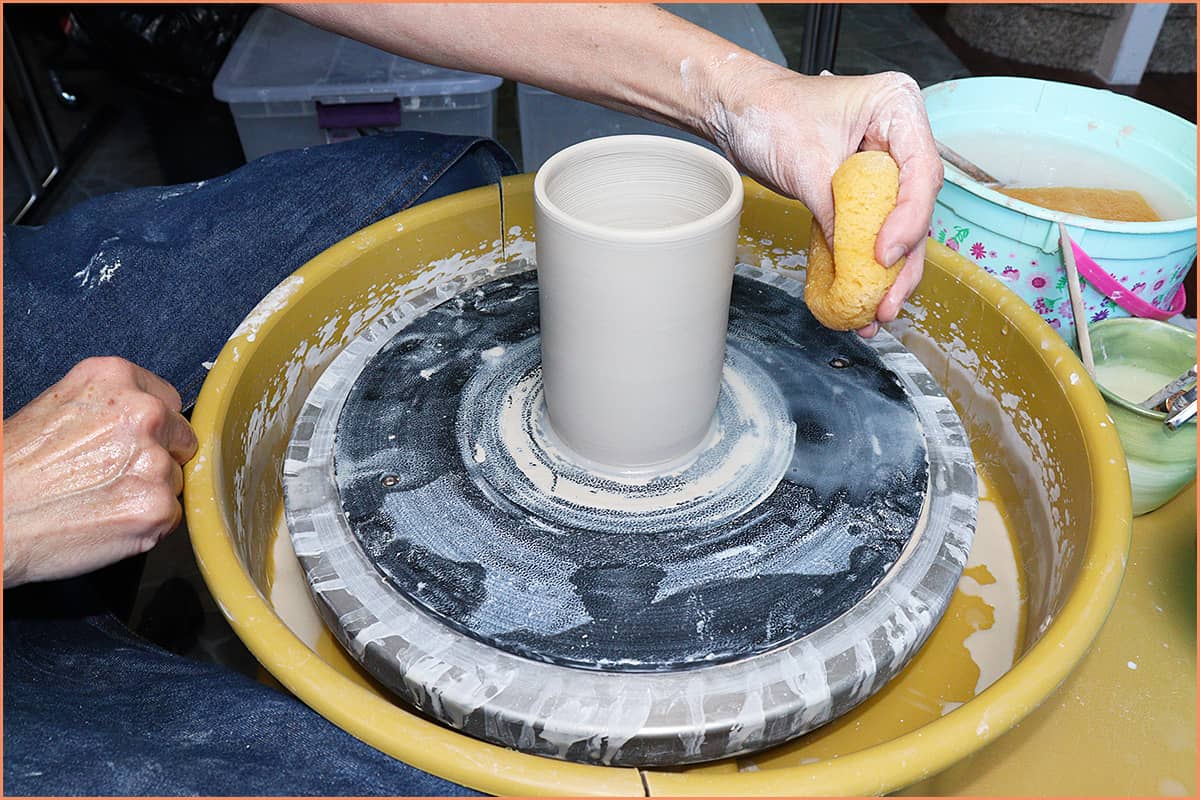
Then run the wire cutter through the bottom of your piece.
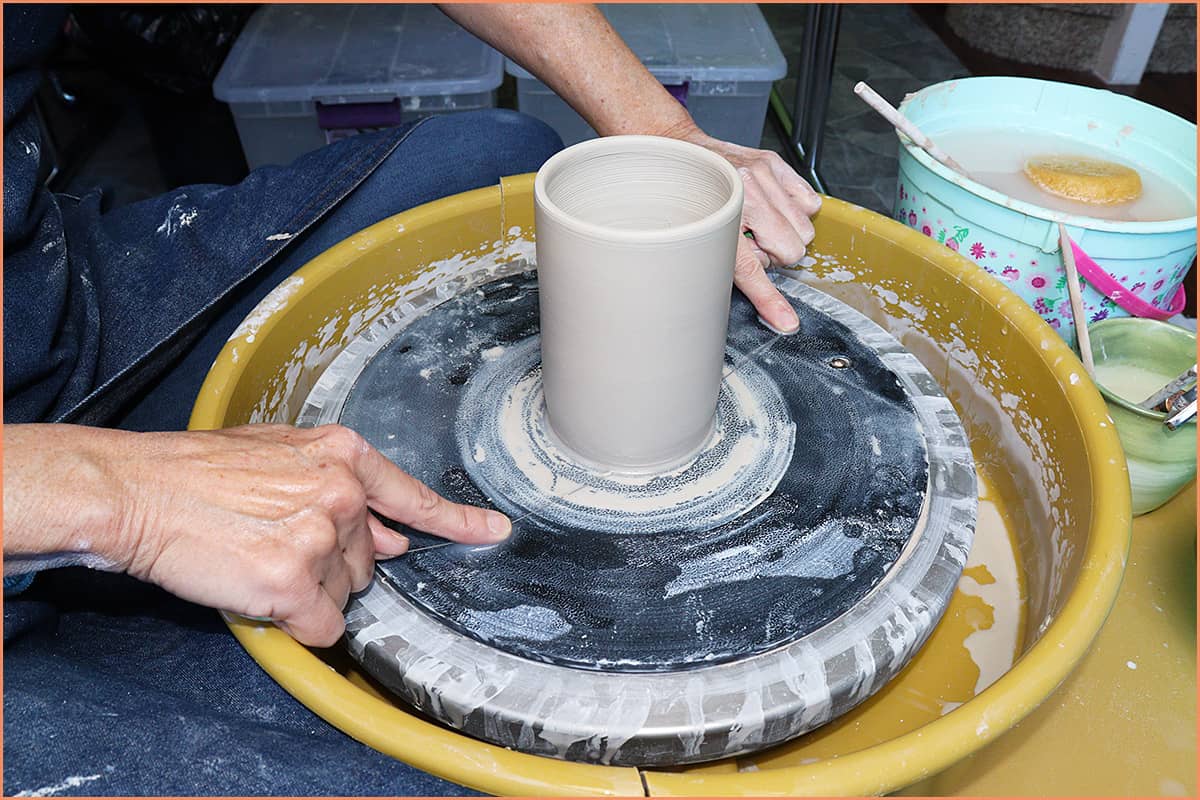
With Dry hands, gently cup your piece with both hands, twist, and lift it off your wheel or bat. For more detailed information on bats, you can go to my article on How To Use Bats on a Pottery Wheel -Types – Usage – Storage.
Conclusion
Throwing takes time to learn. Don’t get discouraged if your pot looks uneven on the first several attempts. Everyone goes through the beginner stage, and learning how to throw on the wheel takes practice. By following these steps, anyone can throw beautiful pots with minimal difficulty!
Many people want to try throwing pottery on the wheel because it looks like fun, and it is. If you would like to learn more about how to make pottery at home, this post will go through everything you need to Start a Home Pottery Studio