

How Fast Should a Potter’s Wheel Turn?
The potter’s wheel shapes and rounds the ceramic wares, a technique also known as throwing. The speed of the wheel centers and forms the wedged clay. Knowing the right speeds makes using the pottery wheel easier.
How fast should a potter’s wheel turn? The rate at which your pottery wheel turns will vary throughout the crafting of your clay. Variable-speed control on an electric wheel lets you adjust the speed from 0 to 240 or 300 RPM.
If you’d like to learn more about the pottery wheel speed, keep reading because we’re going to cover when to use speeds at certain points when making pottery.
Affiliate Disclaimer: We are ambassadors or affiliates for many of the brands we reference on the website. As an Amazon Associate, I earn from qualifying purchases.
Find Your Pottery Wheel Speed Balance
You want to strike a balance between higher and lower speeds. Too much speed can make it difficult to shape the clay into pottery. You can also have difficulties with your clay if your wheel is turning too slowly.
Exercise caution on speed for thinner pots because it can cause the pottery to get wonky, wobble, or collapse.
How fast you turn the potter’s wheel depends on the piece of ceramic ware. You learn this best from experience, but speaking in general terms, you usually keep the pottery wheel spinning at between 100 and 150 rpm (half to one-third of the speed).
As you smooth out the pot with a sponge or rib, you want to slow the speed to around 30-40 RPM.
Good Habits at the Pottery Wheel
When you change wheel speeds, think of it as good practice to slowly take your hands off the pottery. A sudden change in speed and touching the ceramic can mark your pottery or move it off-center. While working with the clay, you want to keep the finger pressure steady to avoid thin spots. Keep an even gap between your fingers as you pull up the clay.
Beginner potters often increment the rotational speed, which can hurt the ceramic.
Speed Depends on Personal Preference
To an extent, the speed of the wheel varies based on personal preference.
Some potters like a slower wheel because it lets them shape the clay more easily, and others prefer the higher speed because it helps them shape the clay more easily. Be aware that when throwing at a faster rate, your pottery is more likely to collapse. Because of the centrifugal force of the spinning wheel, your clay will want to move outward, forming a bowl, then getting wobbly and collapsing. As your skills grow, will your speed control.
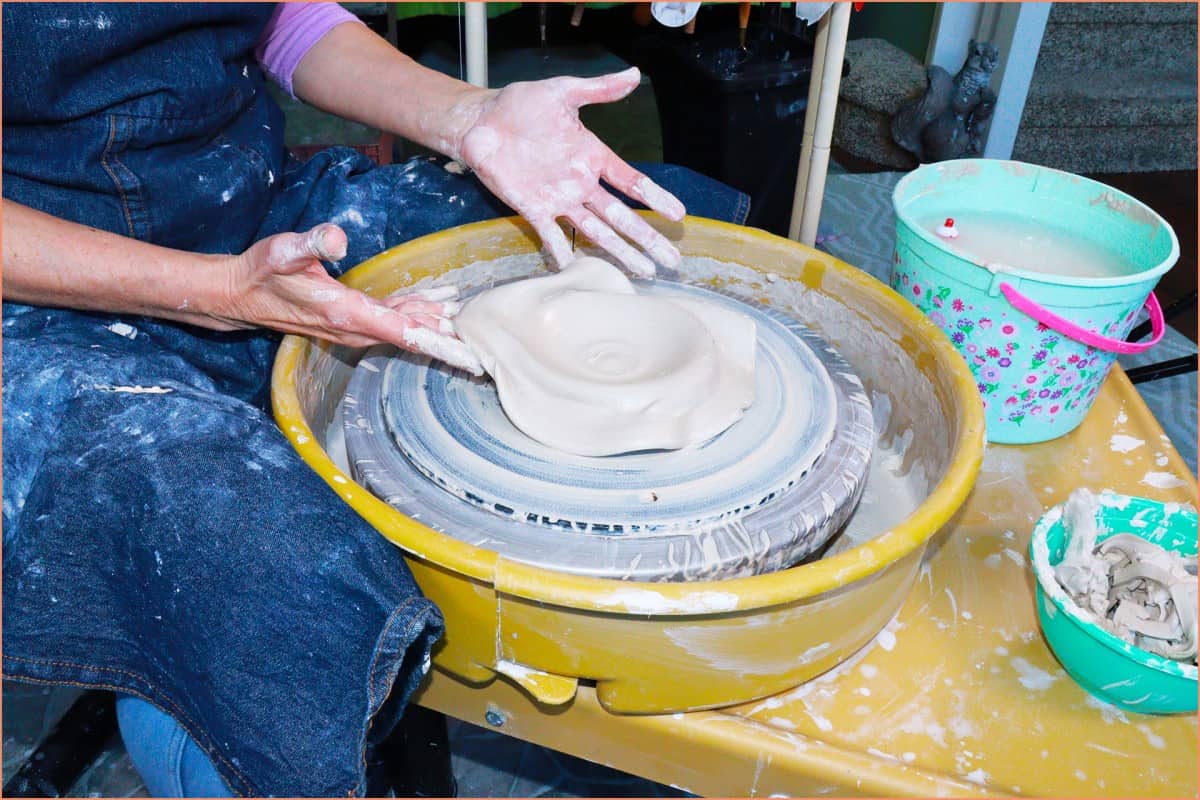
Switch between Variable Speeds to Center, Throw, and Trim, as needed.
When centering faster is better, you want the wheel to spin fast enough to use the centripetal force to your advantage. Faster is better for centering your clay. High to medium-high speed is recommended. If you go too slow, you will find your clay is moving you more than you are moving it, making it much harder to center.
When throwing and forming your piece, you will want a medium or slower speed. You can’t do much when the wheel is turning around 300 RPMs. After you center, slow the wheel down to at least 150 RPMs, then to 80 RPMs. Most will turn their wheels between medium and medium-low. As you go, you will find the speed that works best for you. Remember: not too fast, not too slow.
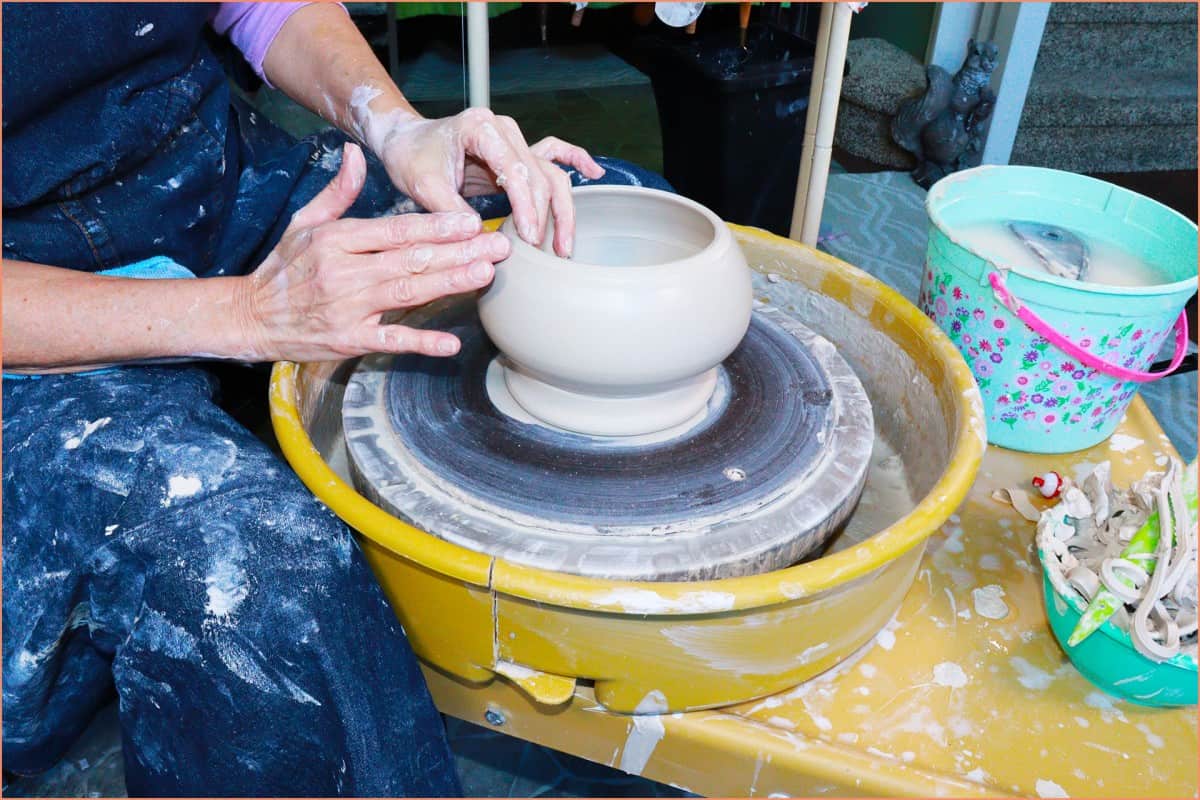
When trimming, again, you do not want the wheel to turn too fast or too slow. I have seen pots fly off the wheel (mine included), and I have also heard my teacher say if you go any slower, the wheel will stop. Medium speed or less is good for trimming. As you go, you will find your sweet spot where the clay is peeling off nicely like a ribbon.
Recommended Article:
11 Problems Centering Clay and Easy Ways to Fix Them – Pottery Crafters
Electric Pottery Wheel Speeds vs. Kick-wheel Speeds
The speeds on the electric wheel offer greater consistency than with the kick wheel. On the kick-wheel, you have to learn how to shape your pottery while keeping a consistent speed. This takes more practice than with an electric wheel.
Electric wheels have become a more popular choice over kick-wheels. Still, you have some potters who prefer the quaintness of the kick-wheel.
In Japan, you have people known as “Living Treasures” who use only the kick wheel. Living Treasure in Japan describes a group of living, breathing artists who have such skill in the ceramic arts and other arts that they have earned protection in the Land of the Rising Sun. Other countries that designate this include France, Romania, the Philippines, and South Korea.
Even with kick-wheels, many will have a motor on them to bring the kick-wheel up to speed, which
can be a huge advantage.
What to Know About the Different Pottery Wheel Speeds
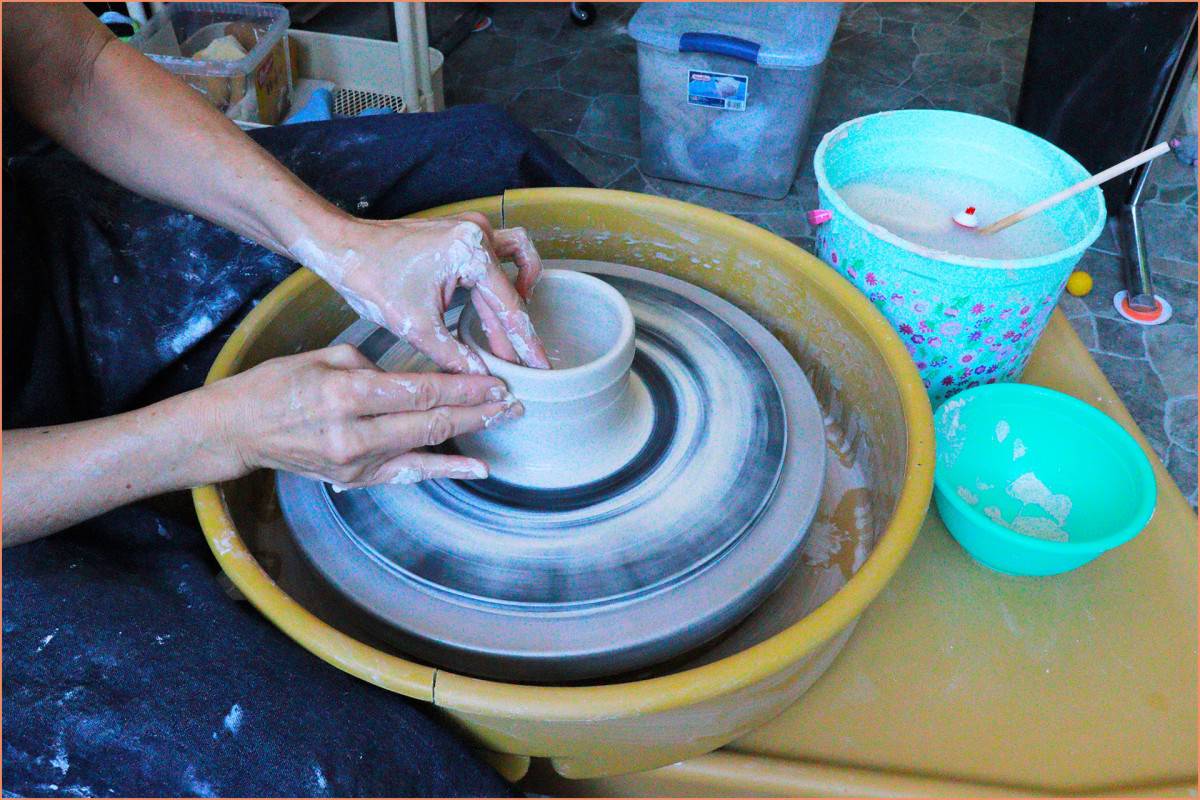
Think of this as a general guide rather than the gospel when it comes to wheel speeds. Each potter will have their preferences.
Some people prefer a faster speed because they can center more quickly and more accurately. When throwing, beginners will struggle at higher speeds due to a lack of control.
The speed you use depends on the weight of the clay, too. At 2 pounds and under, you may go with 50 to 40 percent of the maximum speed. For anything over 3 pounds, you want to lower the speed to 40, or even 30 percent. With larger pieces, use a slower speed, and with smaller pieces, up the speed because control is less of an issue.
Related Articles:
Which Direction Should a potter’s wheel turn
How Much Does A Kick Wheel Weigh
Conclusion
Most electric wheels have their speed controlled with a foot pedal. On a select group of models, you control the speed with hand controls. That comes in handy for someone who’s disabled or doesn’t have the full use of their legs. Beware of torque with pottery wheels because it influences how much poundage they can center. You can center anywhere from 20 pounds to 400 pounds, depending on the pottery wheel. Hopefully, this sheds some light on the speed of the pottery wheel.