
Can Pottery Clay Be Mixed – Pottery For Beginners
Ever wondered if you can mix different pottery clays? Maybe you have run low on Clay and only have enough if you mix the two clays together. Can you do this without a problem?
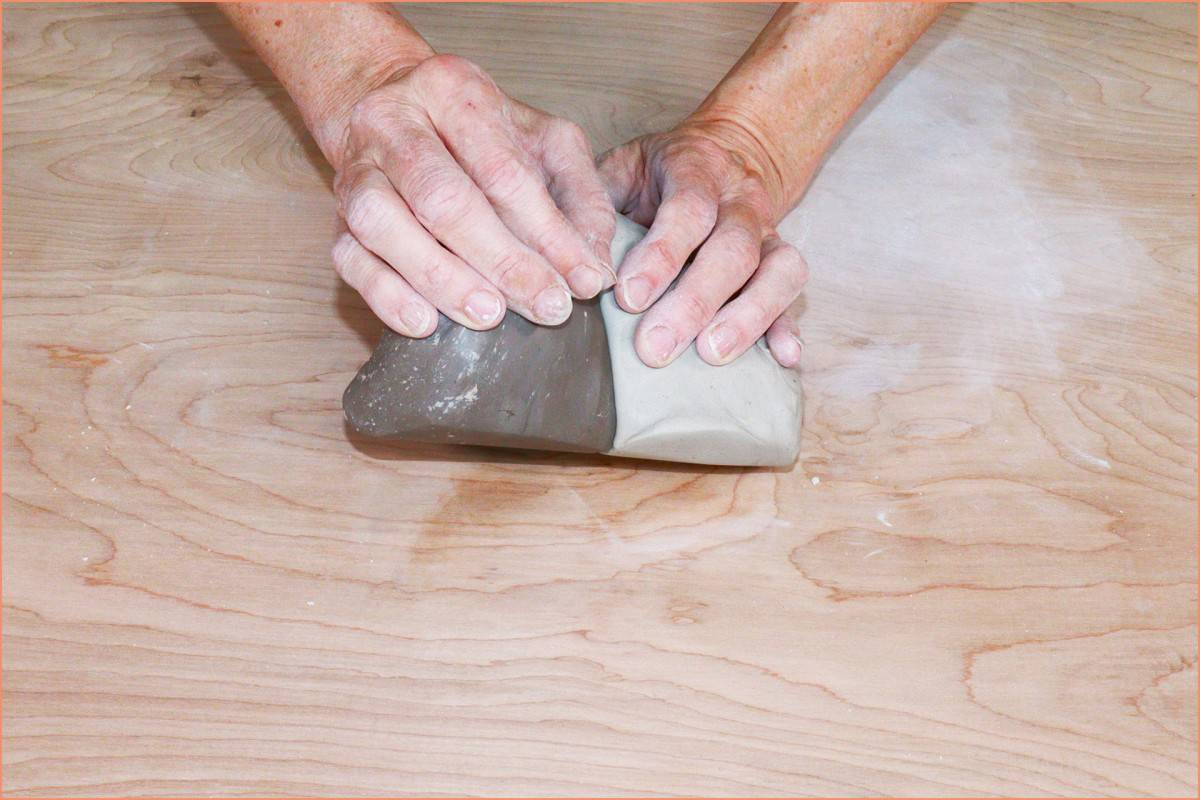
Yes, Pottery clay can be mixed. And, in fact, Potters often mix different Clays to achieve more favorable characteristics. You want the two clays to have the same firing temperatures, moisture content, and shrinkage rates because this lowers stress on the pottery and affects glaze results.
If you’d like to learn more about mixing clay, we will cover everything that you need to know in the following article. Keep reading to learn more.
Affiliate Disclaimer: We are ambassadors or affiliates for many of the brands we reference on the website. As an Amazon Associate, I earn from qualifying purchases.
Why do Potters Mix their Pottery Clay?
You have a few key reasons that potters choose to mix pottery clay, such as:
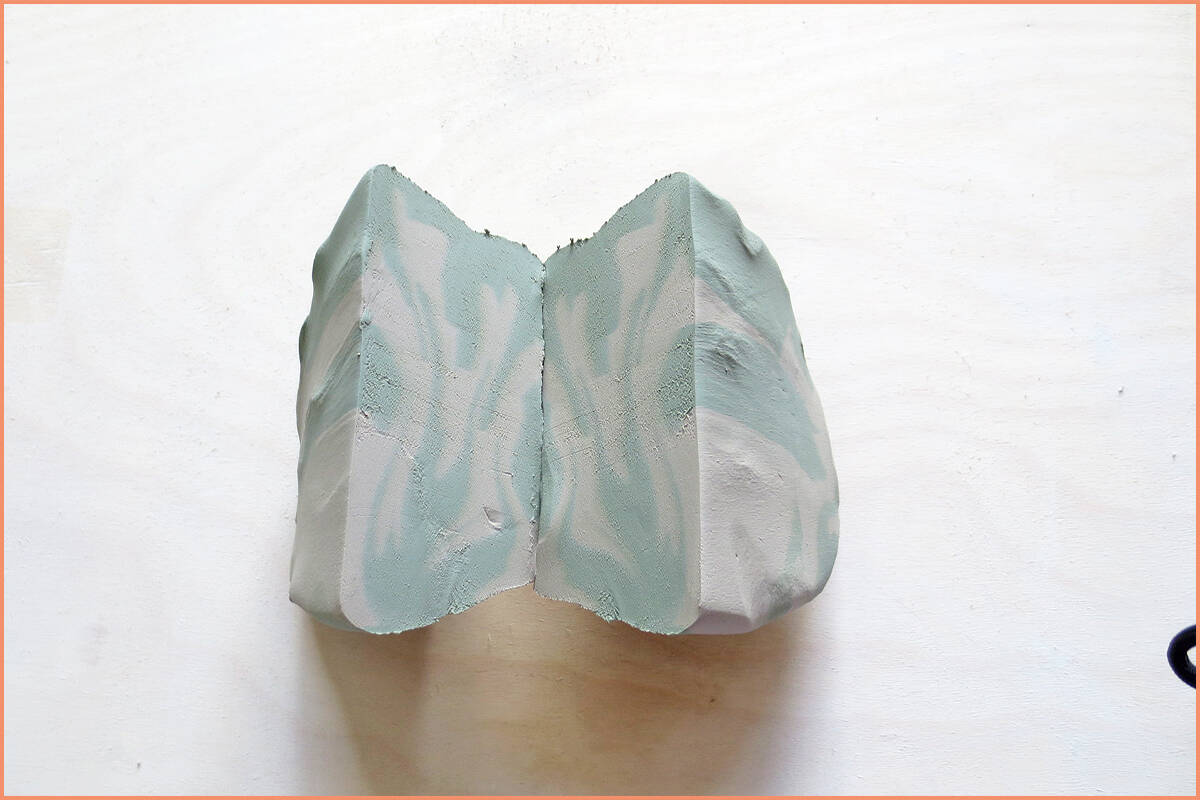
Adding a new color to the work
Mason Stains are great to mix into your clay. They create some cool colors and do not affect the composition of your clay body.
Defining the pottery with a new texture
Adding course grog can change the texture of your clay. Also, drying it faster helps reduce shrinkage and cracking.
Wanting to add new characteristics to your work
Some of today’s potters mix hard materials like glass, stones, and even rust into their clay. These are more seasoned potters who become familiar with firing techniques.
Changing the composition of the clay body
Adding ball clay to make the clay more plastic (workable) or fire clay to make your clay more durable. Also, adding flux to change the melting temperature. This again is for the more seasoned potters.
Making use of clay scraps from other projects
Recycling your Clay is one of the smarter and more economical ways to make use of all your clay. When mixing scraps of clay, it’s best to know what clay bodies are in the scraps and test fire, then test glaze.
Experiment with Pottery Clay Mixing: What to Know
You never know if a clay mix will work until you have fired it up in the Kiln. If the two clays didn’t mesh, it could crack, separate, or Explode in the Kiln. Mixing pottery clay usually takes up to 1 hour, depending on the amount you are working with.
After you mix the clay, you will want to wait at least a week before using it, as this makes it more workable. Some potters wait for months, even up to a full year, before using the mixed clay. With that said, you may want to test it to see that it works at the one-week mark. You don’t want to wait a full year to learn that the mixture didn’t work—not fun!
Waiting for months is preferable when you have plenty of other pottery clay to work with.
Rules of Mixing Clay: What You Need to Know
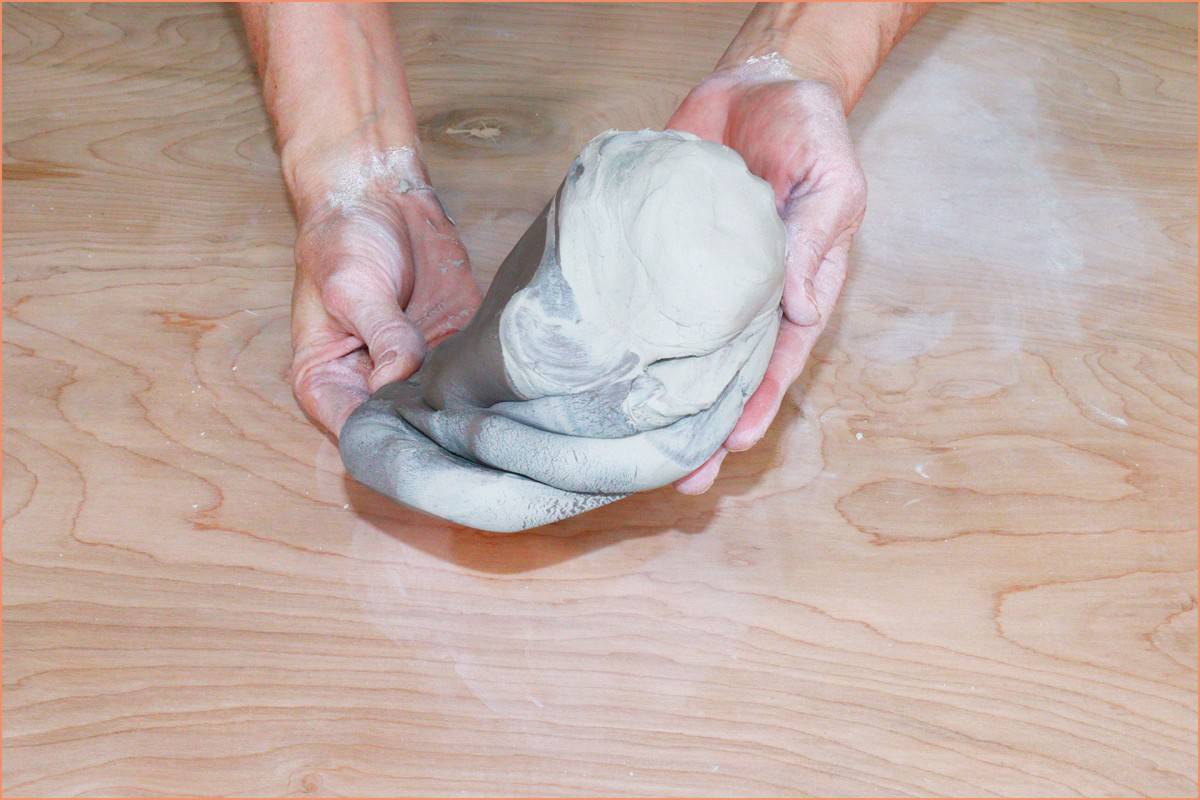
You can follow a few rules to increase your chances of successfully mixing different pottery clays. One of the most important rules is to mix pottery clays with the same firing temperature. This ensures that the clay fuses with the other at the same time. Shrinkage rate and moisture level are also important.
From Amaco Customer Care:
When you mix clay bodies, you are creating a new clay body. Therefore, you will have to do your own testing for shrinkage and compatibility with your glazes. There is no way to determine in advance whether it will work. That is why it is suggested that beginner potters not mix two clay bodies until they understand the nature of clay and can test-fire first.
When mixing clay bodies together, there are different ways you can wedge them together. This article, How To Wedge Clay A Beginner’s Guide with A Step By Step Video, can help you choose the way you want to mix your clay together.
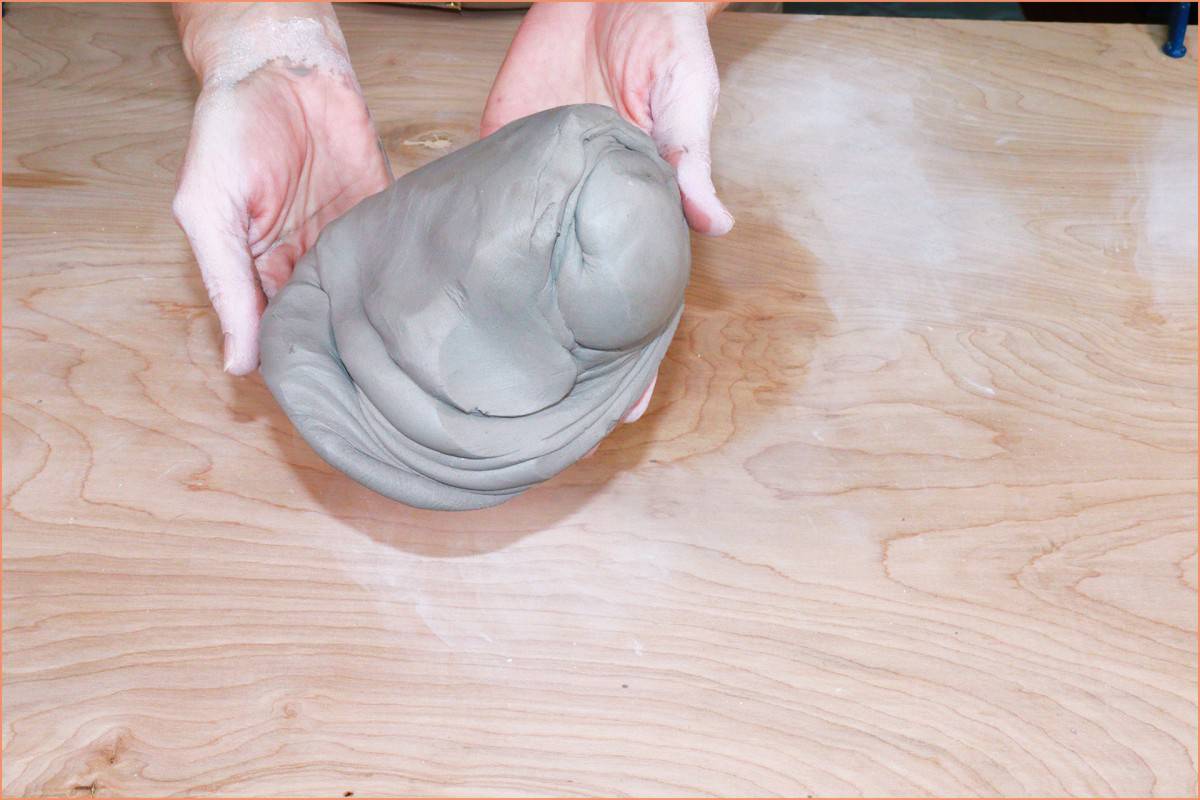
Spiral Wedging is a good method. It is similar to the Ram’s Head in that both create a swirl pattern. The Spiral mixes the clay together faster than the other methods, as shown in the article and on the video.
What should you keep in mind when wedging your clay together?
- Choose a comfortable amount of clay for your first time.
- You can wedge enough clay for several pots as easily as one.
- Add water as needed to make harder clay softer.
- Make sure the clays are mixed thoroughly before use.
Is Mixing Pottery Clay Easier for Experts?
Maybe you have a friend who has several years of experience as a potter. You might ask them to help you mix your pottery clays.
While mixing pottery clay comes down to choosing the right clays, years of experience as a potter can make it easier. As you gain experience, you can do trickier combinations.
You won’t notice as many pots breaking in the Kiln as you gain experience. Some of this comes down to learning how to do it. You have to pay your dues to learn how to mix pottery clay without it cracking or breaking in the kiln.
Recycling Your Scrap Clay
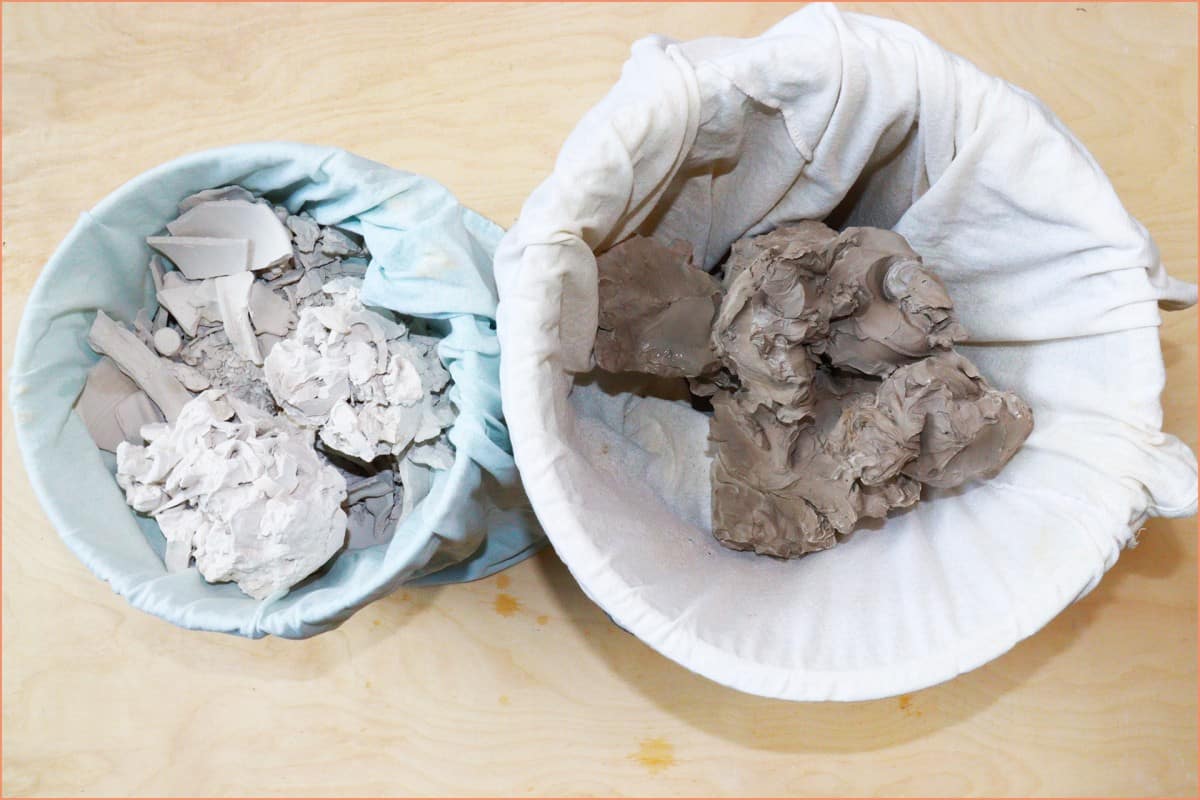
When beginning on your pottery journey, the information you receive can seem confusing. You see some potters recycling their scrap clay from different clay bodies, and others that don’t. These are seasoned potters who have worked with these clays and know the results.
It’s best for new potters to stay on the safe side and not mix different clay bodies when Recycling your Clay until you have done bisque and glaze firing tests on them. It’s worth taking the time out to test small amounts of your favorite clays. This will take a little time, but it’s totally worth it in the long run.
Can you mix different Types of Pottery Clay
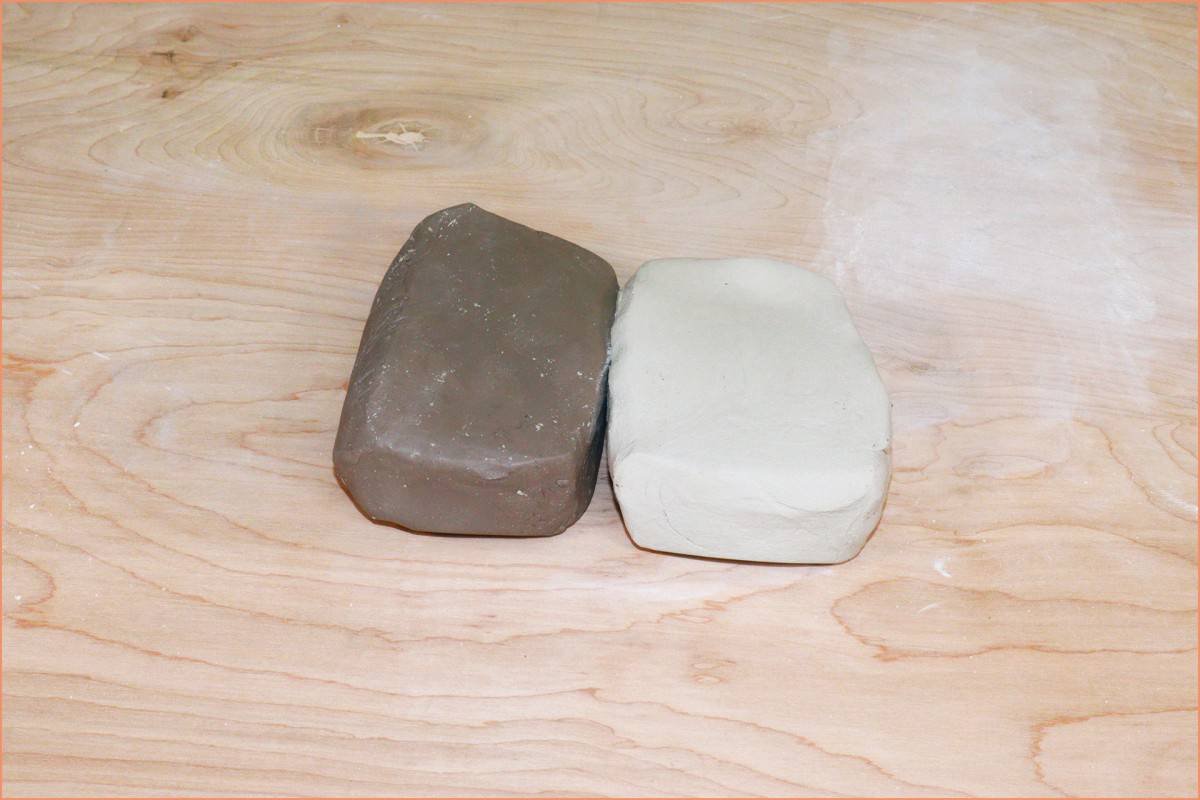
Stoneware and Porcelain clay mix well together because of their similar properties, but you wouldn’t want to mix Earthenware and Stoneware.
Part of this comes from the fact that porcelain fires up at higher temperatures, while earthenware fires at lower temps. The two clays do not marry very well and may be difficult to glaze.
Porcelain and stoneware work well together because they both fire at similar temperatures and become hard and non-porous upon firing.
Fire Clay works well with Stoneware clay because they both have higher firing temperatures.
Fire clay is typically used as an additive to other clays, like what you would with ball clay.
Adding Ball Clay to porcelain improves its plasticity, but it will lose its bright white color, which makes it popular. In general, porcelain can be tricky for beginners because of its workability and shrinkage rate; it can crack easily in the Kiln.
Ball clay is not recommended for beginners because of its tendency to crack. It is a pottery clay that you’d want to mix with others. Like fire clay, ball clay is more of an additive.
You Don’t Have to Mix Pottery Clay?
If new to pottery, you don’t have to mix it yourself. You will get better results from buying Premixed Pottery Clay. This way, someone else does the work for you, getting it set up, and you may find that you get better results from doing it that way.
Buying the premixed version usually goes better because you don’t have to worry as much about the clay cracking or separating in the Kiln. They have some wonderful hybrids available, such as a porcelain-stoneware blend. This takes the best properties of each.
B-Mix and A-Mix Clays are the closest to porcelain, with A-Mix Clay producing a whiter color than B-Mix.
Using a Shrink Ruler
A flexible, two-sided plastic ruler, this tool in pottery determines how much shrinkage will occur in wet clay as it is fired. Clay can contain a lot of organic material, depending on the type of clay. Some clay has more organic materials than others, different-sized clay particles, and chemical or (structural) water which gets out in the Kiln.
Understanding the shrinkage rate matters because you can determine project specifications when it comes out of the Kiln.
This tool becomes especially helpful when you mix clay because you need to understand the shrinkage rates of both types of clay being mixed, or you will experience much greater stress on the pots. If one clay shrinks more quickly than the other, it could lead to separation in the Kiln.
How to Calculate Clay Shrinkage
Almost every beginner has pulled a pot out of the Kiln and felt disappointed, thinking, “This was much bigger when I put it in!”
Previously, we talked about using a shrink ruler, but we didn’t go into detail on how to use it. Clay starts to shrink as water evaporates from it. The finer the particle size, the more water layers there are, which equates to more shrinkage. As the Kiln fires up, glass platelets will form on the clay and harden it.
You want to find a clay that shrinks less than 12 percent, but even 6 to 8 percent is ideal. Keep in mind that you would get a lower percentage of shrinkage from earthenware clays and with grog. At the same time, porcelain would give you a higher percentage of shrinkage.
To begin the process of measurement, you will first leave some marks on a test bar. You will use a 10-centimeter test on the bar of mixed pottery clay. Put the test bar into the Kiln, and you will fire it at the same temperature as your project. Now, take your shrinkage ruler and measure the test bar.
Let’s say that you pull the test bar out of the Kiln to measure it. You learn how the test bar now sits at 9.3 centimeters. That means you have a 0.07 shrinkage rate, which translates to a 7% shrinkage rate. Testing each batch of clay is wise because each batch may contain a different volume of water, which can vary the shrinkage rate.
You may want to test both clays separately to ensure they have similar shrinkage rates.
Understanding the shrinkage rate, even for a beginner to pottery, won’t be surprising as the pottery exits the Kiln. With the pottery clay that you have mixed, this becomes even more important.
The Cool Effects of Mixed Pottery Clay
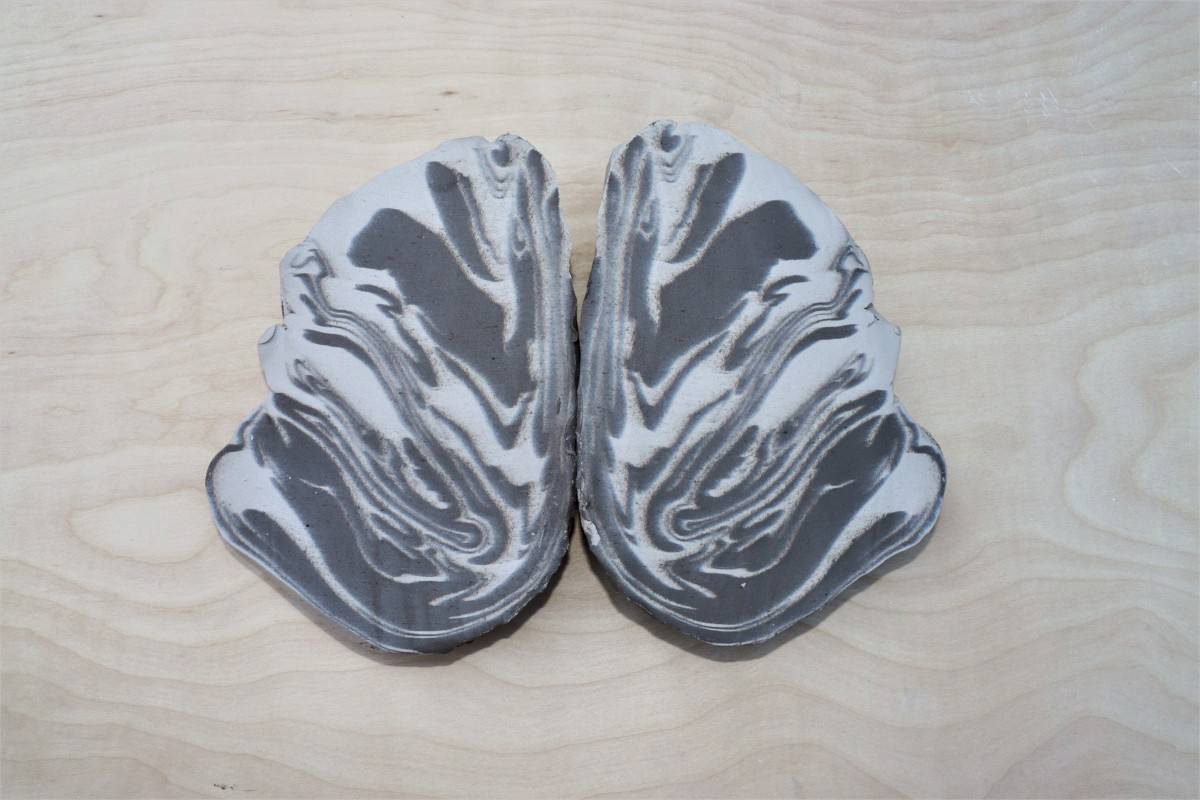
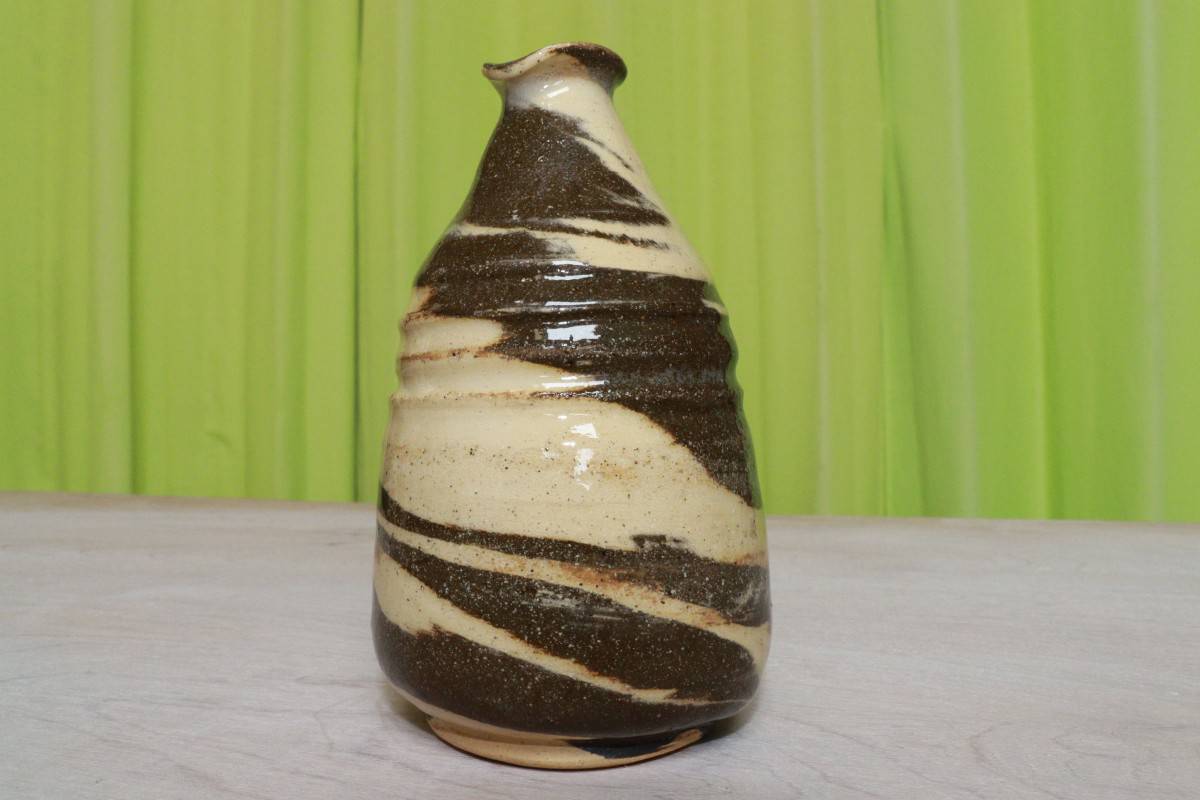
Many experienced Potters love to mix clay because it lets you achieve spectacular effects. You could make a pot or create pottery known as agateware, which creates a marble-like effect on your pottery.
For agateware pottery, you have to create the effect by mixing multiple colored clays. The contrast in colors creates a stunning effect. The marble effect is the defining characteristic of agateware pottery. You might take a darker stoneware clay and mix it with white stoneware clay. The effect is wonderful as you arrange a checkered pattern over the piece.
Another type of mixed-pottery clay effect you might achieve by mixing clay is a contrast between colored and white clay.
Agateware pottery requires you to throw quickly because the more time you spend with the piece, the more it will begin to blend together, creating less of an agate effect.
Don’t want to mix clay? Here’s Your Alternative…
We talked about buying premixed clay, but you have another option if you don’t want to mix it at all. You can use glazes, stains, and oxides to achieve similar effects that you might with mixed pottery clay.
Here are a few different types of clays for you to check out.
Unmarked Clay: Addressing a Common Problem
What if you have unmarked clay that you had stashed away? You will have a hard time mixing it if you don’t know what type of clay it is.
Test it with your lowest firing temperature so that you don’t have to clean your kiln shelf. The higher temperatures will melt certain clays. This can be bad for your Kiln and future clay projects.
In some cases, if you can’t determine the type of clay, people recommend using it for decorative pieces rather than functional ones. This means don’t mix the clay because you can’t tell the type of clay that you will be mixing.
Conclusion
People usually mix pottery clay either for aesthetic beauty or because they have extra scraps from previous projects they want to get rid of. You can do some awesome things by mixing pottery clay.
Most studio potters, however, don’t mix clay. Instead, they buy the pre-made mixes that come neatly packaged in a bag. It saves time, and especially if you’re a beginner, it ensures that your efforts don’t go to waste.