Skip to content
pottery crafter logo 2021
  • Beginner InfoExpand
    • Choosing Your Pottery Clay – Best Pottery Clay For Beginners
    • 21 Essential Pottery Clay Tips for Every Potter
    • 21 Essential Do’s and Don’ts for Making Pottery Every Potter Should Know 
    • 21 Pottery Wheel Throwing Tips
    • 21 Essential Underglaze Tips for Pottery
    • How I Started Making Pottery at Home – My Guide for New Potters 
    • What is Greenware Ceramics: Understanding Its Role in Pottery
    • Is Raku Pottery Expensive to Make?
    • 30 Beginner Pottery Wheel Projects | With Easy Instructional Videos
    • How to Dispose of Pottery Clay Water | 3 Proven Methods
    • 10 Tips on How to Become a Successful and Confident Potter
    • How To Make Colored Clay For Pottery – A 6-Step Clay Coloring Guide
    • 21 Tips for Hand Building Pottery
    • Pottery Clay Extruders – Uses and Functions
    • Is Raku Pottery Waterproof: Sealing Raku Ceramics
    • Is Raku Pottery Food Safe: What You Need to Know
    • Can Pottery Clay Be Frozen
    • Stoneware Clay Vs. Porcelain Clay – Details and Facts Explained
    • 21 Pottery Clay Slip Questions Answered
    • What Is Potters Clay Made Of – Pottery Clay Ingredients Explained
    • How to Store Pottery Clay
    • How to Prevent Pottery Clay From Cracking While Drying
    • How to Throw Clay on the Pottery Wheel: A Step-by-Step Beginners Guide
    • How To Use a Pottery Kick Wheel (Ultimate Guide)
    • 7 Best Surfaces for Hand Building
    • How To Do Pottery With Long Nails – 5 Tips To Remember
    • How To Use Bats on a Pottery Wheel | Types – Usage – Storage
    • Can Air-Dry Clay Be Used on the Pottery Wheel – 3 Brands Tested
    • What Causes Pinholes in Pottery Glaze and How To Prevent Them
    • What Is the Difference Between Stoneware and Earthenware Clay
    • Can Broken Pottery be Repaired?
    • Pottery Wheel Positions and Posture – All You Need to Know
    • How to Make Kiln Cookies in 6 Easy Steps – With a Video
    • Can Handmade Pottery Go In The Dishwasher?
    • How to Make Pottery – 8 Step Pottery Making Process
    • How to Start a Home Pottery Studio
    • Which Direction Should a Potters Wheel Turn
    • Online vs In-Person Pottery Classes – A Beginners Guide
    • Are Pottery and Ceramics The Same Thing
    • Plain Clay Slip
    • Colored Clay Slip
    • 11 Problems Centering Clay and Easy Ways to Fix Them
    • 21 Kiln Questions Answered
    • 9 Common Pottery Wheel Mistakes and How to Fix Them
    • Wax Resist Tips | Protect – Decorate – Design
    • What Are Sponges Used for in Ceramics?
    • The Four Types of Clay
    • What Is Wax Resist in Pottery Used For
    • Why Every New Potter Should Take a Pottery Class
    • What To Wear When Doing Pottery
  • Product ReviewsExpand
    • Beginner-Portable-Full Size Pottery Wheel Review: Which Wheel Type Is Right for You?
    • The Original Giffin Grip and Giffin Grip Mini – Review and Comparison
    • Giffin Grip vs. Bailey Quick Trim 2: The Detailed Differences 
    • Brent CXC Pottery Wheel – OWNERS REVIEW – Buyers Guide
    • Skytou Pottery Wheel Pottery Forming Machine – OWNERS REVIEW
    • Speedball Artista Pottery Wheel – Owners Review Buyers Guide
    • Pottery Wheels Reviewed
    • Shimpo Ceramics Rebranding – A Huge Undertaking
    • The Ultimate Edger Pottery Making Multi-Tool Review
  • Buyer GuidesExpand
    • Gift Ideas for Potters – Pottery Crafters Gift Guide
    • 10 Things to Consider When Buying a Used Pottery Wheel
    • Pottery That Sells Well – 9 Pieces All Potters Should Make and Sell
    • Ultimate Pottery Glazing Tools & Supplies Guide
    • Buying a Pottery Kiln | Facts Features and What to Consider
    • Choosing an Electric Kiln – A Step-by-Step Buyer’s Guide
    • Choosing a Pottery Wheel – Step-by-Step Buyer’s Guide for Beginners
    • Best Pottery Tool Sets Under $18
    • Best Glaze Brush Sets
  • Projects & SuppliesExpand
    • Berry Bowl
    • Bowl with Chopstick Holes
    • Bowl with Chopstick Holes
    • Berry Bowl
    • Cat Bowl
    • Casserole Dish
    • Ceramic Citrus Juicer
    • Creamer
    • Honey Jar
    • Incense Holder
    • Kitchen Utensil Holder
    • Mortar and Pestle
    • Mug with a Gallery Lid
    • Piggy Bank
    • Succulent Plant Holder
    • Sugar Bowl
    • Toothpick Holder
    • Vase
    • Yarn Bowl
    • Plain Clay Slip
    • Colored Clay Slip
  • GlazingExpand
    • Can Pottery Glaze Be Frozen
    • Do You Have to Glaze Pottery  
    • What is Glaze Made of — Ceramic Glaze Ingredients
    • Is Pottery Food Safe Without Glaze?
    • Do You Need a Kiln to Glaze Pottery at Home 
    • How to Remove Glaze From Pottery
    • How to Choose Pottery Glaze – A Beginner Glaze Guide
    • What Is Crazing in Ceramics and How To Prevent It!
    • Can You Bisque and Glaze Fire Pottery at the Same Time?
    • Sponge Glazing
    • Glaze Grinding
    • Applying Underglaze on Greenware vs Bisqueware – Which Is Best
    • What is The Difference Between Glaze and Underglaze
    • Underglazing with Split Cups For a Marbling Effect – A Step-by-Step Guide  
    • Can You Layer Underglaze
    • How Do You Mix Underglazes / Tips to Mix Underglazes
    • Underglazing Pottery | Glazing Tips Tools and Ideas
    • Bubble Glazing
    • Sponge Underglazing
    • Sponge Glazing Ombre Glazing
    • What Is Slip Trailing | Glazing Tips Tools and Ideas
  • Kiln TipsExpand
    • Kiln Maintenance Guide: Tips for Top Performance  
    • The Differences Between a Raku and Electric Kiln Explained
    • What Is the Difference Between a Gas and Electric Kiln
    • What Temperature Do I Bisque Fire Pottery Clay To?
    • Is it Recommended that a Pottery Kiln Be Vented?
    • The Ultimate Guide to Troubleshooting Kiln Problems
    • Are Pottery Kilns Safe – Beginner Kiln Questions
    • How To Use a Pottery Kiln at Home – 13 Tips To Remember
    • What Is A Kiln Sitter? Everything You Need To Know
    • At What Temperature Can You Open a Pottery Kiln?
    • What Is Kiln Wash – Kiln Shelf Protection Guide
Recommended Tools
  • Pottery Wheels
  • Kilns
  • Clay
  • Tools
  • Glazes
  • Brushes
  • Bats
  • Stools
YouTube YouTubePinterest PinterestInstagram Instagram
pottery crafter logo 2021
Pottery Crafters
Tools I Endorse

Can Broken Pottery be Repaired?

ByMarie Updated onMarch 15, 2024
Home / Beginner Info /

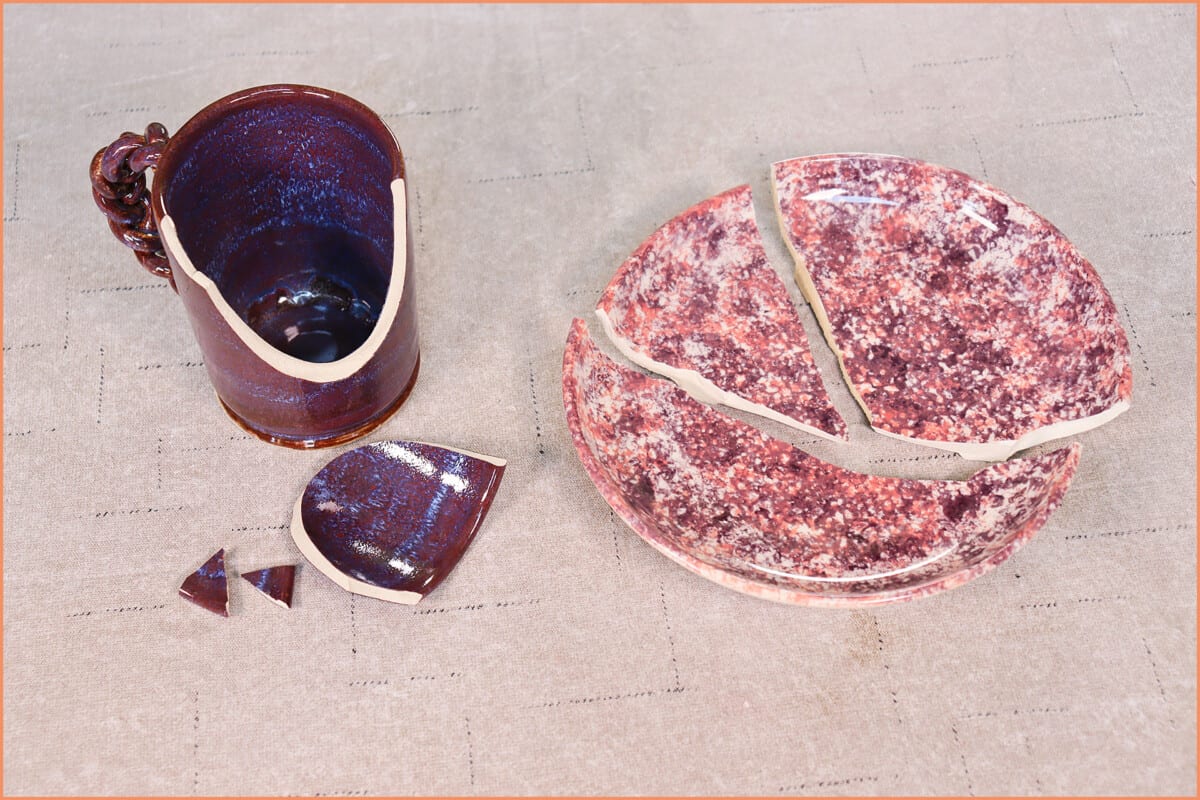
Breaking a cherished piece of pottery that has been in the family for generations can be devastating. Even if it’s a brand-new piece or something you just pulled out of the kiln and dropped to the floor, the feeling is no different.   

Can broken pottery be repaired? Yes, most pottery that was broken can be fixed! If you have all the pieces and a high-quality adhesive, you can put it back together. Repairing pottery requires high-quality ceramic glue. In cases with valuable pottery, you may want to take it to a professional.   

Don’t worry, all is not lost. As long as your piece of pottery isn’t smashed into teeny tiny pieces, your piece can usually be repaired so long as you have the right kind of adhesive. Follow along as I show you the tools and the exact steps involved for proper pottery repair.

Table of Contents
  • How to Choose the Best Pottery Glue
  • Broken Made New: The Art of Kintsugi
  • Most Common Types of Glue for Repairing Pottery 
    •  Superglue or Clear Glue
    • Sxhyf Ceramic Glue
    • Epoxy
  • The Importance  of a Precision Applicator Tip on Pottery
  • Repairing Your Pottery: Step One
  • Step Two: Prepping the Pottery
  • Step Three: Mix and Add the Adhesive
  • Step Four: Align the Broken Ceramics
  • Step Five: Letting it Cure
  • How to Remove a Break Line in Your Pottery
  • Can a Broken Plate Be Glued?
  • Can Chipped Pottery Be Repaired?
  • How Do You Fix a Broken Ceramic Vase?
  • Conclusion

Affiliate Disclaimer: We are ambassadors or affiliates for many of the brands we reference on the website.  As an Amazon Associate, I earn from qualifying purchases.

How to Choose the Best Pottery Glue

The adhesive you use depends on the type of project you set for yourself. For example, pottery that you plan to eat off of should have a label on the adhesive that says food safe. Not only does it protect you when eating, but food-safe adhesives can handle hand washing.

Choose ceramic glue based on the purpose of your pottery. Look at the purpose and look for a ceramic glue that says it can repair it. Is your pottery decorative or dinnerware? 

Broken Made New: The Art of Kintsugi

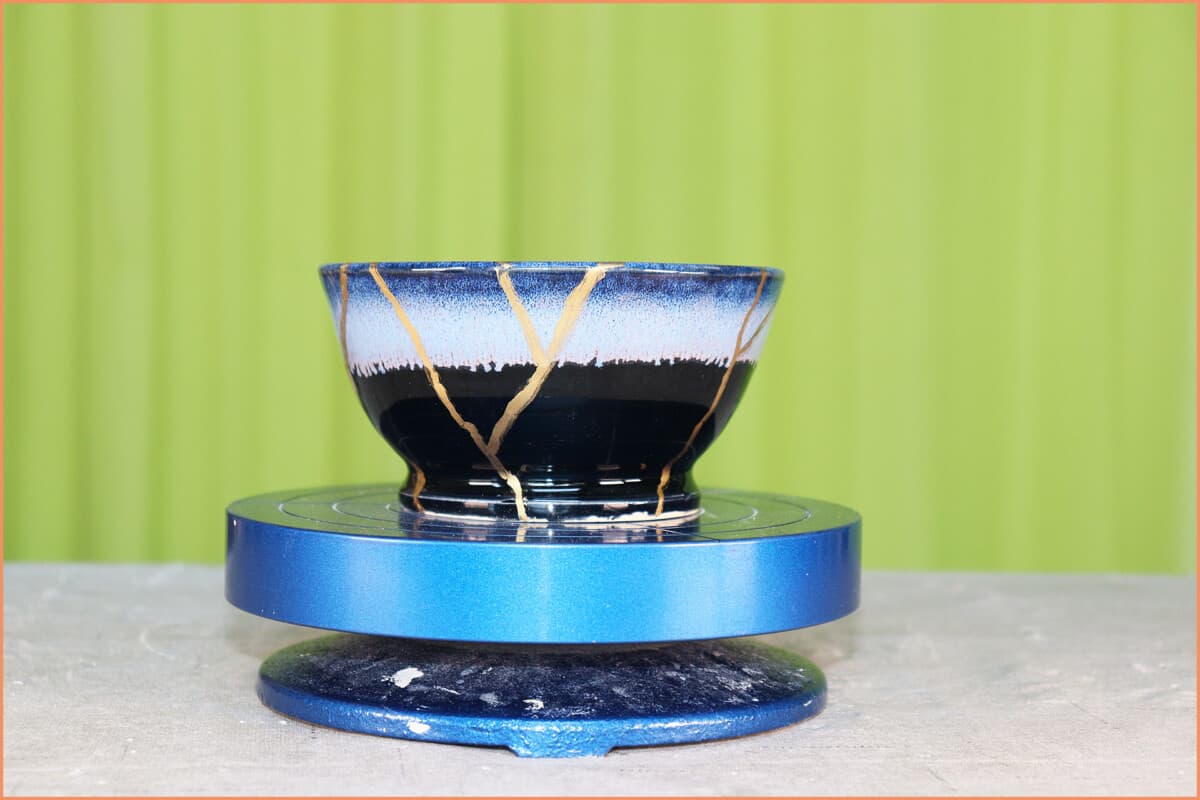
The Japanese even made repairing pottery an art form. Some people who practice the sublime art of Kintsugi will purposely drop their ceramics on the floor deliberately just so that they can repair it.


Once they have broken the pottery, you can use this Kintsugi Gold Repair Kit to repair the broken pieces of pottery. Kintsugi’s beautiful message is to embrace the imperfect as part of the character of the piece.

Rather than disguising the breaks as unsightly, this becomes the character and history of the piece. This longstanding tradition in Japan originally began with lacquerware. 

Modern-day potters have even begun to experiment with it and the art has had an influence that you even see at the Herbert F. Johnson Museum of Art and the Smithsonian.

Most Common Types of Glue for Repairing Pottery 

The most common types of glue to repair your pottery are superglue, clear glue, and epoxy. They have their pros and cons, so it’s important that you know the difference before deciding on which one to use in a particular situation. 

 Superglue or Clear Glue

Superglue and Clear glue are very similar. You may have mixed opinions about the use of these for repairing ceramics—some potters use them and some see it as a cheap and ineffective fix. Like an adhesive, they dry in 10 minutes and cure in 24 hours. 

The speed of the repair has made them popular, but some potters dislike clear glues because a thin layer of film needs to be placed between the two parts for proper bonding.
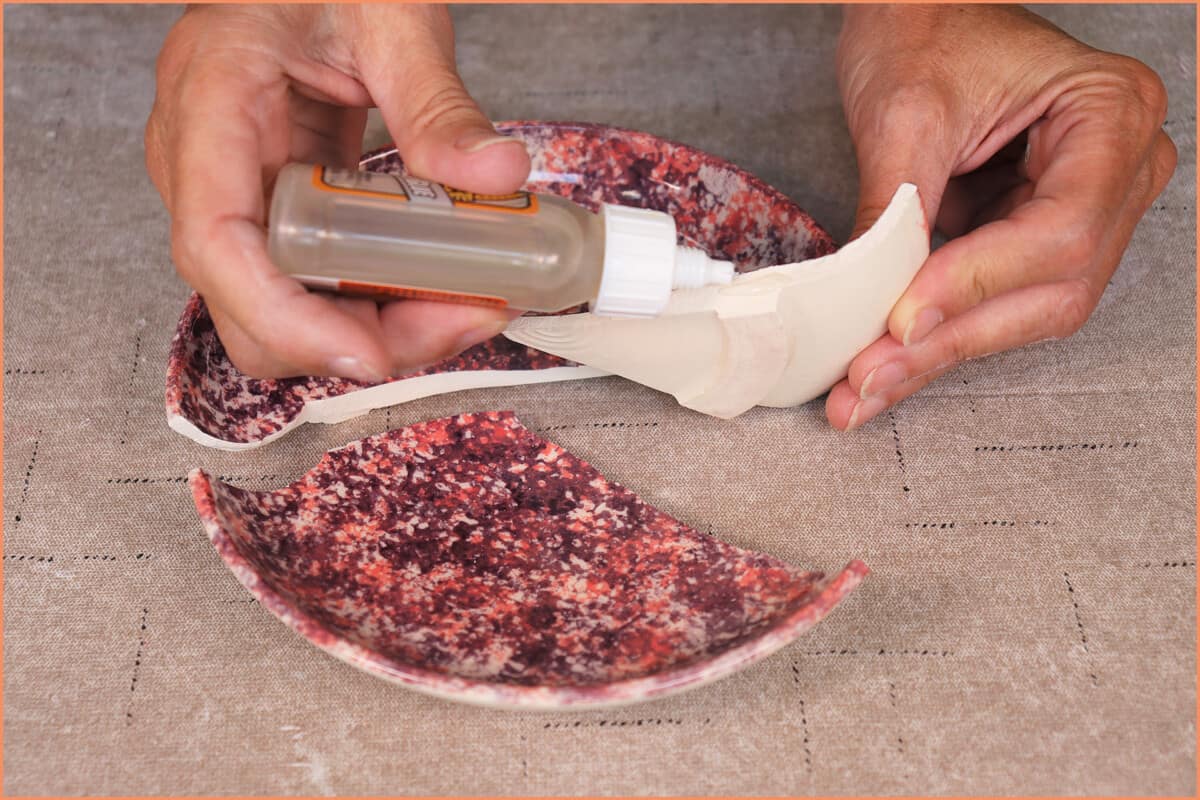
To repair pottery with superglue or clear glue, apply a generous amount. This helps it stick. The glue will adhere for a very long time, but high temperatures can destroy the bond. Superglue and clear glue can come off in as little as 180 degrees Fahrenheit. 

Superglues have value in cases with ceramics where you won’t handle the item much. It also works well for lightweight ceramics. Most superglues are water-resistant and can only handle being washed once or twice.

Pros
  • Dries fast
  • Good choice for items with little handling
  • Most are water-resistant
  • Cheaper than using epoxy
  • Offers you a quick fix
Cons
  • Not as strong as epoxy
  • They are a poor choice for food. Depending on the glue, they can fail at temperatures between 200 to 400 degrees Fahrenheit.

Sxhyf Ceramic Glue

Ceramic glue is a fast-acting adhesive designed for repairing ceramic and glass items. It bonds surfaces within 45 seconds, providing an instant and strong adhesion. The glue is easy to use with its needle nozzle that prevents dripping leaking. The long nib allows for application to hard-to-reach areas.

Repairs made with Sxhyf Ceramic Glue are said to last a long time as the glue is water and shock-resistant. It has a low odor and does not harden or become brittle, providing a bond that does not crack or break down over time .

Epoxy

Think of superglue as a quick-fix solution, but don’t think of it as one to absolutely fix the problem. On the other hand, Epoxy acts as a gap filler, making it the perfect choice for ceramics. Epoxy fills in the gaps and creates a strong bond with the shattered pieces. It may cost more, but you will have a lasting solution.

Expect to wait several days for the epoxy to fully cure. It may dry in 12 hours, but you wouldn’t want to use it for anything other than light use at the 24-hour mark.

Beware not to clamp epoxy too hard, or it can be squeezed out of the gaps in the ceramic. Stronger epoxies can hide the flaws in the broken ceramic piece. 

While I discussed repairing pottery with Kintsugi and putting the flaws on full display, you may not always want to do that unless you want a Kintsugi-style piece. Stronger epoxies, regardless of color, hide the repair lines much more easily.

You need to put more effort into the repair with epoxy, but the results are long-lasting and more durable than clear glues.

Pros
  • Acts as a good gap filler
  • Repairs last longer than with superglue
  • Intended more for quality pieces
  • Hides the repair lines better
  • Much stronger solution than superglue
  • More durable than superglue
Cons
  • Takes longer to set
  • Some epoxy’s have strong toxic fumes
  • Requires more effort
  • Resin may yellow from UV rays

In general, both work well for small cracks in pottery but not large ones. Superglue is great for repairing chips or nicks in clay pots, while Epoxy is better suited for larger repairs, such as broken handles or shattered pottery pieces.

The Importance  of a Precision Applicator Tip on Pottery

You may not think of the shape of the container as influencing your pottery repairs, but pay close attention to the shape. Being able to drip ceramic adhesives from the container will make the repairs easier.

Look for one with a Precision Applicator Tip. You can apply the glue more easily with a Precision Applicator Tip, and it will have better accuracy. Some manufacturers, however, will give you a brush instead, which may be easier for you to apply.

Repairing Your Pottery: Step One

After you picked out the glue for your application, you should understand what you will need:

  • Epoxy, Superglue, or Clear Glue
  • Wooden stick
  • Razorblade
  • Paper pad
  • 91% alcohol
  • Polish remover
  • Rag
  • Dremel Sanding Disk  – Put your safety glasses on because you shouldn’t use a Sanding Disk without safety glasses.

Step Two: Prepping the Pottery

To begin, clean away any dirt or debris on the pottery. This will keep the dirt from interfering with the bond. Before you apply the glue, ensure that everything aligns correctly by doing a dry fit. This shows you where the pieces belong.
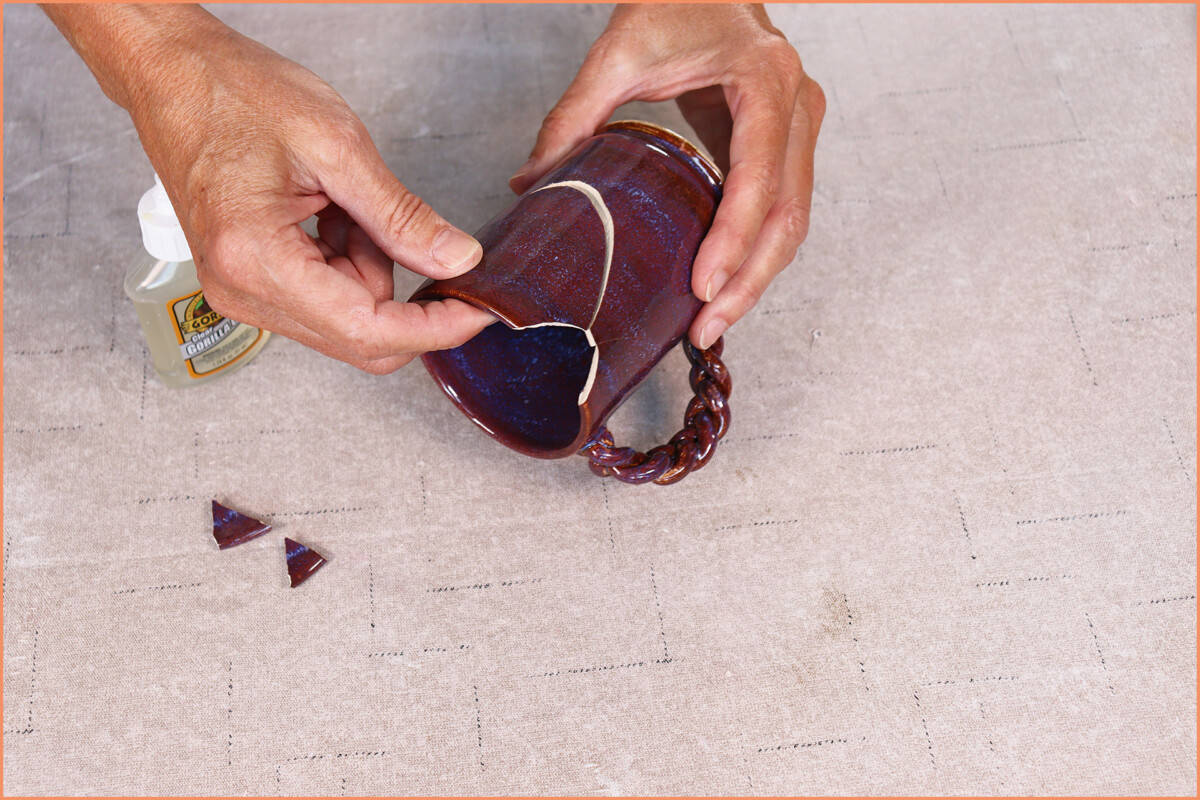

Step Three: Mix and Add the Adhesive

Superglue or clear glue doesn’t require mixing. However, if you have epoxy, you need to mix it. You have to apply epoxy to a pad of paper to mix it. Using the wooden stick, you will mix the epoxy thoroughly to ensure that you get a proper cure.

Step Four: Align the Broken Ceramics

After mixing the epoxy, you will take the broken pieces from the pottery and put them back together. Squeeze them until you see excess glue. Don’t squeeze too hard because you want this to stick and fill the gaps of the broken ceramic piece.
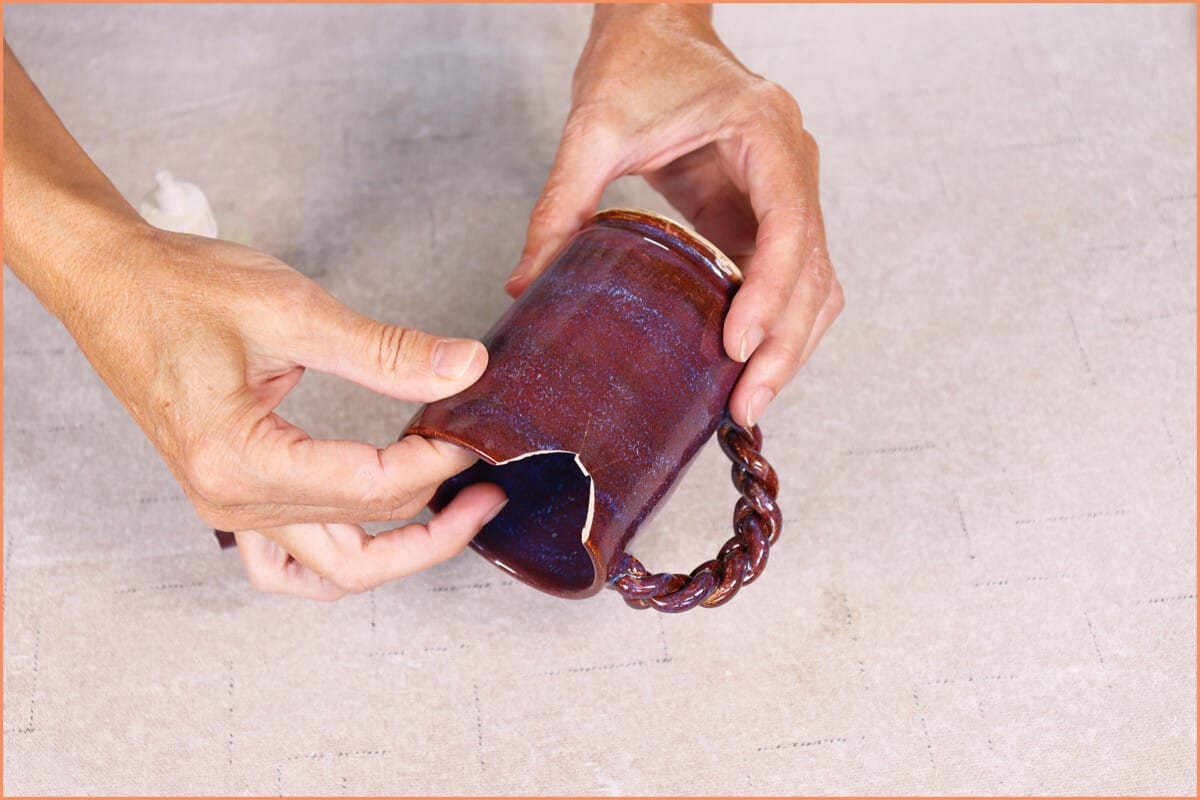

Wipe any extra glue away right away. I use polish remover to avoid glue residue on my pottery. Wait at least 20 minutes before you continue with the next broken piece. You will keep adding pieces until you have put together the entire broken ceramic piece.

Step Five: Letting it Cure

Before you let the ceramic piece cure, you first want to check to see that it will remain in a sturdy position. You want them to cure in the same place you put them.
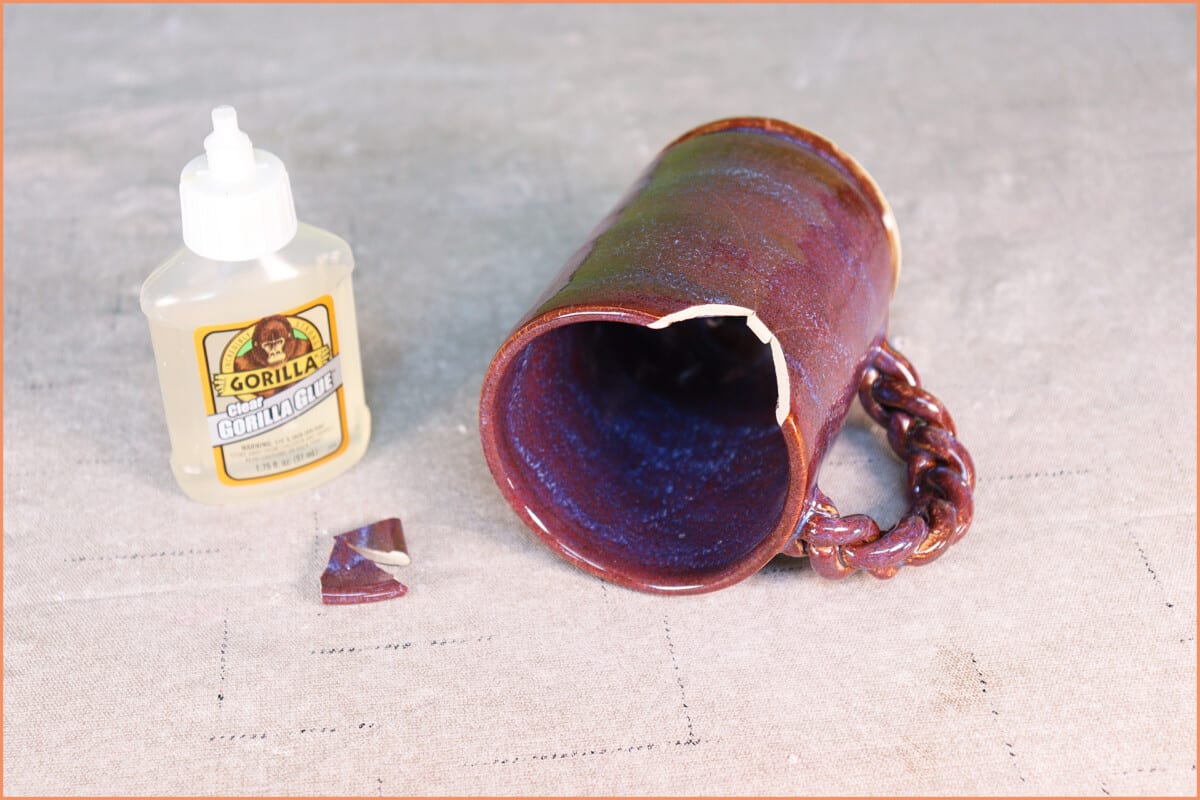

Holding them in place for hours isn’t practical or accurate, so working in a room that is over 75 degrees Fahrenheit will help the ceramic piece cure more quickly. For a quicker curing time, set your piece in the sun.

How to Remove a Break Line in Your Pottery

Remove the dust from the pottery using a 91% alcohol solution. Add the thin layer of filler for the cracks and missing shards. Wait until this cures at the 24-hour mark.
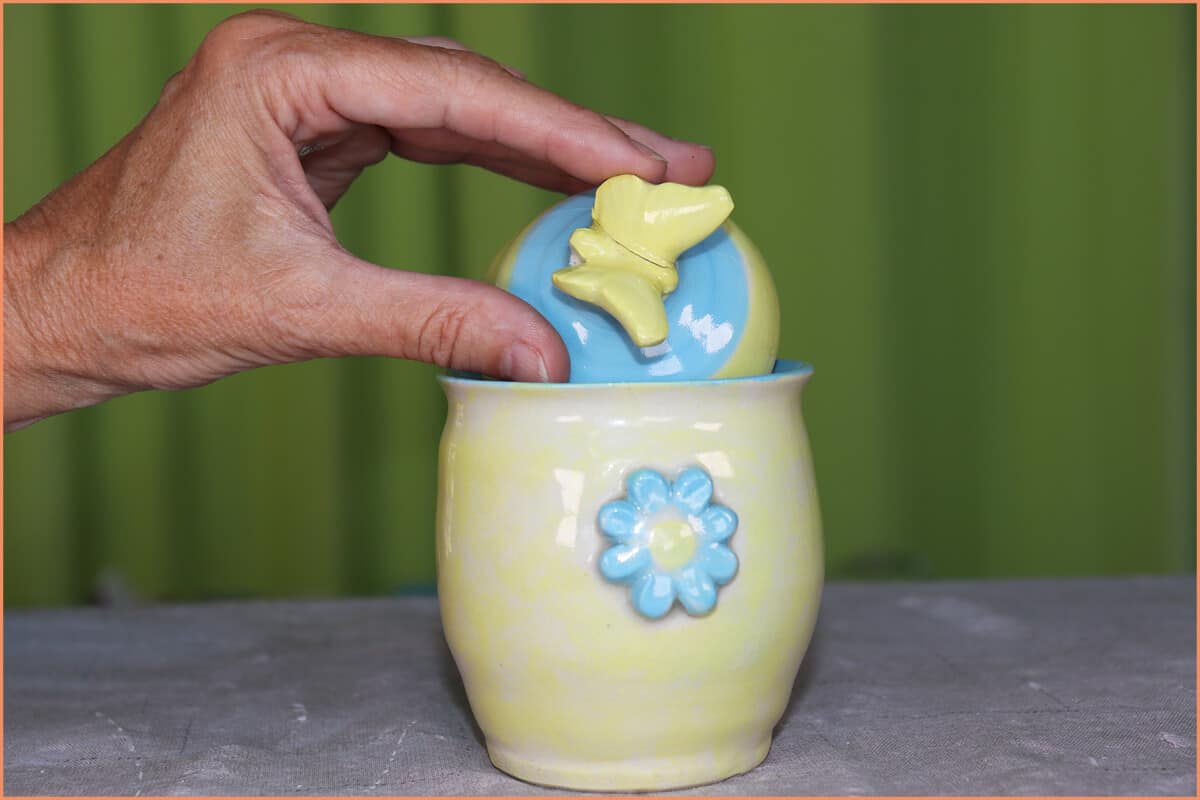
Once it cures, sand the break line using a Rotary Tool with 120-grit Sanding Disk. Wear Safety Glasses when doing this. Low speeds on the sander work best to keep from burning your ceramic piece.

You can also hand sand it using 220 grit sandpaper, and you will continue by finishing with 400-grit sandpaper.

Once you think you are finished, inspect the piece for cracks. If you spot any cracks, continue sanding. Clean your piece again with the 91% alcohol solution to prepare it for painting or glazing over the breaks.  

Can a Broken Plate Be Glued?

You can use Superglue or Clear Glue if the plate is used for decorative purposes only. Apply glue to both sides of your pottery.
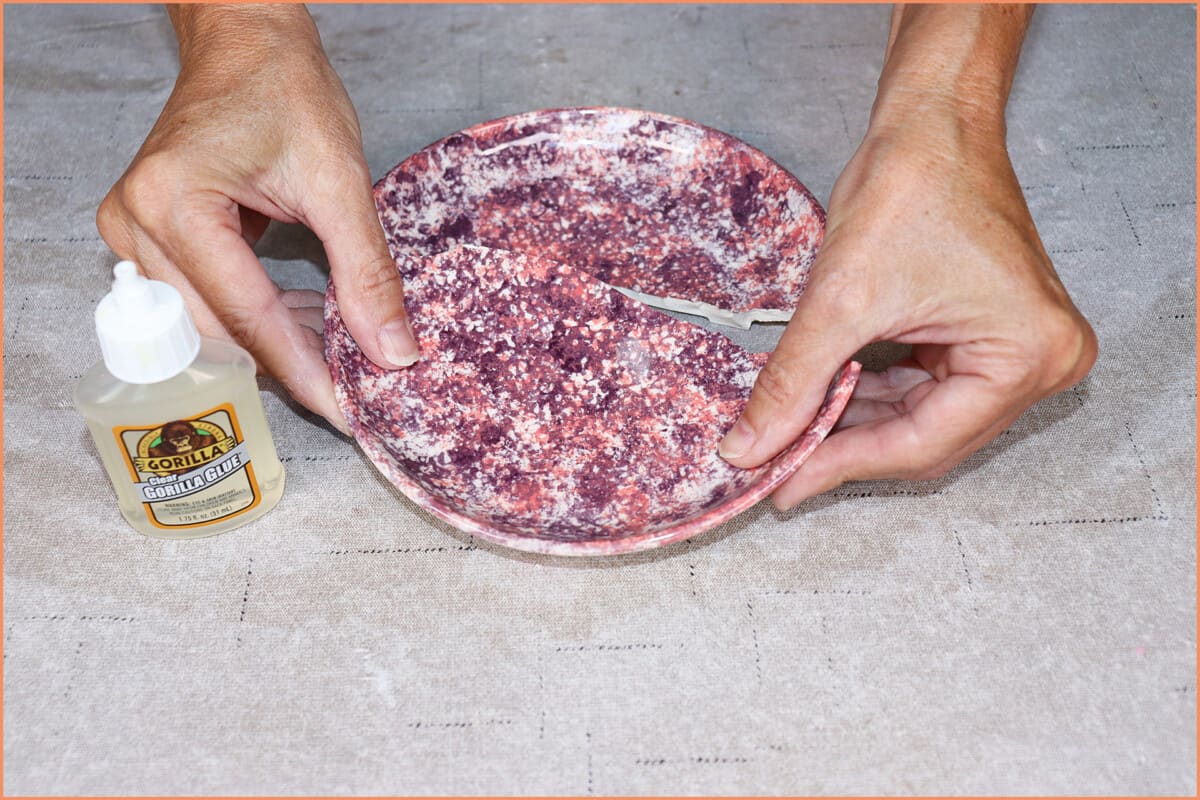

I recommend the clear two-part Epoxy if you hand wash it. It works well if you have gaps from missing pieces that are too small to recover. It can fill them in. You may want to Wear gloves when gluing it back together.

Can Chipped Pottery Be Repaired?

By using two-part epoxy, you can repair the chips in your ceramics. The epoxy acts as a putty to fill the gaps in your ceramics. Dry times with epoxy vary based on the resin used, but you can expect it to take several days to fully cure.

How Do You Fix a Broken Ceramic Vase?

The clear two-part Epoxy works best when repairing a broken vase. Take the broken pieces and apply the glue around the edges of the broken pieces. Fast-drying epoxies aren’t advised if you want a precise fit. Make sure to use the right acrylic paint or glaze to match the repairs of the vase. Finding the right paint to match your ceramic vase takes time and research.

Conclusion

You can repair pottery, and fairly easily too. You have cases where you couldn’t repair it because of too much damage. You can either choose to repair it yourself or take it to someone experienced in pottery repair for professional results. If you’re dealing with generational dishes within the family or a cherished family heirloom, you may want a professional to repair it so that you know it has been repaired correctly.

Post navigation

Previous Previous
Pottery Wheel Positions and Posture – All You Need to Know
NextContinue
Speedball Artista Pottery Wheel – Owners Review Buyers Guide
Search

Get Your Free Claymail Alerts

Subscribe and start learning today! 

Pottery Crafters Claymail Alerts are completely free, and you have the freedom to unsubscribe at any time.

You're All Set!

Congratulations! You're now a member of the Pottery Crafters Claymail Alerts newsletter. 

Get ready to explore the art of pottery with the latest techniques, tips, product reviews, and irresistible deals from top brands.

If you don't receive an email shortly, please check your junk/spam folder.

About Marie

Hi, I’m Marie
I’m a Potter, a Writer, and the Creator of Pottery Crafters
I also make videos on YouTube about Making Pottery.
My passion is to make Pottery and to Pass on what I’ve learned to you,
helping you in your Pottery Making Journey… Read more


Legal Information This site is owned and operated by Pottery Crafters. Pottery Crafters is a participant in the Amazon Services LLC Associates Program, an affiliate advertising program designed to provide a means for sites to earn advertising fees by advertising and linking to Amazon.com. Pottery Crafters also participates in affiliate programs with, CJ, Impact Radius, and other sites. Pottery Crafters is compensated for referring traffic and business to these companies.


  • About Us
  • Privacy Policy
  • Terms and Conditions
  • Disclaimer
  • Affiliate Disclaimer
  • Contact Us

© 2026 Pottery Crafters
Design By Marie with Kadence

Table of Contents
  • How to Choose the Best Pottery Glue
  • Broken Made New: The Art of Kintsugi
  • Most Common Types of Glue for Repairing Pottery 
  • The Importance  of a Precision Applicator Tip on Pottery
  • Repairing Your Pottery: Step One
  • Step Two: Prepping the Pottery
  • Step Three: Mix and Add the Adhesive
  • Step Four: Align the Broken Ceramics
  • Step Five: Letting it Cure
  • How to Remove a Break Line in Your Pottery
  • Can a Broken Plate Be Glued?
  • Can Chipped Pottery Be Repaired?
  • How Do You Fix a Broken Ceramic Vase?
  • Conclusion
Scroll to top
  • Beginner Info
    • Choosing Your Pottery Clay – Best Pottery Clay For Beginners
    • 21 Essential Pottery Clay Tips for Every Potter
    • 21 Essential Do’s and Don’ts for Making Pottery Every Potter Should Know 
    • 21 Pottery Wheel Throwing Tips
    • 21 Essential Underglaze Tips for Pottery
    • How I Started Making Pottery at Home – My Guide for New Potters 
    • What is Greenware Ceramics: Understanding Its Role in Pottery
    • Is Raku Pottery Expensive to Make?
    • 30 Beginner Pottery Wheel Projects | With Easy Instructional Videos
    • How to Dispose of Pottery Clay Water | 3 Proven Methods
    • 10 Tips on How to Become a Successful and Confident Potter
    • How To Make Colored Clay For Pottery – A 6-Step Clay Coloring Guide
    • 21 Tips for Hand Building Pottery
    • Pottery Clay Extruders – Uses and Functions
    • Is Raku Pottery Waterproof: Sealing Raku Ceramics
    • Is Raku Pottery Food Safe: What You Need to Know
    • Can Pottery Clay Be Frozen
    • Stoneware Clay Vs. Porcelain Clay – Details and Facts Explained
    • 21 Pottery Clay Slip Questions Answered
    • What Is Potters Clay Made Of – Pottery Clay Ingredients Explained
    • How to Store Pottery Clay
    • How to Prevent Pottery Clay From Cracking While Drying
    • How to Throw Clay on the Pottery Wheel: A Step-by-Step Beginners Guide
    • How To Use a Pottery Kick Wheel (Ultimate Guide)
    • 7 Best Surfaces for Hand Building
    • How To Do Pottery With Long Nails – 5 Tips To Remember
    • How To Use Bats on a Pottery Wheel | Types – Usage – Storage
    • Can Air-Dry Clay Be Used on the Pottery Wheel – 3 Brands Tested
    • What Causes Pinholes in Pottery Glaze and How To Prevent Them
    • What Is the Difference Between Stoneware and Earthenware Clay
    • Can Broken Pottery be Repaired?
    • Pottery Wheel Positions and Posture – All You Need to Know
    • How to Make Kiln Cookies in 6 Easy Steps – With a Video
    • Can Handmade Pottery Go In The Dishwasher?
    • How to Make Pottery – 8 Step Pottery Making Process
    • How to Start a Home Pottery Studio
    • Which Direction Should a Potters Wheel Turn
    • Online vs In-Person Pottery Classes – A Beginners Guide
    • Are Pottery and Ceramics The Same Thing
    • Plain Clay Slip
    • Colored Clay Slip
    • 11 Problems Centering Clay and Easy Ways to Fix Them
    • 21 Kiln Questions Answered
    • 9 Common Pottery Wheel Mistakes and How to Fix Them
    • Wax Resist Tips | Protect – Decorate – Design
    • What Are Sponges Used for in Ceramics?
    • The Four Types of Clay
    • What Is Wax Resist in Pottery Used For
    • Why Every New Potter Should Take a Pottery Class
    • What To Wear When Doing Pottery
  • Product Reviews
    • Beginner-Portable-Full Size Pottery Wheel Review: Which Wheel Type Is Right for You?
    • The Original Giffin Grip and Giffin Grip Mini – Review and Comparison
    • Giffin Grip vs. Bailey Quick Trim 2: The Detailed Differences 
    • Brent CXC Pottery Wheel – OWNERS REVIEW – Buyers Guide
    • Skytou Pottery Wheel Pottery Forming Machine – OWNERS REVIEW
    • Speedball Artista Pottery Wheel – Owners Review Buyers Guide
    • Pottery Wheels Reviewed
    • Shimpo Ceramics Rebranding – A Huge Undertaking
    • The Ultimate Edger Pottery Making Multi-Tool Review
  • Buyer Guides
    • Gift Ideas for Potters – Pottery Crafters Gift Guide
    • 10 Things to Consider When Buying a Used Pottery Wheel
    • Pottery That Sells Well – 9 Pieces All Potters Should Make and Sell
    • Ultimate Pottery Glazing Tools & Supplies Guide
    • Buying a Pottery Kiln | Facts Features and What to Consider
    • Choosing an Electric Kiln – A Step-by-Step Buyer’s Guide
    • Choosing a Pottery Wheel – Step-by-Step Buyer’s Guide for Beginners
    • Best Pottery Tool Sets Under $18
    • Best Glaze Brush Sets
  • Projects & Supplies
    • Berry Bowl
    • Bowl with Chopstick Holes
    • Bowl with Chopstick Holes
    • Berry Bowl
    • Cat Bowl
    • Casserole Dish
    • Ceramic Citrus Juicer
    • Creamer
    • Honey Jar
    • Incense Holder
    • Kitchen Utensil Holder
    • Mortar and Pestle
    • Mug with a Gallery Lid
    • Piggy Bank
    • Succulent Plant Holder
    • Sugar Bowl
    • Toothpick Holder
    • Vase
    • Yarn Bowl
    • Plain Clay Slip
    • Colored Clay Slip
  • Glazing
    • Can Pottery Glaze Be Frozen
    • Do You Have to Glaze Pottery  
    • What is Glaze Made of — Ceramic Glaze Ingredients
    • Is Pottery Food Safe Without Glaze?
    • Do You Need a Kiln to Glaze Pottery at Home 
    • How to Remove Glaze From Pottery
    • How to Choose Pottery Glaze – A Beginner Glaze Guide
    • What Is Crazing in Ceramics and How To Prevent It!
    • Can You Bisque and Glaze Fire Pottery at the Same Time?
    • Sponge Glazing
    • Glaze Grinding
    • Applying Underglaze on Greenware vs Bisqueware – Which Is Best
    • What is The Difference Between Glaze and Underglaze
    • Underglazing with Split Cups For a Marbling Effect – A Step-by-Step Guide  
    • Can You Layer Underglaze
    • How Do You Mix Underglazes / Tips to Mix Underglazes
    • Underglazing Pottery | Glazing Tips Tools and Ideas
    • Bubble Glazing
    • Sponge Underglazing
    • Sponge Glazing Ombre Glazing
    • What Is Slip Trailing | Glazing Tips Tools and Ideas
  • Kiln Tips
    • Kiln Maintenance Guide: Tips for Top Performance  
    • The Differences Between a Raku and Electric Kiln Explained
    • What Is the Difference Between a Gas and Electric Kiln
    • What Temperature Do I Bisque Fire Pottery Clay To?
    • Is it Recommended that a Pottery Kiln Be Vented?
    • The Ultimate Guide to Troubleshooting Kiln Problems
    • Are Pottery Kilns Safe – Beginner Kiln Questions
    • How To Use a Pottery Kiln at Home – 13 Tips To Remember
    • What Is A Kiln Sitter? Everything You Need To Know
    • At What Temperature Can You Open a Pottery Kiln?
    • What Is Kiln Wash – Kiln Shelf Protection Guide
YouTube Pinterest
Search