Beginner-Portable-Full Size Pottery Wheel Review: Which Wheel Type Is Right for You?
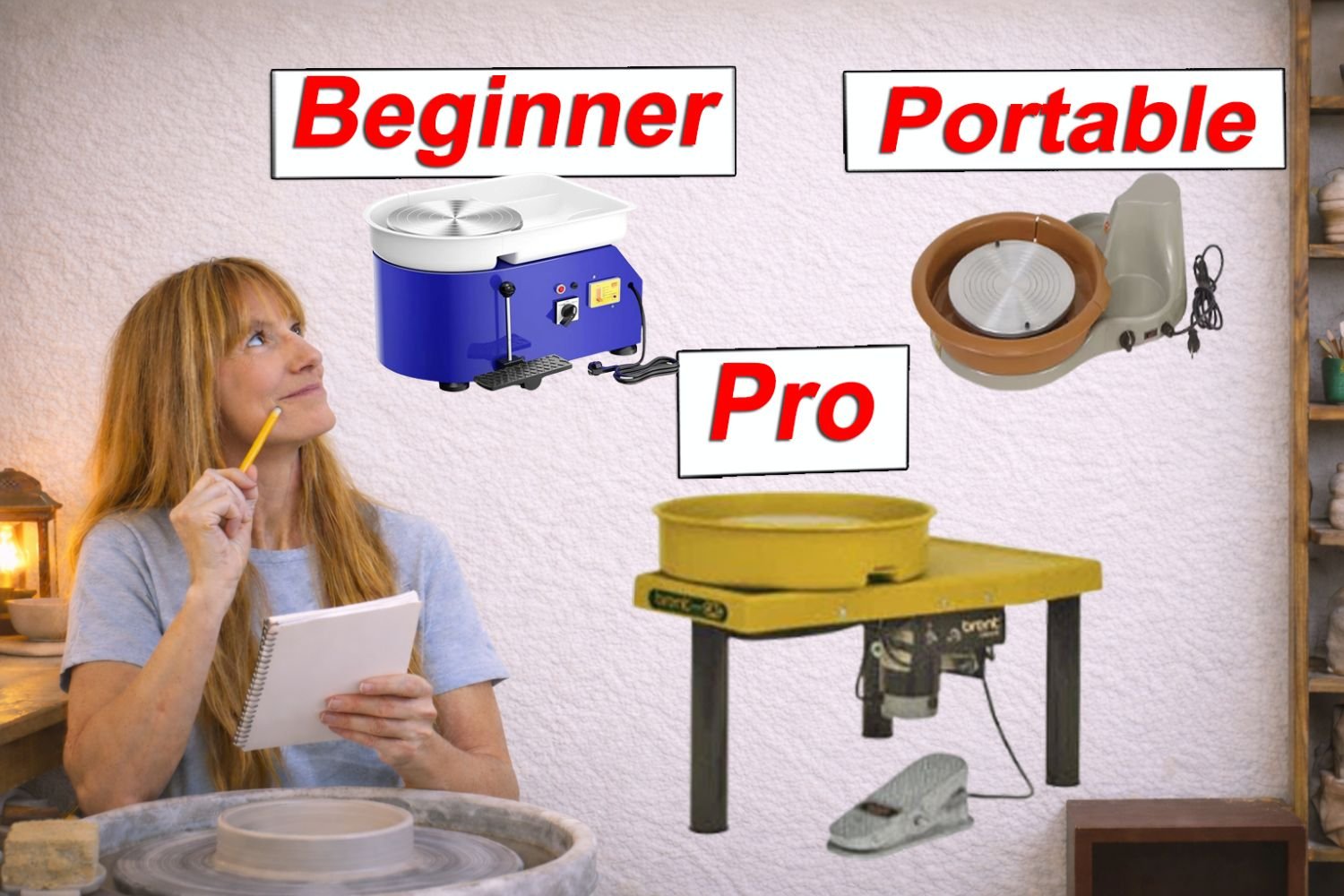
In this guide, I show you my three different types of pottery wheels: the Beginner, the Portable, and the Full-Size Pottery Wheel. I own and use all three, and each one has its strengths and weaknesses
By the end of this Beginner-Portable-Full Size Pottery Wheel Review, you will find which wheel type is right for you. You will know which type or types of pottery wheels make the most sense for you based on your budget, space, and how serious you are about throwing on the wheel. I will also link you to my full written reviews and videos so you can see each wheel in use before making a decision.
Affiliate Disclaimer: We are ambassadors or affiliates for many of the brands we reference on the website. As an Amazon Associate, I earn from qualifying purchases.
Beginner Budget Pottery Wheel Machine
Who This Wheel Is For
This Beginner Budget Pottery Wheel Machine type is perfect if you are brand new to pottery, working with a tight budget, or simply want to try throwing on the wheel before spending a lot of money. It is also a great option for small spaces.
My Experience with This Wheel
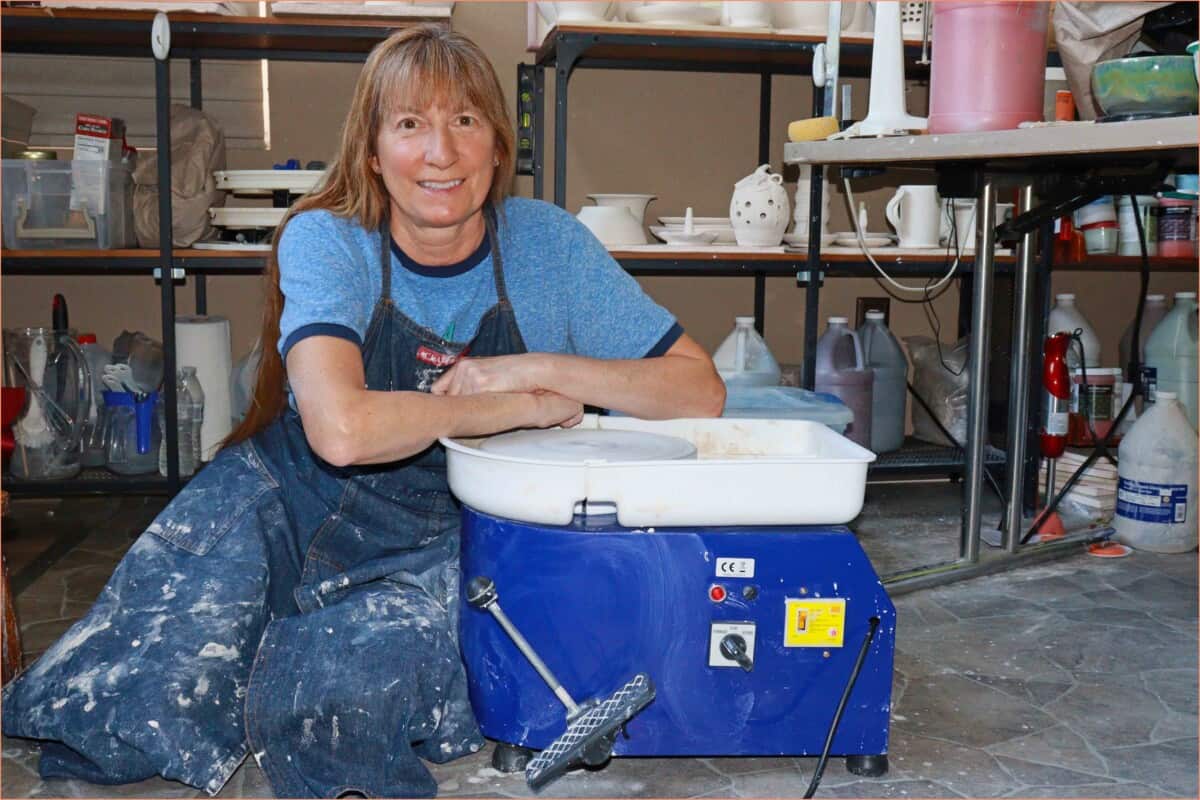
I have had my Pottery Wheel Machine for over five years. It is designed for beginners and those on a tight budget. If you are thinking about trying pottery but do not want to spend a ton of money yet, this type of wheel lets you get started without a big investment.

The aluminum wheel heads on these machines are usually about 9 to 10 inches across. This one is 9.8 inches, which is a good size for a small wheel. It comfortably handles beginner projects, small bowls, mugs, candle holders, and tiny decorative pieces.
What I Like About It
For a budget wheel, the motor is reasonably quiet. The speed reaches about 300 RPM, which is actually pretty fast. You can control the speed in two ways: a handheld lever and a foot pedal, both connected. The wheel stays at the speed you set, which is important when you are throwing.

Because it only weighs about 25 pounds, it is easy to pick up, move, and store. I put mine on a short cart with heavy-duty locking wheels so I could match the height of my professional wheel. Once locked, it stays put while I am throwing. When I am not using it, I just unlock the wheels and tuck it away.
The removable splash pan makes cleanup much easier. I can even attach my Giffin Grip to this wheel, which I find funny because the Giffin Grip actually costs more than the wheel itself.

Price is a big reason beginners are drawn to this type of wheel. Most of these machines are around $100, sometimes a little more or less. It can comfortably handle about 8 pounds of clay, which is plenty for beginners and making small pieces of pottery.
You can also switch the throwing direction, which is helpful whether you are right-handed or left-handed.
What You Need to Know Before Buying
This wheel is not built for large amounts of clay. Even though the RPMs are high, the torque is not. If you apply too much pressure, the wheel can bog down or even stop. If you are dreaming of throwing big vases or wide bowls, you will eventually want more power and stability.
Because the body is very light, you can lean too hard on the foot pedal, which can tip the wheel a bit. I did that the first time I used it. If you are aware of that and get used to it, you may actually like the foot pedal. I personally stick with the lever.
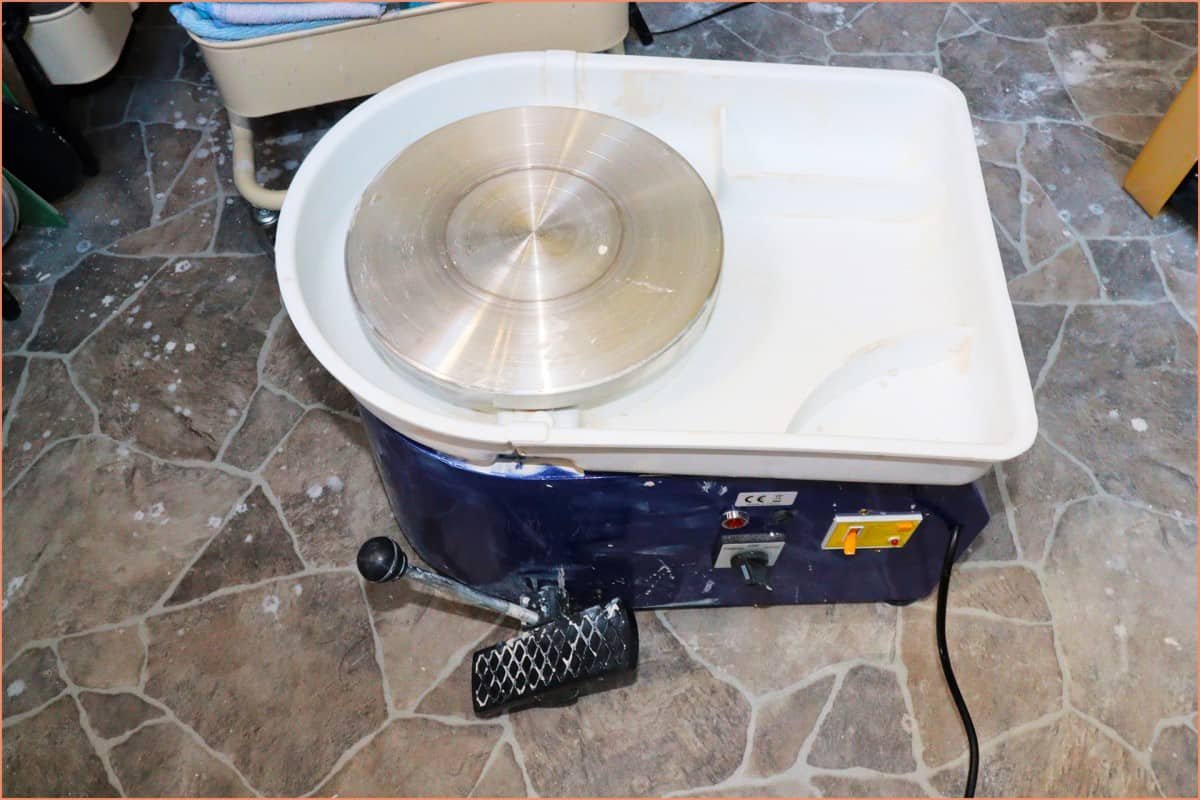
There are no bat holes in the wheel head, so if you want to use bats, you will need to attach them with clay pads. I do have a post showing how to do that. How To Use Bats on a Pottery Wheel | Types – Usage – Storage
The build quality is clearly budget-level, and many potters outgrow this type of wheel as they advance. It is also quite low, so most adults will want to place it on a bench, a riser, or a table to achieve a comfortable throwing height.
You can read my full owner’s review here: Pottery Wheel Pottery Forming Machine
If you want to see current pricing, you can find the wheel here: Beginner Pottery Wheel Machine
YouTube Review
Portable Pottery Wheel
Who This Wheel Is For
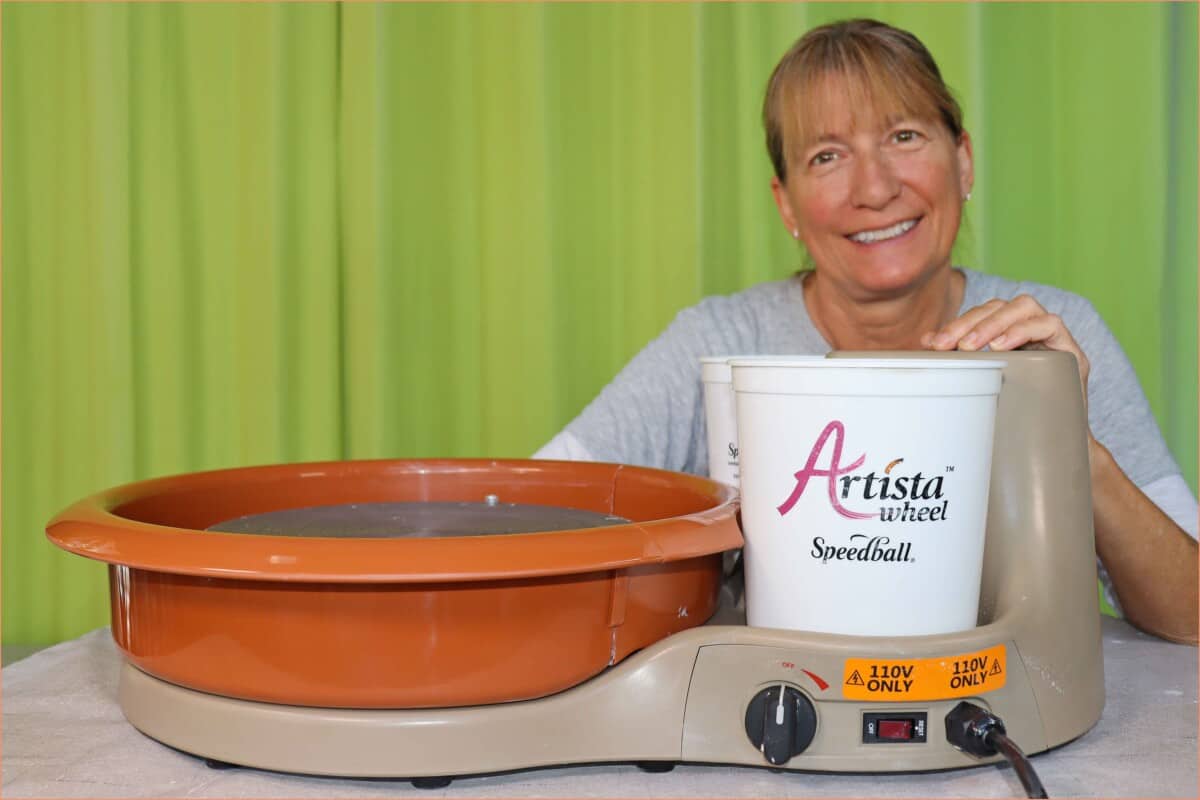
This Portable Pottery Wheel is for potters who know they are serious about pottery and want a higher-quality wheel, but still need portability. It works well for beginners moving into intermediate work and for people with limited space.
My Experience With This Wheel
The portable mid-priced pottery wheel I use is the Speedball Artista. I like to think of this wheel as the bridge between a small beginner machine and a full-size professional studio wheel.
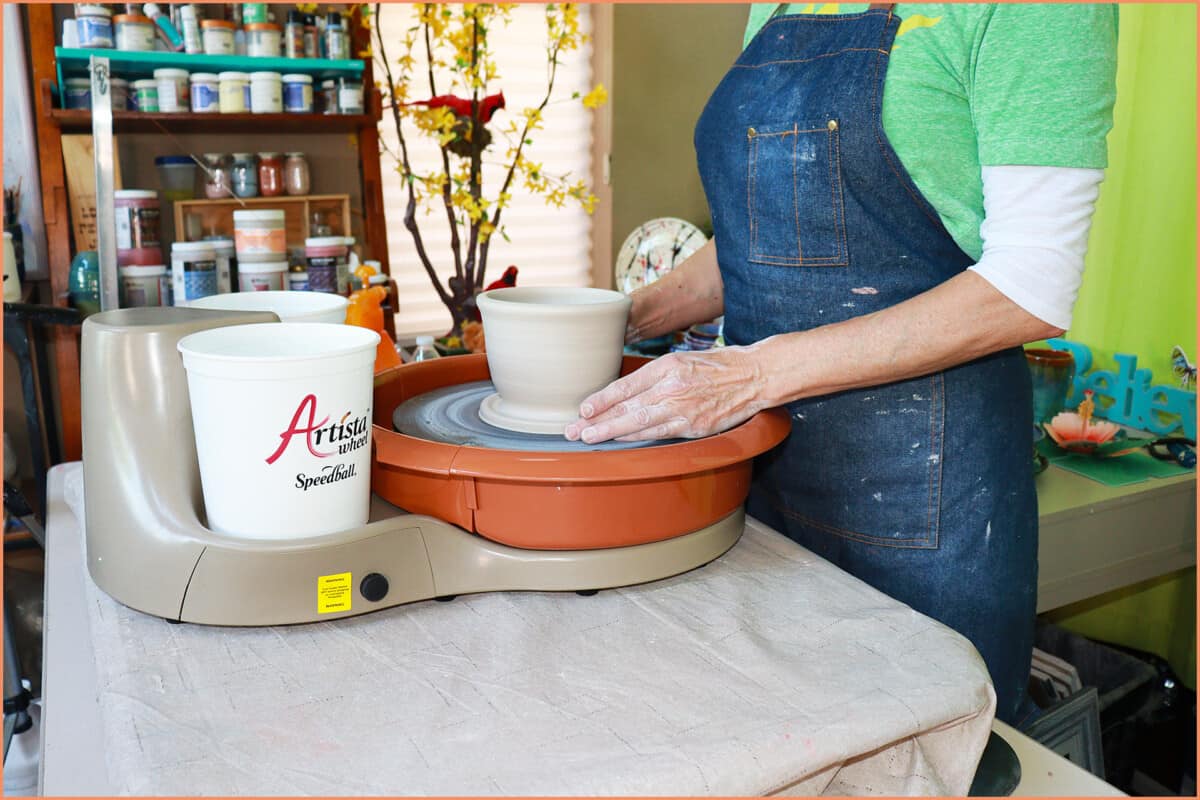
It gives you the feel of a solid studio wheel head in a portable tabletop body, which makes throwing feel much more stable and controlled.
What I Like About the Portable Wheel
The Artista has an 11-inch wheel head, a noticeable upgrade over beginner wheels. The splash pan is secure and durable, making trimming easier and allowing you to use larger bats. It comes with bat pins, and the bat pin holes fit standard 10-inch bats.
The one-third-horsepower motor gives you enough torque to lean in and apply more pressure than you can with a smaller pottery wheel machine. The wheel runs up to about 220 RPM, and the speed dial holds the speed very well, so you don’t have to constantly adjust it.
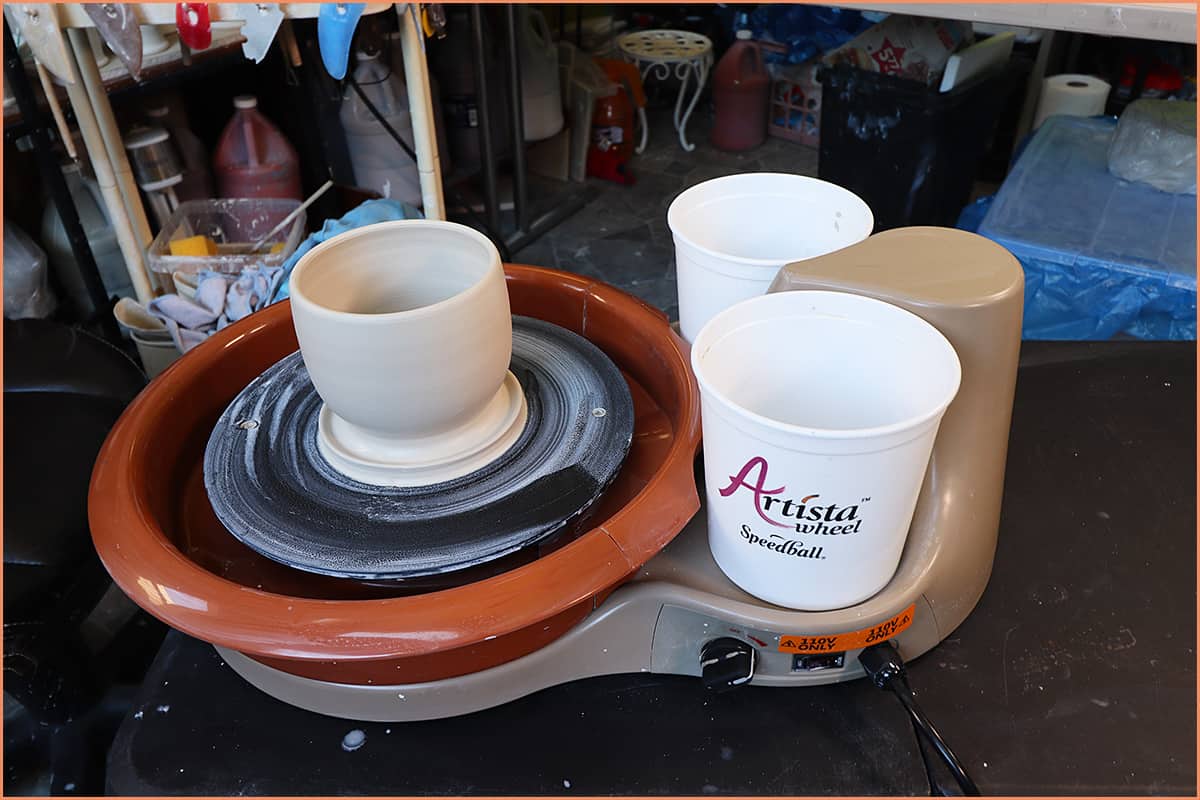
This wheel can center around 25 pounds of clay, which is more than enough for most functional pottery, such as plates, bowls, mugs, and medium-sized vases.
The whole unit weighs around 26 pounds and has a small footprint. It is light enough to move, travel with, or even take outside on a nice day. With optional legs and a foot pedal, you can use it on a table or as a compact floor wheel that feels much closer to a traditional setup.
What You Should Consider
The Artista does not have a built-in reverse switch. Instead, Speedball makes a separate left-handed version, so you need to choose the correct model from the start.
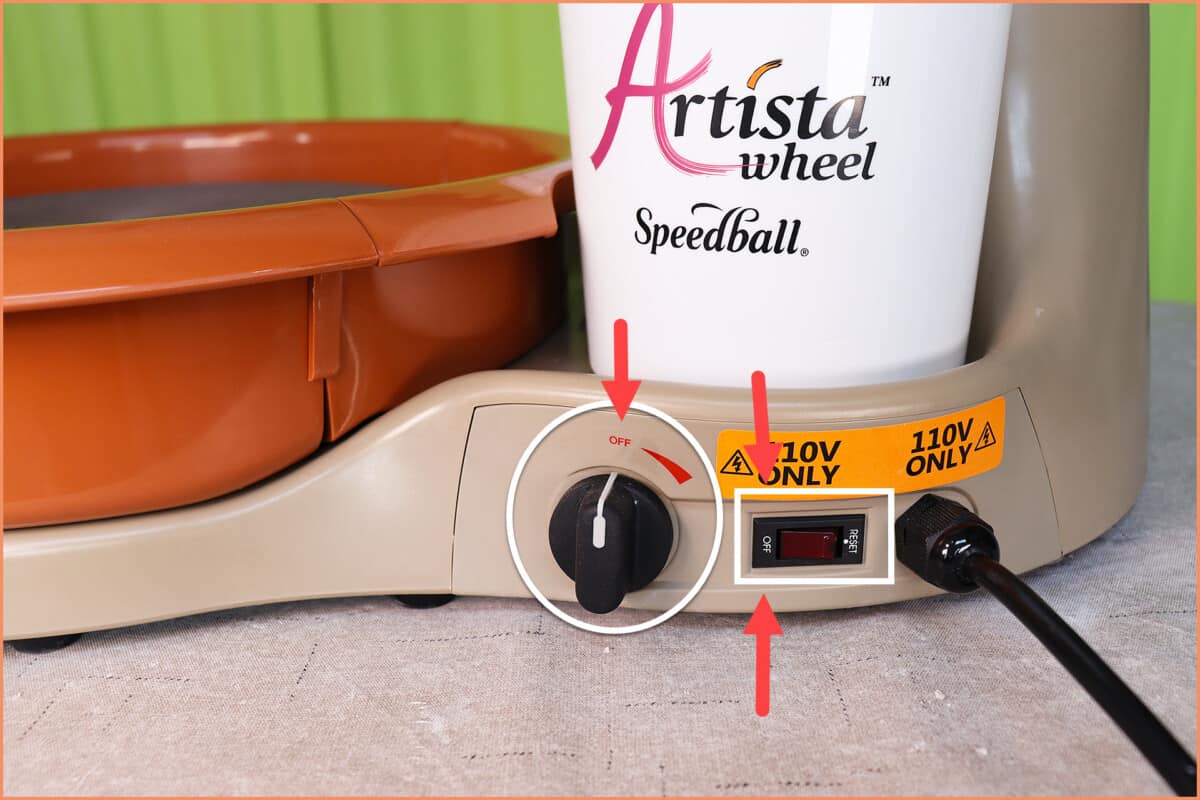
While the motor is great for most work, if you want to throw very large or heavy forms, you may eventually want more power. The splash pan is very sturdy, but it can be hard to remove and reattach until you get used to it.
Compared to a beginner wheel, this is a more significant investment, especially once you add the Foot Pedal and Leg Extensions.
You can read my full owner’s review and buyer’s guide here: Speedball Artista Pottery Wheel
You can check current pricing for the right-handed model here: Portable Speedball Artista Pottery Wheel
YouTube Review
Full Size Professional Pottery Wheel
Who This Wheel Is For
This full-size professional pottery wheel is best for potters who know pottery will be a long-term part of their lives. It is ideal for dedicated studios, frequent throwing, and larger forms.
My Experience with This Wheel
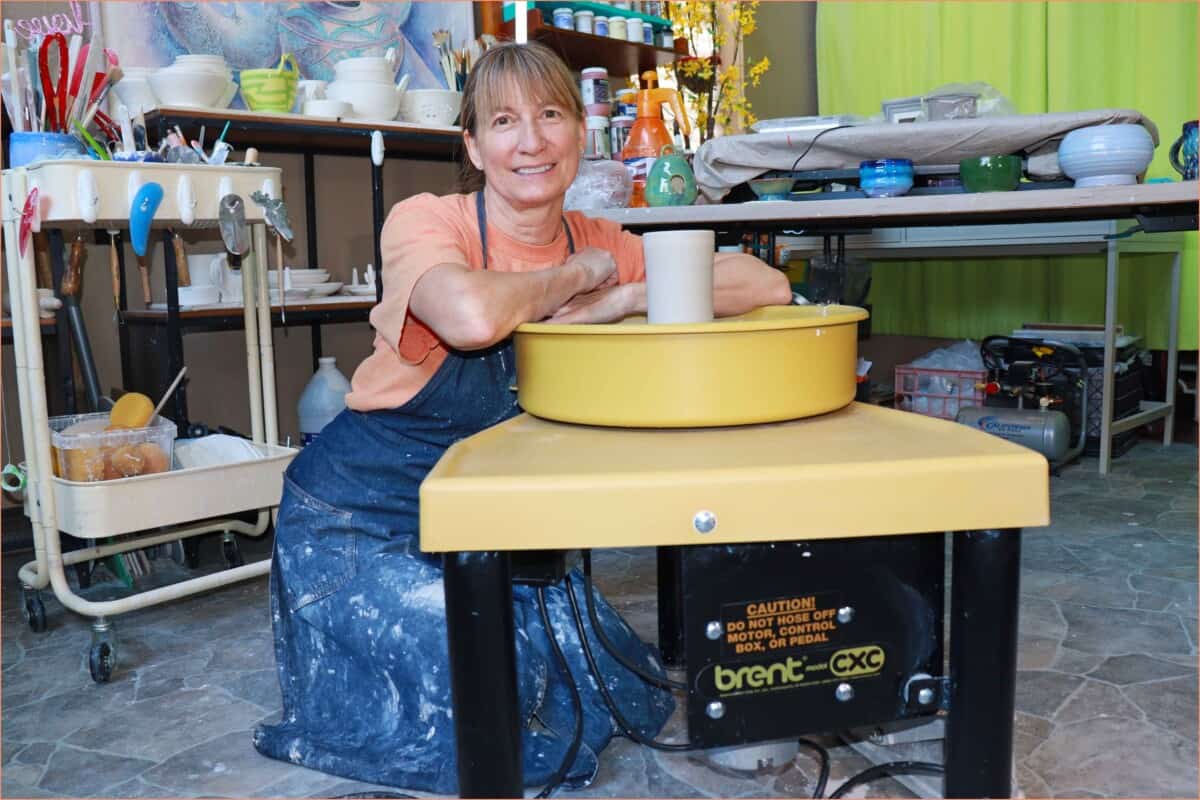
The full-size professional pottery wheel I use is the Amaco Brent CXC. It weighs about 120 pounds and is meant to stay in one spot in your studio. I do move it occasionally, but mostly I slide it.

I have had this wheel for over seven years, and it has been incredibly reliable.
What I Like About It
The wheel head spins up to about 240 RPMs and is powered by a one-horsepower motor. That combination gives you plenty of torque at all speeds. The wheel stays steady even under heavy loads, and while most of us will never throw anywhere near 300 pounds of clay at once, it tells you how strong and stable this wheel really is.

It has a 14-inch cast-aluminum wheel head with standard 10-inch bat holes, forward and reverse, a strong steel frame, and a durable cast-aluminum foot pedal with smooth speed control.
This wheel style is known for lasting a very long time, and I can personally attest to that.
What You Should Consider
The biggest downside is cost. This wheel is a much bigger investment than beginner or mid-priced wheels. It is also heavy and not portable, so it requires more of a dedicated studio space.

For a brand-new beginner who is not sure they will stick with pottery, this can be more wheel than you need early on.
You can read my full owner’s review and buyer’s guide here: Brent CXC Pottery Wheel
You can check current pricing here: Amaco Brent CXC Pottery Wheel
YouTube Review
Final Thoughts
If you are brand new to pottery and just want to try it out, a beginner budget Pottery Wheel Machine makes a lot of sense. If you are mainly making smaller pieces and working with limited space or budget, it works great.
If you are serious about pottery and want more power and stability, a portable, mid-priced wheel like the Speedball Artista is a solid choice. It gives you a real wheel experience without committing to a full-size professional model.
If pottery is a long-term part of your life and you have a dedicated studio space, a full-size professional wheel like the Brent CXC is hard to beat.
Over time, you may find that each type of wheel has its own job. A beginner wheel can become a second station for small pieces, a portable wheel can be used for teaching or travel, and a full-size wheel becomes your main studio workhorse.
I hope this helped you decide which pottery wheel type or types are right for you.
