
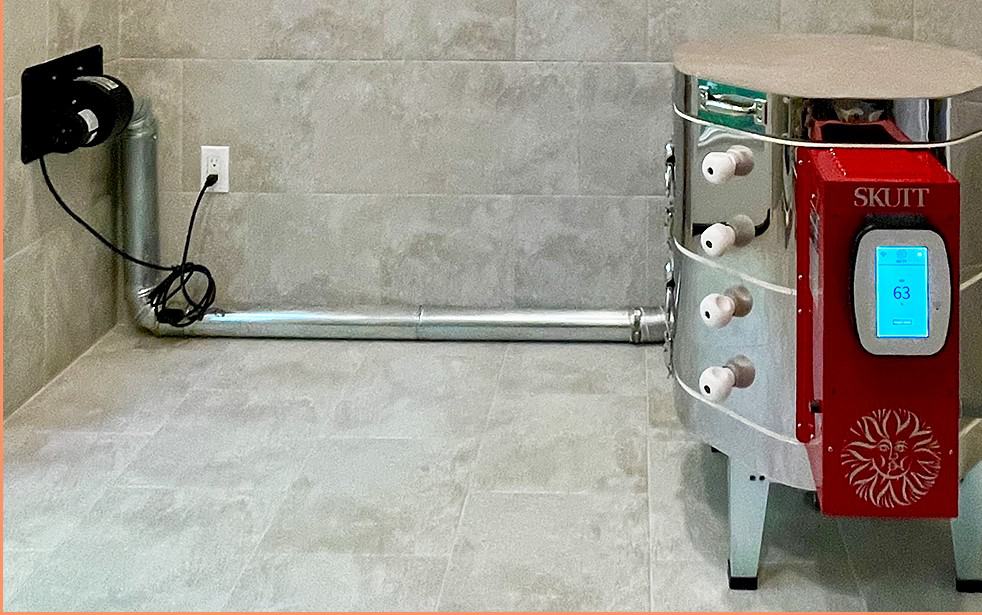
Is it Recommended that a Pottery Kiln Be Vented?
Most Kiln Manufacturers Do Recommend that Pottery Kilns use a Vent System. However, with some basic rules and practices, you can still safely run and vent your Pottery Kiln without buying a vented system for your studio.
I’m going to tell you about the Updraft and Downdraft Venting systems recommended by most Kiln Manufacturers and the alternative venting solutions that many potters use, including myself.
Affiliate Disclaimer: We are ambassadors or affiliates for many of the brands we reference on the website. As an Amazon Associate, I earn from qualifying purchases.
Location of Your Kiln
First, your kiln area must have a window, door, or vent leading to the outside. Some common indoor locations are basements, garages, sheds, or a separate room with good ventilation where the fumes don’t get into the rest of the house.
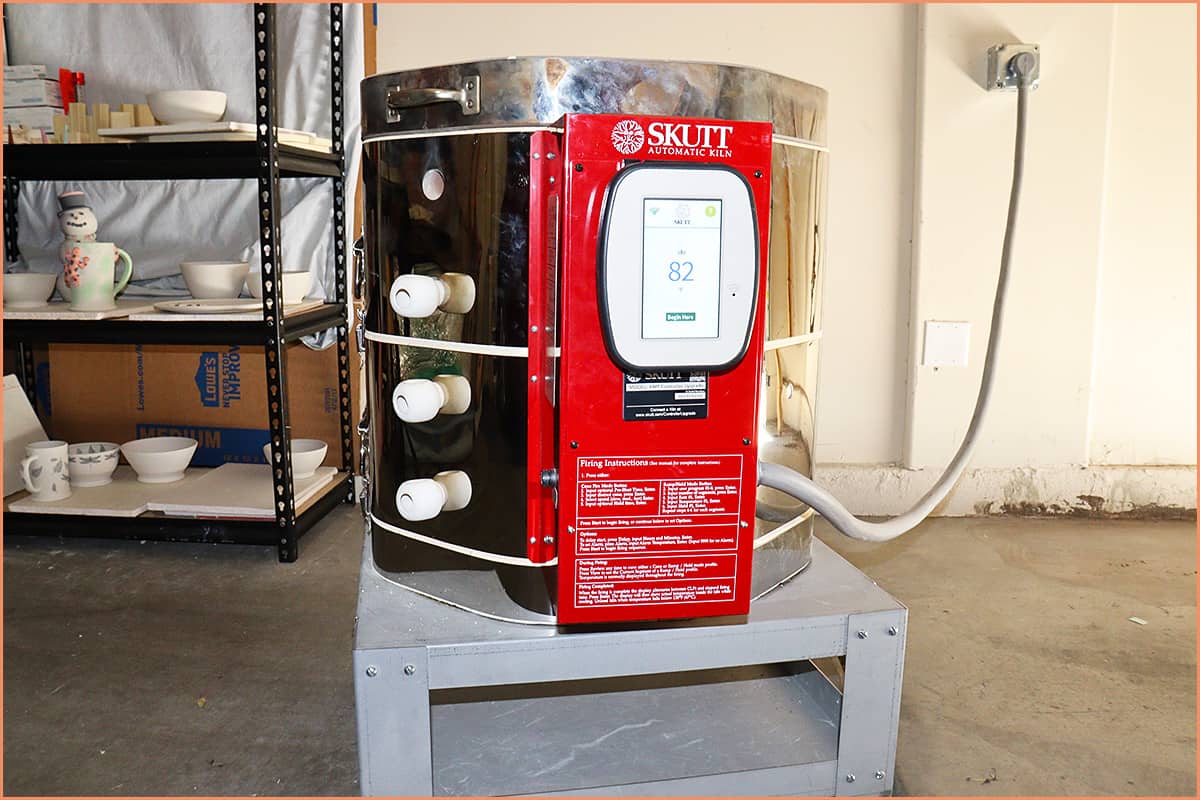
It would be best to place a thermometer in the kiln room to see how well your area disperses heat. Pay attention to how close the thermometer sits to the kiln. A little further back gives you a more accurate reading. Around 90 ℉ (32 °C) in the kiln room is normal when firing your pottery.
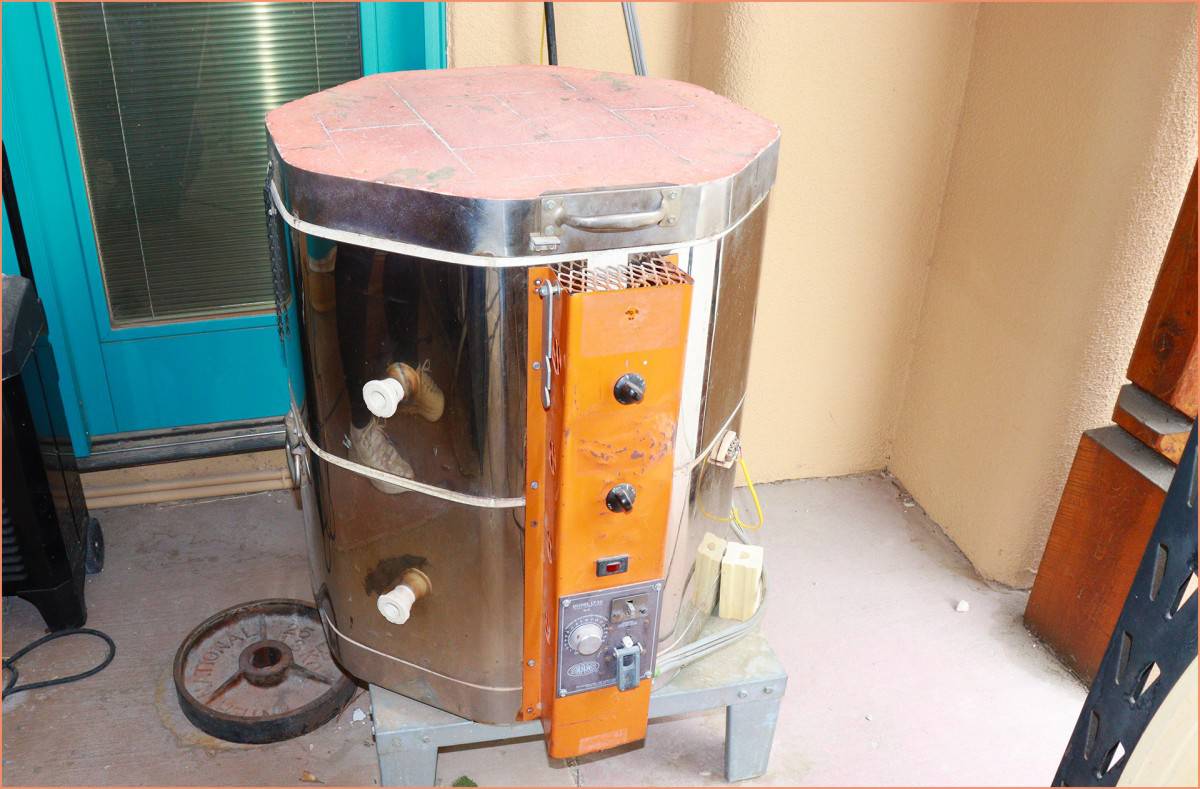
You can also have a kiln outside, but you still have to protect your kiln from the elements. Especially an electric kiln. You would need a protected area with a roof, as my friend has in the image below.
Kiln Spacing
Manufactures Recommended a Safe minimum of 18 inches (45.72 cm) between the kiln and the wall. Also recommended is 36 inches (91.44 cm) of space between all Kilns if you run multiple kilns. You need space around the kiln to ventilate the room properly and prevent heat build-up.
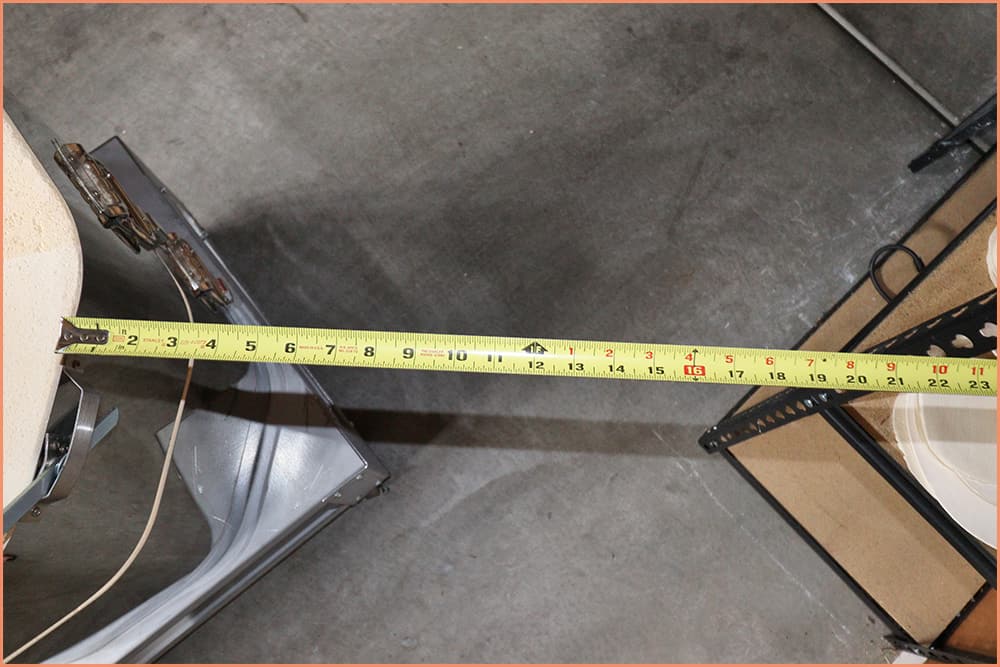
The outside of an electric kiln can reach 120 ℉ (48 C), too hot to touch but not hot enough to ignite. So it’s best to keep an adequate amount of walk-around space for easy maintenance.
Kiln Ventilation Eliminates Fumes and Gases
Proper ventilation removes fumes produced by firing clay and glazes, such as sulfur and carbon compounds. Sulfur fumes, especially, can irritate the eyes, nose, and lungs with a burning sensation. Sulfur and other fumes react with oxygen in the air to produce sulfur oxides, hydrogen, and carbon compounds.
If you use more toxic clays, glazes, or lusters, you want to choose a ventilation system that can adequately ventilate these fumes. Luster overglaze, when fired in high concentrations, produces toxic fumes. Therefore, potters must exercise caution when working with lusters because of the toxic fumes.
Two Types of Kiln Ventilation Systems
When it comes to kiln ventilation systems, the two basic types are updraft and downdraft.
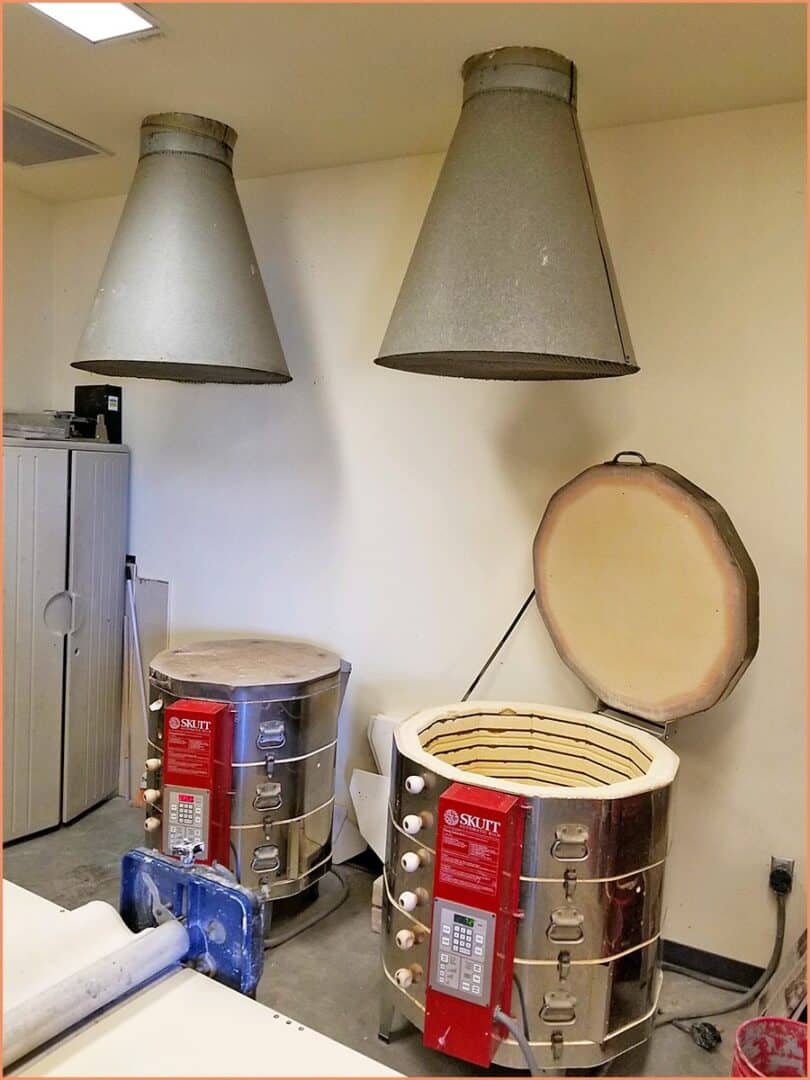
Updraft ventilation is considered highly effective because it provides an external pathway for heat and fumes to rise from the top of your kiln. Since heat rises, this works incredibly well.
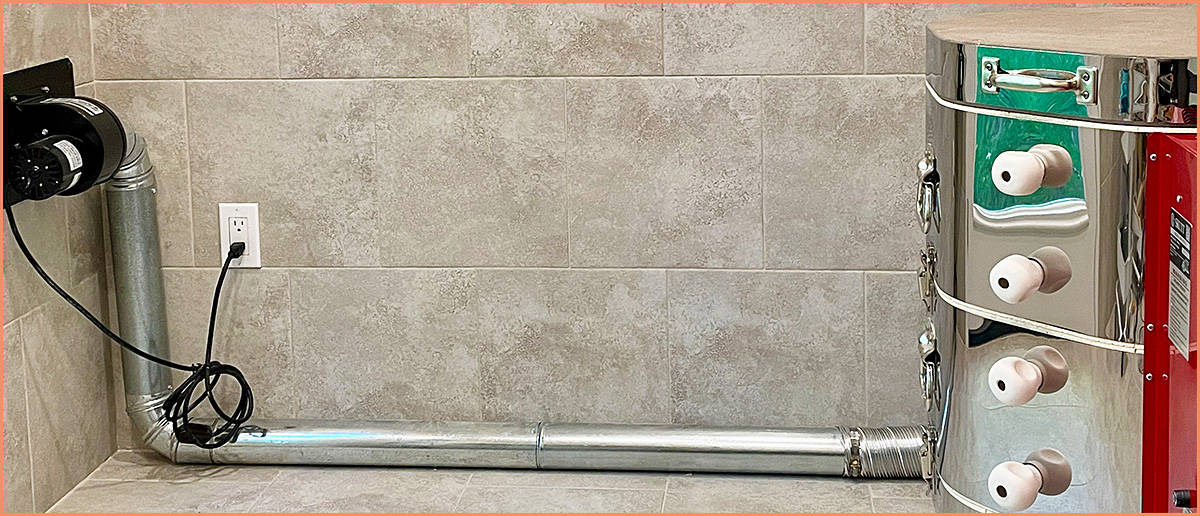
Downdraft ventilation sits at the bottom, making it easier to clean. It removes fumes from any size kiln, but not the heat from your kiln space.
Direct Kiln Venting vs. Hood Kiln Venting
The main difference Between Direct Kiln Venting and Hood Kiln Venting is that direct venting gets rid of the fumes completely, but not the heat. In comparison, the hood vent removes the fumes from the kiln and the heat from the room. However, some heat and fumes may escape into the room because of its design.
Updraft Kiln Vent:
The Updraft Kiln Vent uses indirect ventilation for your kiln. The hood ventilation operates the same way as a kitchen hood vent. An exhaust fan in the duct leads to the outdoors, pulling out toxic fumes and heat.
With the Vent-A-Kiln Updraft System, fumes and heat rise and are captured, making your kiln area safer and your kiln more energy efficient. The hood does not directly draw the fumes out of the inside of the kiln as the downdraft vent does.
Downdaft Kiln Vent:
Using a fan, the Downdraft Kiln Vent pulls toxic fumes straight from the kiln. It draws air from the kiln through a duct. The exhaust duct ventilates the toxic fumes and redirects them out of the home. It can go through the roof, the window, the wall, or the door.
The Downdraft Kiln Vent removes fumes directly from the kiln. It does not remove the heat coming from around the outside of the kiln. Therefore, depending on the size of your kiln, you may need to vent the room through an open window, door, or hood vent if the room gets too hot.
How to manually vent a kiln with Crossdraft
Today, many potters use Cross-draft venting by simply opening a window or door and using a fan to create a cross-draft. Remove the peephole plug from the top peephole throughout the firing.
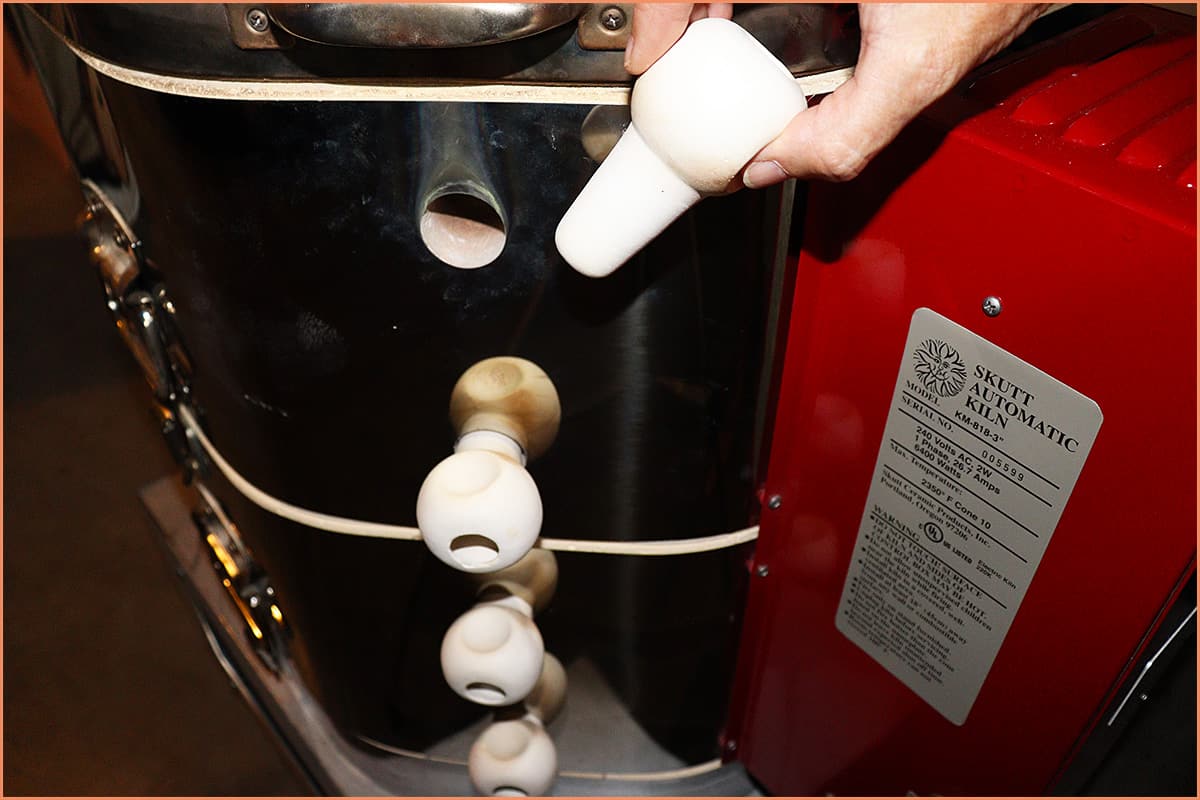
Also, prop the lid open about an inch or two with a piece of Kiln Brick until the kiln reaches 1000 ℉ (538 ℃). Do not leave the lid propped open at temperatures over 1000 ℉ (538 ℃) because the kiln cannot sustain such high heat and will become very inefficient.

A small electric kiln will perform well in a room with an open window or door and a fan circulating air out the window. However, you may encounter problems if you live in a colder climate where temperatures regularly drop below freezing.
With most Kiln control boxes, if the temperature of the control box reaches below 32 ℉ (0℃) or above 160 ℉ (71 ℃), the kiln will shut down. Depending on which type of kiln you have, temperature shut-offs may vary.
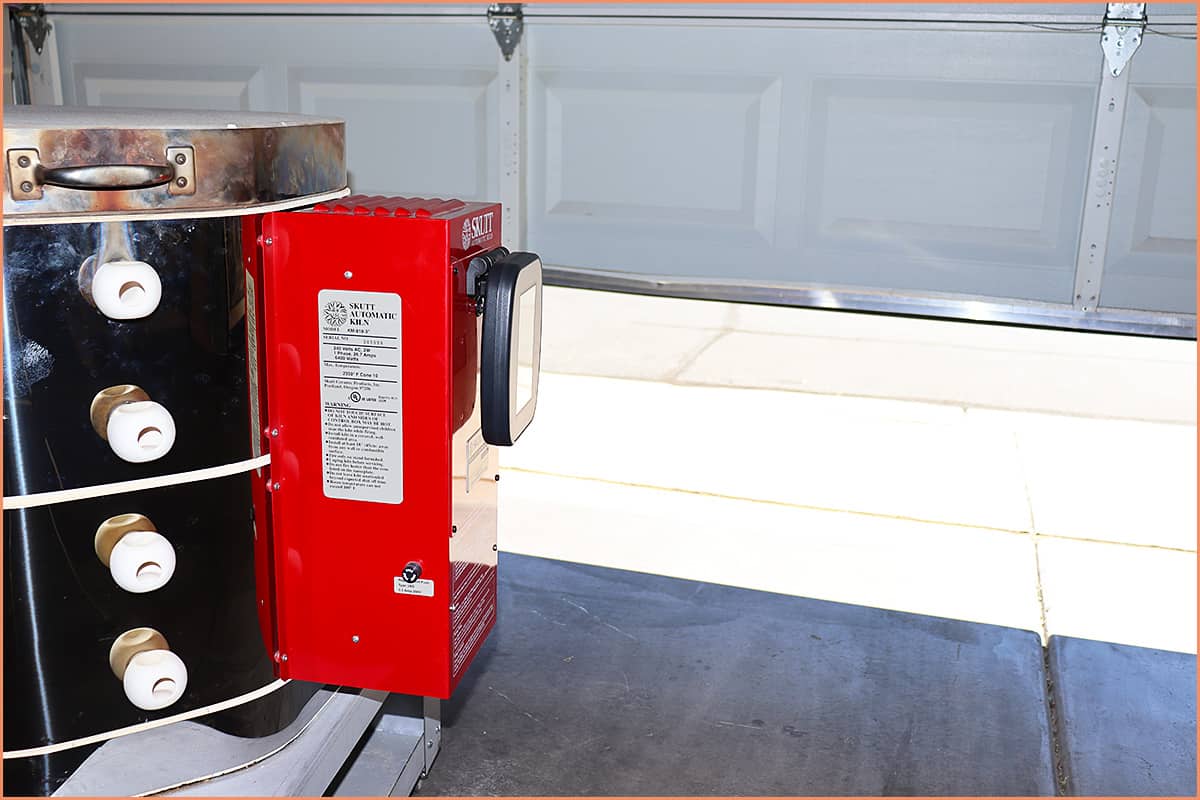
If your kiln is outside, you may still want to vent the inside of your kiln to prolong the life of your elements and keep your colors more vibrant. The kiln can be vented manually or use a downdraft vent system.
Pottery Benefits of Ventilation Inside Your Kiln
You may want to manually ventilate your kiln or use a ventilation system for the benefits.
The benefits of proper kiln ventilation include:
- Produces brighter glaze colors in an oxygen-rich environment, especially Reds and Yellows
- It helps to eliminate cloudy or dulled colors
- Oxygen and Temperature are more even throughout the kiln
- Extends the life of your elements and thermocouple
Good kiln ventilation leads to better results with your ceramics. However, in some cases, you may want the other effect, which you can achieve similar results with a gas kiln or an unventilated electric kiln.
What Happens Without Ventilation Inside Your Kiln
Without ventilation for your kiln, glazes look murkier and have a darker tone. The same thing happens with gas kilns because the fuel uses all available oxygen in the clay and glazes. This creates darker glaze colors. Venting the kiln fills the kiln with oxygen that can interact with other compounds, producing brighter glaze colors.
Not having ventilation in your kiln is also harder on your elements, and they will not last as long.
How to Stay Safe with Kiln Ventilation
Whatever kiln ventilation you choose, it must remove the fumes from the room and discharge them to the outside. Don’t underestimate the importance of kiln ventilation to safety. Check the description to see that the ventilation system you have chosen can adequately ventilate your kiln.
Before you set up a kiln ventilation system, read the instructions carefully. This prevents incorrect installation or incorrect operation, which can be dangerous. In addition, you may need professional installation for both types of ventilation systems unless you or someone you know is handy. You also need to inspect and maintain the ventilation system occasionally.
How to Spot Insufficient Kiln Venting
You can tell that an electric kiln has poor ventilation when the fumes fill the room. Poor ventilation is a real danger because the main byproduct of burning the organics found in clay is carbon monoxide, which is colorless and odorless. Hence, a good rule of thumb is NEVER to hang out in your kiln area when firing your kiln.
Conclusion
Some pottery kilns don’t have ventilation. For those cases, you need to vent your kiln manually. Venting is an essential part of the firing process. However, not venting will lead to a number of problems for you and your pottery.
There are different ways of venting your kiln that can work well in various scenarios. I hope this article has given you some information about how and why to vent your kiln during firing.