
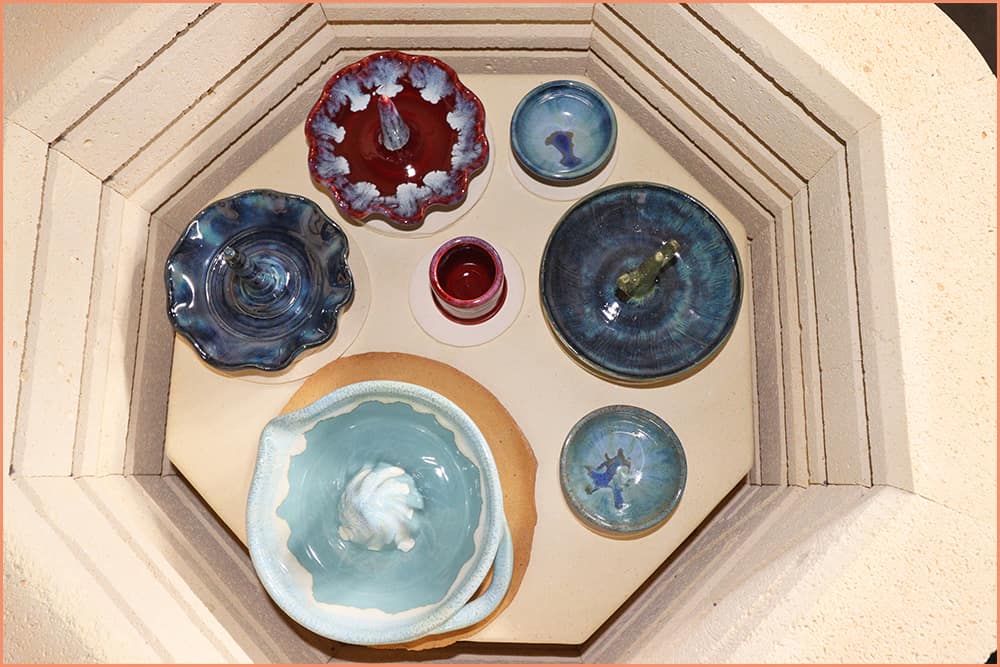
How To Protect Your Kiln Shelf From Melting Glaze
If you just bought your kiln or if you’re using someone else’s, you want to be careful not to damage the kiln shelf.
I’m sure you want to take good care of your investment. If it’s not your kiln, I’m sure you want to respect someone else’s property. If the glaze melts on the shelf, there is a slim chance your pottery will survive, and the kiln shelf now has melted glaze on it.
No one wants to scrape, chisel, or grind glaze off the self or have to buy a new one. There are several ways to protect your shelf and your pottery from melting glaze. Follow along as I show you some basic tips to protect your shelves.
Affiliate Disclaimer: We are ambassadors or affiliates for many of the brands we reference on the website. As an Amazon Associate, I earn from qualifying purchases.
What Is Kiln Wash
Kiln wash is a liquid-resistant substance you brush onto your kiln shelf to help protect it. There are several types of kiln wash to choose from.
Basic Kiln Wash – A basic kiln wash is Kaolin and Flint.
No-Crack Kiln Wash – No crack wash is Alumina Hydrate, Calcined Kaolin, and Kaolin.
Salt Kiln Wash – A salt kiln wash is made up of Alumina Hydrate and EPK Kaolin.
Applying Kiln Wash
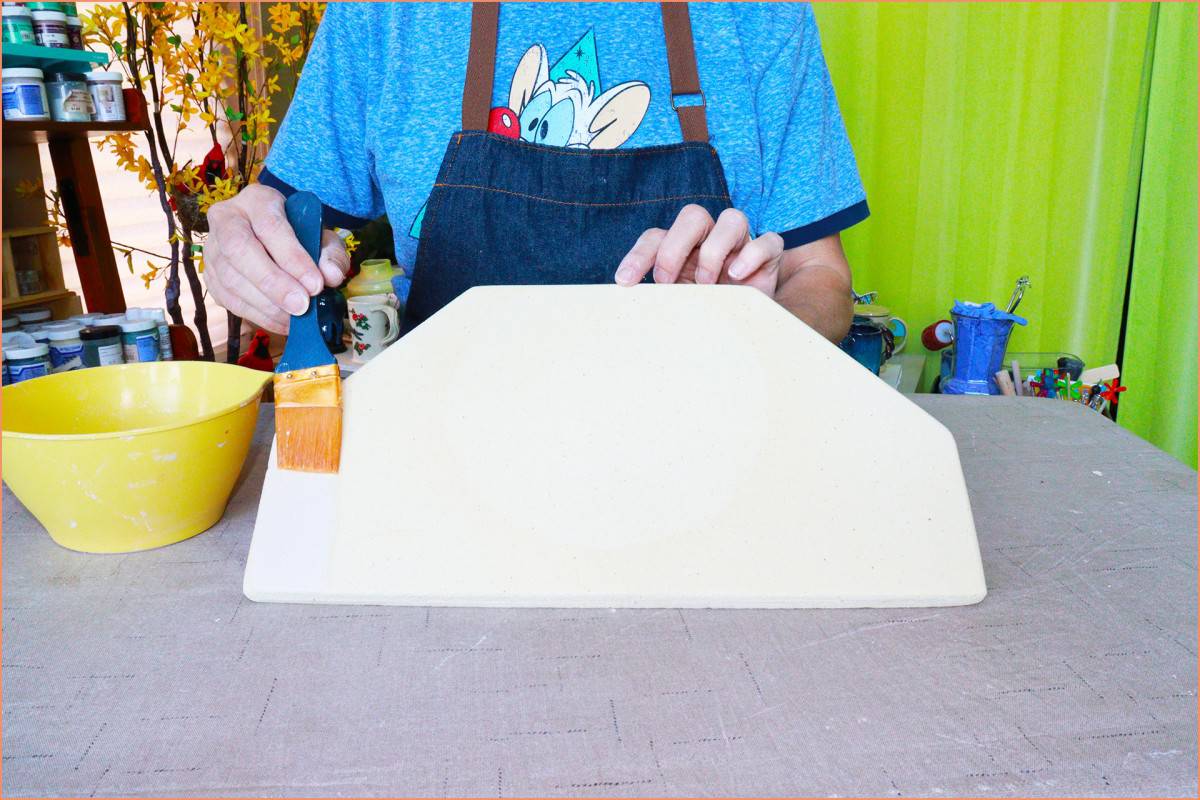
How thick should the kiln wash be?
When mixing the powder with water, it should be as thick as milk.
Is it better to brush or roll it on?
Both are fine. You can even spray it on. When applying kiln wash to your shelf, make sure you apply thin, even strokes. Use a separate Brush or roller for your Kiln wash.
How many coats should be applied?
Two coats are the best. One coat in one direction and the second coat in the other direction. Some potters do one coat, and some do three. It’s best not to apply more than 2 layers because there is a greater chance the kiln wash will flake. If the kiln wash is applied too thickly, it will flake, and the flakes will fly around inside the kiln and stick to your pottery.
How long should you wait in between coats?
Make sure the first layer is dry. At least an hour is good. Once dry, apply another thin, even coat in the opposite direction and let it dry thoroughly before using your shelves.
How Long Does Kiln Wash Last On The Kiln Shelf?
The frequency with which you fire the kiln and how often you fire it will determine how often you need to reapply the kiln wash. When the glaze drips onto the shelf or the kiln wash starts to flake, you see scratches or bare spots that need to be re-applied.
Reapplying Kiln Wash
When the kiln wash starts to chip and pit, scrape it off with a putty knife and reapply.
Scrap off any glaze drippings and flaking kiln wash, then reapply kiln wash by dabbing some on the bare spots.
If you have to grind, scrape, or chisel off any glaze, make sure you are wearing protective eyewear. If you are kicking up dry kiln wash dust, make sure you are wearing a Dust Mask. The Kiln wash dust can be harmful to your lungs.
NOTE: You never apply kiln wash to both sides of your shelf. Also, never apply it to the soft brick on the bottom or sides of your kiln.
Kiln wash does a great job of protecting your shelves when maintained properly.
Test Firing Your Glazes
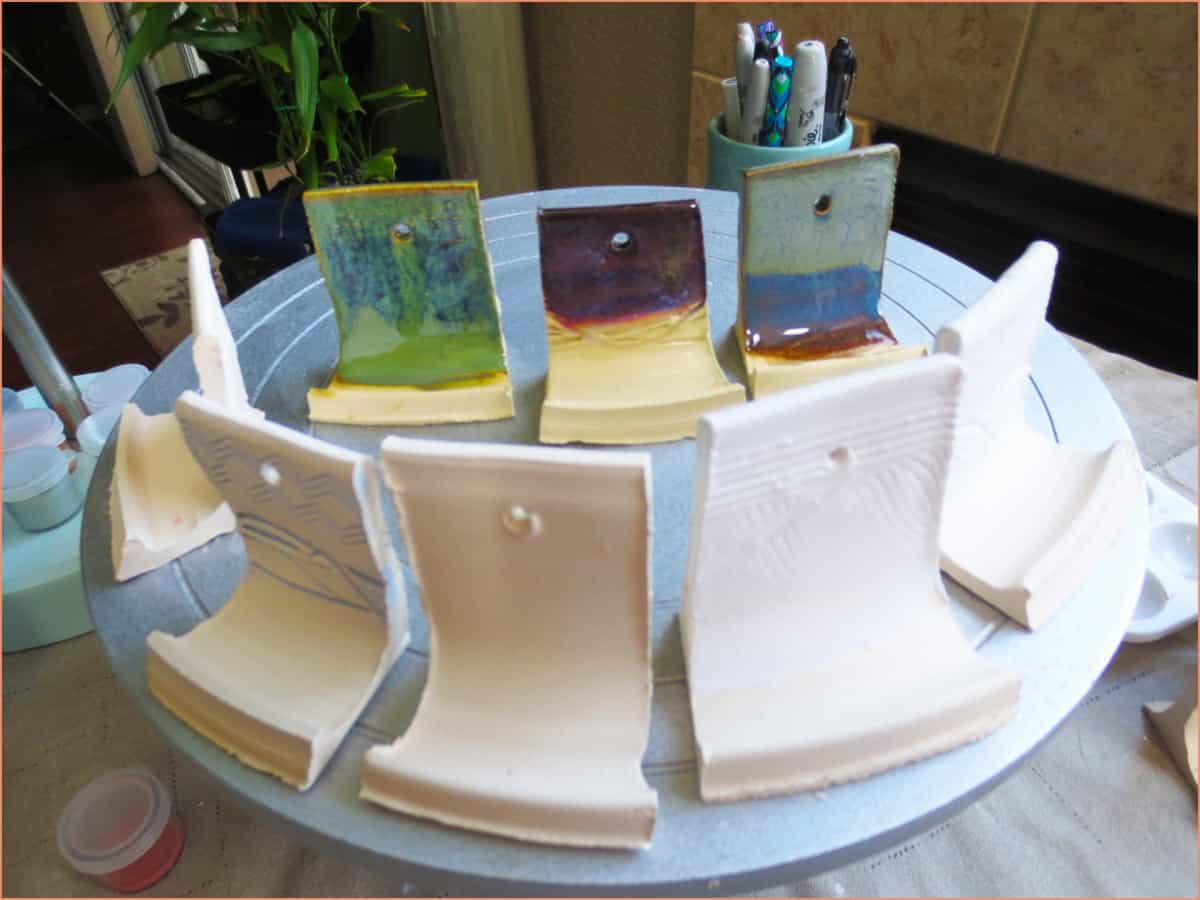
Even if you clean the bottom of your pottery, the glaze may run down the sides and stick to your kiln shelf.
Test firing: After you have found your favorite glazes, it’s always wise to test-fire them. After you have fired the samples, label each one and keep them next to each glaze.
Labeling is good for two reasons. You know which ones run and what effect and color they have after firing.
If you are using a pottery studio, the teacher will let you know which glazes tend to run more than others and will also have some fired glaze samples.
Glaze Free Bottoms
When glazing your pottery, it’s important to ensure there is no glaze on the bottom.
Applying Glazes – There are different methods of applying glazes.
Any way you decide to apply your glaze is fine, just make sure you take a wet sponge and wipe the bottom clean. Rinse your sponge frequently; otherwise, you will be wasting your time smearing the glaze around instead of wiping it off.
Waxing
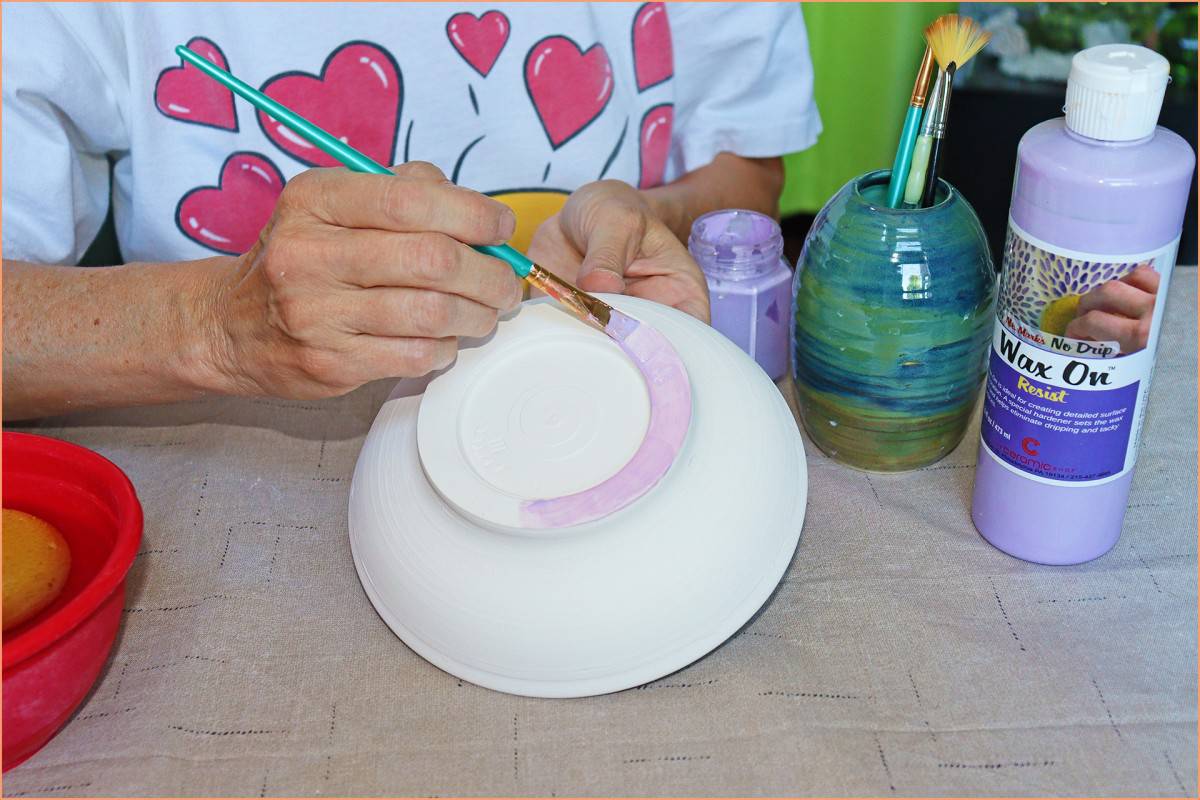
Wax resist will prevent glaze from adhering to your pottery. In any area you don’t want the glaze, just apply wax. The wax makes it much easier to wipe the glaze off the bottom of your pottery. Like water off a duck’s back, just a few wipes, and your bottoms are glaze-free.
There are many different waxes you can try. These are just a few.
Wax Resist: Wax resist is easy to use, and there are many brands to choose from. All you have to do is brush it on or sponge it on the area where you don’t want the glaze. You can even use your fingers if that’s how you want to do it.
Stick Wax Resist: Wax resist sticks are just like crayons; in fact, you could also use crayons.
Paraffin Wax: Melt a paraffin wax bar in a pot. You can get the wax at any grocery store. Simply wax the bottom of your pottery to prevent the glaze from sticking. It makes a nice, even line on the bottom, and the wax burns off the pot when fired.
Beeswax: Gently melting three tablespoons of beeswax with one tablespoon of mineral oil makes a good resist and has a pleasant scent.
Candles: Candles may also be used. Gently melt your candle and brush it on the bottom of your piece.
Sampling is the best way to find your favorite wax and the one that works best for you.
Cookies
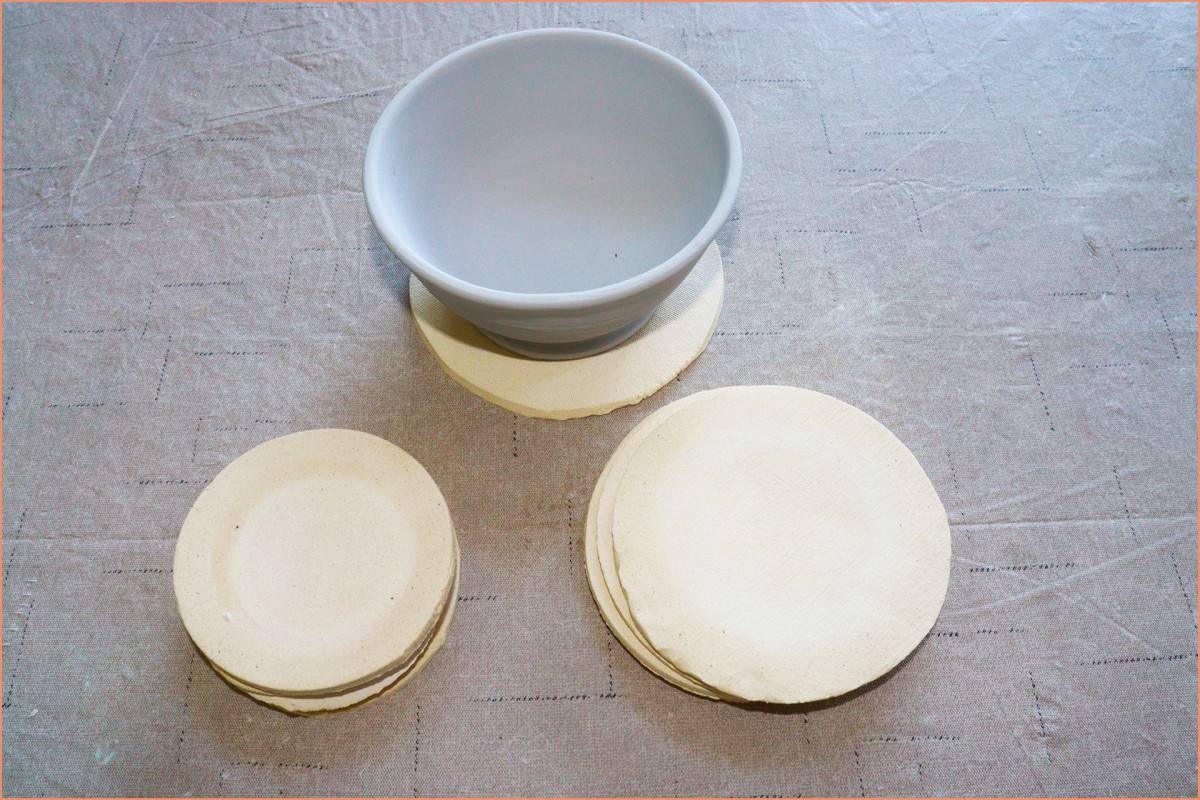
Cookies are clay slabs that are placed under your glazed pottery pieces to protect your kiln shelf. They don’t protect your pottery. If the glaze melts onto the cookie, your pottery will fuse to the cookie. You can apply kiln wash to your cookies. Applying kiln wash will prevent the glaze from sticking to the cookie, but the glaze will still be all over the bottom of your pottery.
If the glaze didn’t melt too badly, you may be able to grind it off with a Rotary tool to save your pottery. Diamond bits work the best.
Cookies are still a great line of defense in protecting your kiln self
Watch the Video – How to Make Kiln Cookies The Easy Way
How cookies are made: Cookies shouldn’t be too small or too large. If the glaze drips, the cookie has to be large enough to catch the glaze and not too big that it takes up too much room in the kiln.
Cookies should be at least 1/8 inch thick; a quarter of an inch is best and lasts longer. They should also be bisque-fired before use. Bisque firing shrinks the cookie, removes moisture, and prevents warping.
Stilts
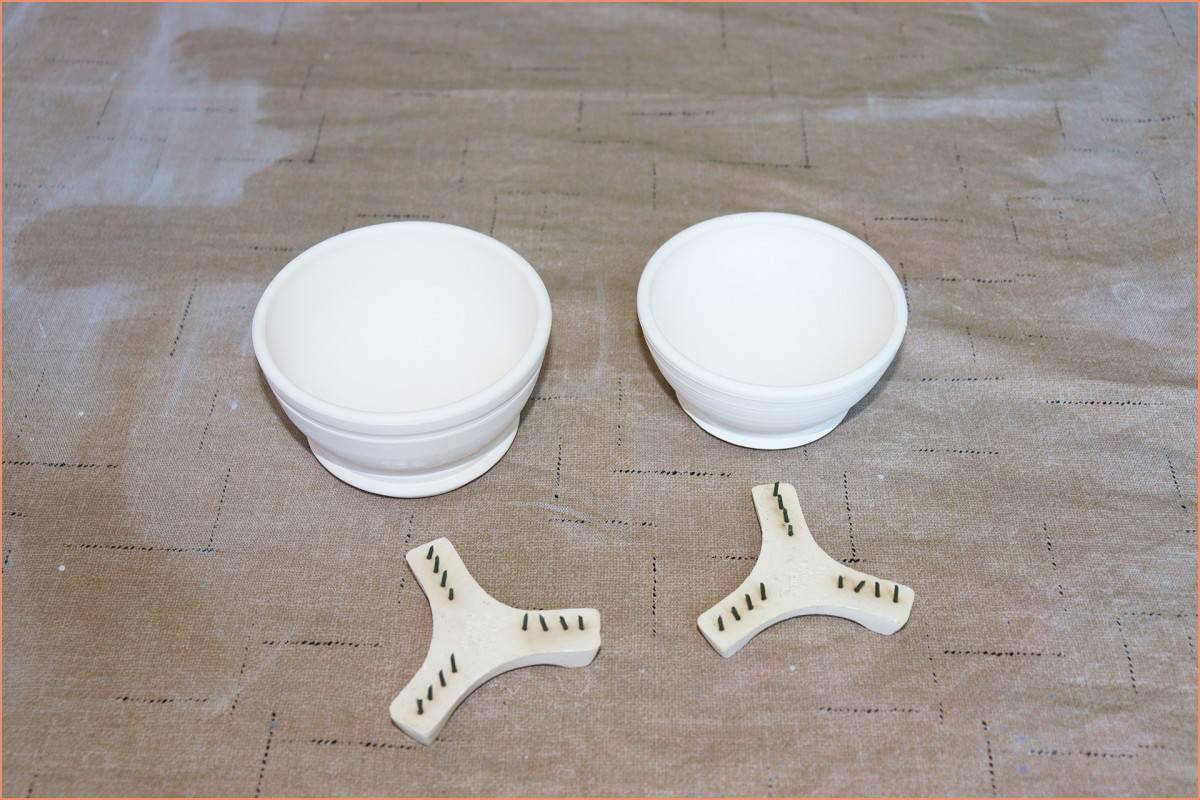
A good way to protect your pottery from sticking to your kiln shelf is to use Kiln Stilts.
Kiln Stilts support your pottery while it’s being fired. There are several kinds of stilts made with ceramic or metal.
Stilts come in different shapes to support different-sized pottery. They are Y-shaped, round, and triangular. They have finely pointed vertical legs. The sharp points leave almost no mark on your pottery.
Placing your pottery on stilts prevents it from sticking to your kiln shelf if the glaze melts and runs.
Shelf Paper
You can use shelf paper if you are low-firing and if your kiln does not have a blower. The paper tends to burn, and the circulating air will blow ash onto your pottery.
Remember
- Keep a thin layer of wash on your kiln shelf
- Don’t overglaze
- Keep the bottom of your pottery glaze-free.
Taking these steps will save time, your kiln shelves, and your pottery. If you don’t take precautions, you’ll waste time trying to get the glaze off your shelves or spend money on new ones.
POTTERY CRAFTERS THOUGHTS… With creating anything, there is always clean up and maintenance. There are so many different things you can do when creating pottery. From molding your clay to painting your pottery, each one is so much fun. It’s well worth the maintenance that’s involved.