
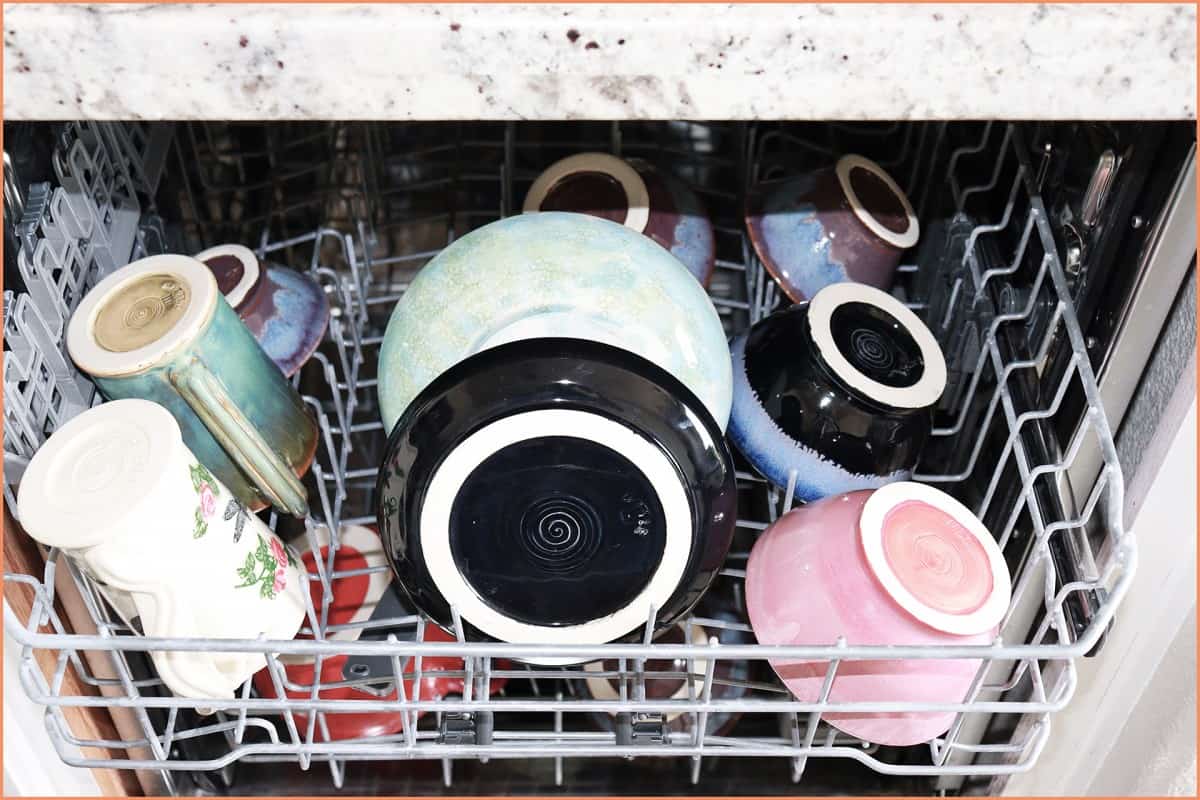
Can Handmade Pottery Go In The Dishwasher?
The short answer is no. Most Handmade Pottery should not go in the Dishwasher because of extreme temperature changes, and harsh detergents can eventually crack or damage your pottery. A humid and soapy environment can wear down your ceramics over time. Low-fire clays also don’t perform as well in the dishwasher because they are less durable.
You can collect a variety of ceramics, but if you plan to put them in the dishwasher, you need to know whether it’s safe to do so. Putting beautiful handmade Pottery into the dishwasher may ruin it if it wasn’t originally made for that purpose.
While Mid-fire and high-fire stoneware and porcelain pottery have hard exteriors, they may still have problems in the dishwasher if the clay is not vitrified. I’m going to help you decide when it’s okay to use a dishwasher on your handmade pottery and when you will want to hand-wash instead.
Affiliate Disclaimer: We are ambassadors or affiliates for many of the brands we reference on the website. As an Amazon Associate, I earn from qualifying purchases.
The Clay used will determine if it’s Dishwasher Safe
High-fire clay, such as porcelain, does better in the dishwasher. Even with high-fire clays, the dishwasher can damage metallic trims or images. The surface of high-fire vitrified clay has better hardness and non-absorbency. Many pieces, in fact, from high-fire clays are used for functional purposes because of their greater durability.
Mid-fire vitrified clays like stoneware can be used in the dishwasher as well because of the non-porous material.

Now, we have low-fire clays such as earthenware. While most earthenware can not go in the dishwasher safely, exercise caution. If a piece appears delicate, hand-wash it rather than risk it. Earthenware ceramic chips more easily than mid-fire and high-fire clays.
Important to note: Most earthenware can not safely go in the dishwasher, and not all earthenware does well in the microwave. For more detailed information, see Is Pottery Microwave Safe.
Identifying the clay used in your dinnerware.
You may have a hard time putting Pottery safely in the dishwasher if you don’t know what Type of Clay you have. For that reason, we have put this together to help you identify the clay used in your dinnerware.
Earthenware
Usually, earthenware will have a thick, heavy, and rustic appearance. Typically, hand-painted designs are earthenware ceramics. Low-fire glazes have come a long way. Now, most glazed earthenware does not go in the dishwasher safely, but you may still want to check with the manufacturer.
Earthenware has a coarser, more porous texture than porcelain or stoneware due to its lower firing temperatures. If the earthenware isn’t covered properly with glaze, don’t submerge it in a watery sink for too long because it will absorb the water.
Stoneware
Firing stoneware at a high temperature offers greater durability than earthenware. It will show more signs of vitrification, or glass-forming, to add strength. In addition, stoneware has a more opaque and thicker appearance than porcelain.
Some of the glaze textures with stoneware include shiny, satin, and matte. Stoneware contains different minerals that make it a stronger clay. Stoneware doesn’t have the same refined and delicate feel as porcelain, but some A and B mixes come close.
Porcelain
Usually, porcelain feels lighter and, in general, has more of a delicate appearance than stoneware or earthenware. You can spot porcelain dinnerware because of its fine texture. They fire porcelain at higher temperatures. As a result, it exhibits durable and non-porous characteristics.
Porcelain looks thinner than the other two clays. You can usually distinguish it from the other two by its upscale appearance. Many people only break out the fine China on special occasions.
Detergent Chemicals that are Harmful to Pottery
Glazes play an important part in vitrifying your pottery. There are things to be aware of with glazes in the dishwasher. Unfortunately, the biggest danger comes from how it can etch the glaze off your ceramics. Exercise care with the soaps used because harsher soaps can ruin the finish.

Some of the harsh chemicals to avoid in dishwasher soaps include:
- Phosphates
- Triclosan
- Sodium Laureth Sulfate
These chemicals are harsh on the glazes. Also, beware of low-fire glazes because the dishwasher often etches (removes the glaze) with time. The higher temperatures can also crack the glaze.
Well-designed glazes shouldn’t have too many problems in the dishwasher because they seal the dish and make it more dishwasher-friendly. In some cases, however, even the best ceramic may have been fired at the wrong temperature, which can cause issues with the glaze.
How to Identify Pottery That’s Safe for the Dishwasher
Generally speaking, thick ceramics or shiny ceramics do fine in the dishwasher. Anything built for everyday purposes will do fine. However, remain vigilant with decorative ceramics because the harsh interior environment of a dishwasher may not be ideal.
Pottery with underglaze may not be dishwasher safe unless it is protected by a clear glaze fired over it. Glazes used on ceramics protect your dishes because they make them dishwasher-safe. It is best to hand-wash your unprotected underglaze pieces.
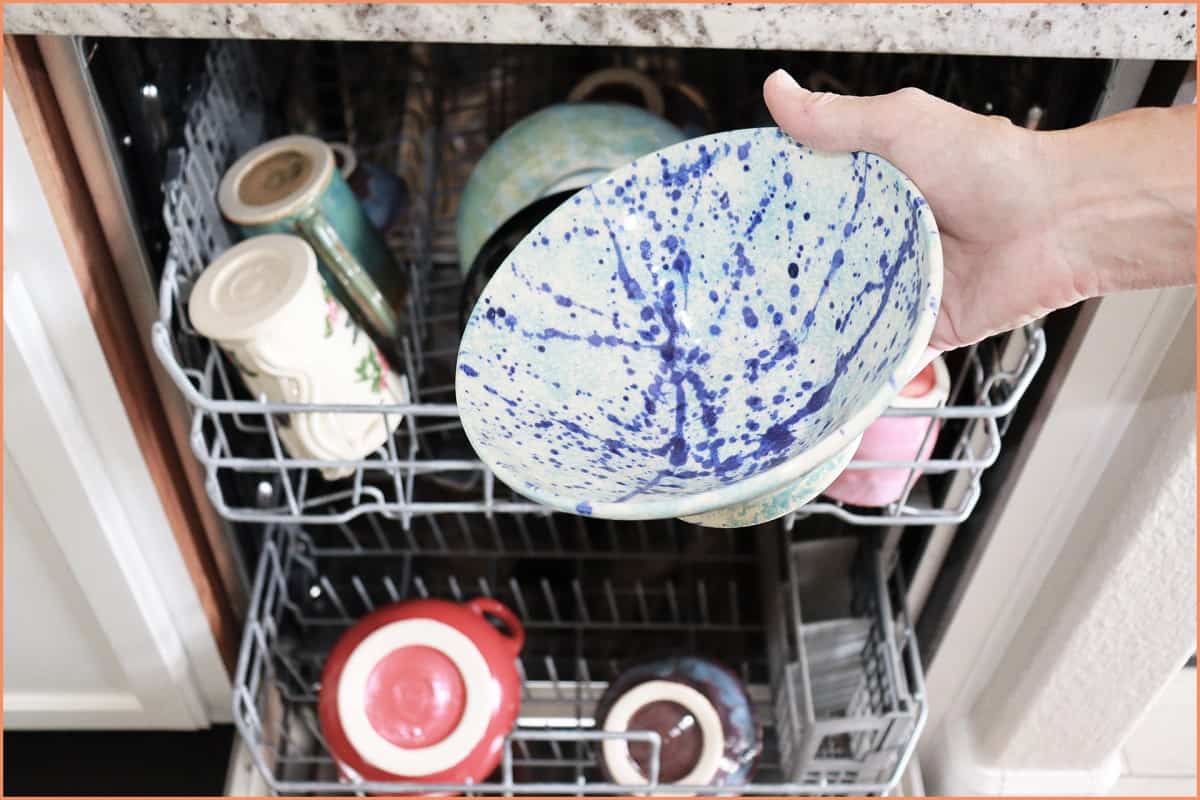
Expert Tip: When in doubt, the top rack of the dishwasher isn’t as aggressive as the bottom. Most dishwashers put the heating element on the bottom, which makes the top rack safer. Earthenware dishes especially do better on the top rack. Understand that some dishwashers will also use more powerful jets than others.
Pottery that should avoid the Dishwasher.
I would not recommend putting pottery with overglazes, such as gold luster and mother-of-pearl, in the dishwasher because it may damage the surface. It depends on the type of detergent used and the water temperature. Harsher detergents will deteriorate and dull the finish. As such, I would recommend hand-washing with gentle soap, and the luster won’t wash off.

The danger is particularly acute with earthenware due to the low-fire temperatures. A lower temperature may fail to properly verify the piece, causing damage while it’s inside the dishwasher. At higher temperatures, porcelain and stoneware are more durable.
Most handmade mugs can go in the dishwasher. However, be aware of the glaze and firing temperature, as these can influence whether it can be put in the dishwasher. As a rule, if you are unsure and want your Handmade mugs to last longer, it is best to hand-wash them.
Is unglazed stoneware dishwasher safe?
It would be advisable to hand-wash unglazed stoneware rather than putting it in the dishwasher. Stoneware pottery is non-porous and fired at higher temperatures. This may help it in the dishwasher even while unglazed. Still, most people advise against putting any unglazed pottery in the dishwasher.
Bowls, plates, and mugs without a foot ring have no glaze on the bottom, so the clay is more exposed. For those pieces, handwashing would be preferred.
Is Raku Pottery Dishwasher Safe?
No Raku Pottery is not Dishwasher Safe. Raku pottery is porous, which means that water can seep into the clay and cause it to crack or break. Additionally, the glazes used on raku pottery are not designed to withstand the high temperatures and harsh detergents used in dishwashers. Therefore, I would not even recommend it after sealing your pot.
If you want to clean your raku pottery, the best way is by hand with mild dish soap. Gently wash the pottery with a cloth or soft sponge. Be careful not to scrub too hard or use any abrasive materials that could scratch or damage the surface. Rinse the pottery thoroughly with clean water, dry it with a soft towel, or let it air dry.
Conclusion
Most Pottery can be put in the dishwasher, but when in doubt, hand-wash it. For example, suppose you have a prized piece of Pottery, such as a family heirloom. In that case, you may want to hand-wash it to preserve its original appearance. Soft ceramics, ceramics with a bright appearance, and delicate pieces should also be hand-washed to prevent damage.
Any pottery not overly water-absorbent can usually do fine in the dishwasher because it won’t waterlog and weaken. Most glazed Pottery won’t experience a problem when placed into the dishwasher. You can also check for a symbol underneath the Pottery with water drops over a glass or plate. This indicates you can safely use it in the dishwasher.