
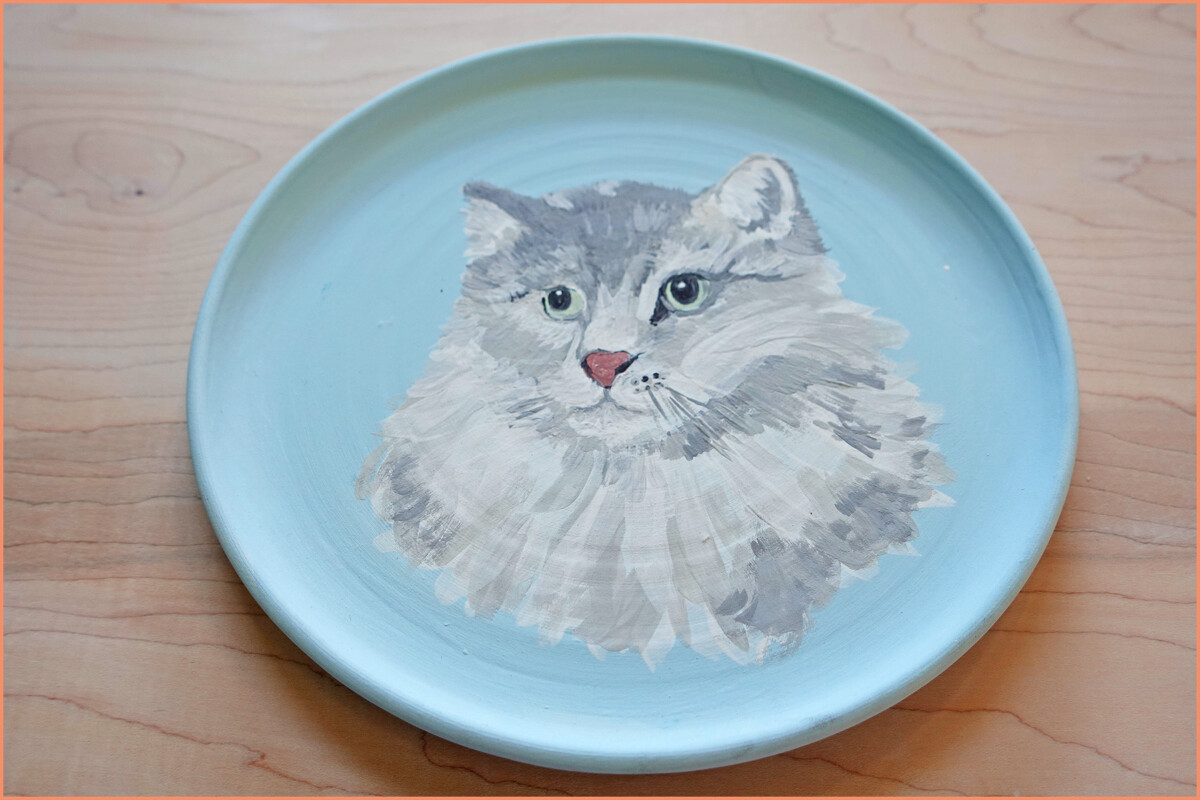
Applying Underglaze on Greenware vs Bisqueware – Which Is Best
Underglaze is unique since it can be applied to both greenware and bisqueware. However, when deciding whether to apply your underglaze to greenware or bisqueware, several factors should be considered.
The main difference between applying underglaze to greenware and bisqueware lies in the clay’s absorbency and stability at these stages. Each clay stage has its own benefits and disadvantages, depending on your goals and the methods you wish to use. I’ll delve into the details of both options so you can decide which one best suits your needs.
Affiliate Disclaimer: We are ambassadors or affiliates for many of the brands we reference on the website. As an Amazon Associate, I earn from qualifying purchases.
Understanding Underglaze
Underglaze can be applied to greenware or bisqueware. This contrasts with the application of clay slip, which is generally applied to greenware to ensure the slip adheres to it. Clay slip is composed of clay, water, colored oxides, and stains.
Traditional underglaze composition consists of colored oxide or stains, water, a small amount of clay, and frit. The frit, a combination of flux and silica, helps the underglaze adhere to the ceramic piece during firing. The presence of clay in underglaze ensures that it remains stable on the surface upon application.
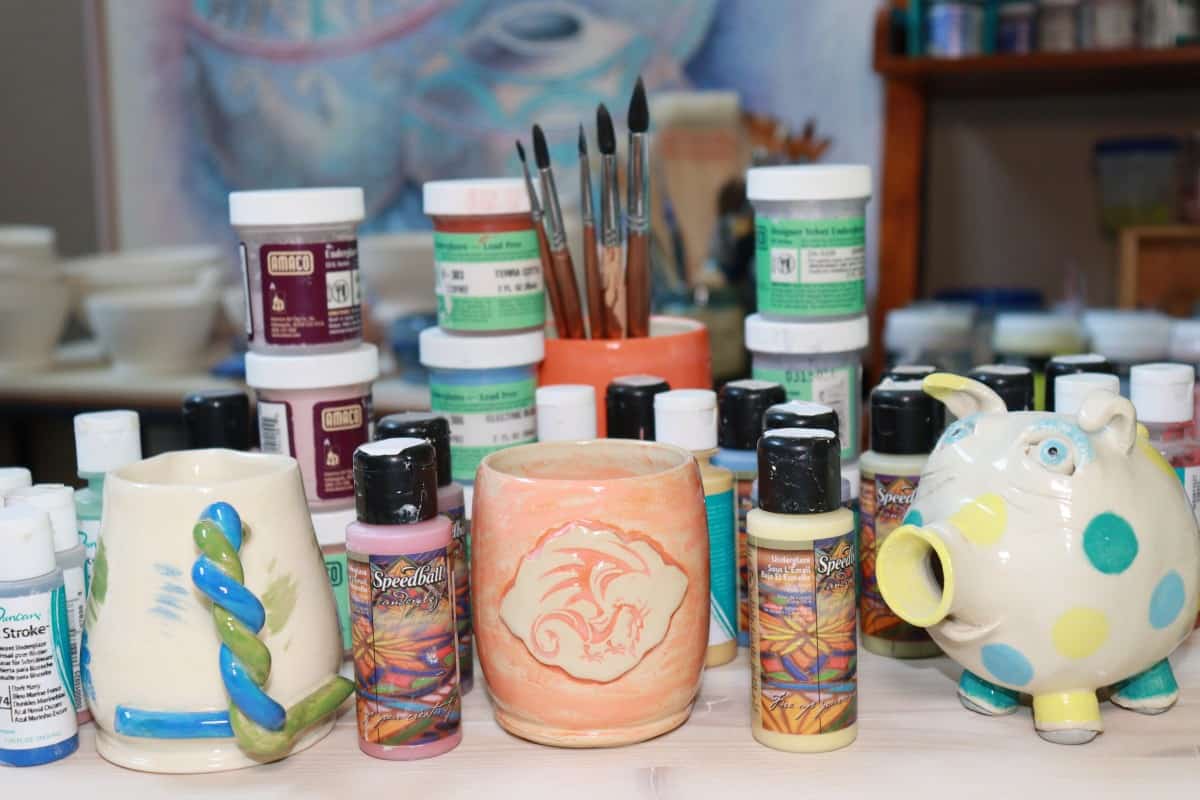
This is why underglaze can be used on both greenware and bisqueware. But there are better times to apply underglaze on greenware or bisqueware. The underglaze colors will vary depending on the firing temperature.
Applying Underglaze on Greenware
Underglazing on the Greenware Stage of Clay involves applying the underglaze directly to the raw clay body before it has been bisque-fired. It can be applied using various methods, such as brushing, sgraffito, or spraying, which offer creative flexibility. Let’s take a look at the benefits and disadvantages.
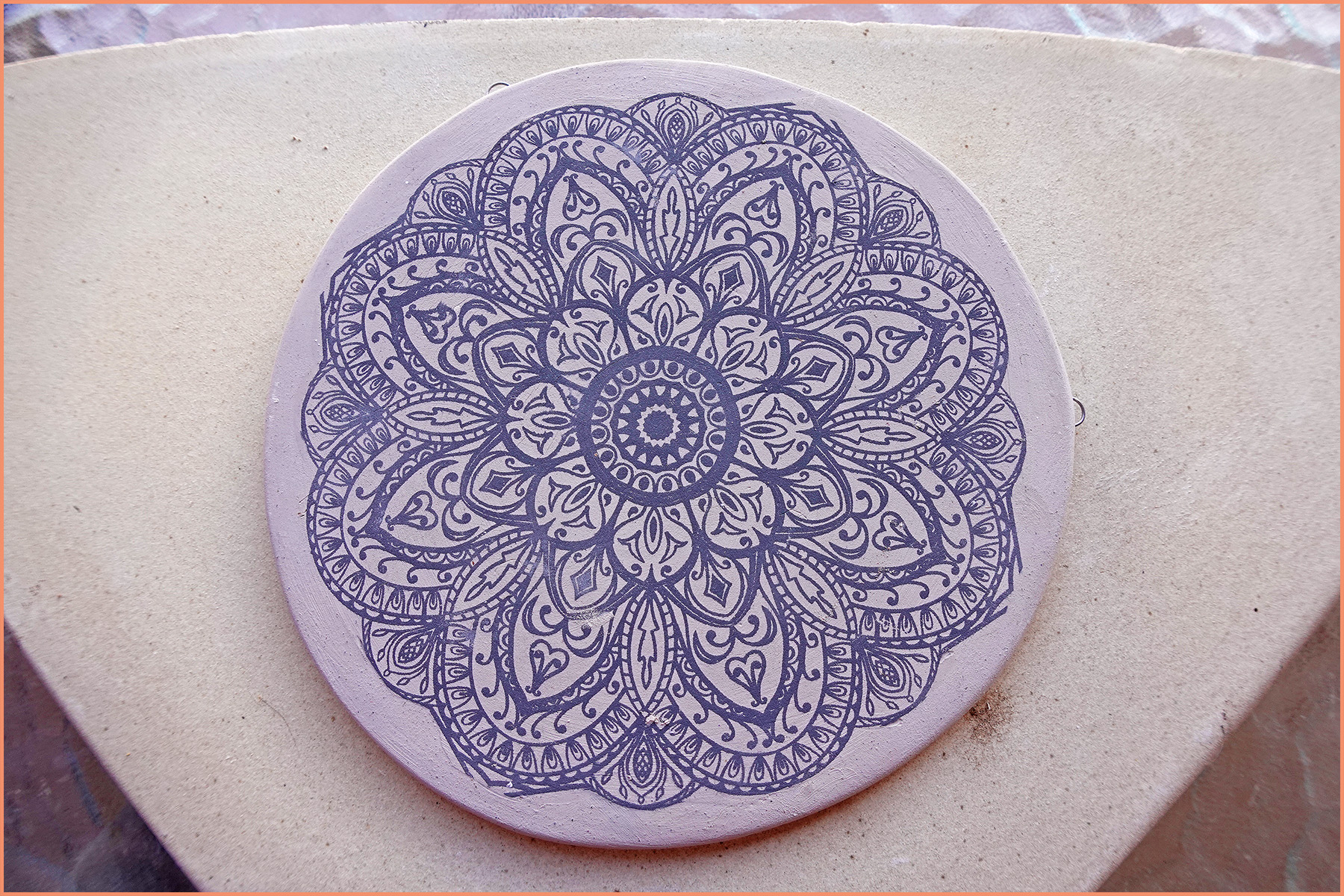
Benefits of Applying Underglaze on Greenware?
Applying underglaze to greenware offers several benefits:
Touch-Up After Firing
One significant advantage of applying underglazes to greenware is the ability to touch up the design after the initial firing. If the color was diminished during the firing, or if there are any imperfections, potters can reapply or touch up the underglaze and refire the pottery. This provides an opportunity to refine the final product.
Modify Their Design
Applying underglaze at the greenware stage allows artists to modify their designs early in the creation process. You can blend underglaze when the clay is in the Plastic (workable) Stage to create effects like marbling or the Sgraffito technique when the clay is in the Leather Hard Stage.
Durability of Design
When fired, the underglaze becomes part of the clay body, making it ceramic. This means the underglaze will not smear when the pottery is covered with a transparent or translucent glaze, which adds a shiny, satin, or matte finish and the underglaze.
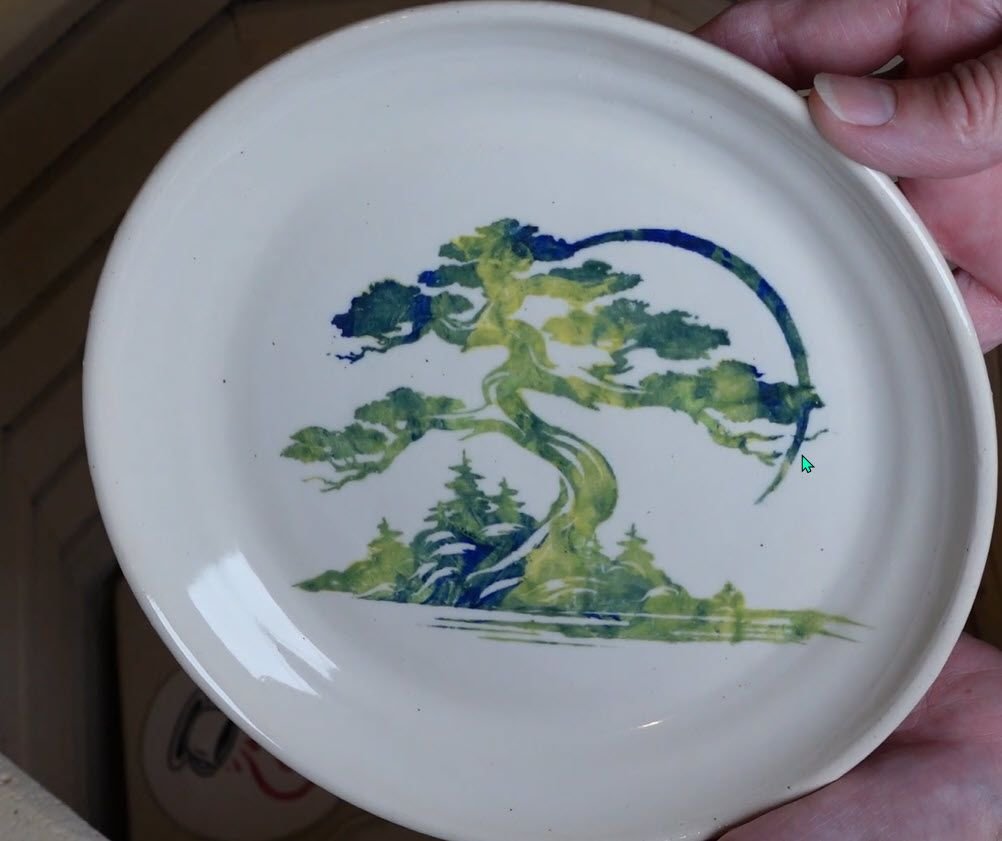
Disadvantages of Applying Underglaze on Greenware?
When applying underglaze on greenware, there are a few disadvantages to consider:
Potential Damage to the Piece
Applying underglaze to greenware, especially in the Bone-Dry Stage, can be risky. Different methods of applying underglaze to raw clay can put pressure on the piece, leading to cracks or warping, especially on thin clay with delicate features.

You will also need to be careful when removing underglaze, as it can rub off the clay and leave an indentation in the pottery.
Difficulties in Application
Applying underglaze evenly on greenware can be more challenging than on bisqueware. Because leather-hard or wet clay in the greenware stage is nonabsorbent, it can be difficult to achieve a smooth, even coat.
Additionally, if you are working with intricate designs or multiple layers of underglaze, applying it to wet clay can lead to smudging or blurring, especially if the piece is not completely dry.
Firing Process
When you bisque-fire the underglazed greenware, it must NOT come into contact with any other piece of pottery in the kiln. This means that if the underglaze greenware touches another piece of pottery, the underglaze will transfer to it. You will have to treat the underglazed clay as a glaze firing, which will take up more kiln space during the bisque firing.
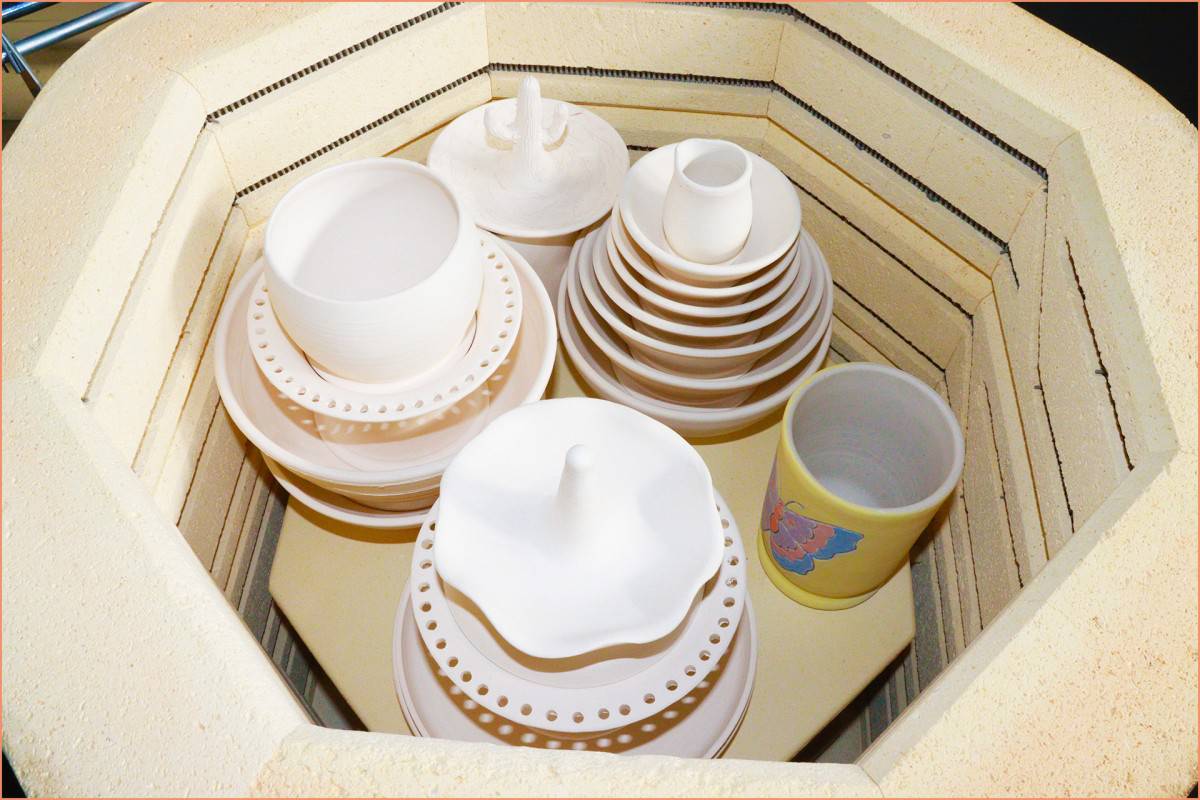
Applying underglaze on greenware has advantages but also presents challenges. When deciding whether to apply underglaze to greenware, carefully consider your project’s specific needs and the piece’s stability during application.
Applying Underglaze to Bisqueware
The Bisqueware Stage of Clay is pottery that has been fired once but not yet glazed. Bisque provides a porous, absorbent surface ideal for underglaze application. The underglaze can be applied using various methods, such as brushing, sponging, and masking.
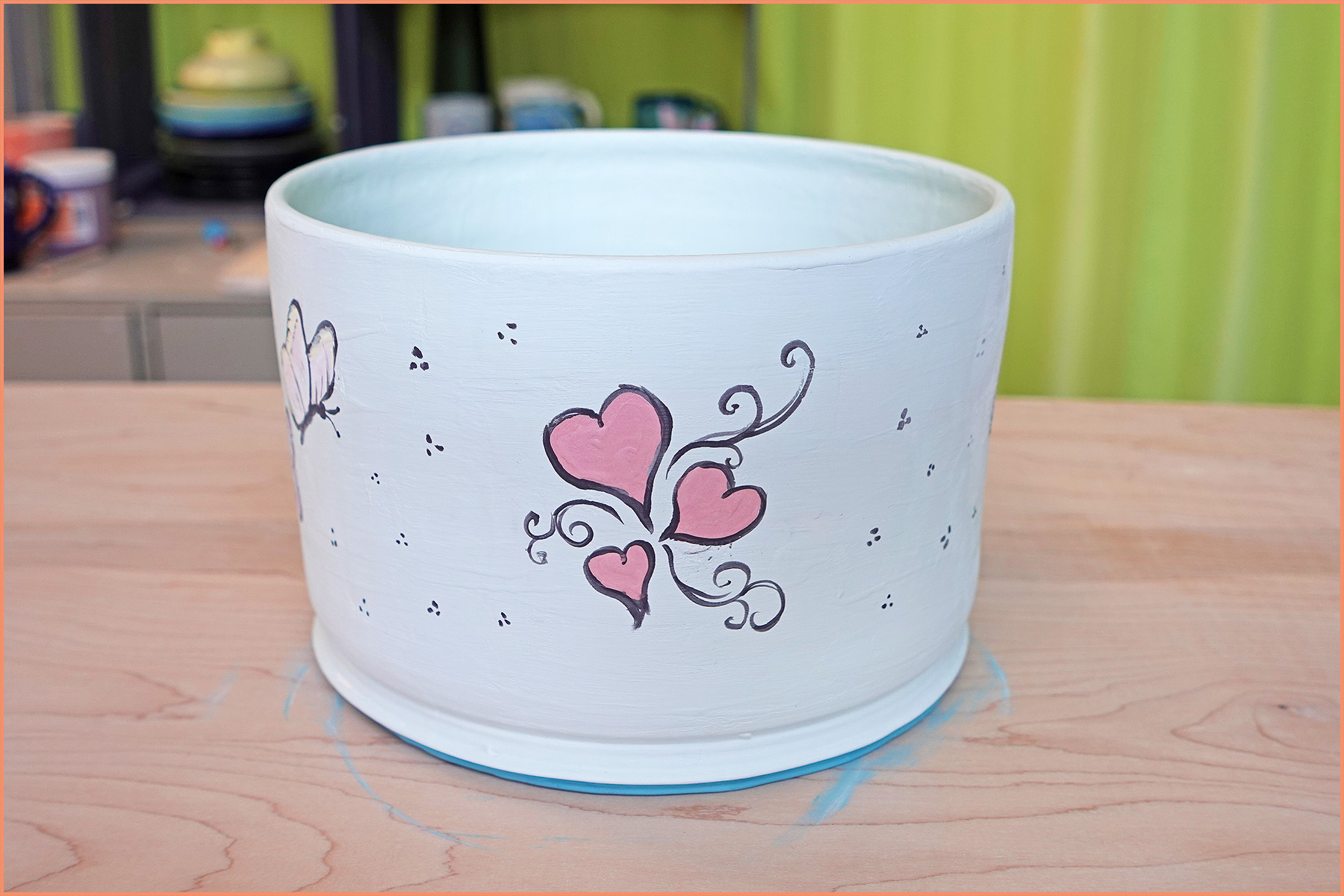
After the underglaze is applied, it is often coated with a transparent or translucent glaze, which protects the underglaze designs and adds a shiny, satin, or matte finish to the piece.
Benefits of Applying Underglaze on Bisqueware?
Applying underglaze on pottery that has been fired once but not yet glazed offers several benefits:
Increased Adhesion
Underglaze tends to adhere better to bisqueware than to greenware. The porous surface of bisqueware absorbs the underglaze more effectively, resulting in a strong bond. Bisqueware allows for more controlled absorption of underglaze, leading to more consistent final color after glaze firing.
Bisque-fired clay provides a firmer surface than greenware, allowing greater control and precision when applying underglaze. This is particularly beneficial for detailed designs and intricate patterns.

Keep in mind that smoother clay will give you more precision. Bisque-fired clay that contains grog can have a bumpier surface.
Easier to Correct Mistakes
It’s easier to clean or sponge off mistakes in underglaze application on bisqueware compared to greenware, which is more delicate and can be damaged more easily.
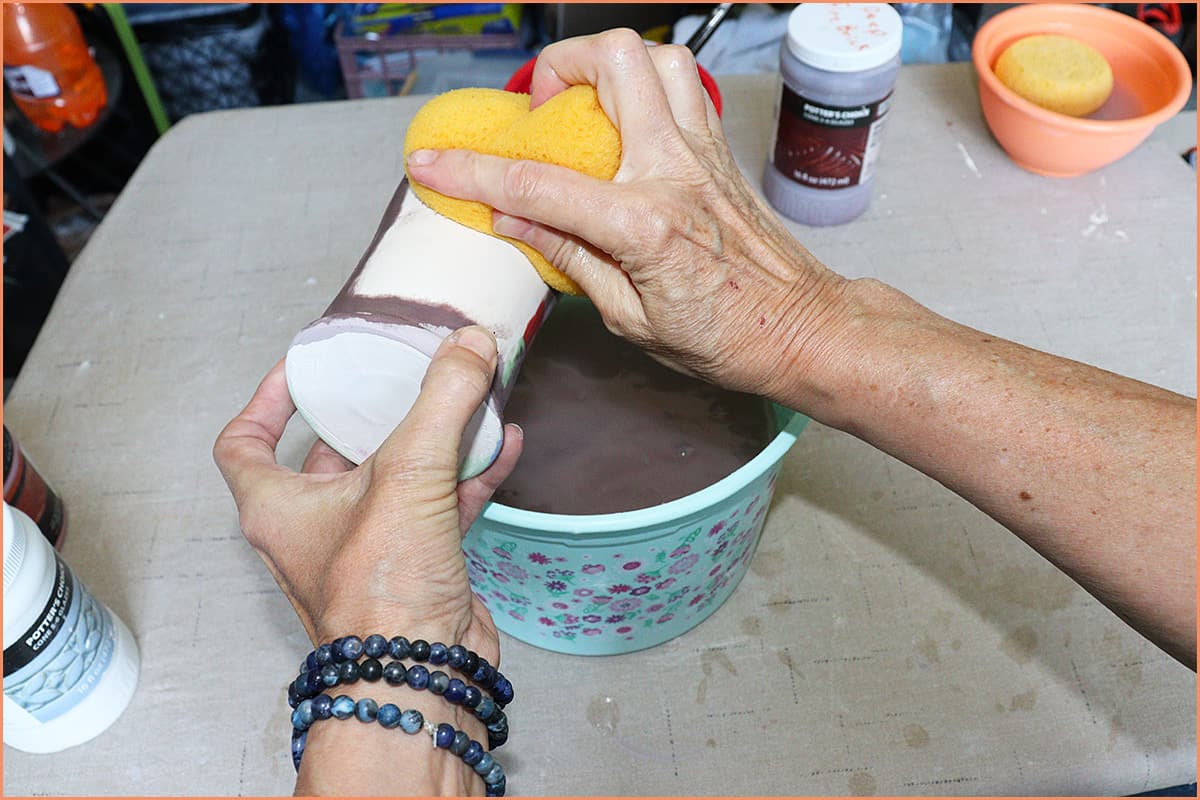
Over the years, I have effectively cleaned the bisque surface without damaging it. I find it easier because it is less fragile and more forgiving when removing or correcting mistakes. You can use a damp sponge or a Magic Eraser.
Reduced Risk of Damage
After the bisque firing, the clay becomes a ceramic material. It is now much less fragile than greenware, reducing the risk of damage during the handling and application of underglazes. For example, you can apply underglaze without worrying about denting, marking, or harming the clay surface.
Disadvantages of Applying Underglaze on Bisqueware?
When applying underglaze on bisqueware, you may encounter a couple of challenges that could affect your final outcome:
Applying Glaze to Underglaze
When applying a transparent ceramic glaze over underglaze, the underglaze can smudge, especially if it is not completely dry. If you are brushing on transparent glaze, it is important to brush over the underglaze lightly. Dipping in the glaze is best.
Difficulty in Achieving Certain Effects
Once the clay is bisque-fired, it cannot be reworked or manipulated. This means any textural or sculptural changes that could have been made in the greenware stage to complement the underglaze are no longer possible.
Due to its softer surface, greenware is better suited to specific underglaze techniques, such as sgraffito, transfer, decals, and stamping.
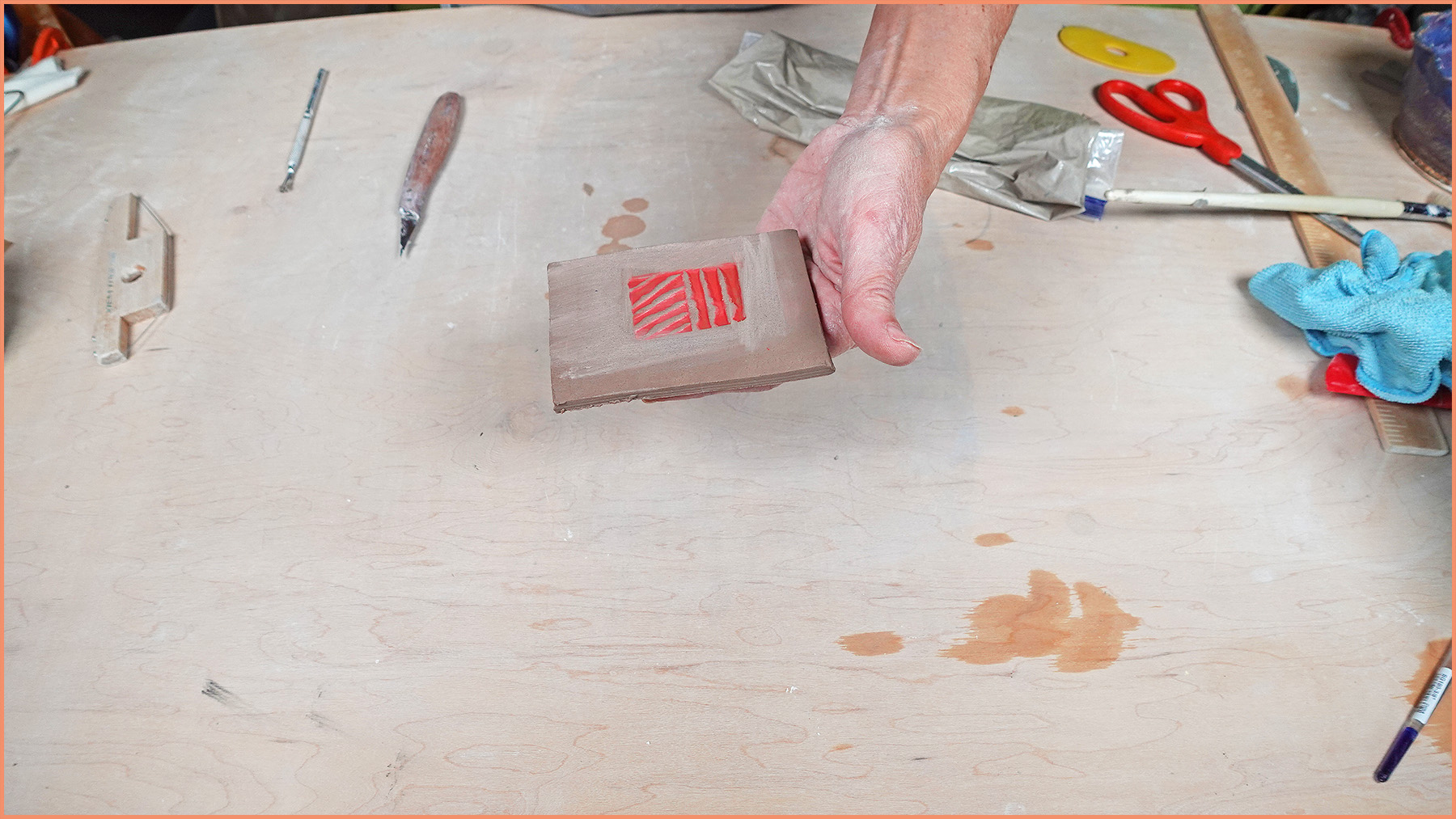
When planning your next ceramic project, consider these benefits and challenges to determine if applying underglaze on bisqueware is the right choice for you.
Underglaze Methods: Greenware vs Bisqueware
In this section, I will go over the most popular underglazing methods. This list outlines the methods best suited to greenware or bisqueware, as well as those that work for both. This guide will help you determine the best stage of clay for underglazing to achieve your desired results.
Brushing
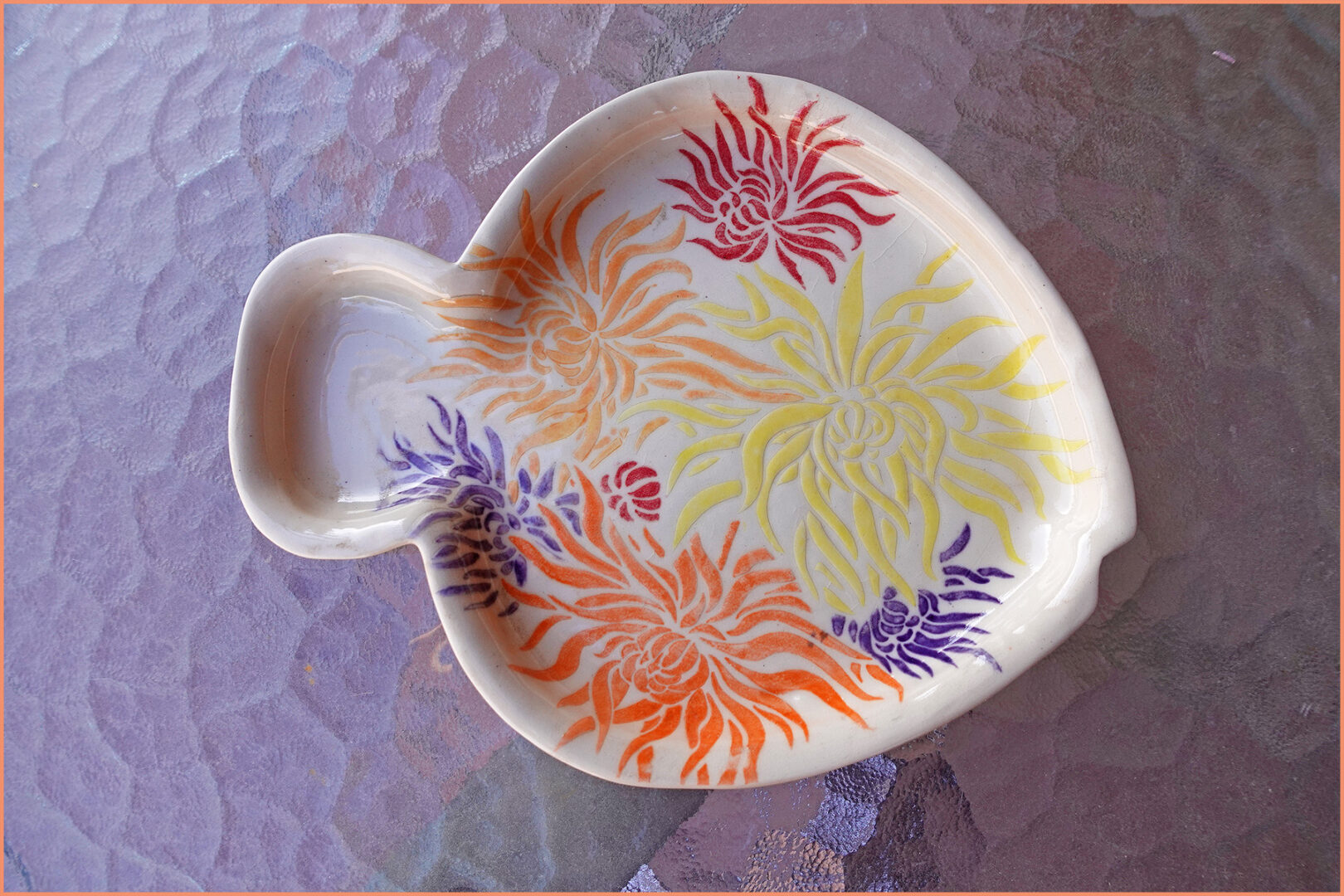
Brushing on underglaze is similar to painting with painterly effects. It is a widely used method for applying underglaze to pottery, suitable for both greenware and bisque-fired clay. The choice often depends on individual preference and the desired outcome. Some potters choose to paint underglaze on greenware, concerned that applying it to bisque ware might cause smudging when the clear glaze is added.

However, I prefer painting underglaze on bisque ware, using careful application, ensuring the underglaze is completely dry, and applying the clear glaze gently so it does not smudge. The color outcome appears consistent regardless of whether the underglaze is applied to greenware or bisqueware.
Sponging
Sponging is a fun way to apply underglaze. Your underglaze application can be done on both greenware and bisqueware. I prefer to sponge on bisque ware because I like how the sponge pattern adheres to the bisque pieces.
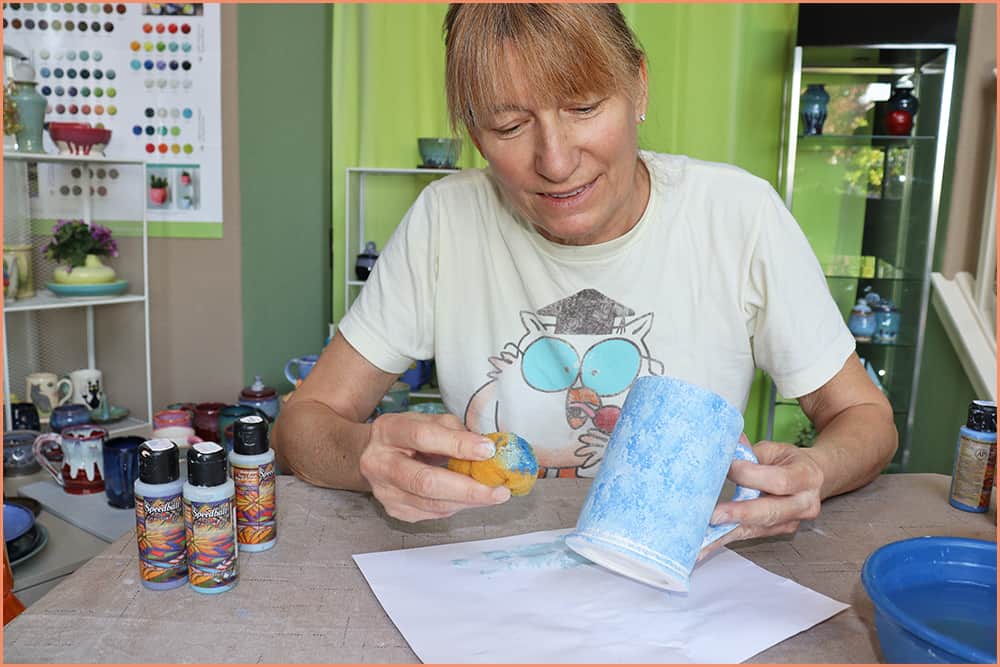
Some potters prefer to sponge greenware, as they worry that applying it to bisqueware could cause smudging when the clear glaze is layered over it. You might consider sponging on one color, bisque firing, and then applying a different color to your bisqued piece. Experimenting with a sample test tile is advisable to gauge the results.
For more detailed information on sponging with underglaze, check out Sponge Glazing | Tips, Tools, And Ideas
Sgraffito
In this method, you first underglaze the clay, then, using carving tools, carefully carve designs into it. As you carve, you remove some of the underglaze, revealing the clay’s natural color beneath.
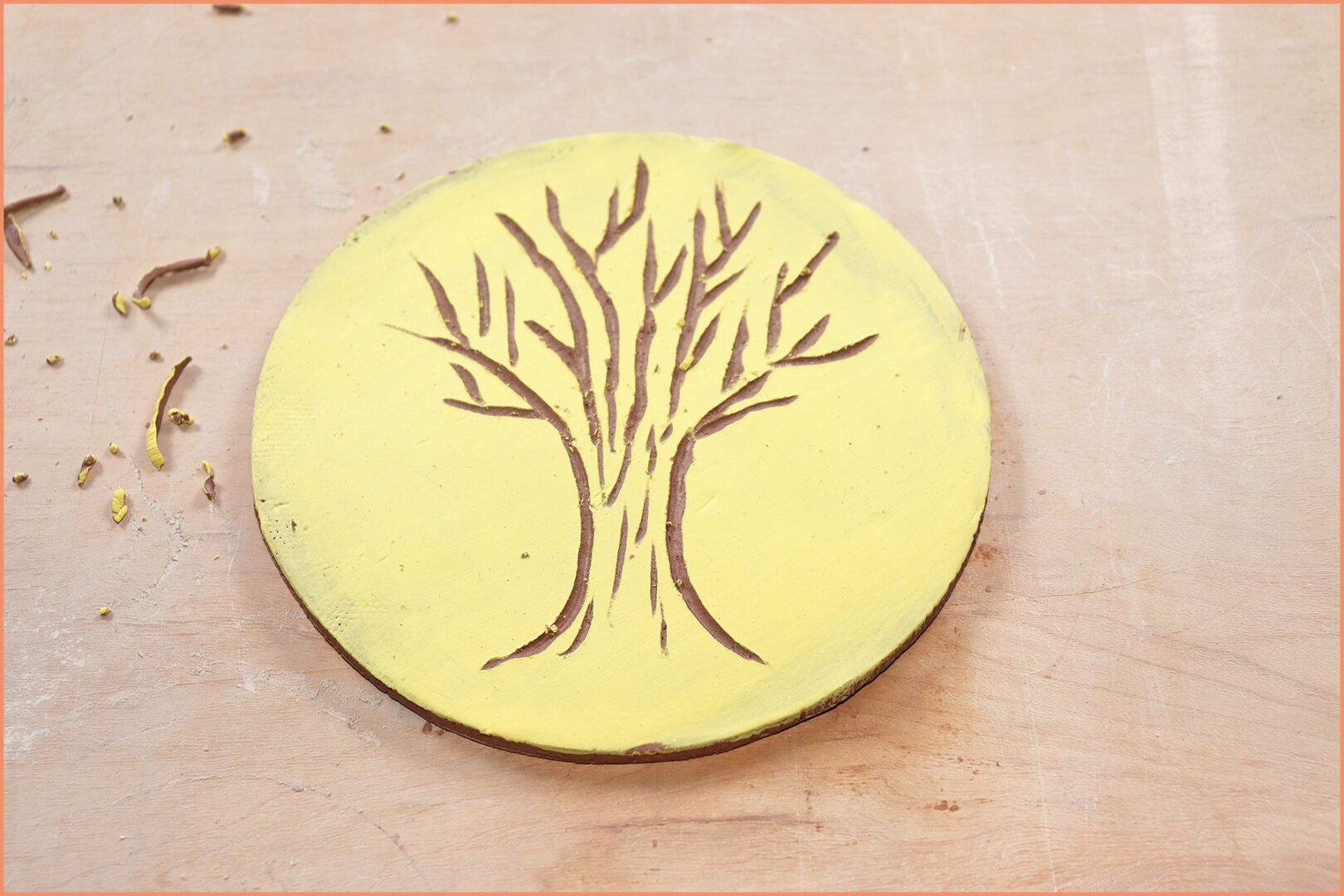
Sgraffito is done when the clay is leather-hard. This creates a cool color contrast and creates unique patterns. Remember, you can only do this when the clay is at the right Leather-Hard Stage.
Mishima or Inlay
Mishima, also known as Inlay, is a method similar to sgraffito, but the carving is done first, then the underglaze is applied. The carving has to be done at the leather-hard stage, but the underglazing can be applied at the leather-hard, bone-dry, and even bisque stages of clay.
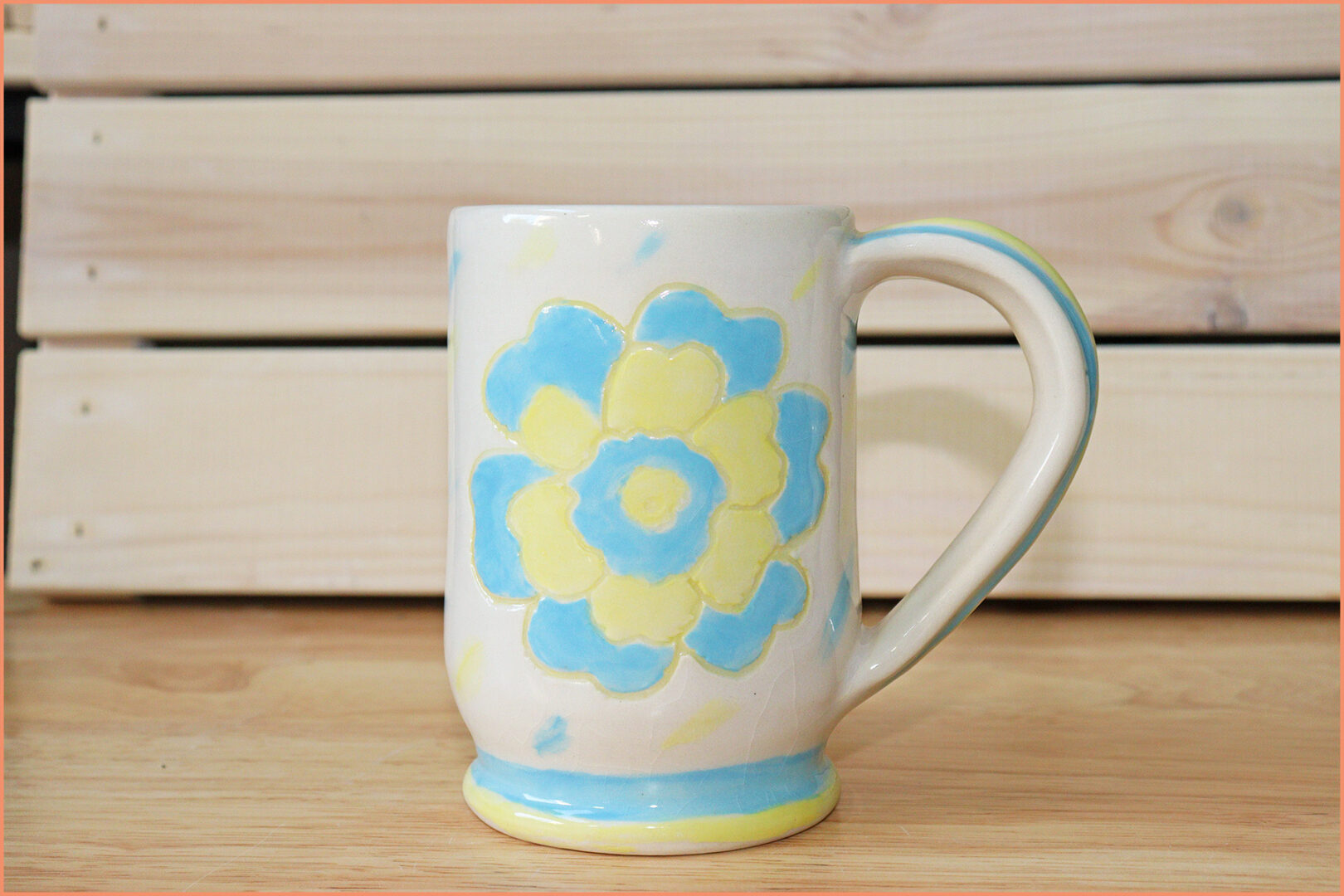
I prefer to apply the underglaze on bisqueware. I have a video that shows this method. Here is the video for you to view: Underglaze Easy Trace and Transfer for Pottery
Wax Resist
The wax resist method is typically used on greenware. This process involves applying wax resist to the greenware, followed by applying underglaze. When the greenware is fired, the wax resist burns away, leaving the underglaze.
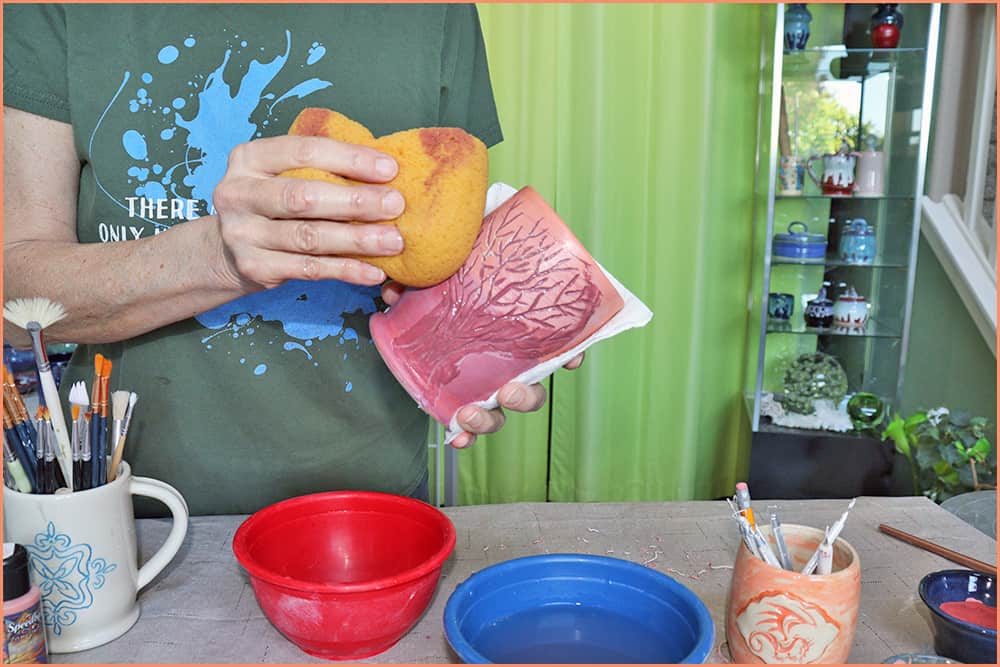
You can apply the wax resist to either hard leather or bone-dry clay. If you are doing the inlay method, the wax resist must be applied to leather-hard clay. Once fired, you can decorate with more underglaze and or glaze.
To learn more about decorating with wax resist, check out Wax Resist Tips | Protect – Decorate – Design
Slip Trailing
Slip Trailing is a technique in which a slip or denser underglaze is used to form elevated lines and designs. This method is particularly effective on greenware, allowing artistic expression through line thickness and style, which can be adjusted by changing the pressure applied to the Applicator Bottle and the nozzle size.
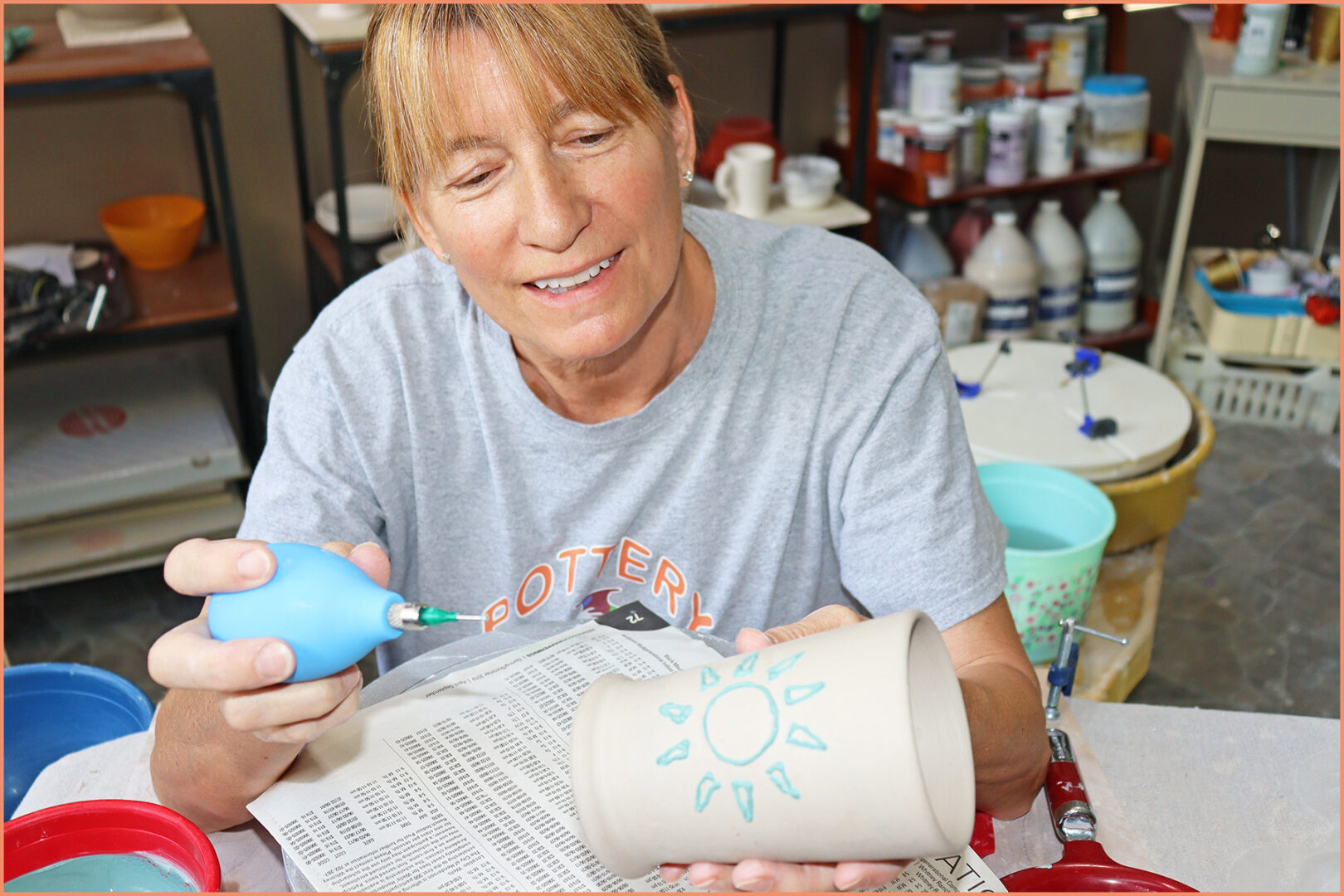
I have found that Slip Trailing with Underglaze on Bisqueware can be successful. The key is that the underglaze contains frit and less clay, which enables it to adhere well to the piece. This differs from slips made by potters, which may not bond as effectively. Knowing this will help you decide when to slip-trail with underglaze.
Marbling Underglaze
Underglaze marbling can be successfully applied during both the Greenware and Bisqueware phases of clay processing.
For techniques such as the shave cream method or the split cup method, it is best to apply this on Bisqueware. This ensures that the underglaze adheres effectively to the clay’s surface.
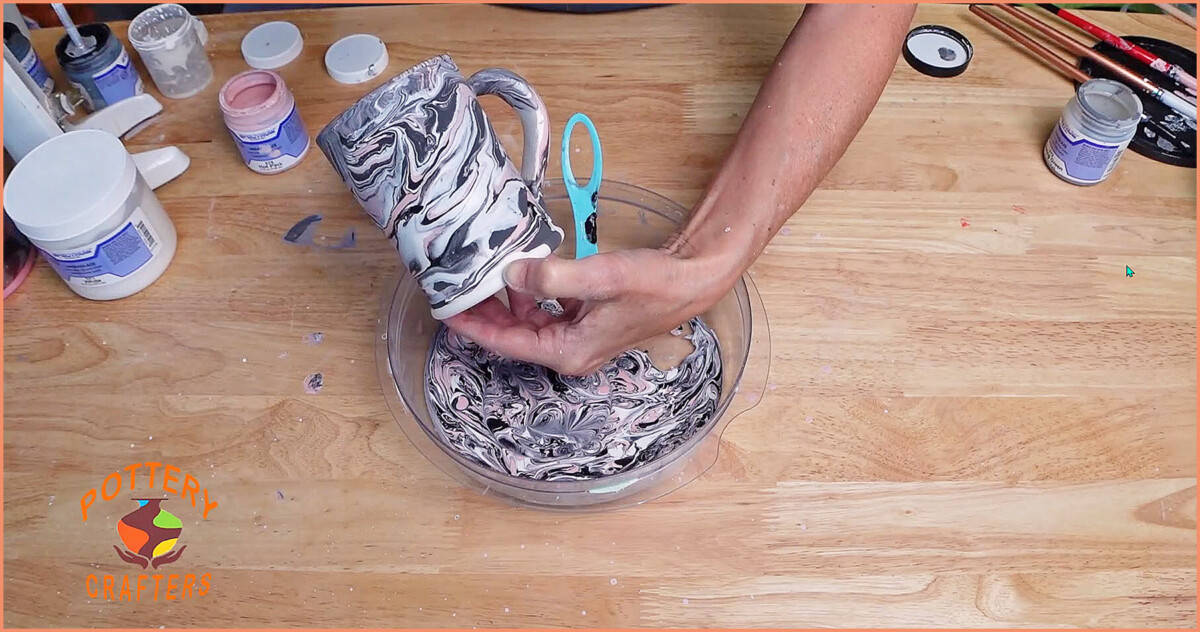
To create the marble effect, you can go to Underglazing with Split Cups For a Marbling Effect – A Step-by-Step Guide
Stamping
Stamping is a versatile method often used to create unique designs, lettering, and patterns, such as leather-on-clay, which involves pressing stamps into the clay surface. Once the pattern is stamped into the underglaze, it can then be applied to both greenware and bisqueware.
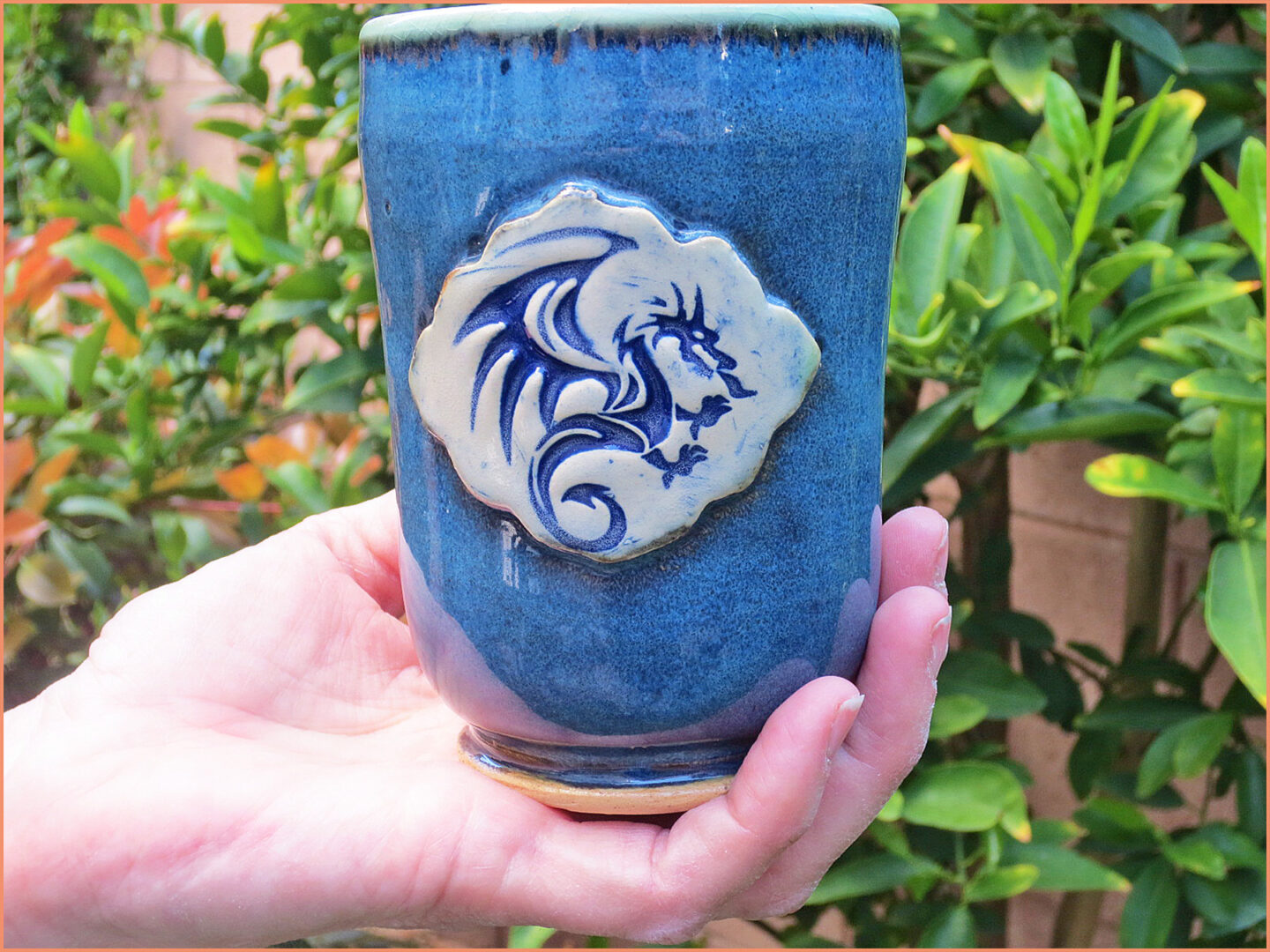
Similarly, in pottery, rubber stamping is used to create patterns on clay. With this technique, the underglaze can also be applied at different stages of the clay. Mainly the bone-dry or bisqued stage.
Masking or Tape Resist
Potters use tape for masking, which helps in creating clean, sharp lines or specific designs on the ceramic piece. This process is preferred during the bisque stage rather than the greenware stage because of the clay’s surface properties. The greenware stage makes it difficult for the tape to adhere properly, leading to less precise masking.
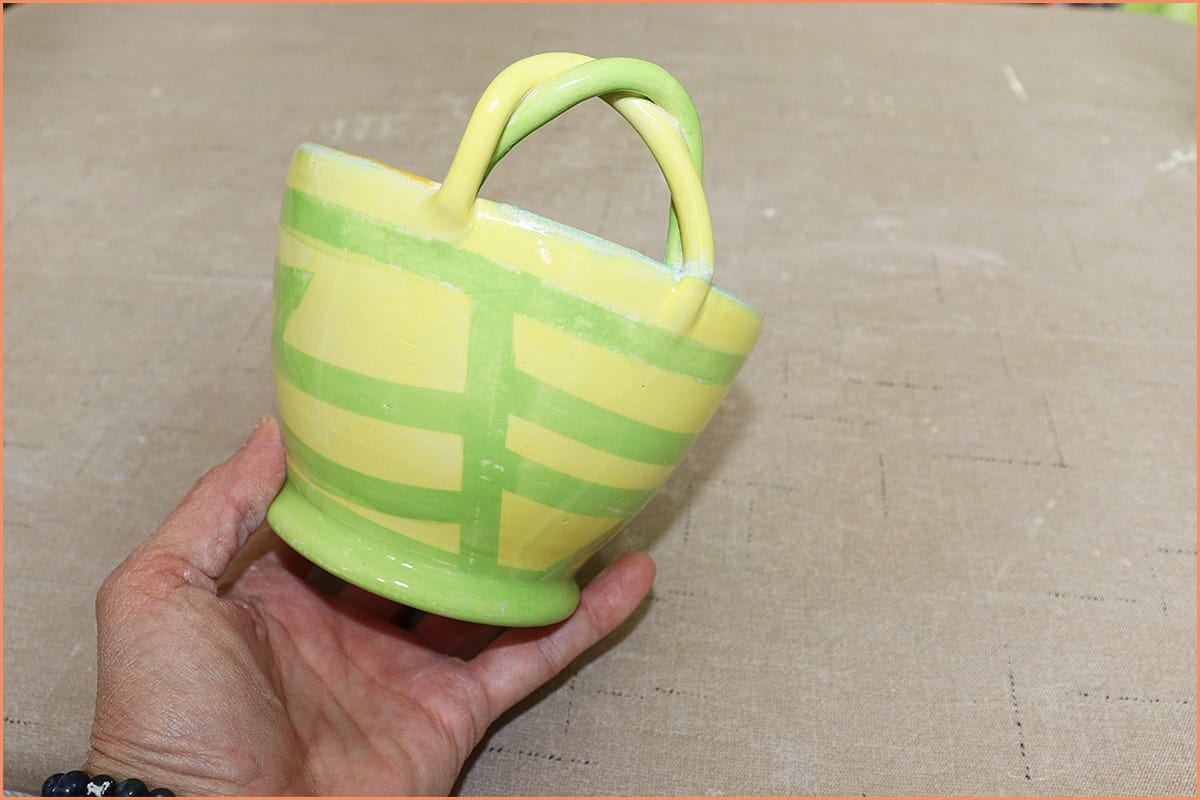
In contrast, bisque-fired clay provides a better grip for Washi Tape, ensuring the masked areas remain clean and the design edges are crisp. This technique is essential for achieving intricate patterns and precise decorative elements in ceramic art.
For more information on masking, you can check out this video: How to Tape Resist and Glaze Pottery – Cool Pottery Glazing Techniques
Drawing Underglaze Pencils and Markers
Underglaze Pencils are used just like a pencil to create detail and a more precise design. Underglaze pencils are great for drawing on pottery. For best results, use an underglaze pencil on bisqueware. Unless you are transferring sketches from paper to your pots, then it is best to do this on leather-hard clay because the moisture level will make the transferring easier.
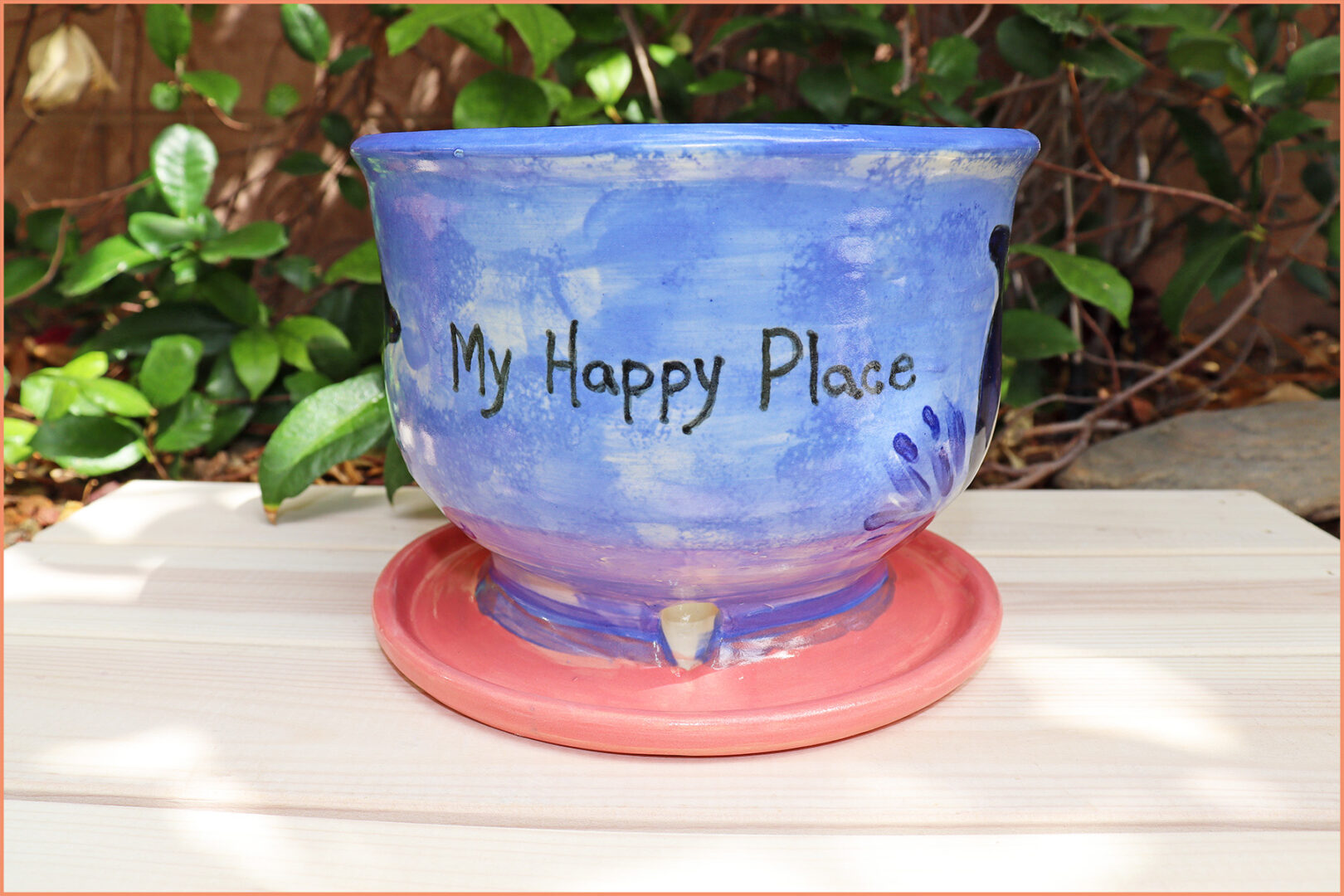
The Underglaze Markers will create a similar effect. They work just like regular markers, and no sharpening is needed. These markers are also recommended to be applied to bisqued pots (ceramic).
Underglaze Transfers and Decals
Underglaze Decals and Transfers consist of underglaze colors printed onto paper or tissue and can be applied to various stages of clay, including leather-hard and bisque ware.
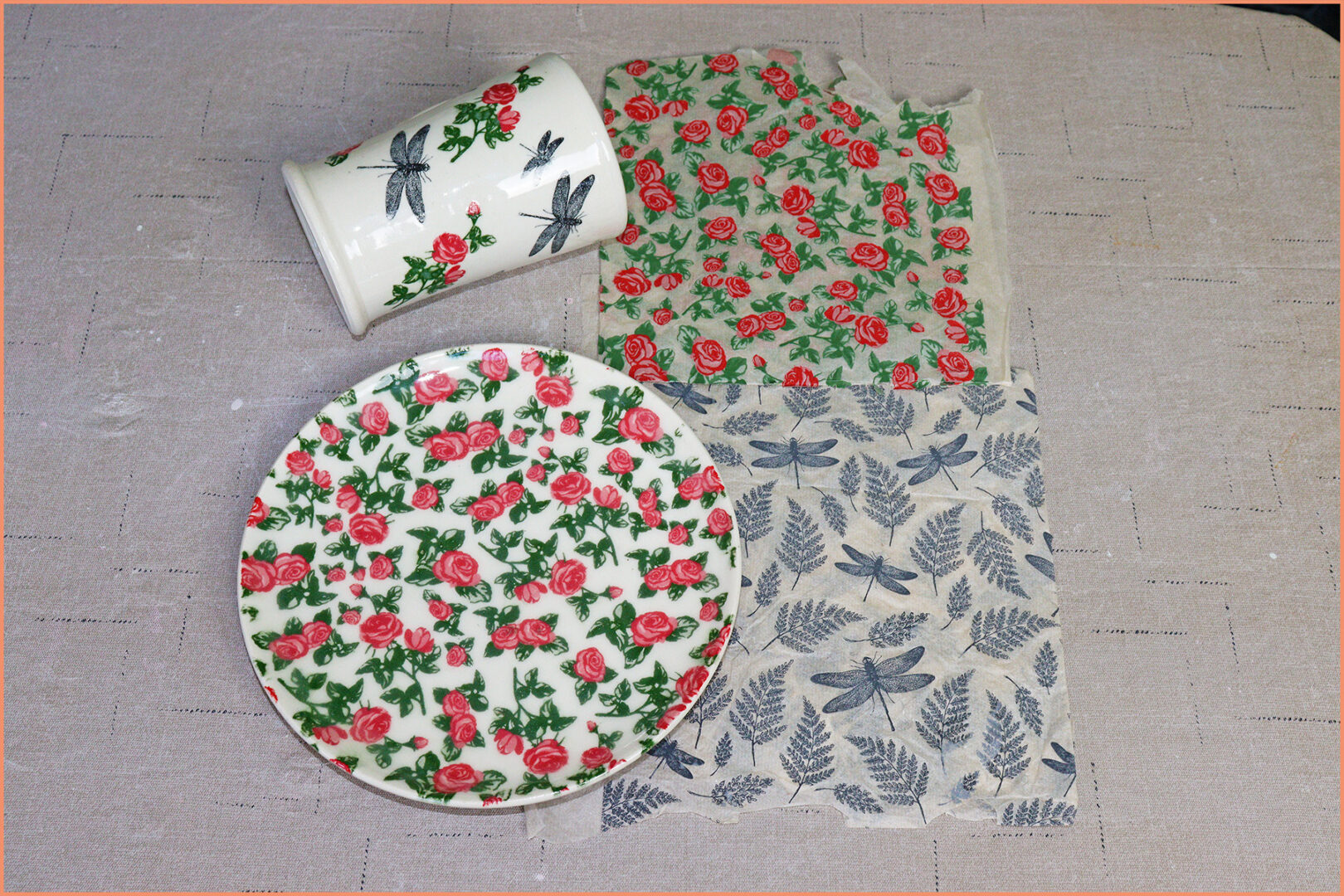
When applying to leather-hard clay, the clay’s moisture helps the transfer adhere smoothly, allowing for a seamless integration of the design. On bisqueware, the process is similar, and though the clay’s absorbency is reduced compared to the leather-hard stage, it can still be done successfully.
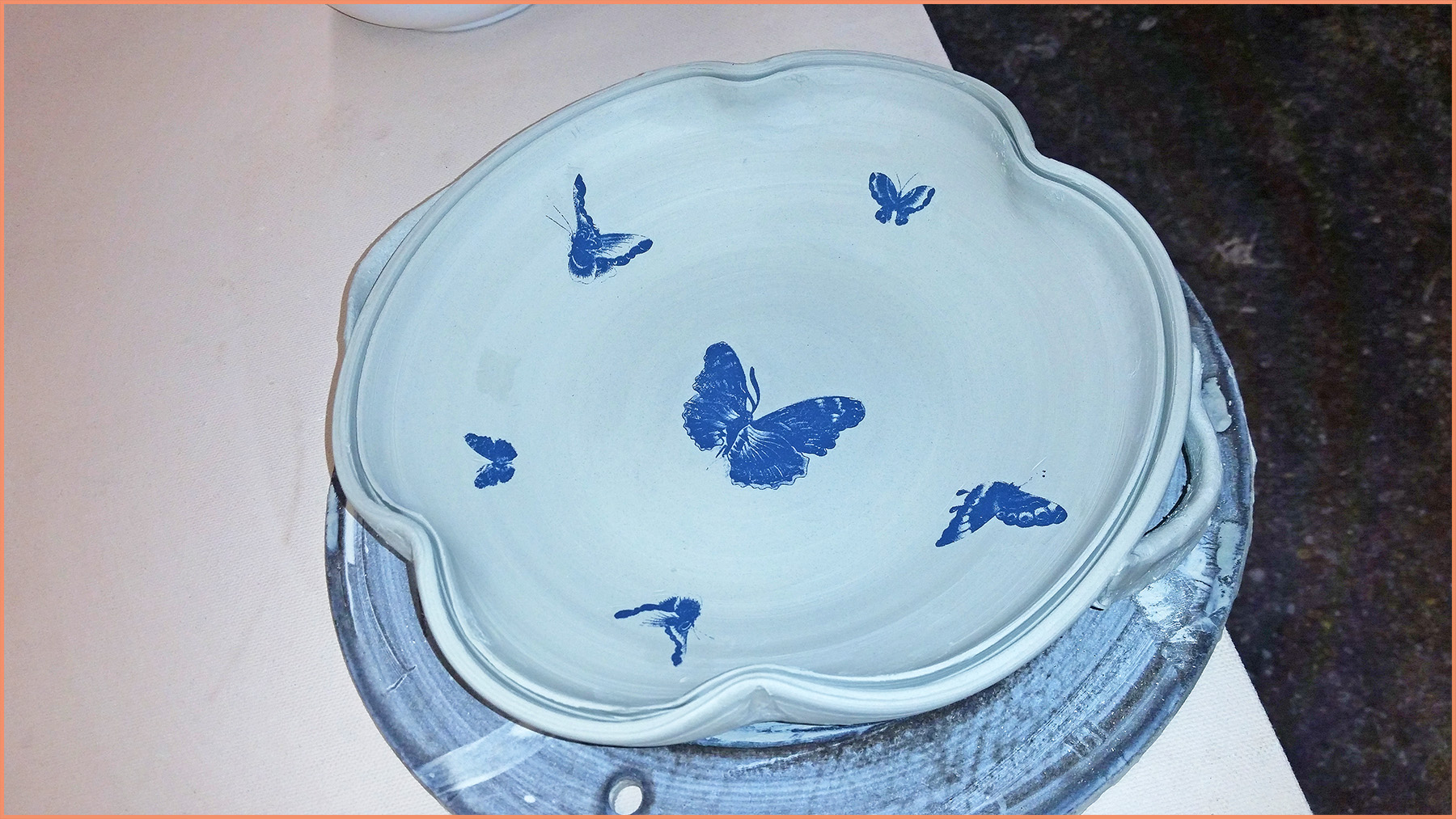
On the other hand, while it is possible to apply these decals to bone-dry clay, it is more challenging. Bone-dry clay lacks moisture, so it absorbs water rapidly from the transfer. This rapid absorption can hinder the transfer’s adhesion, making it difficult to achieve a clean, precise application of the design.
Watercolor Painting
Watercolor painting is done with watered-down underglaze or A Set of 8 Semi-Moist Underglaze Pans. This approach yields beautifully soft effects, making it a favorite among ceramic artists seeking a watercolor aesthetic on their pots.
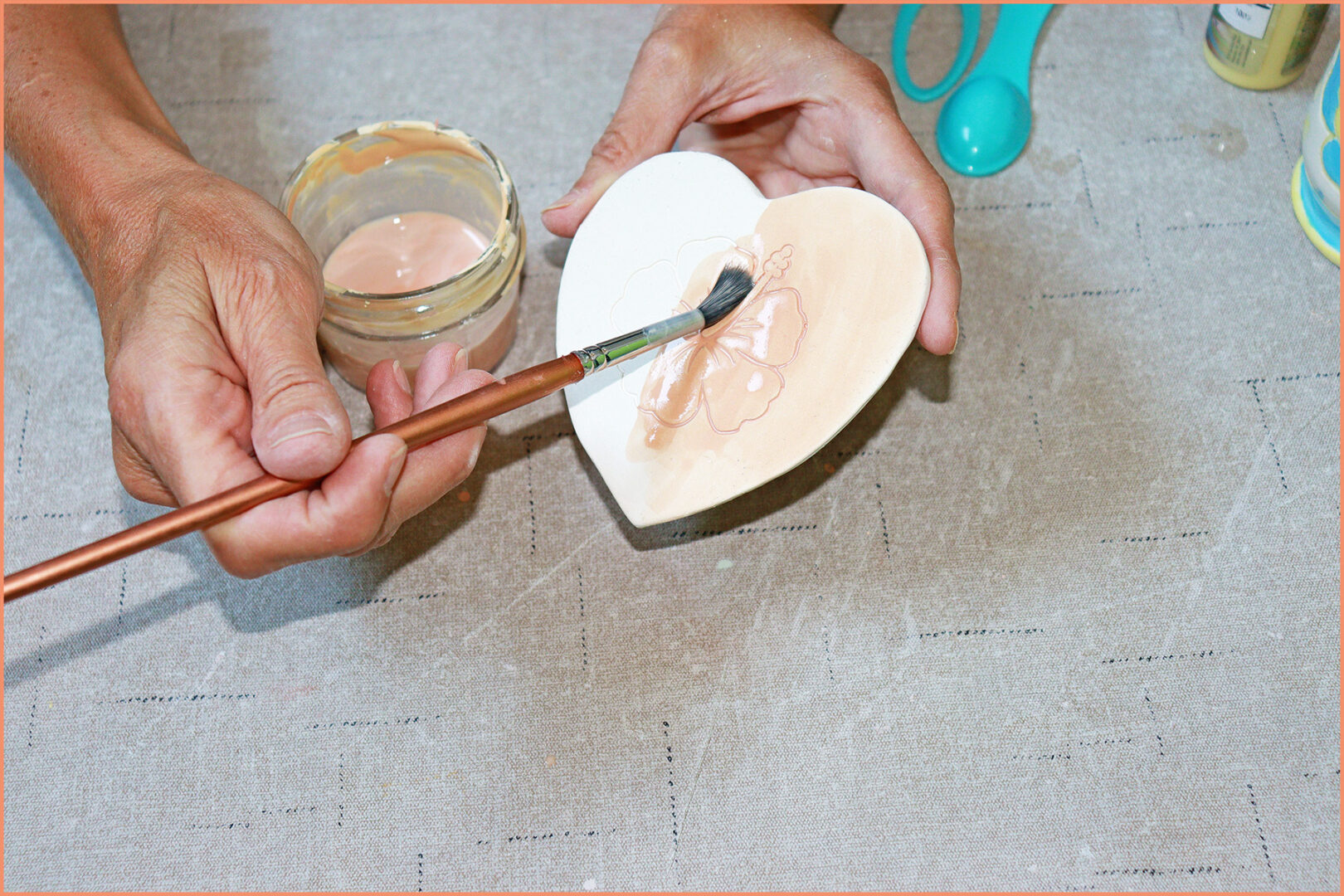
Watercolor painting is best done on bisque-fired clay, as the porous surface of the bisque absorbs the watery underglaze, allowing for subtle blending and gradation of colors, much like traditional watercolor on paper.
Spraying or Airbrushing
Spraying and airbrushing underglaze is a technique widely used in ceramics for its ability to provide a thin, uniform coat of color or speckles of underglaze. This method is particularly effective on both bisqueware and greenware.
The ability to apply underglaze to greenware as well as bisqueware offers flexibility in the creative process, enabling artists to choose the most suitable stage for coloring their pieces depending on the desired effects and the specific properties of the clay and underglaze being used.
Bubble Glazing
The Bubble glazing process involves mixing underglaze with soap and water and then blowing through a straw to create bubbles. These bubbles are then gently transferred onto the pottery’s surface.
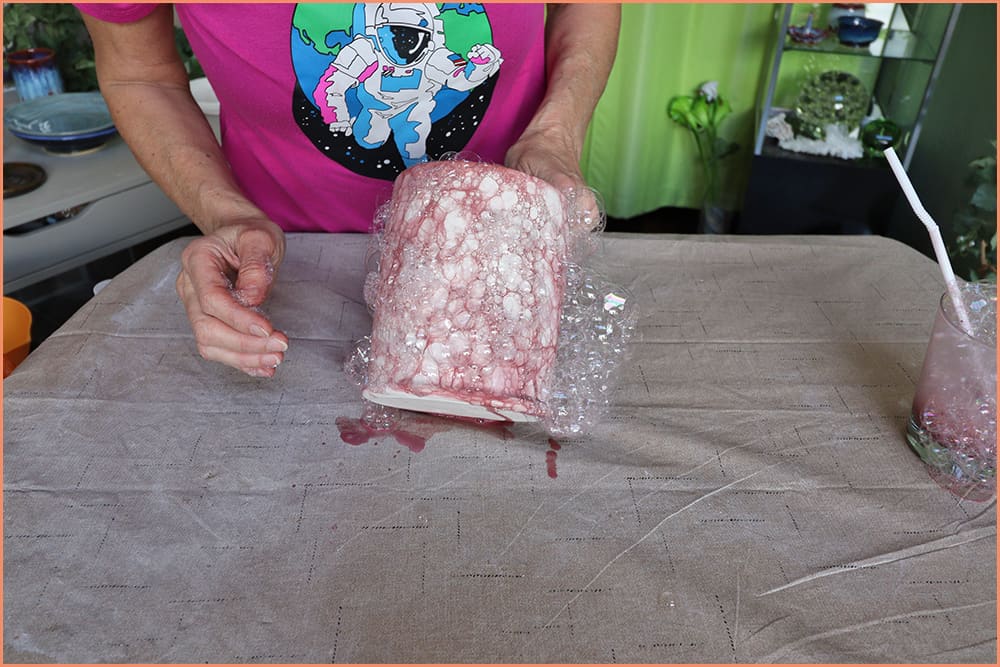
The technique works best on bisqueware because the porous fired clay effectively absorbs the underglaze, allowing the colors to adhere well and appear vivid after the final glaze firing. In contrast, this method is not suitable for greenware.
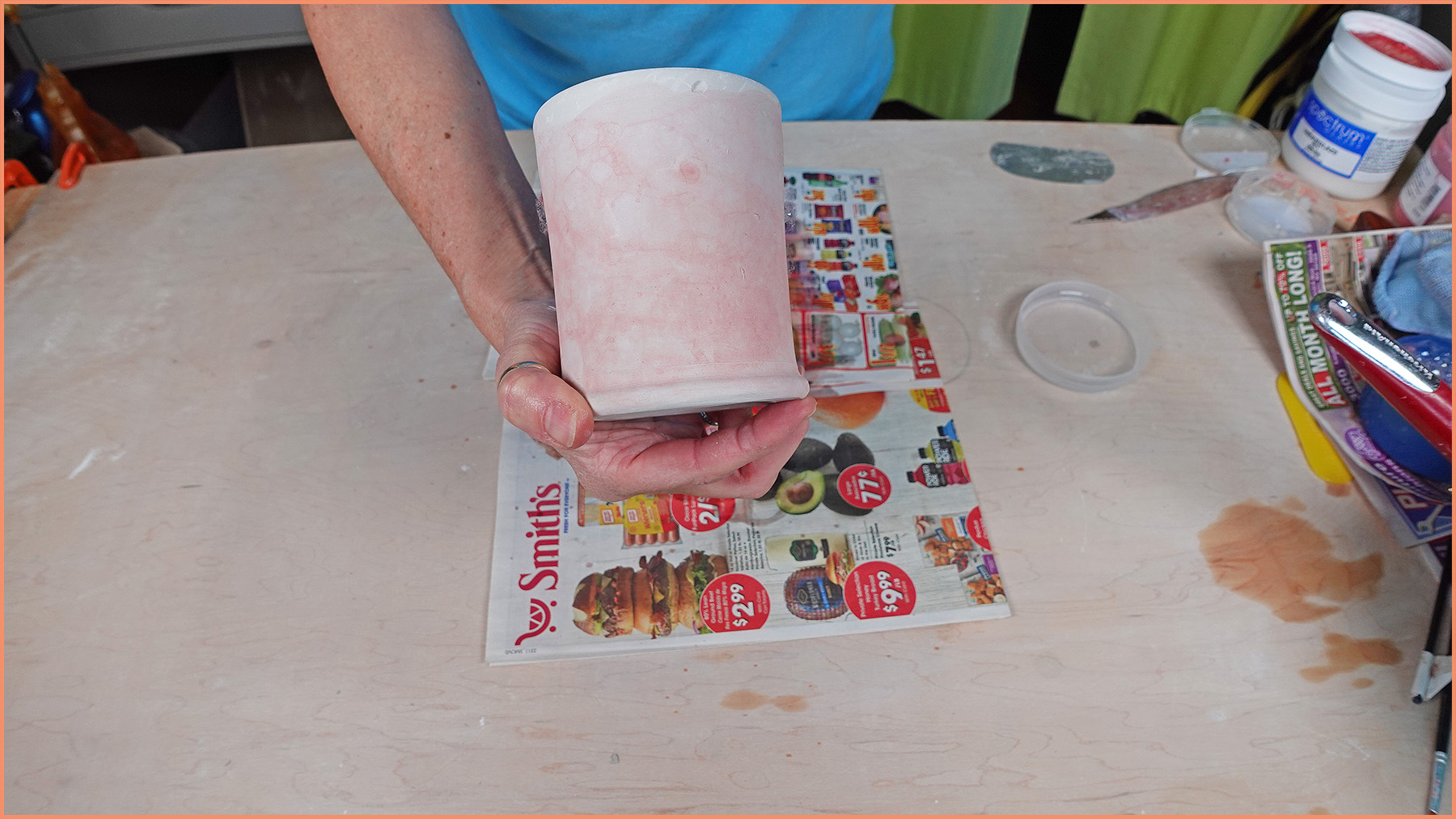
The surface of greenware isn’t porous enough to absorb and retain the underglaze, resulting in poor adhesion and color retention. Moisture in the greenware can also cause underglaze to run or smear, resulting in a less-defined bubble pattern. Thus, for successful bubble glazing, bisqueware is the preferred choice.

To learn more about how to bubble glaze, you can check out this article: Bubble Glazing | Tips Tools And Ideas
Stenciling
Stenciling is a versatile and creative technique for adding patterns and designs to both greenware and bisque ceramics. Underglaze can be applied to a stencil using an airbrush, sponge, or brush, depending on the desired effect. Care must be taken to ensure the underglaze doesn’t seep under the stencil’s edges, which would blur the design.
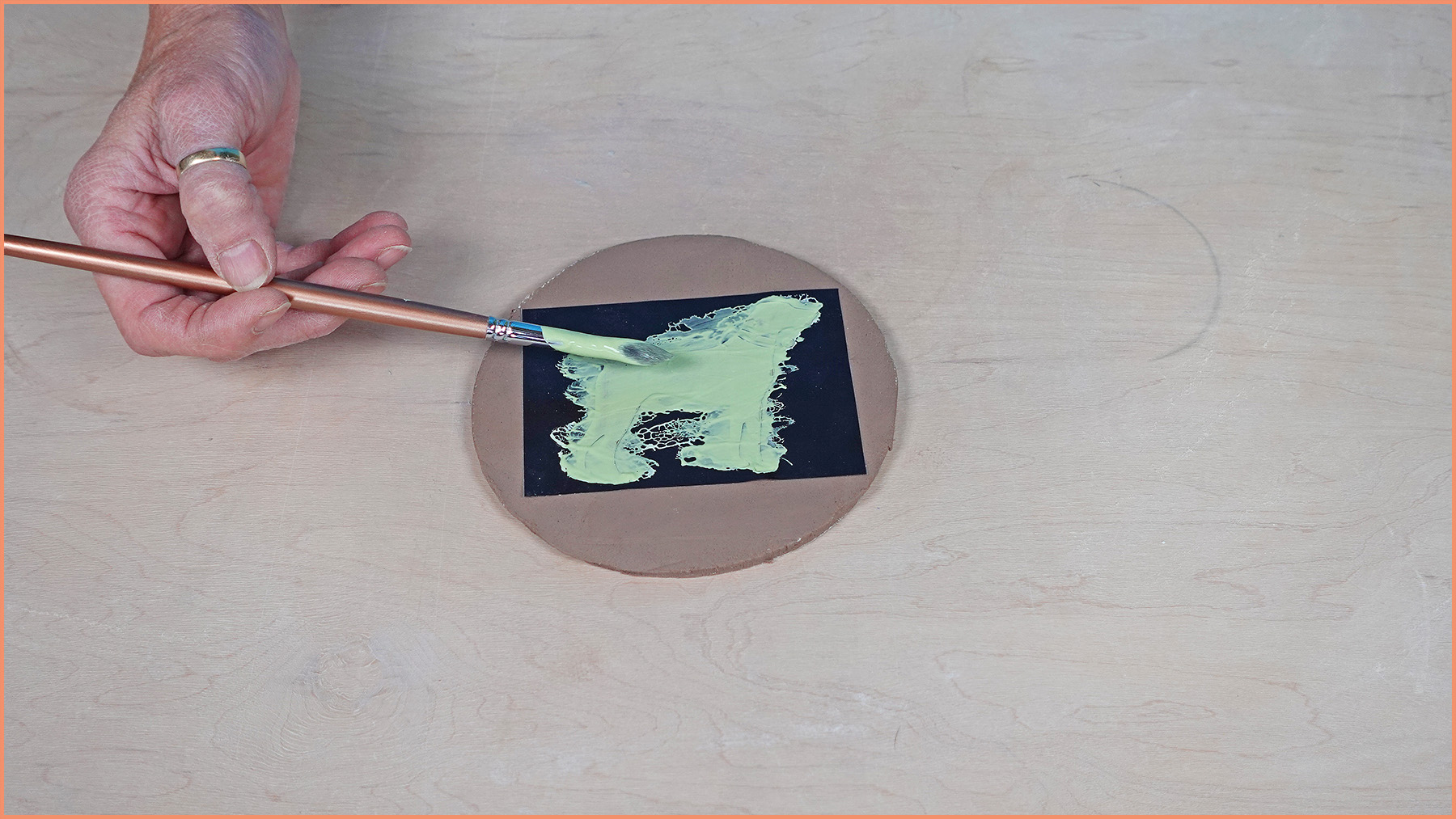
This technique is suitable for different stages of clay work: it can be used on bone-dry clay and bisqueware, as the tape used to secure the stencil adheres to these surfaces. Interestingly, stenciling can also be applied to leather-hard clay, where the clay’s natural moisture allows the stencil to adhere directly without tape.
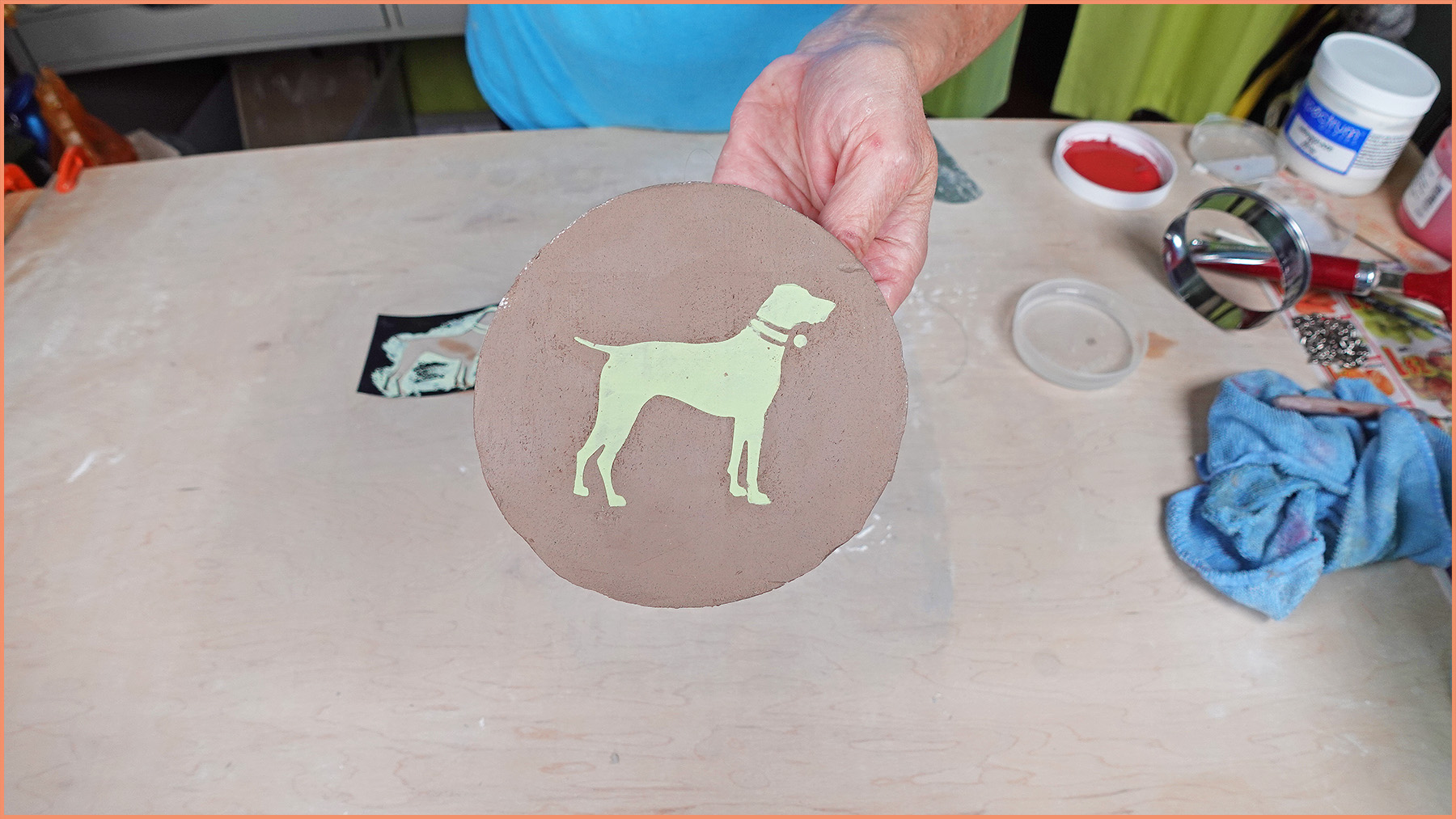
This flexibility makes stenciling a popular choice for ceramic artists seeking to add detailed and precise decorative elements to their work.
Splatter
The splatter effect using underglaze is a creative method that adds a cool, abstract look to the piece. This method involves flicking or splattering underglaze onto the surface of the piece. While it’s possible to apply this effect on bone-dry clay, I found this method is much more effective on bisque ware.
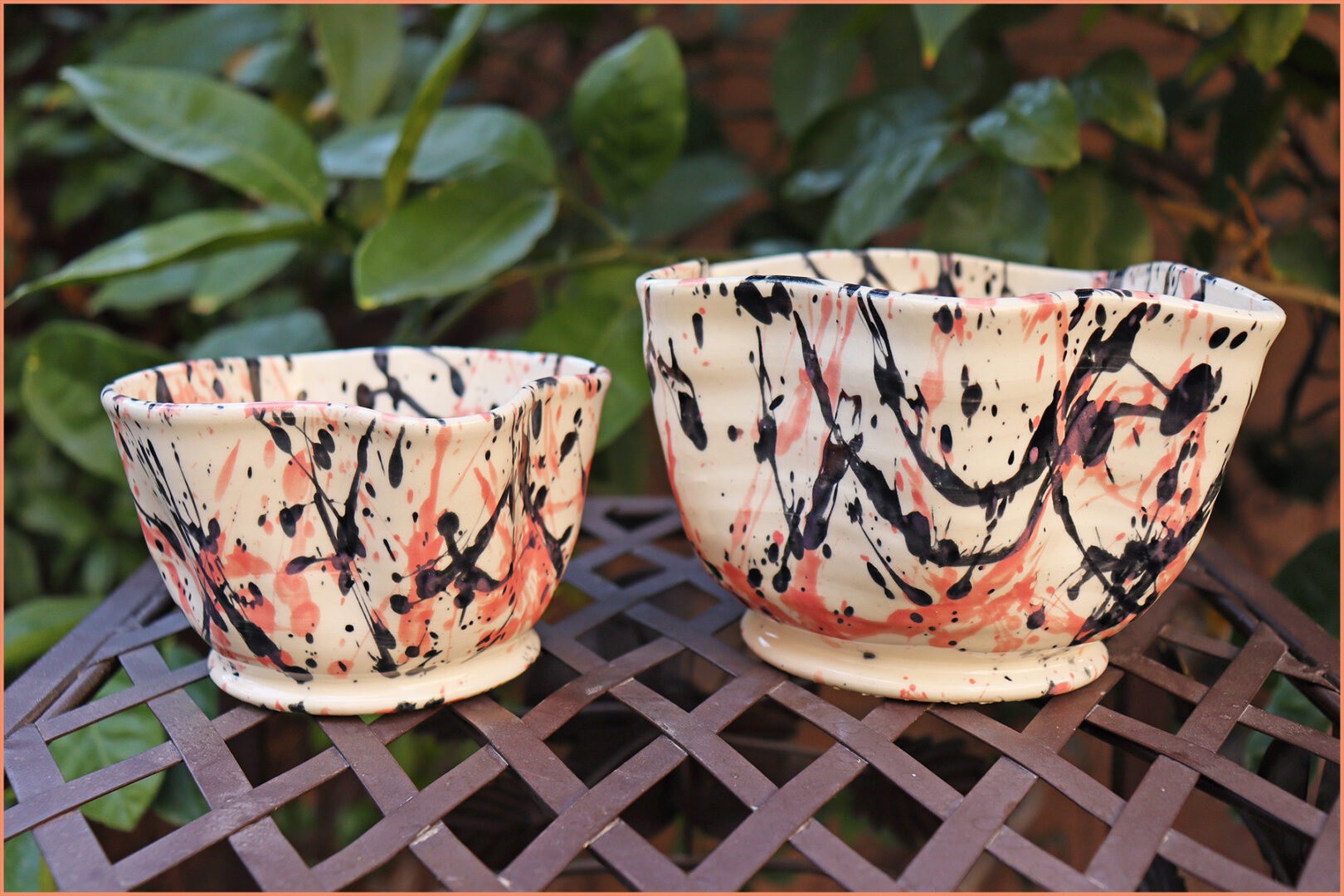
Bisqueware, once fired, provides an ideal surface that absorbs watered-down underglaze efficiently, allowing for more controlled, aesthetically pleasing splatters.
In contrast, applying the same technique to leather-hard clay, which still retains moisture, can cause excessive underglaze dripping. This is because the clay’s damp surface causes the watered-down underglaze to flow rather than splatter, resulting in less-defined and potentially unwanted effects.
For more information on the Splatter method, you can check out this video, How to Splatter Underglaze on a Mug, a Bowl, and a Plate.
Silk Screen
Silk Screens require a special Silkscreen Medium to be mixed into the underglaze. This thickens the underglaze, allowing intricate designs to be transferred onto the pottery surface. Because of the medium used, it is best applied with a brush or your fingers.
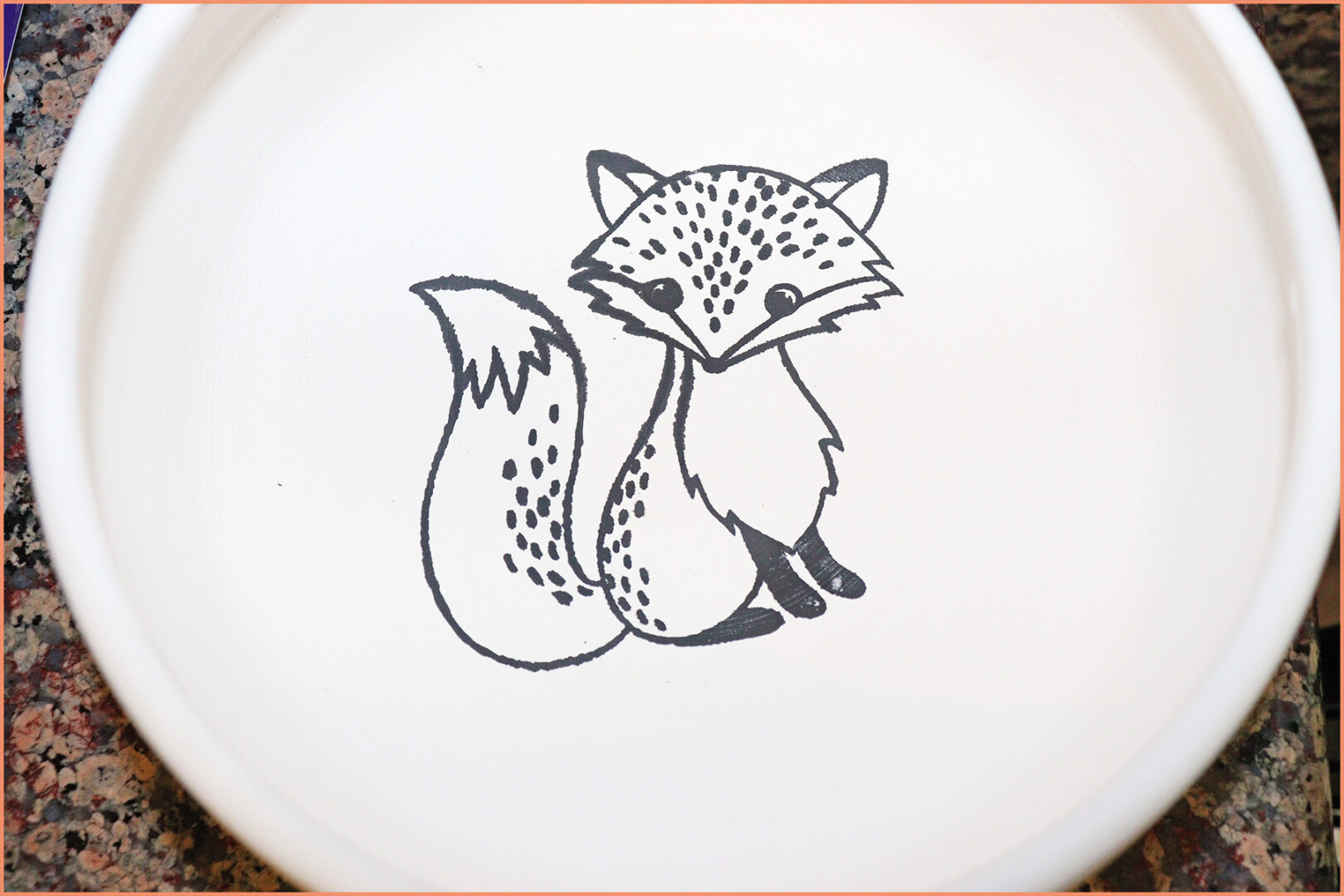
The method can be done on both greenware and bisqueware. However, I prefer to apply silk-screen designs to greenware. The reason is that the medium used in the silk-screening process tends to make the underglaze less adherent, increasing the risk that the design will come off easily when a clear glaze is applied over it. Applying the design to greenware ensures the design remains intact after the bisque firing.
Can you put underglaze on the bottom of greenware or bisqueware?
Yes, you can apply underglaze to the bottom of both greenware and bisqueware. However, there are some considerations to keep in mind when applying underglaze to the bottom of these pottery pieces.
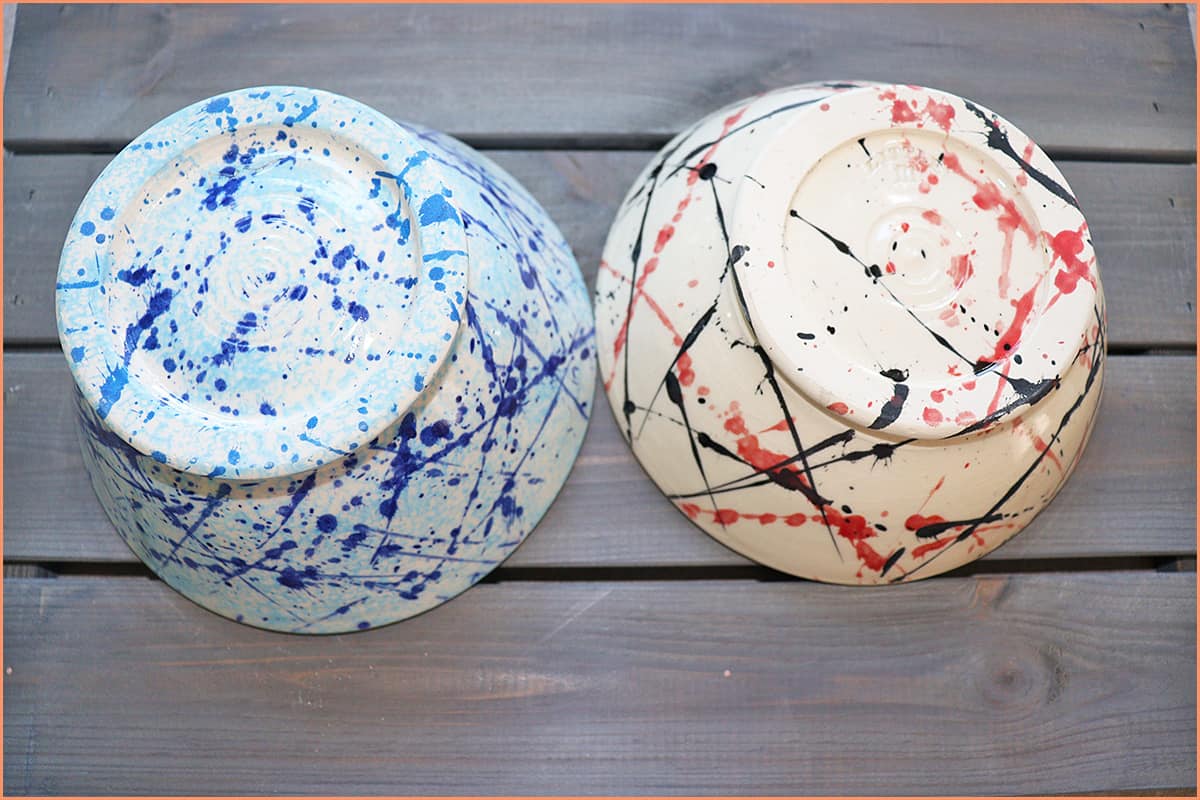
When applying underglaze on greenware or bisque, if applied too thickly, some underglazes might stick to the kiln shelf. To avoid this, it’s best to keep the application on the bottom of your piece on the thinner side, and if you do not own your own kiln, get approval from your studio before using an underglaze on the bottom of your piece, or use a Cookie.
In Summary
In essence, choosing between applying underglaze to greenware or bisqueware depends on your preferences, the method you use, and the specific project you are working on. Consider the advantages and pitfalls of each method, as well as your own comfort level with handling the different stages of clay, to make an informed choice.