
How to Spray Glaze Pottery | Pottery Glazing Tips
Decorating pottery through spraying is very popular and relatively simple. Spray techniques are used on both clay and bisque to layer them with colors, textures, and slips. Transparent and colored glazes can also be applied using sprays.
Spray glazing is a learning process that requires much practice and experimentation to master. The type of clay and kiln you use affects the final results. You may need to apply multiple coats of glaze and wait with patience as each layer dries. But if you’re enthusiastic about pottery, all you need to do is equip yourself with a few techniques that will help make your creative ideas come to life!
Affiliate Disclaimer: We are ambassadors or affiliates for many of the brands we reference on the website. As an Amazon Associate, I earn from qualifying purchases.
How to Properly Spray Glaze Your Pottery:
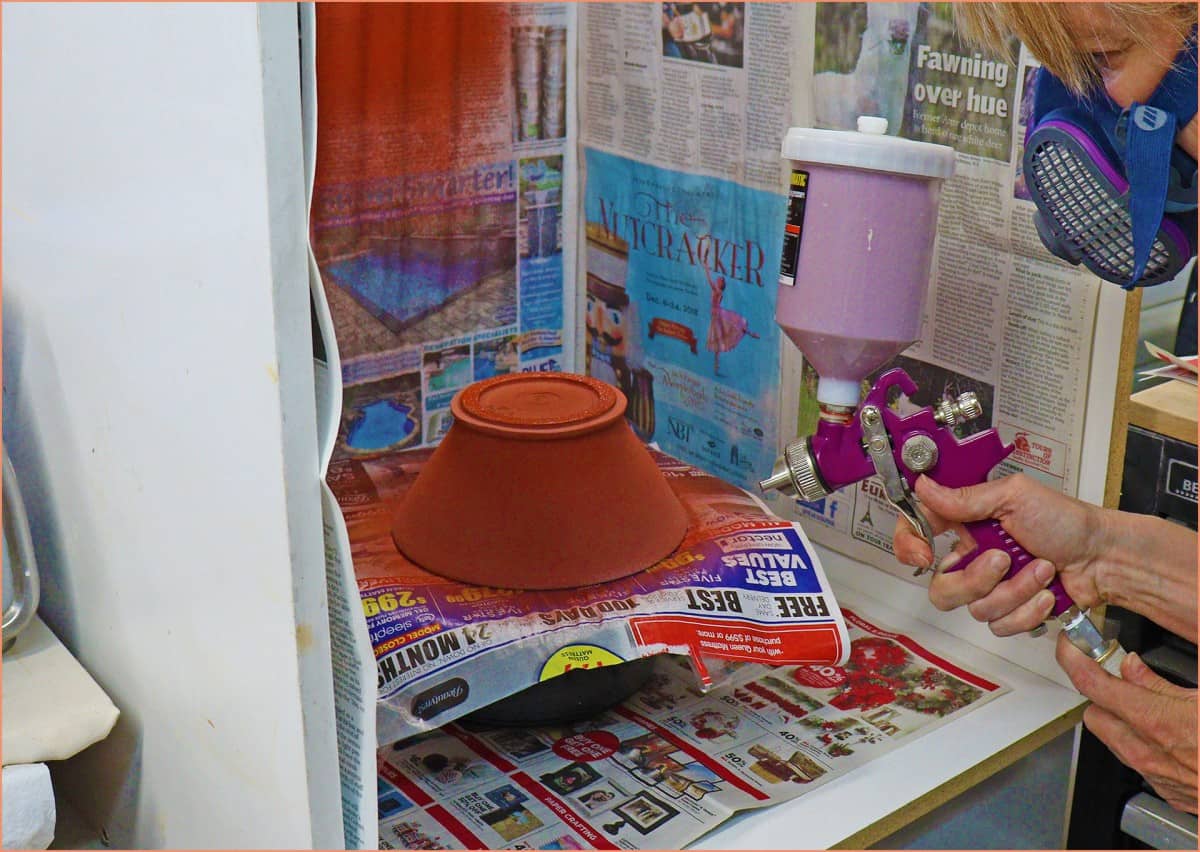
- Take the necessary precautions. Go to a spray booth or some other well-ventilated area before spray glazing. Wear a mask, goggles, and gloves to protect yourself from Glaze Dust.
- Pass the glaze through a Strainer or Sieve so that it passes through the air gun’s nozzle.
- Place the pottery pieces on a handwheel or banding wheel, then rotate it to spray the whole piece.
- Hold the sprayer steadily at a good distance, ensuring the layer of glazed spray has an even texture.
- Clean the nozzle of the sprayer after each use to prevent clogging.
1. Test the Clay and Glaze’s Compatibility
Every eye-catching piece of pottery starts with the right combination of clay and glaze. When you’re picking a glaze, make sure it goes along with the type of clay you’re using to prevent Bubbling, Cracking, and Crazing.
To figure this out, test the glaze on a small piece of pottery before moving on to larger batches.
For ideal results, find a glaze whose fire temperature range matches the firing temperature range of the clay material you’re using. You should never take any chances, especially with a pottery piece you’ve worked so hard on.
2. Note the Experiment
After each compatibility test, note the combinations of clay and glaze that work (or do not). Keeping track of the recipes that worked well for you makes it easier the next time. It’s important to document the bad recipes too, because you may forget and waste your glaze on the same recipe that didn’t work before.
3. Keep the Oils Away
It’s basic science; oils repel glaze. If you want your glaze to adhere to your pottery, avoid using any oils or lotions. Wash your hands thoroughly or wear rubber gloves when glazing pottery, because the natural oils on your hands can clog the pores in the pottery, preventing the glaze from soaking into the piece. Unsoaked glaze can crawl, lift, and create undesirable spots.
4. Bisque Fire your Pottery
Glazes manufactured these days do not recommend a single firing. You should have properly bisque pottery before you begin with glazing. Bisque firing creates pores in your pottery so that the glaze adheres nicely. It also releases Organic gases. Bisque firing at Cone 04 is highly recommended for this task.
5. Sand the Bisque
Once your pottery has been bisque-fired, smooth out any sharp edges or points using sandpaper. Wear a mask while sanding the pottery. For finer smoothing, wet the pottery and sandpaper. This keeps the dust from blowing around.
6. Clean the Sanded Bisque Ware
To wipe the remaining dust off your bisqueware after sanding, use a wet sponge. Damp sponges wipe the pottery clean, and, as a bonus, it dries faster. Removing the dust is a really important step to help the glaze bind nicely to your pottery.
7. Wax the Bottom of the Pottery
Waxing the bottom of your pottery piece is a really good trick to prevent glaze from dripping and sticking to it. Just apply a little wax resist to the bottom part. Then you can use all sorts of glazes. If any runs down, wipe it with a damp sponge. It comes right off, thanks to the composition of the wax resist. You can buy it HERE. For more detailed information on Wax Resist, read: Wax Resist Tips – Protect and Decorate Design
8. Properly Mix the Glaze
When spraying glaze, you can’t skip this step; only a finely blended glaze produces good results and reduces the risk of your spray gun clogging.
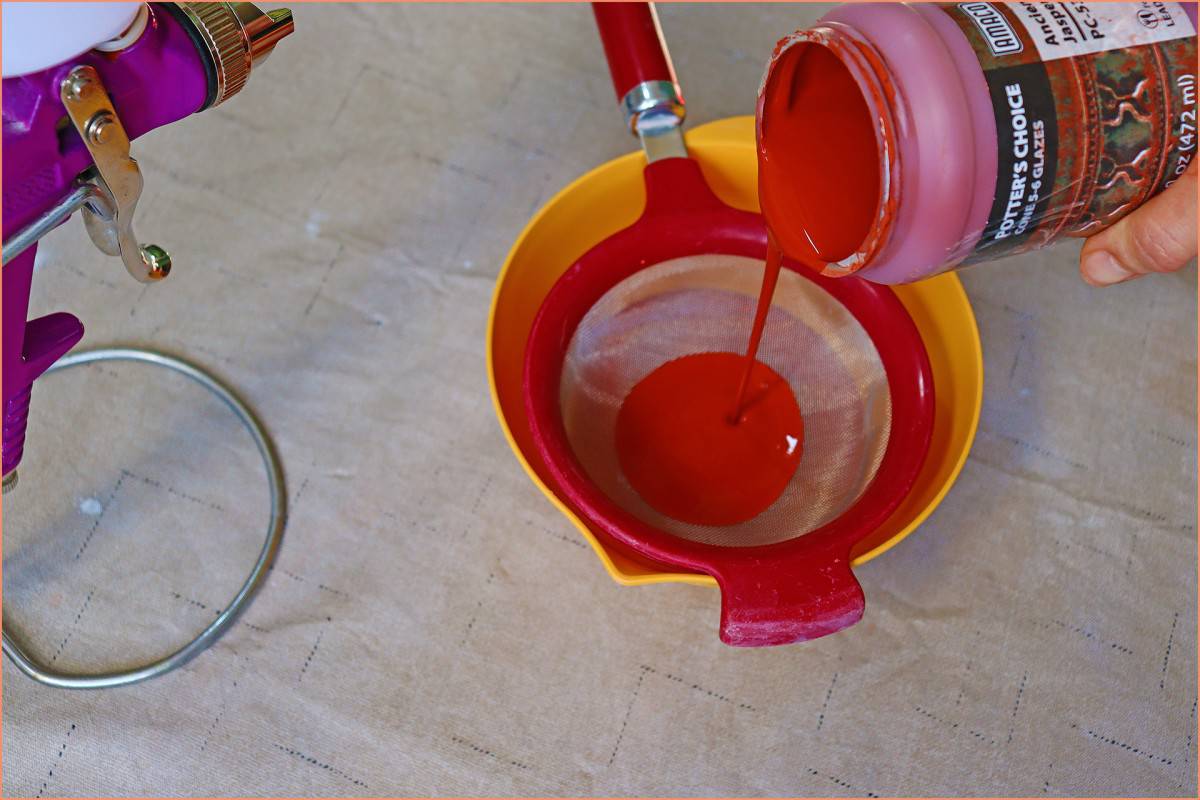
Mix your glaze well, then pour it through a Strainer or Sieve, then remix it. Doing these 3 steps will give your glaze that even consistency you were looking for. If your glaze is too thick, add a little distilled water or Glaze Thinner until it’s the consistency of heavy cream. It will not be fully covered if it’s too thin, or if the glaze is too thick, it will crack. Using an Electric Drill with Mixer will make the task easier.
9. Spray Gun
To spray your glaze, you will need a Compressor and a Spray Gun. A good sprayer is the one you see me using in the example images. It is the Central Pneumatic 47016 High-Volume, Low-Pressure Gravity-Feed Spray Gun. And the California Air Tools CAT-1P1060S Portable Air Compressor. is small and very quiet, and works very well with glazes and underglazes.
10. Your Spray area
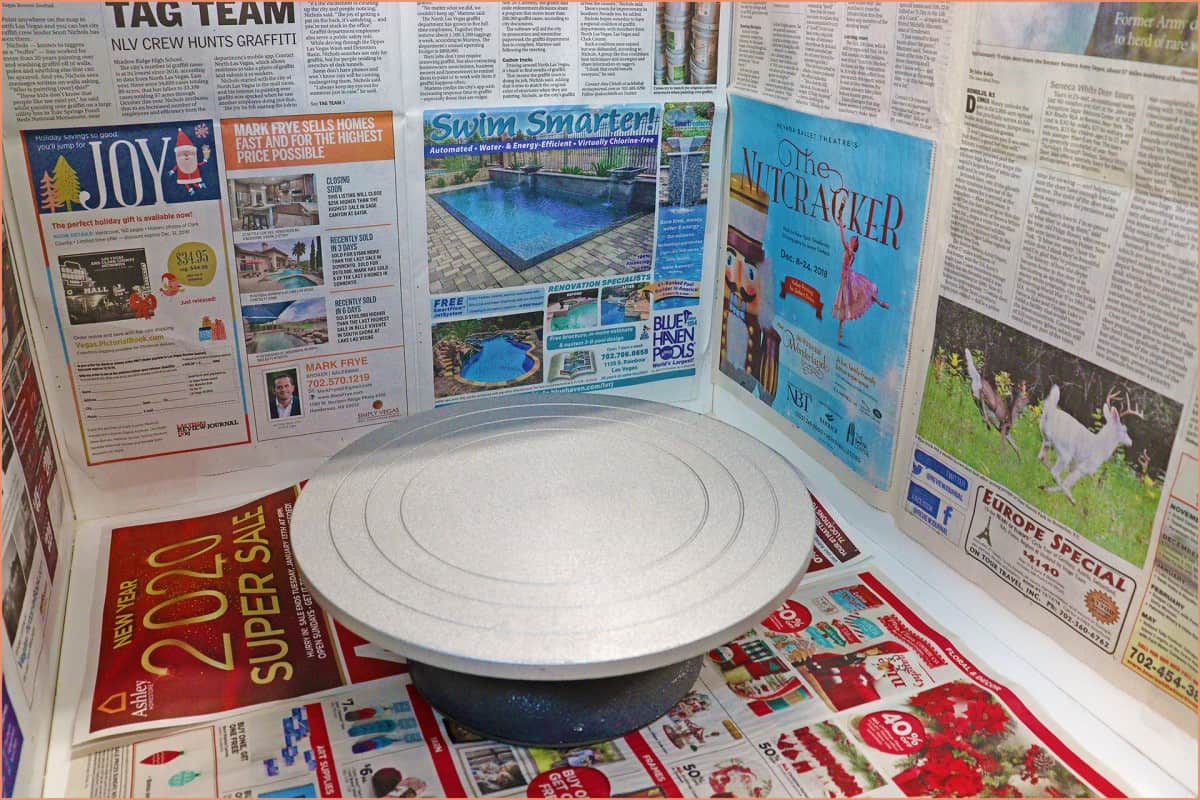
As stated earlier when spraying it is best to take precautions. Besides going to a spray booth or some other well-ventilated area, you can also set up an area outside or set up an area in your Studio and get your own Spray Booth. Covering your booth with paper works best and saves on clean-up time.
11. Test your Spray Gun Before Applying
Test your spray gun to make sure it is spraying out the proper amount of glaze and how much area it is covering before you spray any glaze on your pottery. If the layer applied is too thin or thick, it may cause streaking.

12. Coat Evenly
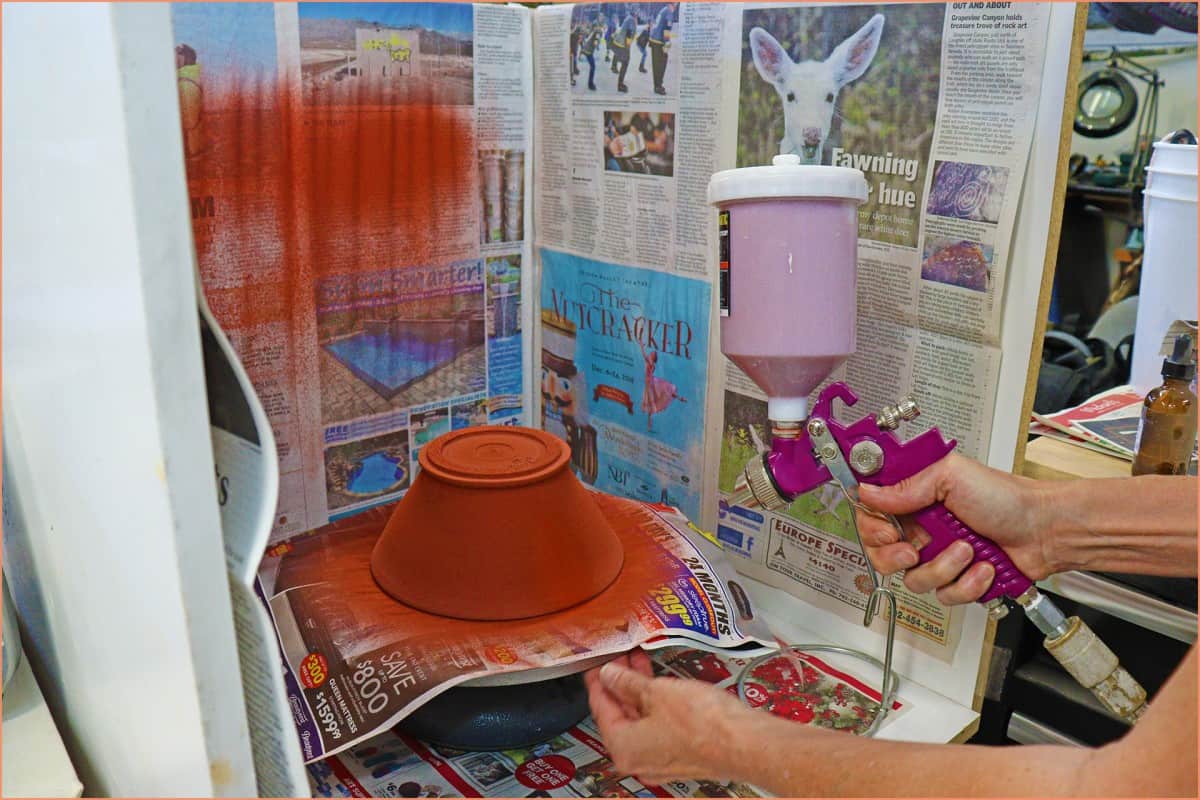
Keep rotating the pottery on the handwheel or Banding Wheel, and hold the gun steadily so the applied coat is even. You can change the spray direction during layering. A proper coating prevents the formation of streak marks.
13. Coat Inside First
If you’re coating both sides with glaze, do the inside of the pottery first. This way, you won’t have to handle or hold the glazed part, lessening the chance of leaving marks or fingerprints.
14. Clean the Nozzle
Clean the nozzle after every 2-3 layers of the same-colored glaze and after each layer of a different colored glaze. This will make the glazing cleaner and finer, and prevent the nozzle from clogging. You can use some warm water to clear the nozzle. Opening up your spray gun and cleaning it out works the best.

15. Thoroughly Dry Each Layer
You’ll end up with a significantly better-glazed pottery piece if you wait for each layer to dry before applying another. Don’t speed up the process; otherwise, the top layer might peel away. The more coats you apply, the more you have to wait.
16. Resist Wiping Drips
If you’ve accidentally sprayed glaze on an area that had already been covered or the runny glaze formed thick spots, don’t get tempted to wipe it. Wait for the glaze to dry properly. If you try wiping wet glaze, you’re likely to smudge it. Use a cleaning tool or sandpaper to carefully and delicately remove the glaze.
17. Check the Thickness
You must keep a check on how much glaze you applied to the pottery. The layer should neither be too thin nor too thick. For comparison, it should be around the thickness of a regular t-shirt. You can check the thickness of the glaze carefully using a fingernail.
18. Use Kiln Wash or Cookie
Kiln Wash helps protect the kiln shelf and your pottery. The wash resists glaze and other liquid substances. You can brush it on the kiln shelf to prevent pottery from sticking to it. Or use a bisque cookie. Click here to get more information on protecting your kiln shelves.
If you would like to know how to make Kiln cookies, I have an article that shows you here – How to Make Kiln Cookies in 6 Easy Steps – With a Video
19. Get a Rotary Tool
Have you laid down a very thick layer of glaze? Or did you forget to sand the sharp, pointy edges? Just get a handheld rotary tool, and those worries will be gone. Not only is the tool useful for grinding melted glaze off the pottery, but it can also be used to sand the remaining parts.
20. Don’t Use Multiple Glazes
You might think using more than one glaze simultaneously saves time, but it only results in more errors. After application, glazes start to separate rather quickly. The more glazes you use, the longer they sit out and separate.
Since the final result of a glaze can only be seen once it’s been fired, they easily mix up. Using a single glaze at a time helps you stay organized and create beautiful pieces.
21. Dry the Glaze Properly
Your glazed pieces need adequate time to dry, just like your greenware. If the glaze feels cold upon touching, it’s not dry. You should only put it in the kiln when it’s room temperature.
Glazes dry faster than greenware, but you should leave them out overnight just in case. You may load the kiln the next morning.
For more tips on glazing, check out Glazing Pottery | 27 Glazing Tips For Beginners
Conclusion
Spray glazing is another wonderful way to glaze and underglaze. It gives you nice, even coats that just float across your pottery. All of these tips are good to follow to increase your success rate. After all the work you put into creating a piece of art, you want your glaze to look great.