
How To Use a Pottery Kick Wheel (Ultimate Guide)
Kick Wheels are one of the earliest ways to Throw Pottery on a Wheel. They are used to make functional and decorative pottery pieces and have been in use since 4000 BC in the Sumerian civilization. Modern technology has not led to the demise of The Kick Wheel. Many potters still enjoy using them as their Primary Pottery Wheel.
Operating a Kick Wheel can be confusing and a little intimidating. I know I was a little nervous the first time. Follow along as I help you take away some of the fear and confusion in my Ultimate Beginners Guide on How To Use a Pottery Kick Wheel
Affiliate Disclaimer: We are ambassadors or affiliates for many of the brands we reference on the website. As an Amazon Associate, I earn from qualifying purchases.
How to Use the Kick Wheel to Get Started
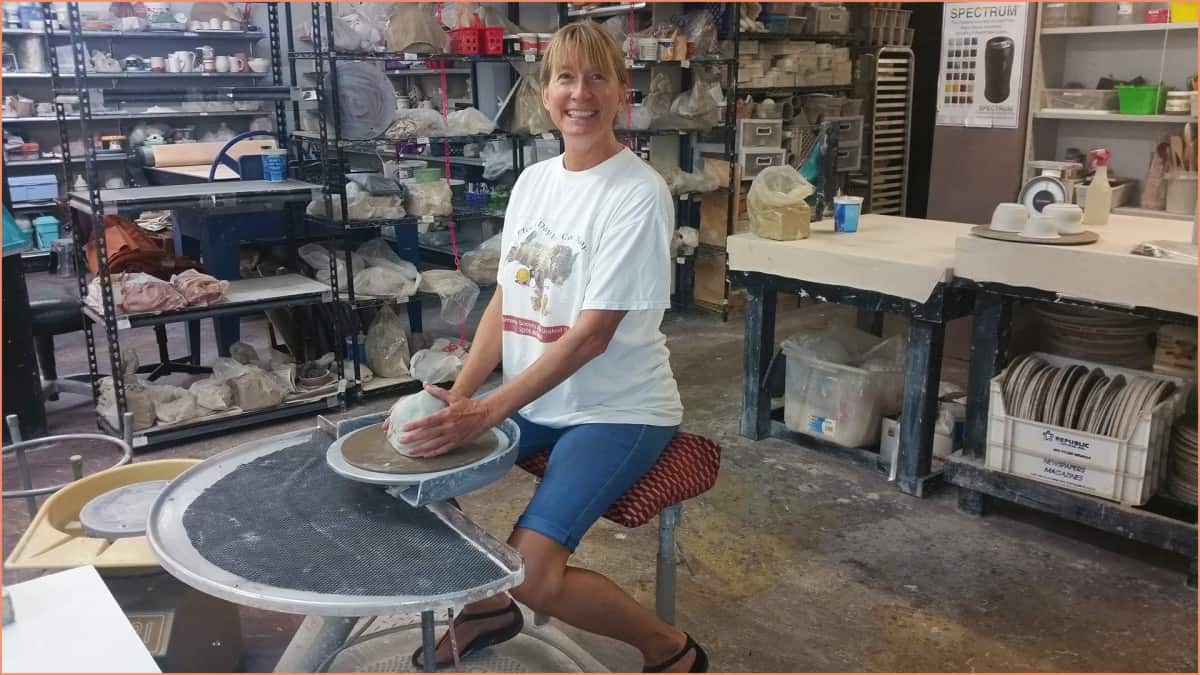
A Kick Wheel is a manual spinning wheel that potters use to make clay vessels. Having no motor makes it easier to maintain. Plus, with no electricity needed, you can go green unless you want an optional motor.
Kick Wheels have a steel or wooden frame and a heavy concrete or steel flywheel. Usually, a 14″ cast aluminum wheel head. An Adjustable seat and worktable in front of the wheel head.
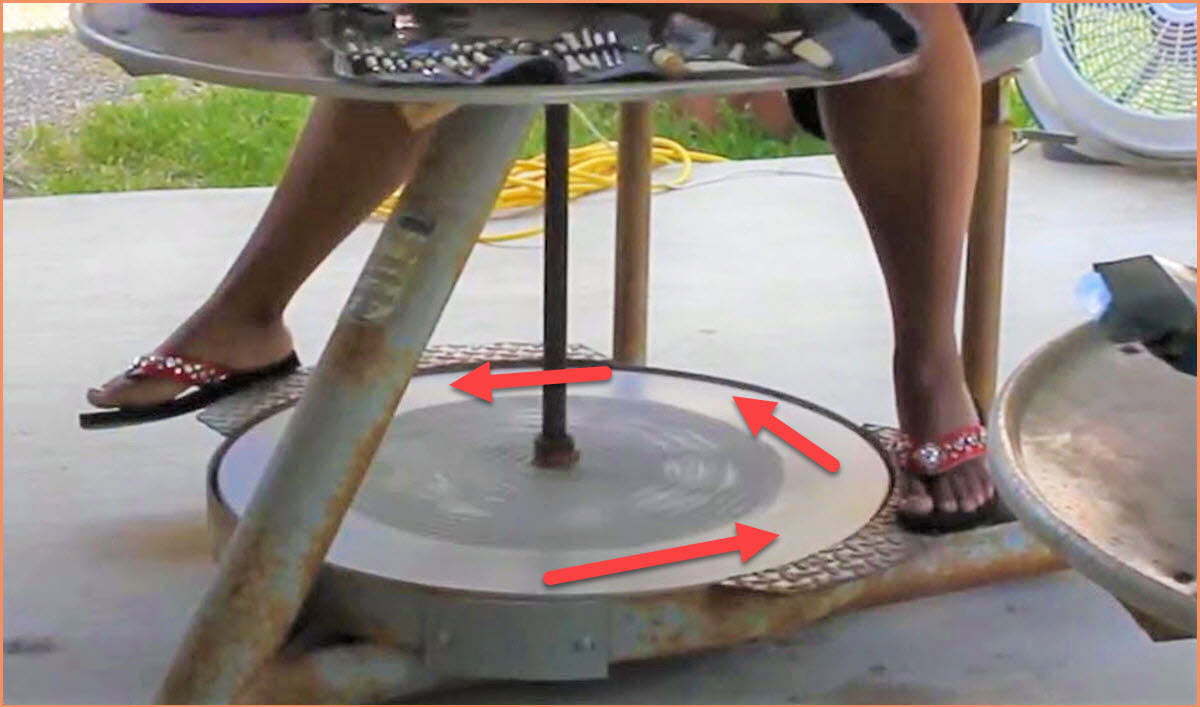
Using a kick wheel involves kicking the heavy flywheel in a counterclockwise or clockwise direction, controlling its speed with the potter’s foot, and using the wheel’s momentum to mold your clay.
Although kicking sounds simple, it actually requires some skill, balance, and concentration to operate the wheel as you throw the pottery.
Because not all clays are alike, make sure you have the right Clay for throwing on the Kickwheel.
How to Adjust the Kick Wheel Seat Before Sitting
Before you begin your pottery-making process using a kick wheel, you should adjust the seat. This will ensure that your body is well-positioned to kick the wheel and create your pottery.
To adjust your kick wheel’s seat, you can lift it out and turn it around to adjust the space between you and the throwing surface. You want to be seated close to the wheel head.
After that, lower or raise the seat’s height, depending on how high the wheel is. This is to ensure you sit comfortably and can reach the throwing surface and throw your clay effectively.
How to Maintain and Increase the Kick Wheel Speed
After the flywheel has started moving, you can increase its speed to prepare for the throwing pot technique. To increase the kick wheel’s speed, kick the flywheel as you move your foot closer to the center (toward the axle).

Kicking closer to the center will not tire you as the wheel head will gain speed in a smooth rhythm, unlike trying to kick the flywheel harder around the edges, which will require more effort and time. The wheel head’s momentum will last for several minutes.
How to Center Your Clay on The Kick Wheel
This process involves slamming the clay on the wheel head to ensure that it sticks to the wheel surface. This must be done before you start spinning the wheel.
Wet the wheel head lightly with a damp sponge and slam the clay ball at the center of the wheel.
To make the wheel head start moving, kick the outside top edge of the flywheel using your foot in a counterclockwise (right-handed) or clockwise (left-handed) direction. The benefit of having a kick wheel is that you can easily go forward or reverse. For more information on the direction in which your wheel should turn, check out Which Direction Should a Potter’s Wheel Turn.
You don’t want to move your knee up and down because it will make your upper body move more. You want to keep your knee as still as you can while kicking the wheel.
To center the clay properly, increase the wheel head speed by kicking the flywheel. Then, start centering your clay. Applying force to the clay will slow the kick wheel down. Kick the center of the flywheel to increase the speed of your wheel head.
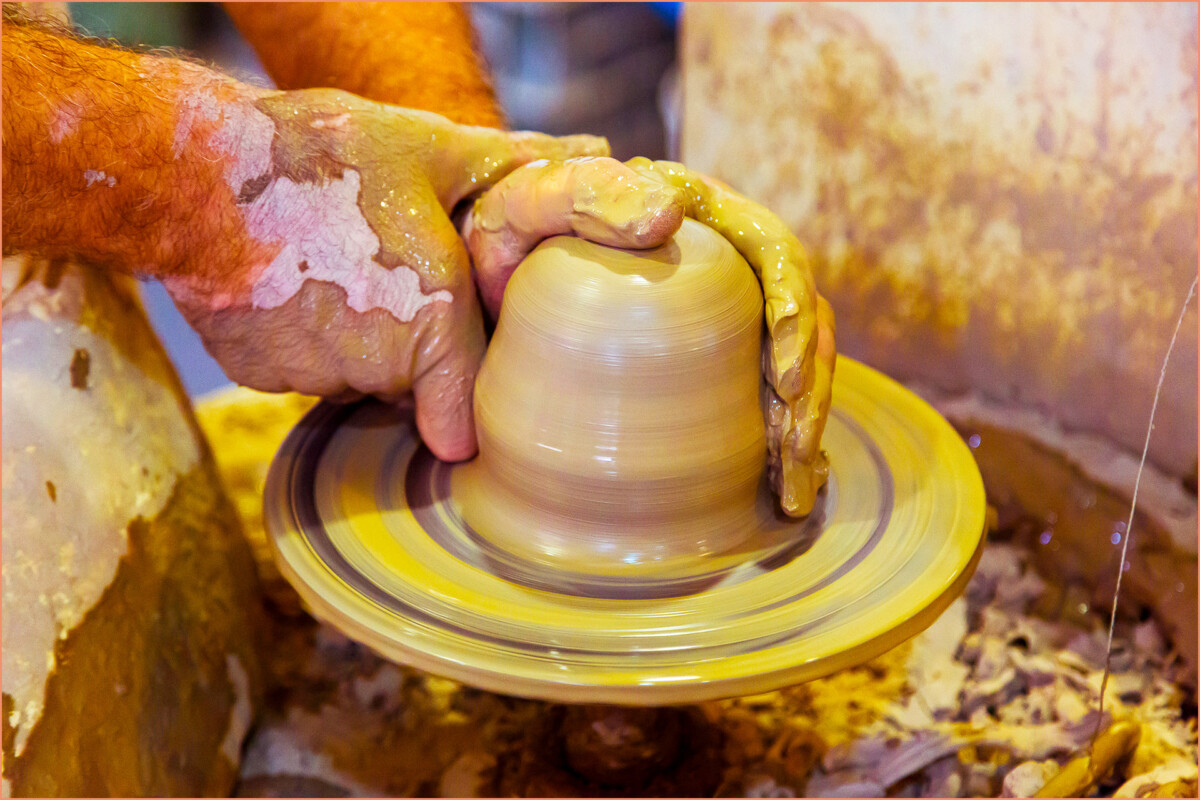
As you open your clay, try not to kick the wheel. Slowly release your hands from the clay and continue to kick the inside of the flywheel.
For more detailed information on centering your clay, check out this video. How to Center Clay on The Wheel Easy A 5 Step Beginners Guide
How to Open Your Clay in the Center
Once your clay is centered, the next step is to open the clay. It’s a straightforward process that involves making a hole in the middle of the clay. However, you can use different methods to open the clay, depending on your skills or preferences.
The flywheel of the potter’s kick wheel can be quite heavy. As you kick, the momentum of the wheel speeds up, and you can start working on the Clay as the wheel head spins.
Push your forefinger (or thumb) in the middle of the clay. Or a half inch if you are planning on trimming the bottom. Use your other hand to hold the clay in position, making it stable.
When the momentum of the flywheel starts to slow down. Slowly release your hands from the wheel and continue kicking towards the center of the wheel.
Form the Base of the Clay and Compress the Bottom
This step enlarges the hole you created in the previous step to form the base, then pulls up the walls of your pot.
During this process, you will have to release your hands from the clay more often and kick the flywheel to continue a higher speed on your wheel head.
Place your fingers inside the hole and push them slowly toward the edges. Use your other hand to support the wall that forms on the spinning clay. Continue pulling the clay until the opening enlarges to your desired width. Then compress the bottom.
Pull up the Walls
You can start slowing your wheel down as you pull up the walls. Go with the wheel’s momentum as it starts to slow down. Then kick the flywheel to continue your desired speed. Because of the weight of the flywheel, you shouldn’t have to kick it as often.
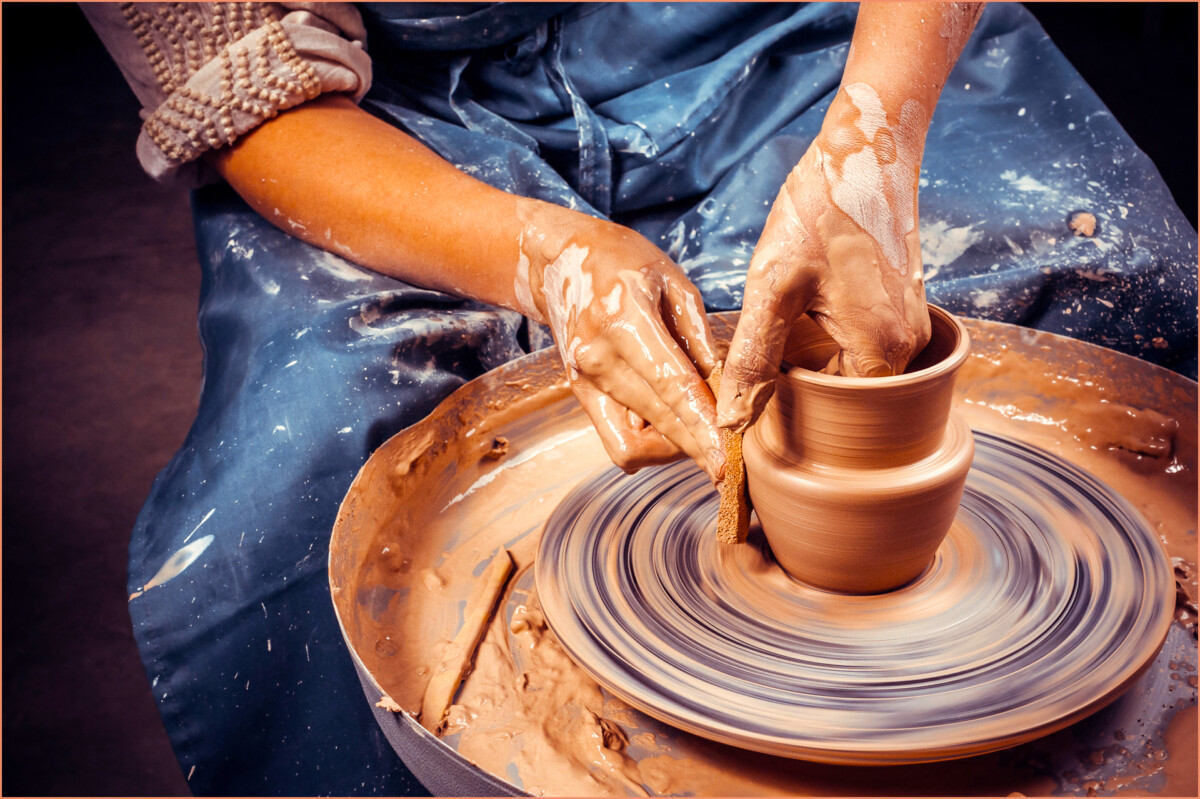
If you are not familiar with throwing a cylinder Here is a helpful video on throwing a mug
Continue controlling the wheel’s speed throughout this process by kicking the kick wheel in between throwing your pot. Allow the weight of the flywheel to spin on its own when throwing.
Shape and Finish Your Pottery
Your pot’s top may become uneven as you thin out the walls. So, shaping and finishing may involve several additional steps depending on what shape you want to create.
Now, the basic shaping step involves slowing the flywheel down as you smooth out the pot’s sides and even its rim. To do this, cut off the undesired parts using a needle tool.
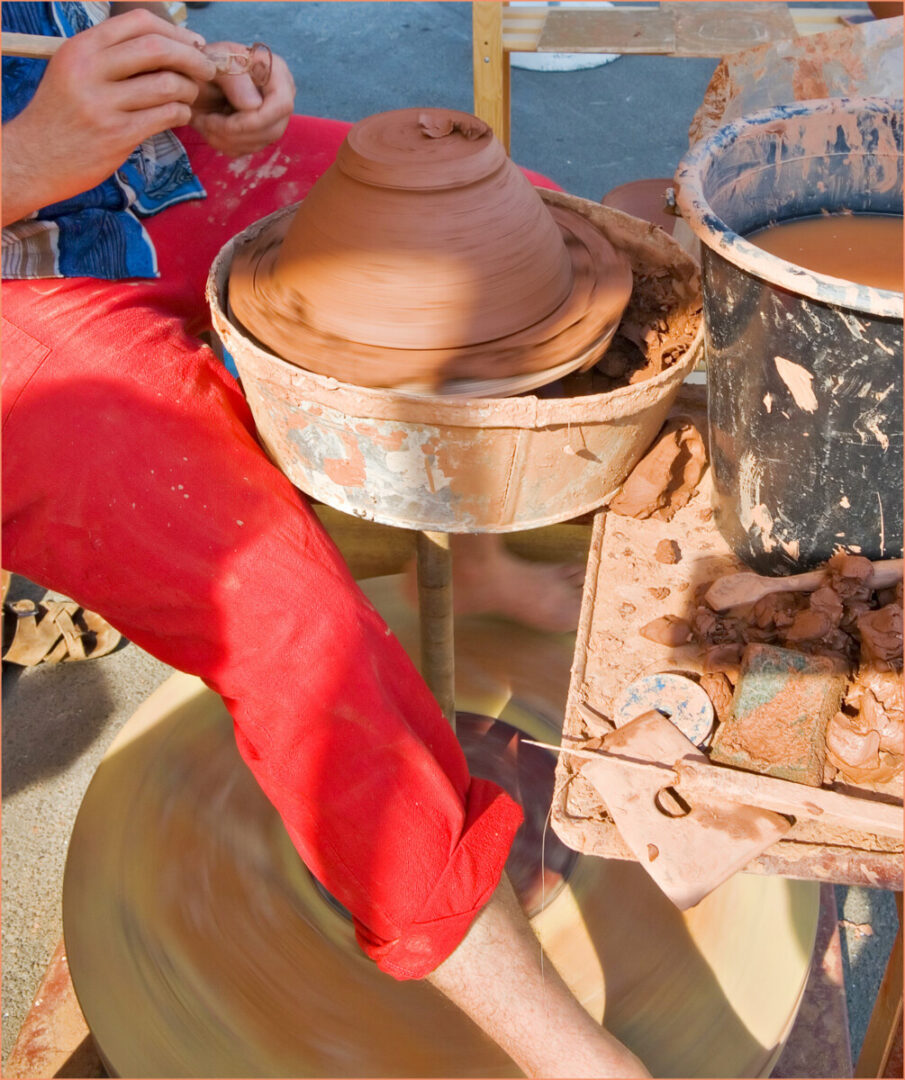
Press the pin on the spinning clay until you remove the clay. When doing this, it’s important not to have your wheel routing too fast.
How to Slow Down and Stop the Kick Wheel
As you approach the end of the throwing process, allow the kick wheel’s speed to reduce gradually on its own. Don’t try to slow down the flywheel as you shape your pot in the last step.
As the wheel slows down automatically, it’ll eventually stop. You can also gradually press your foot on the flywheel to slow it and stop it.
Then you can lift your pottery from the throwing surface using a wire cutter to remove the piece at the bottom and lift it from the wheel. Your pottery is now ready for the other steps, including decorating and firing.
After the wheel has stopped, you can now clean it to prepare it for another throwing procedure. The cleaning process is easy: kick the flywheel a few times, scrape off the clay, press a damp sponge on the wheel, stop the wheel, throw another ball of clay on the wheel, and repeat.
How To Prepare Your Clay for Wheel Throwing
Clay is the primary material used in pottery, and you should prepare it before you begin the throwing process.
Here are The Three clay Bodies you can use during the wheel-throwing technique on a kick wheel:
- Earthenware is a grainier, porous clay. Though it’s relatively easy to work with, earthenware is weaker than stoneware and requires glazing to hold liquids.
- Stoneware is a more durable, non-porous clay. It is easy to work with and more suitable for dinnerware.
- Porcelain is less forgiving than other clays. It absorbs water rather quickly, which can make big changes in its workability, so it’s not the best clay for newbies.
For more detailed information, check out the different Clays to choose from.
Wedging Your Clay
After choosing your desired clay body, you have to prepare it well for wheel throwing. The process of properly wedging your clay will help align its particles evenly, create a consistent texture, and remove air bubbles from the Clay.

The wedging process involves different approaches.
- Ram’s Head wedging – involves pushing a chunk of clay forward toward the table while applying pressure to get rid of air bubbles.
- Spiral wedging – entails pressing a brick-shaped piece of clay away from you at an angle and rotating it to end up with spiral-shaped clay.
For all 5 ways to wedge, check out How To Wedge Clay – A Beginner’s Guide With A Step By Step Video.
Conclusion
So there you have it, everything you need to know in order to start using a pottery kick wheel. It’s not a super easy process, but with practice and patience, you will be able to create beautiful pieces of pottery that will last for generations.
I hope this guide was helpful and that you are now feeling more confident in your ability to use a Kick Wheel. Feel free to refer back here if you need help with any of the steps as you continue learning how to use a kick wheel.
