
21 Pottery Clay Slip Questions Answered
There is something magical about clay slip and all the things it can do. It really is a fun medium to work with. Clay slip is also called clay slurry. It plays an important role in the crafting of pottery.
I put together a list of 21 questions about Pottery Clay Slip. My answers come to you from my personal experience, other professional Potters, and the very helpful consultants at Amaco.
One of the main challenges people face with pottery clay slips is understanding their full range of potential uses. If you’re not sure how to make it or what to use it for, you might find yourself struggling. Let’s learn more about it.
Here’s a quick rundown of the Pottery Clay Slip Questions and Answers to get you started:
- What is a slip used for
- How to make clay slip
- Underglaze vs. slip
- How to make a slip without a blender
- Can you apply slip to bone-dry clay
- Can you use slip on bisqueware
- What is slip trailing
- How to thicken clay slip
- How to store your slip
- Can you make a slip with different clay bodies
Affiliate Disclaimer: We are ambassadors or affiliates for many of the brands we reference on the website. As an Amazon Associate, I earn from qualifying purchases.
1 What Is Slip Used For?
Clay slip is a very versatile material that can be used for a variety of purposes.
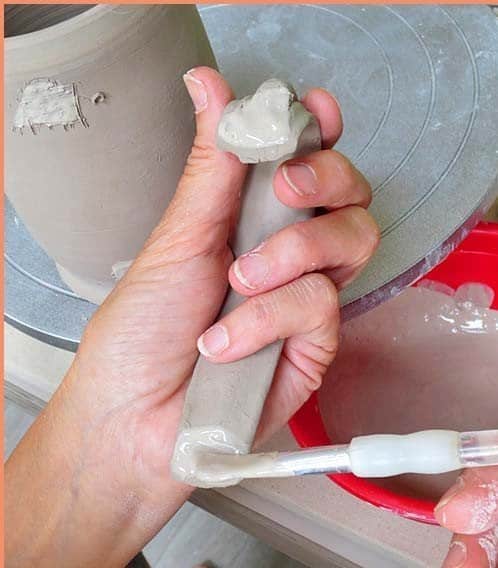
Slip is used to join pieces of Clay together. Slip acts as an adhesive, bonding the handle to the mug, the top to the lid, and any piece of clay to another.
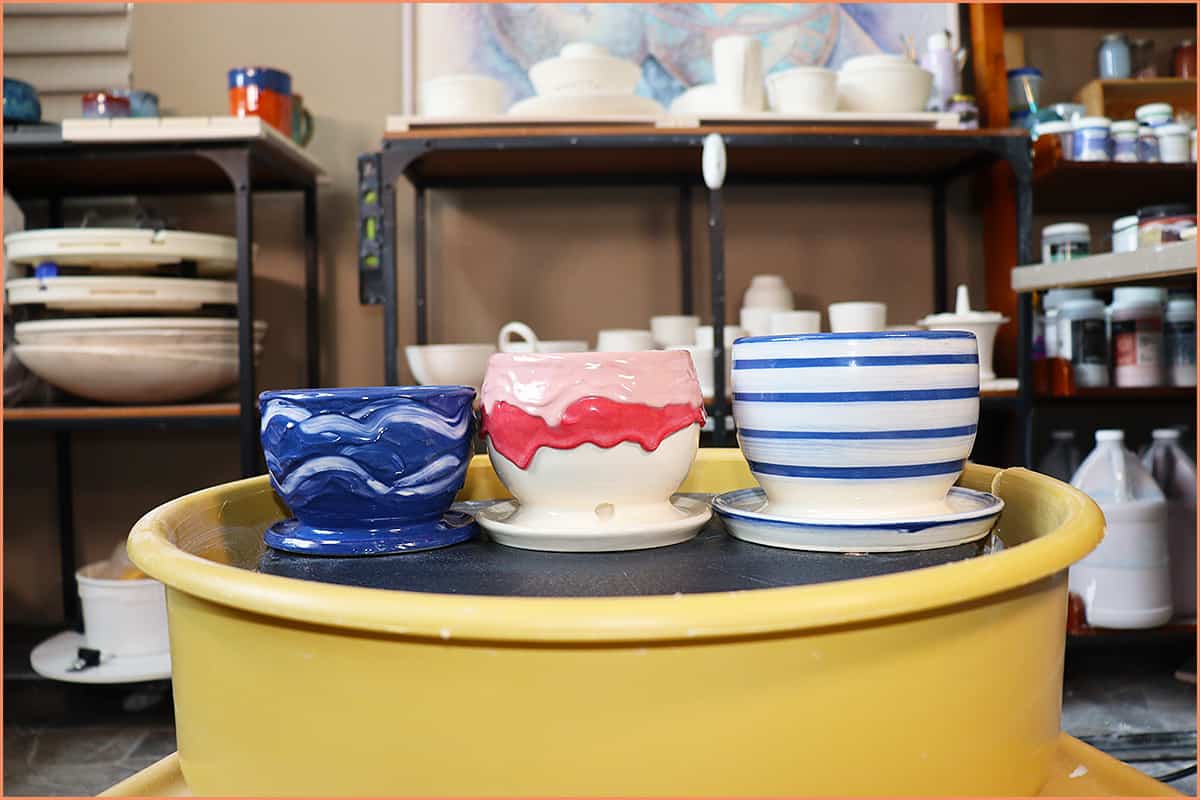
Slip is also used for Decorating. Thick or thin, there are many ways to decorate with slip, including painting on with a brush, dipping your pottery in slip, dripping slip onto your pottery, splashing it to create cool effects, and slathering it on to create cool patterns. Just to name a few.
Slip can also be used for Slip Casting, which is a process of making duplicates of an original object using a plaster mold with Casting Slip.
Whether you’re joining pieces of clay together or creating a unique decoration, slip is a great material to use.
2 How Do You Make Clay Slip?
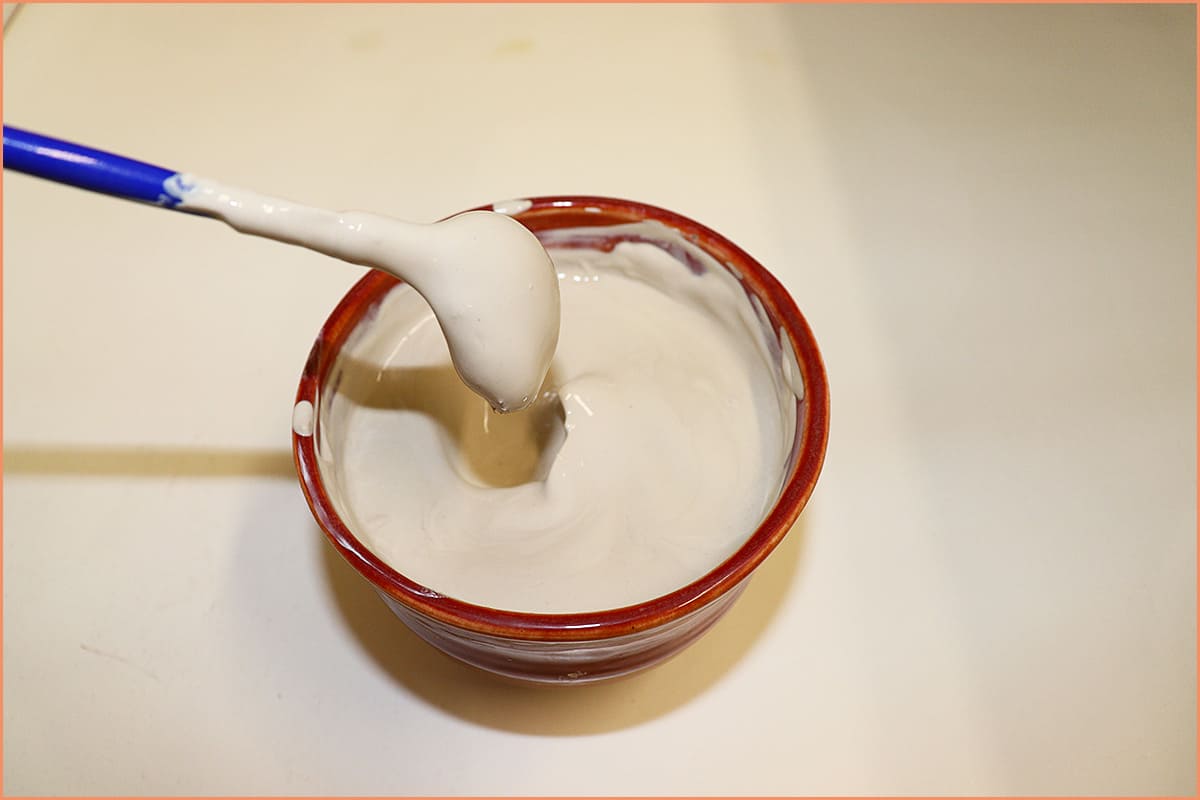
There are several ways you can make clay slip. The first is a simple clay slip, made with a mixture of dried Clay and water. Mixed in different ratios to create a slip with different consistencies. A basic slip has the consistency of yogurt or sour cream that is mainly used to join attachments like handles.
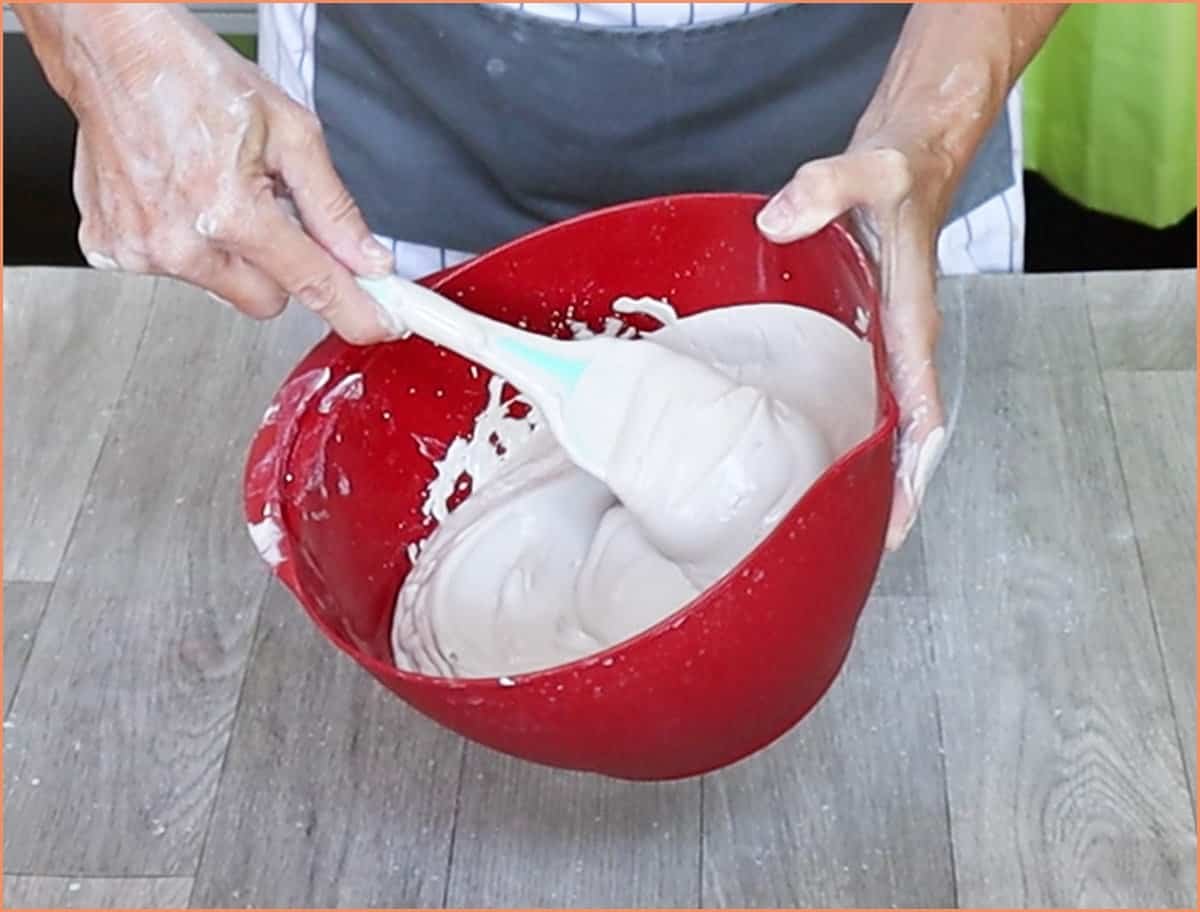
You can add more clay to make a thicker slip with a consistency of cake frosting used for creating more textured surfaces.
You can also create a thinner slip by adding more water to the mixture. These slips are used more for watercolors.
To learn more about making slip, check out How to Make Clay Slip for Decorating
Another way to make a slip is to add a Deflocculant for slip casting. Which I will get into more in slip casting on Question 19.
3 Is Underglaze the Same as Slip?
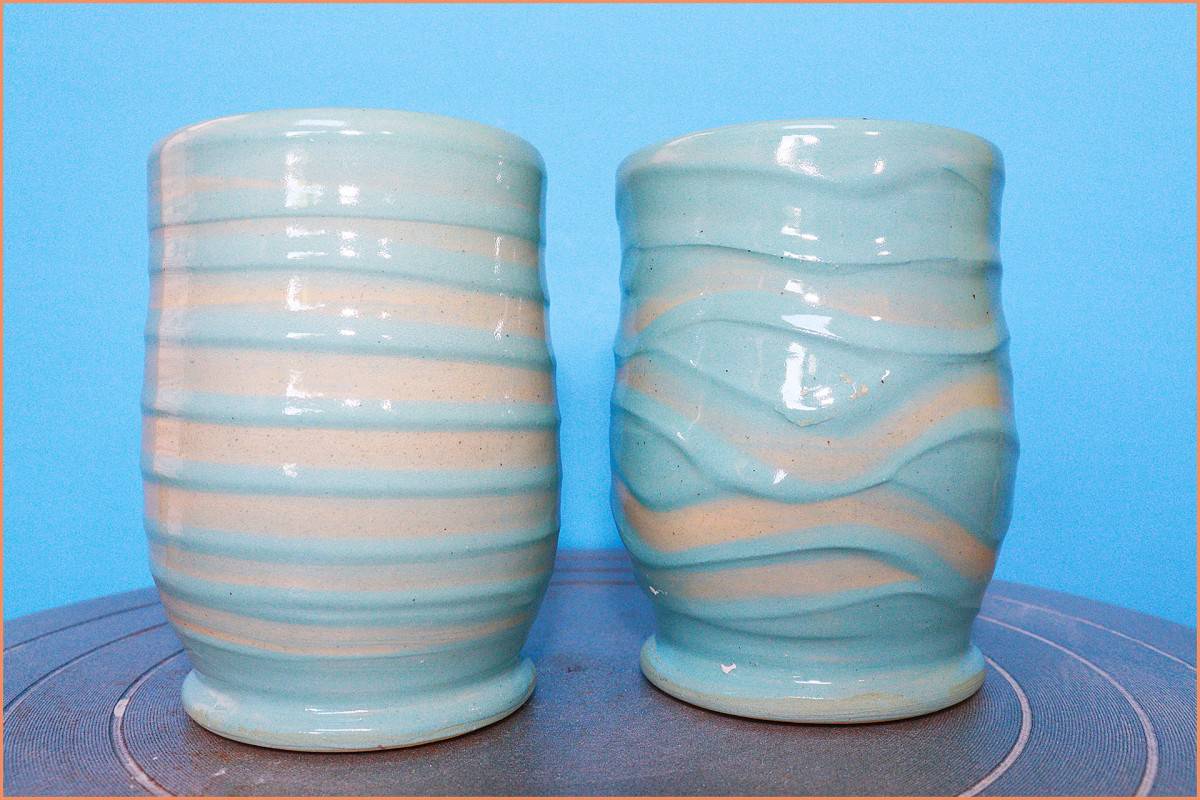
While slip and underglaze are similar, they are not the same.
Underglaze can be used on all stages of greenware and bisqueware because it contains Frit. Frit is a mixture of silica and flux that helps bond the underglaze to the pottery. But not enough to form a glass-like seal.

Slip consists of Water, Clay, and Stains to add color. Slip is applied to greenware because it does not contain Frit.
For more detailed information on Underglaze and Slip, check out Is Colored Slip the Same As Underglaze
4. I’m trying to make a slip, but I don’t have a Blender. Is It Ok If My Slip Isn’t That Smooth?
If you don’t have a blender, put your Bone Dry Clay in a container and let it soak overnight to ensure the water has absorbed into the clay. Then you can mix it by hand.
You may think the slip is smooth just from blending the clay and water together, but it’s not. The Strainer plays an important part. To ensure the slip is smooth, you should put it through a fine strainer. This will remove any lumps and make your slip smooth.
Try to tap it through first, then push the clay through with a Spatula.
5 I Heard People Use Vinegar When Making Slip. Why Is It Done?
You can use a little vinegar, but you don’t have to. Many potters use vinegar when making slips. The vinegar is a flocculant. It helps the clay flock together and makes it stickier.
Vinegar also has antifungal properties, which can help prevent mold from growing in the slip when stored for long periods.
There is also a recipe for slip used to join your clay pieces together that I received from Martha Grover at Clay Con West in January. It’s a simple recipe.
- A pint container, 4 sheets of toilet paper, white vinegar, and clay
- Using an immersion blender, mix the pulp
- Place broken-up pieces of bone-dry clay in the container
- And mix into a paste
- Let it sit overnight
- The vinegar will foam up
- Mix it again
The vinegar acts as a flocculant, helping to bond the clay together. You want to make sure you are using the same clay body as the clay you are working with.
You can use the slip for scoring and slipping when attaching clay pieces together. You can also use it for filling in cracks before you bisque fire.
6 Can You Use Fresh Clay to Make Slip if You Don’t Have Any Old Dried Clay?
While older bits and scrapes of clay are typically used to make slip, you can still slice off pieces of Fresh Clay and dry them out. Then break them up and make a slip.

This process is just fine for those who do not have any clay scraps on hand.
7 Can You Make a Slip With Wet Clay?
I would not recommend making a slip with wet clay. It takes a long time because wet clay does not absorb water as quickly as dry clay.
When I tried, I didn’t fare very well. I mixed and mixed and mixed some more. When I was tired of mixing, I tried straining it, which didn’t help either. All I remember creating was a mess.
When making a slip, make sure the Clay is Bone Dry. Otherwise, you’ll be mixing for a long time.
8 How Do You Make Colored Slips for Decorating Pottery?
Making colored slip clay is fairly easy. Start by adding water to broken-up, bone-dry clay. The smaller the pieces, the better. You can add more or less water to create thinner or thicker slips as needed.
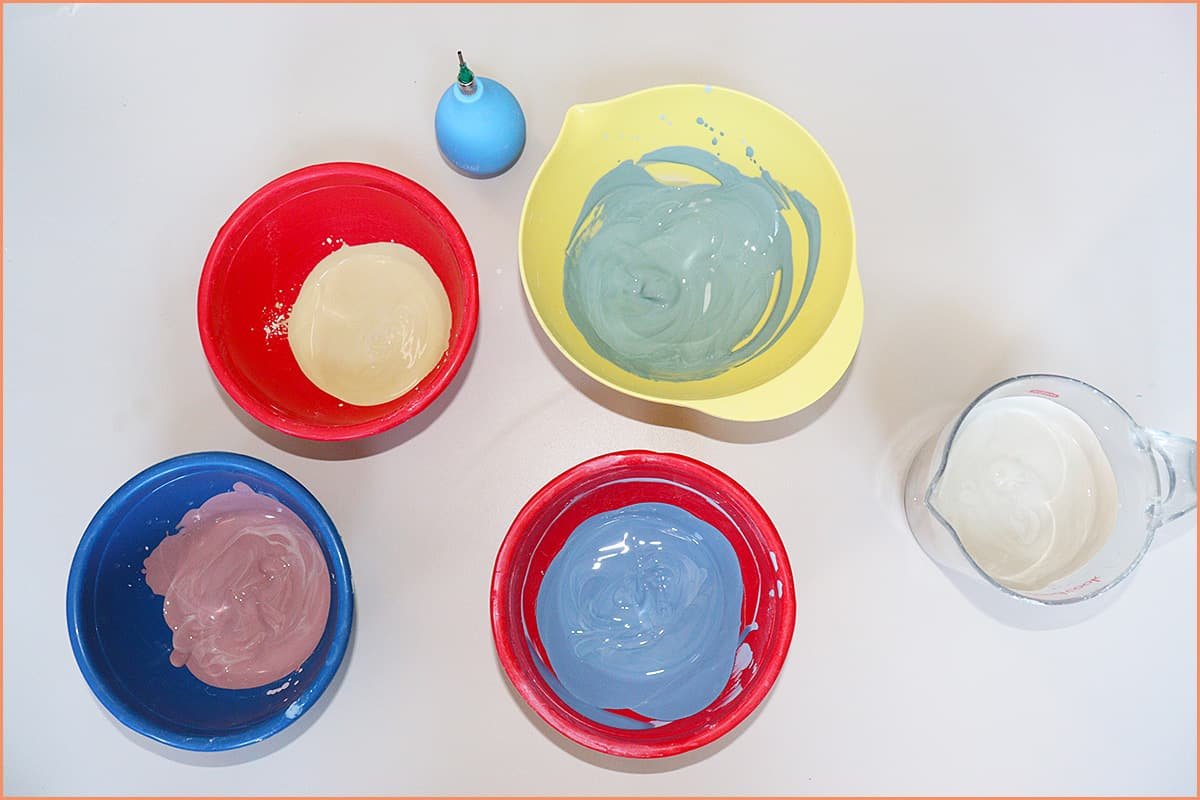
Then, add Mason Stains or oxides to create different colors. Blend it all together, then put it through a strainer.
Here is a step-by-step YouTube Video on How to make Colored Slip.
9 Could You Add Mason Stain to the Water Before You Add the Water to the Clay Slip?
I personally like to get the consistency of the Clay Slip right before I add the colorant.
If I were to add water to the colorant first, I may not need all the colored water, so it makes sense to get the thickness and amount of slip first, then add the colorant.
After I make my colored Slip, I know how much mason stain to add. I can then double or triple the recipe, and the color will be the same.
This is important if I have a project that may need more slips of the same color.
10 Can You Add Mica Instead Of Mason Stain To Slip?
Mica is a shimmery refractory mineral that can withstand temperatures only around 1422°F (772°C), which would be (cone 016), so I wouldn’t recommend firing higher than that.
Mica has been used in Raku firing because Raku firing is done at lower temperatures. Mica added to a slip will often crawl during firing, creating a textured surface and producing some interesting effects.
So, if you are interested in experimenting with mica in your Raku-fired pieces, go ahead and give it a try!
11 Do I Need a Coat of Transparent Glaze Over My Slip Decoration?
You don’t have to if it’s a decorative piece of pottery. Or, if you are using high-fire clay and firing in the Kiln, to vitrification at Cone 10 (2345℉ or 1285℃) or higher, making the clay waterproof and food-safe.
If your clay is not high-fired to vitrification, and you don’t want to glaze your slip-decorated vessel but still want it to be waterproof, you only need to glaze the inside. After bisque firing it.
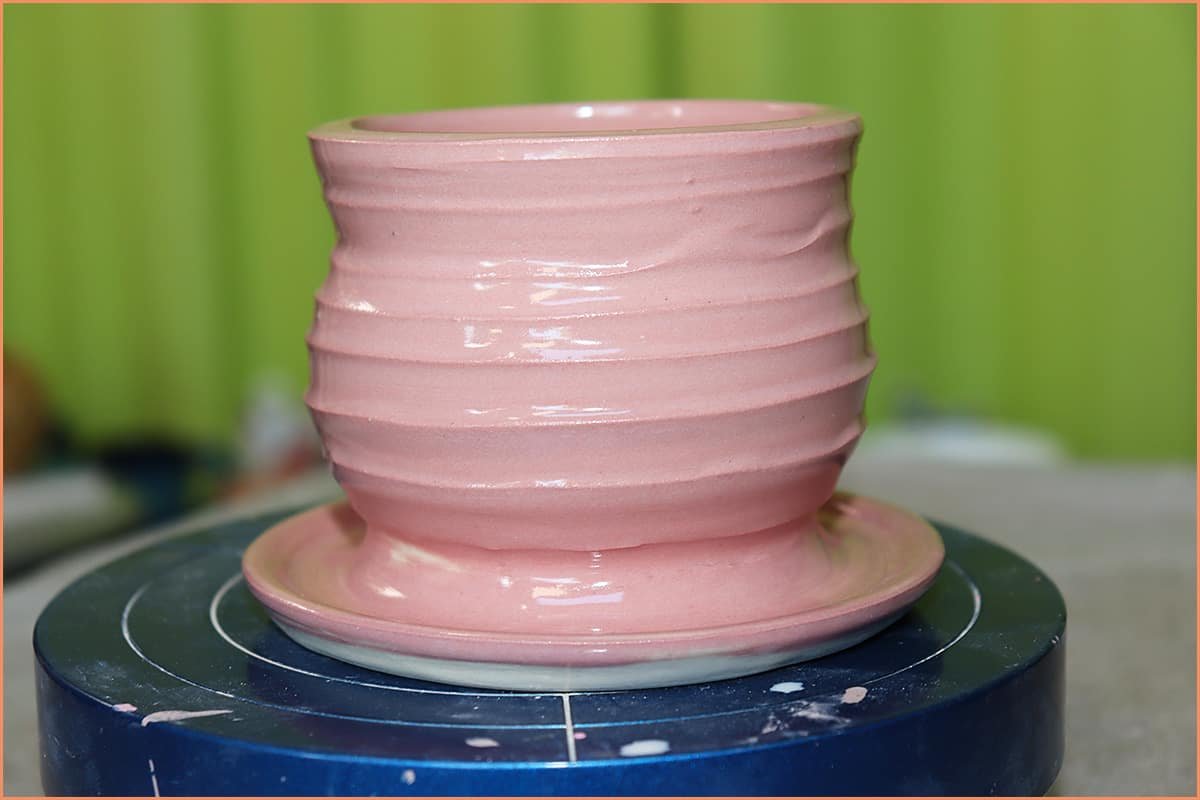
If you want to add a glossy sheen to your slip, enhance the color, or increase durability and protection for your pottery, then applying a coat or two of Clear Glaze may be the way to go.
12 If I Burnish the Colored Slip-on Leather Hard Clay, Does It Still Need a Transparent Glaze to Make It Waterproof?
Although burnishing compresses the clay particles and smooths the surface, it does not make the pottery waterproof. It will become waterproof if you use high-fire clay and fire it to vitrify it.
Otherwise, you will have to apply a Clear Glaze on the inside of the pottery to make it waterproof, and just hand-wash it.
13 Can I Apply Slip to Bone Dry Clay?
While the best time to apply a simple slip to pottery is in its plastic workable stage or leather hard stage, because the shrinkage rate is the closest.
You can still apply slip to bone-dry clay. But you have to be careful when doing so. I brushed on a thin layer of slip, let it dry, and applied another layer, and another, with great success.
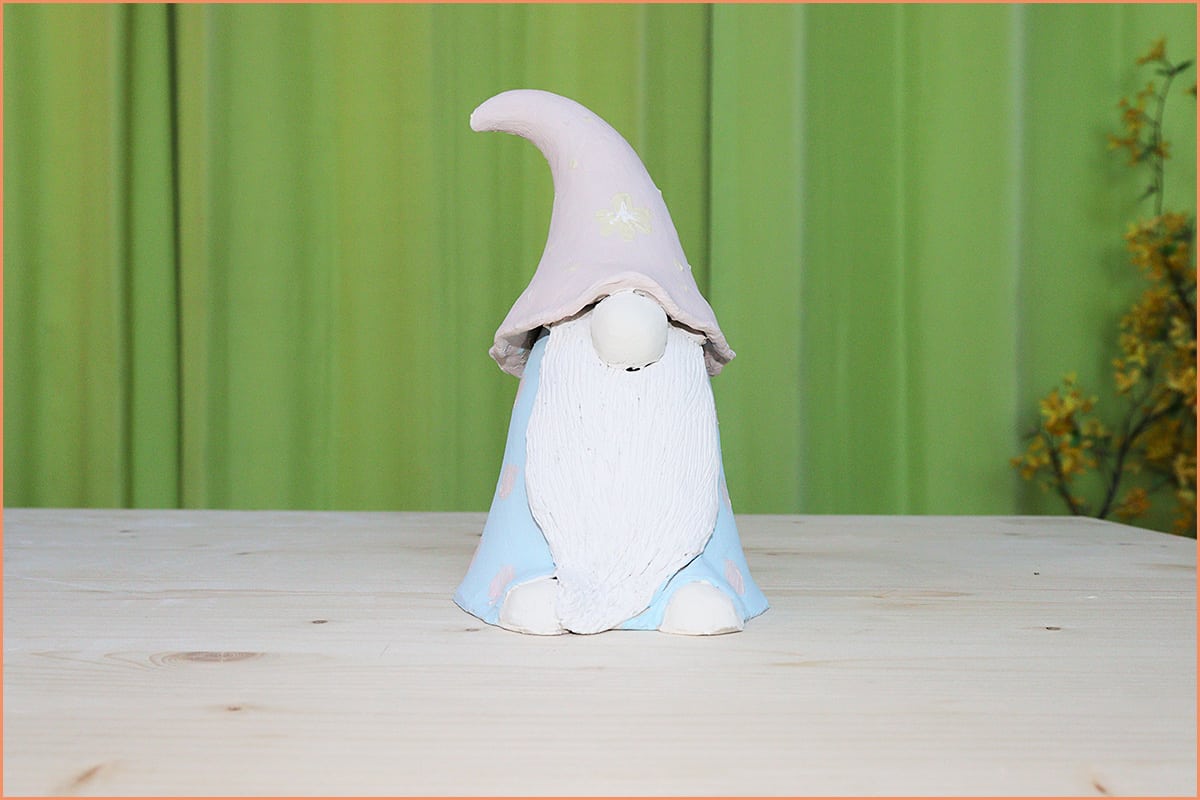
The problem lies in thicker slip coats because the shrinkage levels are too far apart. This can cause cracking and separation of the slip from the bone-dry clay.
Some potters Spray Water on the clay or even dip the piece in water before applying slip.
If you decide to apply slip onto bone-dry clay, it’s always best to test it out because many Clay Bodies are Different and may not work.
14 Can I Use Slip-on Bisqueware?
You can decorate with slip-on bisqueware, but not with a simple Slip. Because simple Slip has no melting agents for bonding to the bisqueware, the Slip will most likely flake and or peel off.
However, you can add Frit to help the slip bond to the bisqueware, so it performs more like an englobe or an underglaze. Then the clay slip will adhere to the pottery without flaking or peeling.
There are many Bisque slip recipes out there to choose from.
Bisque slip recipe :
- Tile 6 Kaolin 70%
- Nepheline Syenite 30%
- Then – Veegum CER 2%
Watered-down slip recipes do work the best on bisque ware. Thick slips may be too much for bisqueware. If the slip is too thick, it can crack and peel off the bisqueware.
If you choose to use a thicker slip, you can always test fire and see what happens to your piece.
15 What Is Slip Trailing?
Slip trailing is a technique in which you apply slip (with or without colorant) to mainly leather-hard clay using a Squeeze Bottle with a pointed tip or an Application Bulb. Simply squeeze the slip out of the applicator to create decorative shapes with lines or dots.
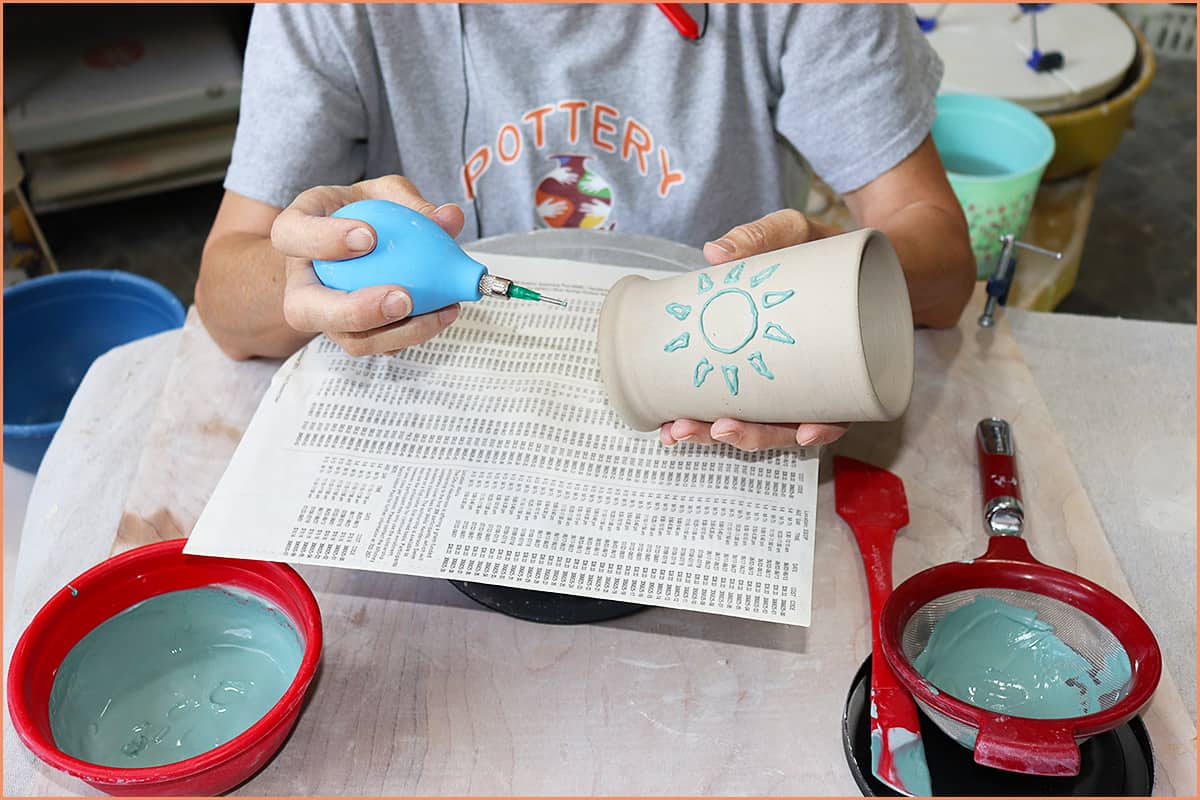
This is a great way to add some extra design to your work. Plus, it’s really easy to do! For more detailed information, check out “What Is Slip Trailing?“
16 How Do You Thicken Clay Slip?
If you find your Slip contains too much water, you can do a few things to thicken it up.
The first option is to simply wait for some of the water to evaporate. This may take a while. Like days or even weeks, depending on how much extra water is in your slip.
Another option is to add some bone-dry clay to the slip and blend it thoroughly. Then, put it through a strainer to remove any clumps.
Another faster way is to add Epsom salt to the slip. This works as a flocculant (floating the Clay together) and will help to thicken your Slip. Just dissolve some salt in a little water, then add it in small amounts at a time until you reach the desired thickness.
With these three simple methods, you can easily thicken your clay slip
17 What Can Be Done if the Slip Becomes Too Thick?
If the slip in your container becomes too thick, you can add water and blend it really well.
It’s important to add a little water at a time until you reach the desired consistency. Then run it through a strainer to remove any clumps of Clay.
18 What Is the Best Way to Store Your Slip?
When it comes to storing your slip, you have a few options.
For large amounts of Slip, you can use a Bucket with a Tight-Fitting Lid and add vinegar to help prevent mold growth. Check it from time to time to make sure there is no mold growth or thickness.
You may need to add more water or vinegar as needed. You can also add bleach. Keep in mind that the bleach will evaporate in the kiln and won’t hurt the Clay.
For smaller amounts of slip, Freezer Bags work great. Simply pour the amount of slip you need into the bag and seal it tightly. Some of my Slips have been stored in these bags for over a year with no maintenance. I haven’t had any problems with mold growth, and the consistency is still like sour cream or yogurt.
19 Is Clay Slip for Decorating the Same as Slip for Slip Casting?
The simple answer is no. While you can use clay and water for decorating slip, it will not work at all for slip casting. When I started pottery, I did not know you could not use decorating and joining slip for slip casting.
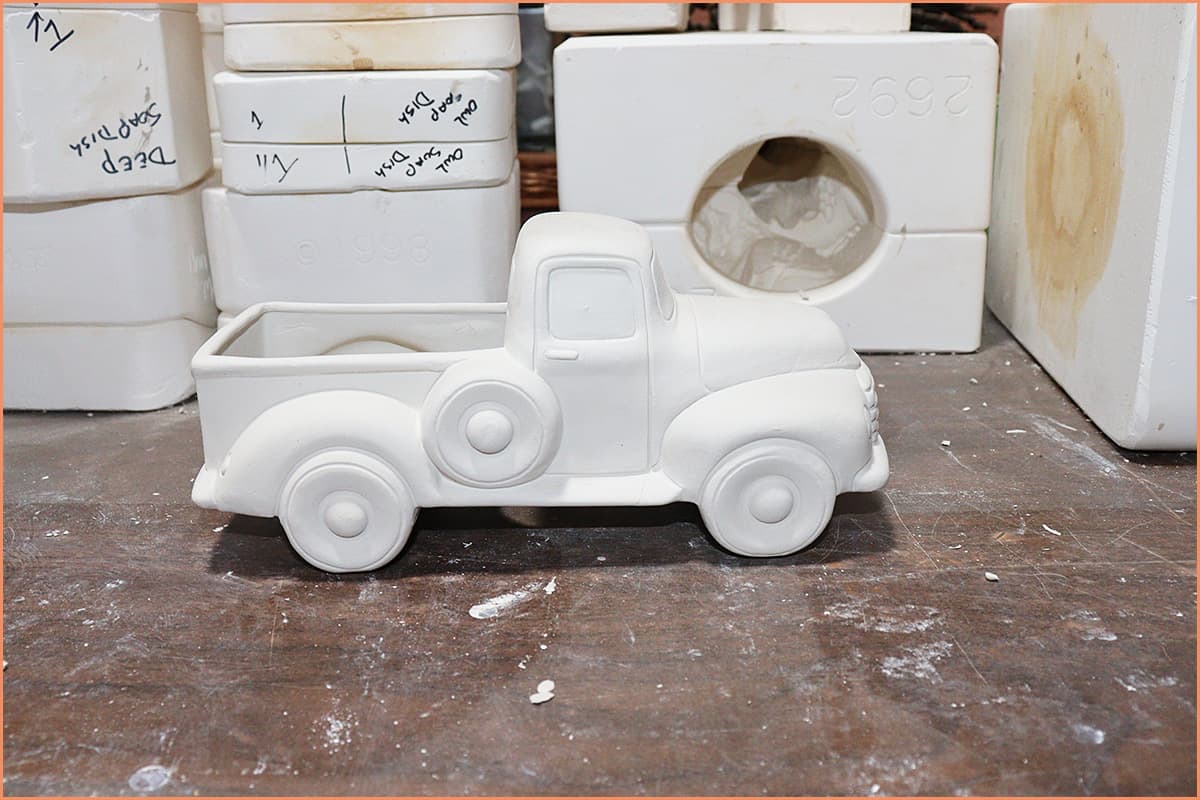
Not only will the simple slip waterlog the plaster molds, but it will also shrink unevenly and shrink too much as it dries. For slip casting, you need to mix dry clay with water blended with a deflocculant so the clay stays suspended and doesn’t settle in the mold.
Sodium Silicate and soda ash are commonly used as deflocculants in slip casting. It is added to the slip to neutralize particle charges, enabling a more uniform suspension for slip casting. It will help to create a smoother, thinner consistency for the slip, with less shrinkage.
Darvan is also used as a deflocculant to disperse the Clay suspension and minimize water content. Darvan has a few advantages. You don’t need to add soda ash, and it is more stable. Darvan doesn’t eat away the plaster. Increases the life of the mold. Slips also reclaim better without constantly adjusting with more deflocculant.
You can also buy Gallon Jugs of Clay Slip ready-made.
20 Can You Use Slip Casting Slip for Decorating and Attachments?
While slip casting slip may work on bisque ware, I would not recommend it for decorating or attaching to greenware.
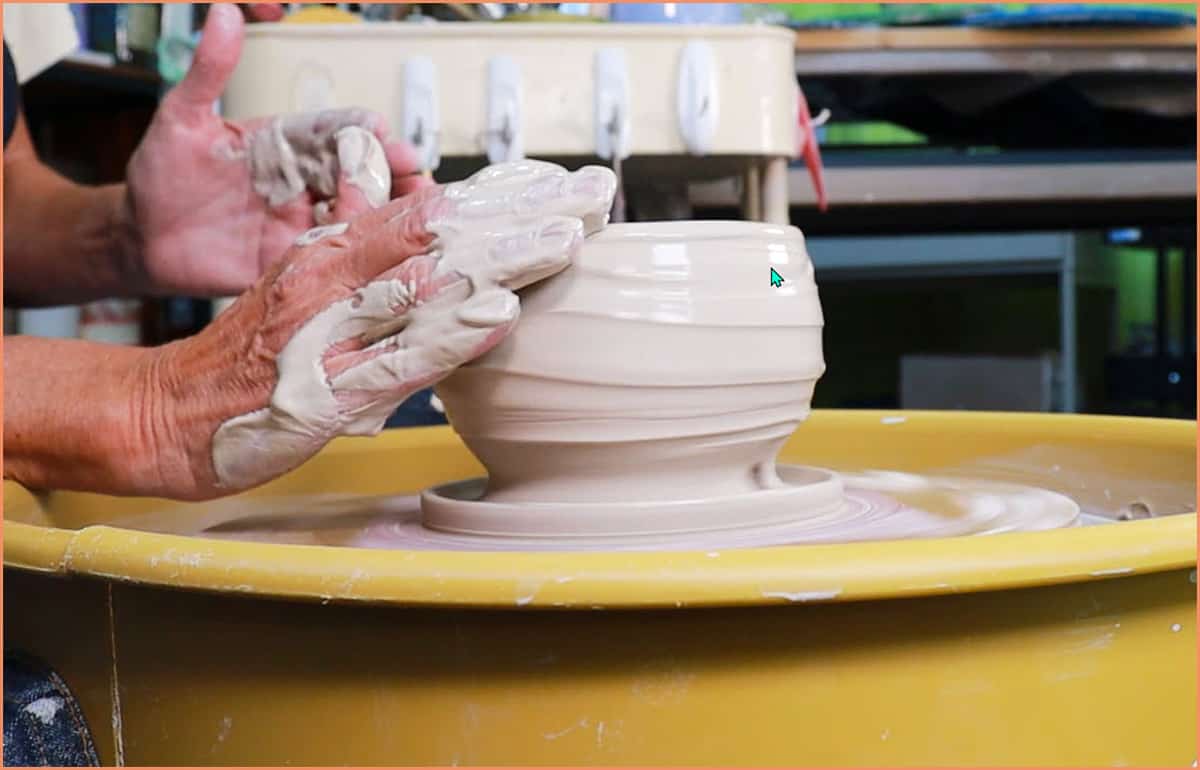
Since Casting Slip is formulated for plaster molds to suspend particles and slow drying, it does not have the same shrinkage or absorption rates as simple slip.
When you decorate and join clay with slip, the clay has similar shrinkage and absorption characteristics. Plus, you don’t need to keep the clay particles suspended
21 Can you Make Slip Out of Several Different Clay Bodies?
Working with multiple clay bodies can be tricky, as they often have different shrinkage rates and iron content. This can cause problems with the piece’s final outcome, as the different bodies may not fire at the same rate or produce the same color.
The consultant at Amaco told me it is always best to stick with one clay body when possible, as this will help to ensure that the piece is uniform and consistent. He also said that once you mix clay bodies, you have created another clay body that may not be compatible with the clay you are working with. And you want the Slip to attach and adhere to your piece properly
However, if you do need to work with multiple bodies, make sure to test each body thoroughly before using it. This will help you identify any potential issues and determine whether the slip is suitable for your needs.
You can check out the slip questions YouTube Video below.
Conclusion
There’s something special about clay slip. It can be used for a variety of different things, from crafting pottery to decorating pieces. The article discussed various questions about pottery slip and provided answers based on my experience. Slip is a clay-and-water mixture used in pottery for various purposes, including decorating and joining pieces together.
There are different types of slips, each with its own uses. It is important to use the correct type of slip for the desired purpose, as using the wrong type can cause problems. Slip is also made using different methods, depending on the purpose.
Making a simple slip from scratch involves mixing clay and water. For slip casting, you need a deflocculant to keep the clay particles suspended and prevent shrinkage. A ready-made slip is also available for purchase. When working with multiple clay bodies, it is best to test each one thoroughly before using it to avoid potential problems. With that said, enjoy all the great ways to use slip.